
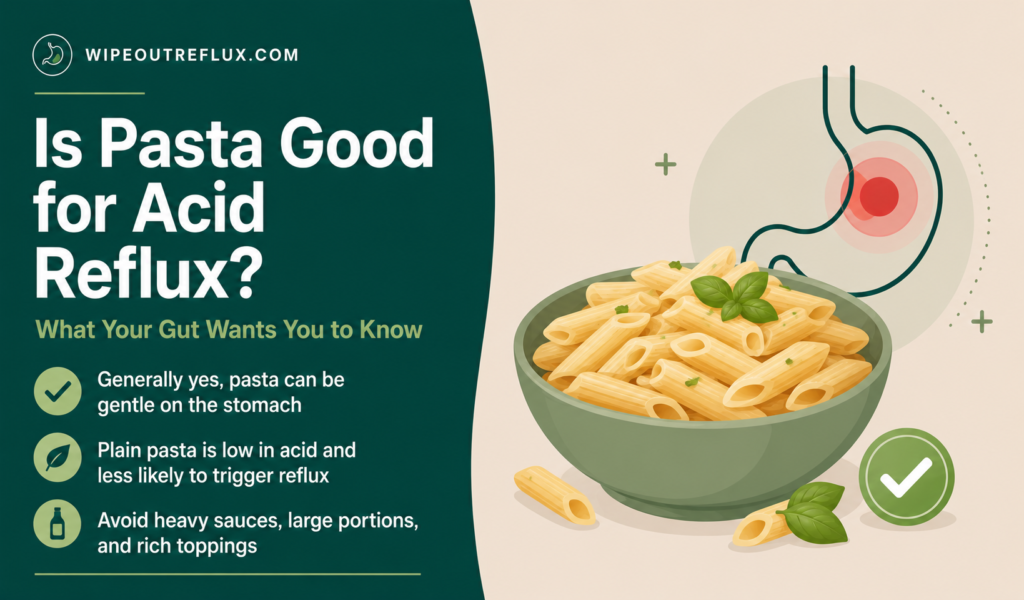
Pasta is one of the most commonly asked-about foods in acid reflux management, and it’s a reasonable question. Unlike tomatoes, coffee, or alcohol, pasta doesn’t immediately come across as an obvious trigger. The answer, though, isn’t simply yes or no — because plain pasta itself is largely neutral, while everything that usually comes with it can be where the problems start.
For most people with acid reflux, plain pasta is tolerated reasonably well. It’s not acidic, it doesn’t directly relax the lower esophageal sphincter (LES), and it doesn’t contain significant fat on its own. The real variables are the sauce you use, the toppings and proteins you add, the portion size, and when you eat it. Get those right, and pasta can genuinely be a reflux-friendly meal option. Get them wrong, and it becomes as problematic as any other trigger food.
There’s also a meaningful difference between pasta types when it comes to reflux. The original assumption — that whole wheat pasta is harder on the digestive system due to its fibre content — is actually the opposite of what the evidence shows. I’ll explain why below, and what type of pasta is actually the better choice.
Key Takeaways
- Plain pasta is not acidic and does not directly relax the LES — it is generally well-tolerated by people with acid reflux
- The sauce is almost always the primary reflux problem: tomato-based sauces are highly acidic and a well-documented GERD trigger
- High-fat additions — cream, cheese, processed meats — reduce LES pressure and delay gastric emptying, increasing reflux risk
- Large pasta portions cause gastric distension, which significantly increases the rate of transient LES relaxations
- Whole wheat and high-fibre pasta varieties are generally better for reflux than refined white pasta — dietary fibre has been shown to reduce GERD symptoms
- Refined white pasta has a higher simple carbohydrate load, and research shows reducing simple carbohydrate intake improves acid exposure time
- People with LPR (silent reflux) should be especially careful with tomato-based pasta sauces, which can reactivate pepsin in the throat
- Pasta eaten at least 3 hours before lying down is significantly less likely to cause nocturnal reflux
Why Plain Pasta Is Generally Tolerated With Acid Reflux
Plain cooked pasta — without sauce or fatty additions — has a few properties that make it relatively safe for people with reflux. Its pH is close to neutral, sitting around 6.0, which means it doesn’t add any meaningful acid load to the stomach. It contains no fat in significant quantities, so it doesn’t trigger the cholecystokinin (CCK)-mediated LES relaxation that fatty foods cause. And it absorbs quickly compared to a large, fatty meal, limiting the duration of gastric distension.
For people coming out of an active reflux flare and looking for easy, tolerable foods, plain pasta with a light olive oil base or a small amount of cooked vegetables is a reasonable option. It’s bland enough not to irritate an inflamed esophagus and neutral enough not to provoke reflux directly.
The key phrase is plain pasta. The moment you add a tomato-based sauce, a cream sauce, a large amount of cheese, or processed meat toppings, you’re introducing the actual reflux triggers. Most people don’t eat plain pasta — they eat pasta with sauce. And that’s where the risk enters.
When Pasta Does Cause Acid Reflux Problems
Understanding when pasta becomes a problem requires looking at each component of a typical pasta meal separately. It’s rarely the pasta itself — it’s what comes with it.
The Sauce Is Almost Always the Problem
Tomato-based pasta sauces — bolognese, marinara, arrabbiata, puttanesca — are among the most commonly consumed acidic foods in Western diets. Tomatoes have a pH of around 4.0 to 4.5, and when cooked into a concentrated sauce, that acidity is amplified. Additional acidic ingredients like wine, lemon, or vinegar push it lower still.
A systematic review of dietary and lifestyle factors related to GERD, drawing on 72 studies across 19 countries, confirmed that tomatoes and tomato-based products are positively associated with reflux-related symptoms, with acidic foods identified as a direct contributor to esophageal acid exposure and LES pressure reduction [Zhang et al., Therapeutics and Clinical Risk Management, 2021]. For people with GERD, this makes a bowl of spaghetti bolognese fundamentally different from a bowl of pasta with olive oil — even if the pasta base is identical.
For people with LPR (silent reflux), the problem is compounded. Pepsin deposited in the throat can be reactivated by any food or drink with a pH below approximately 6.5. Tomato sauce, sitting well below that threshold, is more than acidic enough to reactivate throat pepsin and sustain LPR symptoms even without a new reflux event occurring. A tomato-based pasta sauce isn’t just a reflux trigger — for LPR sufferers, it’s an active irritant to tissue that’s already inflamed.
High-Fat Additions: Cheese, Cream, and Processed Meats
A creamy carbonara, a rich cacio e pepe, a pasta bake loaded with mozzarella — these are delicious, but each adds a substantial fat load to what might otherwise be a manageable meal. Fat is one of the most well-documented contributors to LES dysfunction, triggering the release of hormones that reduce sphincter pressure and slow the rate at which food leaves the stomach.
When gastric emptying slows, the stomach remains full and acidic for longer, extending the window during which reflux can occur. This mechanism explains why a rich pasta meal in the evening so often leads to late-night symptoms — the fat from the sauce or cheese is still slowing gastric clearance hours after eating.
Processed meats — pepperoni, salami, Italian sausage — also contribute additional fat and salt, both of which can irritate the digestive tract. If you want to make pasta work with reflux, keeping fats low is essential. An olive oil-based sauce with lean chicken or vegetables is a fundamentally different proposition from a cream-based sauce with pancetta.
Large Portion Sizes and Gastric Distension
Pasta is a high-volume food, and it’s easy to eat a large bowl without noticing. That volume matters for reflux because of gastric distension — the physical stretching of the stomach wall that comes with a large meal. Distension is one of the primary triggers for transient LES relaxations (TLESRs), the mechanism responsible for the majority of acid reflux events.
Research examining the direct effect of meal volume on reflux found that larger meals — consuming 600ml versus 300ml — resulted in significantly more reflux episodes (17 versus 10 per session) and greater total acid exposure time (12.5% versus 5.5%) in GERD patients [Wu et al., Journal of Gastroenterology and Hepatology, 2014]. A separate study found that gastric distension produces a threefold to fourfold increase in the rate of transient LES relaxations, directly increasing the likelihood of acid escaping the stomach [Holloway et al., Gastroenterology, 1985].
A smaller portion of pasta — 70–80g dry weight rather than 120–150g — meaningfully reduces the volume-related risk without requiring you to forgo the meal entirely.
Eating Pasta Late at Night
Pasta is commonly eaten as an evening meal, which creates a timing problem for reflux. A large evening carbohydrate and fat load, eaten close to bedtime, means your stomach is still digesting when you lie down. The recumbent position removes gravity’s assistance in keeping stomach contents where they belong, and nocturnal reflux events — when acid sits in the esophagus for longer without being cleared — are associated with greater mucosal damage than daytime events.
The standard guidance of eating at least 3 hours before lying down applies particularly to heavier pasta dishes. If you’re eating dinner at 7pm and going to bed at 10pm, that’s borderline. If it’s a rich pasta with cream sauce, the fat-related gastric emptying delay could extend that window further. As a general rule, if pasta is your evening meal, keep the sauce light, the portion modest, and leave time before you recline.
Which Type of Pasta Is Best for Acid Reflux?
This is where I want to correct a common misconception — including one that appeared in an earlier version of this article.
Whole Wheat Pasta vs. Refined White Pasta
The assumption that whole wheat pasta is harder on the digestive system because of its higher fibre content is not supported by the evidence. In fact, the research points in the opposite direction: dietary fibre appears to be protective against GERD symptoms, not problematic.
A clinical study examining the effect of a fibre-enriched diet in patients with non-erosive GERD found that after just 10 days of increased fibre intake, the proportion of patients experiencing heartburn dropped from 93.3% to 40% (p < 0.001), and overall GERD-Q symptom scores improved significantly [Morozov et al., World Journal of Gastroenterology, 2018]. A separate study found that dietary fibre intake is associated with a meaningfully reduced risk of developing reflux symptoms in the first place [Sun et al., Nutrients, 2023].
The issue with refined white pasta is different. Refined white pasta has a higher glycemic index and a greater simple carbohydrate load than whole wheat. Research increasingly suggests that simple carbohydrate intake is a meaningful driver of GERD symptoms. A randomised controlled trial examining the effect of carbohydrate type on esophageal acid exposure found that reducing simple sugar intake significantly lowered acid exposure time (from +3.1% to -4.3% in the intervention group, p = 0.04) and improved symptom ratings including heartburn frequency, heartburn severity, and lump or pain in the throat [Pointer et al., American Journal of Gastroenterology, 2022].
In practical terms: whole wheat pasta, with its higher fibre and lower glycemic index, is a better choice for reflux than refined white pasta — not worse. If you’ve been avoiding whole wheat pasta for reflux reasons, that’s worth reconsidering.
Gluten-Free Pasta
Gluten-free pasta (made from rice, corn, chickpeas, or lentils) is a reasonable alternative for people who have a confirmed gluten sensitivity or coeliac disease, which can independently worsen digestive symptoms. However, if you don’t have a gluten-related issue, gluten-free pasta doesn’t offer any meaningful reflux advantage over whole wheat. Some gluten-free pasta products also have a higher glycemic index than standard wheat pasta, which, based on the carbohydrate evidence above, could be a mild disadvantage. Choose based on your actual dietary needs, not a general assumption that it’s easier on the gut.
Best Pasta Sauces for Acid Reflux
Given that the sauce is the primary driver of pasta-related reflux, choosing the right base makes an enormous practical difference. The following are the most tolerable options:
- Olive oil-based sauces — a simple aglio e olio style (olive oil, cooked garlic, herbs) is one of the most reflux-friendly pasta preparations. Keep the garlic cooked rather than raw, as raw garlic is a known trigger for many people with reflux.
- Pesto — traditional basil pesto made with olive oil, pine nuts, and a small amount of cheese is generally tolerated by people with GERD, though the fat content from oil and cheese means portions should be modest. Avoid pesto with sun-dried tomatoes or lemon juice.
- Light vegetable-based sauces — sauces built from courgette, mushrooms, spinach, or roasted butternut squash are low-acid, low-fat options that work well as a pasta base without triggering reflux.
- Small amounts of a white sauce — a light béchamel made with low-fat milk is less problematic than a full cream sauce, but keep quantities modest given the fat content of even a lighter white sauce.
Sauces to avoid or use cautiously: any tomato-based sauce, wine-based reductions, cream-heavy sauces, spicy arrabiata or fra diavolo, and anything with citrus (lemon pasta). For a more detailed breakdown of which foods and drinks sit safely within a reflux-friendly diet, my LPR diet guide covers the underlying logic in full, and the same principles apply for GERD.
What About LPR (Silent Reflux)?
If you have LPR rather than classic GERD, the sauce issue becomes more significant. With LPR, the primary concern isn’t just acid reaching the esophagus — it’s acid and pepsin reaching the throat and larynx, where they cause inflammation and symptoms like hoarseness, throat clearing, mucus, and a persistent sense of something stuck.
Pepsin deposited in throat tissue can be reactivated by any acidic food or drink. A tomato pasta sauce — with a pH typically well below 5 — is directly within the range that reactivates pepsin and can sustain throat inflammation even without a new reflux event occurring from the stomach. For LPR sufferers, this means tomato-based pasta dishes should be avoided during active symptom phases, regardless of how small the portion is or how well-timed the meal is. A white pasta with olive oil, cooked vegetables, and lean protein is a much safer evening meal.
For more on identifying your specific food triggers with LPR, my article on LPR foods to avoid covers the full picture, including why some foods that are safe for GERD remain problematic for LPR.
Frequently Asked Questions
Is pasta good or bad for acid reflux?
Plain pasta is largely neutral — it’s not acidic, doesn’t directly relax the LES, and is generally well-tolerated. The problems arise from what accompanies it: tomato-based sauces, fatty cheeses, cream, and processed meats. The right pasta meal (whole wheat, olive oil base, lean protein, small portion) can be genuinely reflux-friendly. The wrong one (large portion of white pasta in tomato sauce with cheese, eaten before bed) hits most major reflux triggers at once.
What is the best pasta for acid reflux?
Whole wheat or high-fibre pasta is the best choice. The evidence shows dietary fibre is protective against GERD symptoms, not problematic. Refined white pasta has a higher simple carbohydrate load, and research suggests reducing simple carbohydrate intake improves esophageal acid exposure time. If you need to avoid gluten for a confirmed medical reason, choose a lower-glycemic gluten-free option like chickpea or lentil pasta over white rice pasta.
Can I eat pasta with a tomato sauce if I have acid reflux?
Tomato sauce is one of the most commonly reported GERD triggers and is directly acidic enough to reactivate pepsin in the throat if you have LPR. During an active flare, I’d recommend avoiding it entirely. When symptoms are stable, some people with GERD (not LPR) can tolerate a small amount of homemade, low-acid tomato sauce. A basic marinara made from fresh tomatoes with added bicarbonate of soda to reduce acidity is a strategy some people use — though it’s worth testing cautiously and watching your response.
Does pasta cause acidity or heartburn?
Plain pasta does not cause acidity directly. It has a near-neutral pH and doesn’t stimulate excess stomach acid production or LES relaxation on its own. Heartburn after a pasta meal is almost always attributable to the sauce, fat content of toppings, or the portion size — not the pasta itself.
What pasta sauce is best for acid reflux?
Olive oil-based sauces, light pesto, and vegetable-based sauces made from courgette, mushrooms, or butternut squash are the most tolerable options. Avoid tomato-based sauces, wine reductions, cream-heavy sauces, and spicy or citrus-based preparations. If you want something more substantial, a very light béchamel with low-fat milk in a modest amount is workable for most people with GERD.
Is pasta okay for LPR (silent reflux)?
Pasta with the right sauce (olive oil, vegetables, no tomato, no citrus) is generally fine for LPR. The critical thing to avoid is any tomato-based sauce, which is acidic enough to reactivate pepsin in the throat even without a new reflux event. Keep portions moderate, avoid eating within 3 hours of lying down, and stick to lean protein toppings rather than fatty processed meats.
Can I eat pasta every day with acid reflux?
Pasta can be part of a regular reflux-friendly diet if it’s prepared thoughtfully. Using whole wheat pasta, an olive oil or vegetable-based sauce, lean protein, and controlled portions makes it a viable everyday option. The problem arises when pasta habitually means a large serving of refined pasta in tomato sauce with cheese — that pattern is more likely to maintain or worsen symptoms over time.
Conclusion
Pasta is one of the more workable staple foods for people managing acid reflux, but it comes with conditions. The pasta itself — particularly whole wheat varieties — isn’t the problem. The problem is the sauce, the fat load of the toppings, the portion size, and the timing of the meal. Get those factors right and pasta can be a genuinely reliable option; get them wrong and it becomes as problematic as any classic reflux trigger food.
The most important swap you can make is the sauce. Moving from a tomato-based sauce to an olive oil base, a light pesto, or a vegetable-based sauce removes the most directly irritating component and changes the profile of the meal significantly. From there, using whole wheat pasta, keeping portions to around 70–80g dry weight, adding lean protein, and eating at least three hours before lying down rounds out a genuinely reflux-conscious approach to pasta.
If you have LPR rather than GERD, I’d be more cautious with pasta dishes generally — not because of the pasta, but because the acidic sauces that typically go with it are potent pepsin reactivators. Stick to oil-based preparations and keep a close eye on your response.
Managing reflux through food doesn’t mean giving up the meals you enjoy — it means understanding what drives your symptoms well enough to make adjustments that actually work. The Wipeout Diet Plan provides a full structured approach to reflux-friendly eating, covering which foods to include and avoid, how to adjust portions and timing, and how to build meals that keep symptoms at bay. If you’d like tailored guidance for your specific situation, a private consultation is available to work through this with you directly.
Related Articles
- LPR Diet: What to Eat and Foods to Avoid with Silent Reflux
- LPR Foods to Avoid: A Complete Guide for Silent Reflux
- Is Pizza Bad for Acid Reflux?
- Best Snacks for LPR and Acid Reflux
- What to Drink with Acid Reflux: Best and Worst Choices
- The Complete GERD and Acid Reflux Guide
Research & References
- Zhang et al., Therapeutics and Clinical Risk Management, 2021 — A systematic review of 72 studies across 19 countries confirmed that acidic foods including tomatoes and tomato-based products are positively associated with GERD onset and symptom severity, with dietary and lifestyle factors identified as major modifiable contributors. [Zhang et al., Therapeutics and Clinical Risk Management, 2021]
- Morozov et al., World Journal of Gastroenterology, 2018 — A clinical study in 36 patients with non-erosive GERD found that a fibre-enriched diet significantly reduced the proportion of patients experiencing heartburn from 93.3% to 40% (p < 0.001) and improved overall GERD-Q symptom scores, supporting a protective role for dietary fibre against reflux symptoms. [Morozov et al., World Journal of Gastroenterology, 2018]
- Sun et al., Nutrients, 2023 — A study examining dietary patterns and GERD risk found that dietary fibre intake is associated with a measurably reduced risk of developing gastroesophageal reflux symptoms, consistent with a protective role for fibre in digestive health. [Sun et al., Nutrients, 2023]
- Pointer et al., American Journal of Gastroenterology, 2022 — The first randomised controlled trial investigating carbohydrate type and GERD in 98 patients found that reducing simple sugar intake significantly improved esophageal acid exposure time (p = 0.04) and symptom ratings including heartburn frequency, heartburn severity, and lump or pain in the throat, providing strong evidence that simple carbohydrate load matters for GERD management. [Pointer et al., American Journal of Gastroenterology, 2022]
- Wu et al., Journal of Gastroenterology and Hepatology, 2014 — A study of 15 GERD patients using 24-hour ambulatory pH monitoring found that larger meal volumes (600ml) produced significantly more reflux episodes (17 versus 10) and greater total acid exposure time (12.5% versus 5.5%) compared to smaller, more frequent meals (300ml), confirming the importance of portion control in reflux management. [Wu et al., Journal of Gastroenterology and Hepatology, 2014]
- Holloway et al., Gastroenterology, 1985 — A study measuring the effect of gastric distension on LES pressure in 16 healthy subjects and 17 GERD patients found that gastric distension produced a threefold to fourfold increase in the rate of transient LES relaxations, directly linking meal volume to the primary mechanism of postprandial acid reflux. [Holloway et al., Gastroenterology, 1985]

David Gray
12 years living with LPR · Consultant & researcher
I've lived with LPR for twelve years — the misdiagnoses, the PPI courses that did nothing, the slow work of figuring out what actually helps. Wipeout Reflux is where I translate the research into plain terms for people stuck in the same place. Every claim here is sourced to peer-reviewed work, and I consult one-to-one with LPR sufferers.