
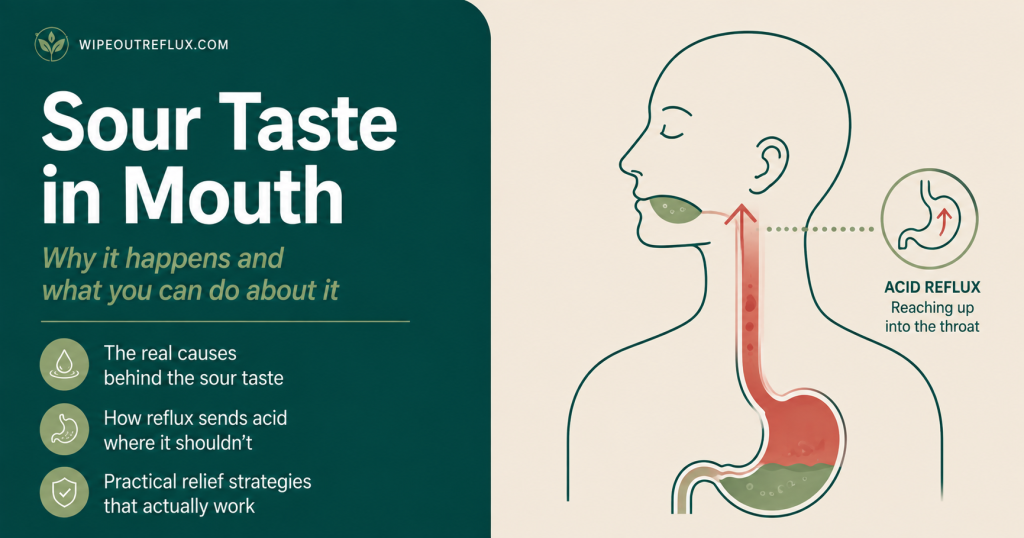
A persistent sour taste in the mouth is one of the most common giveaways of acid reflux — and often one of the first signs people notice before they ever connect it to their gut. When stomach contents travel back up, the acid can reach the back of the throat and mouth, leaving a distinctly sour, acidic or tangy taste behind. Sometimes it arrives with obvious heartburn; just as often, especially with silent reflux, the sour taste turns up on its own with no burning at all.
Reflux causes the sour taste in a few different ways — through outright acid regurgitation, through a reflex flood of saliva called water brash, and through silent reflux depositing acid and pepsin in the throat where it lingers. But a sour taste isn’t always reflux, so it’s worth knowing the other possibilities too, and the handful of situations where it’s worth getting checked.
Here’s why reflux leaves a sour taste in your mouth, the different mechanisms behind it, what else can cause it, and how to get rid of it.
Key Takeaways
- A sour taste in the mouth is a classic sign of acid reflux — caused by stomach acid reaching the back of the throat and mouth.
- Regurgitation (acid or contents rising into the mouth or throat) is a cardinal symptom of reflux and the most direct cause of the sour taste.
- Water brash — a sudden flood of saliva triggered by acid in the oesophagus — can fill the mouth with sour or bitter fluid.
- Silent reflux (LPR) often causes a lingering sour or acidic taste with no heartburn, frequently worse in the morning, and treating the reflux improves it.
- Not every sour taste is reflux — dental problems, dry mouth, dehydration, certain medications, smoking and pregnancy can all contribute.
- See a doctor if it’s persistent, comes with swallowing trouble, weight loss, or dental erosion — otherwise, calming the reflux usually clears it.
Why reflux leaves a sour taste
The most direct cause is regurgitation, and it’s worth understanding because it’s one of the two defining symptoms of reflux. Regurgitation is the effortless flow of stomach contents back up into the throat or mouth — not forceful like vomiting, but a quiet rising of acidic material. Along with heartburn, it’s recognised as a cardinal symptom of GERD [Young et al., Cleveland Clinic Journal of Medicine, 2020]. When that acidic refluxate reaches your mouth, the taste it leaves is sour — sometimes sharply acidic, sometimes bitter if bile is involved.
What makes it confusing is that regurgitation doesn’t always announce itself. You might not feel anything travel up; you simply notice a sour taste appear, particularly after meals, when bending over, or when lying down. That’s still reflux — the acid has reached your mouth even if you didn’t feel it move. If a sour or metallic edge is more prominent than a purely acidic one, that overlaps with the bitter or metallic taste of silent reflux.
Water brash: the sour flood of saliva
There’s a second, distinct mechanism that catches people off guard, and it’s called water brash. This is when your mouth suddenly fills with saliva — often tasting sour — seemingly out of nowhere. It’s not the acid itself; it’s your body’s reflex response to acid in the oesophagus. When acid irritates the lower oesophagus, it triggers the salivary glands to pump out a rush of saliva, as a kind of built-in defence to help neutralise and wash the acid down.
This salivary reflex to oesophageal acid was demonstrated decades ago, and it’s more pronounced in people with reflux [Helm et al., Gastroenterology, 1987]. The result can be a mouthful of sour or salty fluid that appears suddenly, sometimes with a little burning behind it. It’s harmless in itself, and actually a protective response, but it’s a strong clue that reflux is at work — I go into it more in the piece on acid reflux and excess saliva and on water brash and regurgitation.
Silent reflux and the lingering sour taste
If your sour taste has no heartburn attached and often shows up in the morning, silent reflux is a likely explanation. In LPR, acid and the stomach enzyme pepsin travel all the way up past the oesophagus to the throat and mouth, where they linger on the sensitive tissue. Because there’s no burning in the chest, the taste can be the main — or only — symptom you notice.
The morning timing is a particular tell. Reflux tends to be worse overnight when you’re lying flat and swallowing less, so acid pools in the throat while you sleep and you wake with a sour or acidic taste — part of the reason reflux often feels worse in the morning. Pepsin is central to this, because it clings to throat tissue and stays capable of reactivating, which is why understanding what pepsin is helps make sense of a taste that won’t shift. Reassuringly, when reflux is the cause, treating it helps: a controlled study in LPR patients found that reducing the reflux improved taste disturbance, including the perception of sour tastes [Suzuki et al., Tohoku Journal of Experimental Medicine, 2019].
What else can cause a sour taste
Reflux is the leading cause, but it’s worth knowing it isn’t the only one, so you’re not missing something else. A sour or altered taste can also come from:
- Dental and gum problems. Tooth decay, gum disease and poor oral hygiene can produce a persistent sour or off taste — and reflux can worsen dental issues too, as I cover in acid reflux and teeth erosion.
- Dry mouth. Reduced saliva concentrates tastes and lets acids linger, which is why a dry mouth often tastes sour or stale.
- Medications. Many drugs alter taste as a side effect, leaving a sour, bitter or metallic note.
- Dehydration and smoking. Both change the mouth’s chemistry and can sour the taste.
- Pregnancy. Hormonal changes commonly alter taste and also increase reflux, so the two often combine.
- Infections. Sinus, throat or oral infections can temporarily change how things taste.
The distinguishing feature of reflux-related sour taste is its pattern: worse after meals, when lying down or bending, or first thing in the morning, and often alongside other reflux clues like throat clearing, a lump sensation or excess saliva.
When to see a doctor
A sour taste on its own is rarely serious, but a few situations deserve a proper look. See a doctor if the taste is persistent and not improving with basic reflux measures, or if it comes with difficulty or pain on swallowing, unintended weight loss, frequent regurgitation of food, or signs of dental erosion. Persistent reflux reaching the mouth can damage teeth over time, so it’s worth mentioning to your dentist as well as your doctor. And any new, persistent taste change that doesn’t fit an obvious cause is reasonable to have checked.
How to get rid of a reflux sour taste
When reflux is the driver, the fix is to reduce how much acid reaches your throat and mouth in the first place. The most effective measures target the reflux itself, but a few also help clear acid faster:
- Reduce reflux at the source. Fewer reflux events mean less acid reaching your mouth — the foundation of any silent reflux treatment plan, and the thing that makes the biggest difference.
- Protect your nights. Since the taste is often worst in the morning, keeping acid down overnight — not eating late, and raising the head of the bed — pays off directly.
- Stimulate saliva. Saliva neutralises and clears acid, so chewing sugar-free gum after meals can help wash the sour taste away and buffer the acid.
- Stay hydrated and keep your mouth clean. Good hydration and oral hygiene stop other causes stacking on top of the reflux.
- Rinse, don’t brush, right after acid. If acid has reached your mouth, rinse with water and wait before brushing, to avoid scrubbing acid-softened enamel.
Conclusion
A sour taste in the mouth is most often your body telling you acid is getting somewhere it shouldn’t — through regurgitation, through the reflex saliva of water brash, or through silent reflux settling in your throat overnight. It’s usually harmless in itself and tends to clear once the reflux behind it is under control, though it’s worth ruling out dental causes and getting persistent or worsening cases checked. The pattern — worse after meals, lying down, or in the morning — is the clue that points back to reflux.
Since reflux is the usual cause, that’s where lasting relief comes from, and it starts with what you eat and drink. The Wipeout Diet Plan is the complete, step-by-step method I built to calm reflux at its source; it was designed first and foremost around LPR — the silent, throat-based form that so often leaves a sour taste with no heartburn — but because it works on the same underlying reflux mechanisms it’s just as effective for GERD, heartburn and classic acid reflux. Cut down the acid reaching your throat and mouth, and the sour taste fades with it. The Wipeout Food Reference Guide is the essential companion, showing which foods and drinks are safe for reflux and LPR and their pH values, so you can strip out the triggers keeping acid in your mouth. Settle the reflux, protect your nights, and a persistent sour taste usually clears for good.
Frequently Asked Questions
Why do I have a sour taste in my mouth?
The most common cause is acid reflux — stomach acid travelling back up to the throat and mouth, leaving a sour or acidic taste. It can happen through regurgitation, through a reflex flood of saliva (water brash), or through silent reflux settling in the throat overnight. Dental problems, dry mouth, medications, dehydration and pregnancy can also cause it.
Can acid reflux cause a sour taste without heartburn?
Yes — this is very typical of silent reflux (LPR), where acid and pepsin reach the throat and mouth without causing the chest burning of classic reflux. The sour taste, often worse in the morning, may be the main symptom you notice. Treating the reflux has been shown to improve the taste disturbance in LPR.
What is water brash?
Water brash is a sudden flood of saliva in the mouth, often tasting sour or salty, triggered by acid irritating the oesophagus. It’s a reflex defence — your salivary glands pump out saliva to help neutralise and clear the acid. It’s harmless in itself but a strong sign that reflux is present, and it tends to settle when the reflux is treated.
Why is the sour taste worse in the morning?
Because reflux is usually worst overnight. Lying flat removes gravity’s help, and you swallow less while asleep, so acid pools in the throat and mouth through the night and you wake with a sour taste. Not eating late and raising the head of your bed both reduce overnight reflux and this morning taste.
How do I get rid of a sour taste from reflux?
Reduce the reflux itself with a reflux-friendly diet and habits, protect your nights by not eating late and elevating the head of the bed, and stimulate saliva with sugar-free gum to help clear acid. Stay hydrated and keep good oral hygiene so other causes don’t add to it. If it persists or comes with swallowing trouble or weight loss, see a doctor.
Research & References
- Review of GERD identifying heartburn and regurgitation as the typical (cardinal) symptoms of the condition, with regurgitation being the flow of refluxed stomach contents toward the mouth — the most direct cause of a sour taste [Young et al., Cleveland Clinic Journal of Medicine, 2020].
- Study of the salivary response to acid in the oesophagus in normal subjects and reflux patients, demonstrating that oesophageal acid triggers increased salivation — the reflex behind water brash and the sour flood of saliva it produces [Helm et al., Gastroenterology, 1987].
- Randomised controlled study in patients with laryngopharyngeal reflux, finding that proton pump inhibitor treatment improved taste disturbance — including perception of sour taste — indicating that reducing reflux helps resolve a reflux-related sour taste [Suzuki et al., Tohoku Journal of Experimental Medicine, 2019].

David Gray
12 years living with LPR · Consultant & researcher
I've lived with LPR for twelve years — the misdiagnoses, the PPI courses that did nothing, the slow work of figuring out what actually helps. Wipeout Reflux is where I translate the research into plain terms for people stuck in the same place. Every claim here is sourced to peer-reviewed work, and I consult one-to-one with LPR sufferers.