
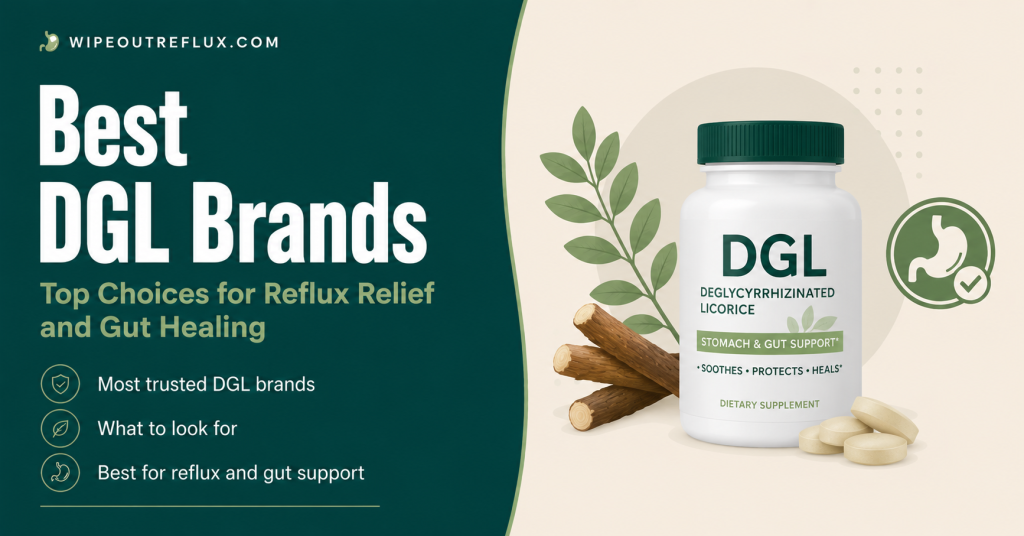
If you’re shopping for a DGL supplement for reflux, two things separate a good one from a waste of money: it should be a genuine chewable (the traditional form that coats the throat and mixes with saliva), and ideally it should use a standardised, clinically studied extract rather than generic licorice powder. Get those right and DGL is one of the more sensible soothing supplements to try.
On that basis, my top pick for most people is Natural Factors DGL 400 mg Chewable — a well-made, widely trusted chewable at a fair price. If you want the exact extract used in the reflux research, Nature’s Way DGL Ultra uses the studied GutGard extract, and NOW DGL with Aloe Vera is the value capsule option.
Below I’ll explain what DGL is, what the evidence does and doesn’t show, what to look for on the label, and my full picks — with the honest caveats.
Key Takeaways
- DGL is licorice with the glycyrrhizin removed, so it keeps the soothing benefits without raising blood pressure or lowering potassium the way ordinary licorice can.
- The traditional reflux form is a chewable taken before meals, so it mixes with saliva and coats the throat and gullet.
- Best overall: Natural Factors DGL 400 mg Chewable — trusted brand, good value, classic form.
- Best clinically studied extract: Nature’s Way DGL Ultra, which uses the GutGard extract from the trials.
- The strongest evidence is for functional dyspepsia and H. pylori, with newer trial data pointing to reflux symptom relief — promising but still modest.
- Look for a real DGL (glycyrrhizin under ~3%), a chewable form for reflux, and ideally a standardised extract.
- DGL is generally well tolerated, but it’s a supplement to try alongside the real work of diet and lifestyle, not a standalone fix.
What DGL actually is
DGL stands for deglycyrrhizinated licorice — licorice root with one specific compound, glycyrrhizin, stripped out. That matters. Glycyrrhizin is the part of ordinary licorice that, taken regularly, can raise blood pressure and drop your potassium, which is why you shouldn’t manage reflux with licorice sweets. Remove it, and you’re left with the flavonoids and other compounds thought to do the soothing, without that risk. So DGL is the form that lets you use licorice’s gut-soothing reputation safely over time.
The proposed mechanism is appealing for reflux: rather than suppressing acid like a PPI, DGL is thought to support the stomach and gullet’s own mucous defences — encouraging the protective mucus layer that shields the lining. That’s a different, gentler approach, and it’s why DGL sits alongside things like slippery elm and zinc carnosine in the mucosal-support category. I cover where it fits in the bigger picture in DGL for acid reflux and LPR and in my roundup of supplements for LPR.
What the evidence shows (and doesn’t)
I want to be straight about this, because DGL is often oversold. The best evidence isn’t actually for reflux — it’s for related upper-gut problems, though newer data is closing that gap.
A specific standardised extract called GutGard has the most research behind it. In a randomised, double-blind, placebo-controlled trial, it significantly reduced the symptoms of functional dyspepsia — the indigestion-type discomfort that often overlaps with reflux Raveendra et al., Evidence-Based Complementary and Alternative Medicine, 2012. And more directly relevant, a 2025 Phase III randomised placebo-controlled trial found the same extract improved gastro-oesophageal reflux symptoms compared with placebo Complementary Medicine Research, 2025. Licorice compounds have also shown activity against H. pylori, the ulcer bacterium.
The honest summary: the evidence is genuine but still modest, mostly built around one branded extract, and DGL is best thought of as a reasonable soothing adjunct to try — not a proven reflux treatment on the level of the core dietary work. That framing actually helps you shop, because it points you towards products using the studied extract.
What to look for in a DGL supplement
- A genuine DGL. The label should say deglycyrrhizinated, with glycyrrhizin reduced to under about 3% — that’s what makes it safe for regular use.
- Chewable form for reflux. The traditional approach is to chew it 15–20 minutes before meals so it mixes with saliva and coats the throat and gullet. Capsules are fine for general gut support but don’t give that coating.
- A standardised extract such as GutGard if you want the form with trial data behind it.
- A clean label — minimal sugar and additives, and a flavour you’ll actually tolerate chewing daily.
- A trusted manufacturer with third-party testing, since supplement quality varies a lot.
Best DGL supplements for reflux
My picks below cover the main forms and budgets. Exact prices and pack sizes change, so check the current listing on Amazon.
Natural Factors DGL 400 mg Chewable — best overall
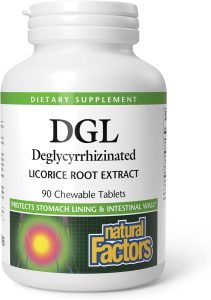
This is the easy recommendation for most people: a straightforward 400 mg DGL chewable from a reputable, third-party-tested brand, at a sensible price and in the traditional pre-meal chewable form. It’s non-GMO and gluten-free, comes in 90- and 180-tablet sizes, and does exactly what a DGL should without gimmicks. If you just want one solid DGL to try, start here.
Nature’s Way DGL Ultra — best clinically studied extract
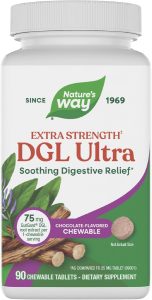
DGL Ultra uses GutGard — the standardised extract behind the dyspepsia and reflux trials mentioned above — so if you want the version most closely matching the research, this is it. It’s a pleasant chocolate-flavoured chewable, which makes the pre-meal routine easier to stick to. The one trade-off is that the studied extract sits in a lower milligram serving than plain-powder DGLs, so don’t compare it on raw milligrams alone; the point is the standardisation.
NOW Foods DGL with Aloe Vera — best value (capsule)
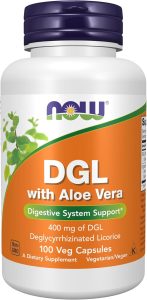
NOW is the reliable budget name in supplements, and this pairs DGL with aloe vera, another traditional gut-soother. It’s a capsule rather than a chewable, so it’s better suited to general stomach support than to coating the throat — a good pick if your symptoms are more stomach-and-heartburn than throat-based, or if you simply can’t stand chewing tablets. Excellent value per serving.
Enzymatic Therapy DGL Original Chewables — best traditional chewable
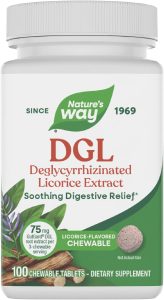
One of the longest-standing DGL chewables on the market, and a favourite of practitioners who’ve used it for years. It’s a no-frills, original-flavour chewable for people who want the classic product without added sweeteners or chocolate. If you like the idea of the tried-and-tested option, this is it.
Best Naturals DGL Chewable 380 mg — best for buying in bulk
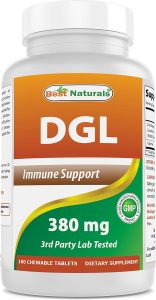
If you’ve already tried DGL, know it agrees with you, and want to keep the cost per tablet down, this 180-count chewable is a practical, economical way to stock up. It’s a plain-powder DGL rather than a standardised extract, so treat it as the everyday workhorse option rather than the research-grade one.
How to take DGL for reflux
The traditional method is to chew one or two tablets about 15 to 20 minutes before meals, and again before bed if night-time symptoms are an issue — letting it mix thoroughly with saliva so it can coat the throat and gullet on the way down. Chewables are designed for exactly this; swallowing them whole defeats the point.
Give it a fair trial of a few weeks, and use it as one part of a wider approach rather than the whole plan. Even though DGL removes the risky compound in licorice, it’s still sensible not to megadose it indefinitely, and to check with a pharmacist if you’re pregnant, on blood-pressure medication, or managing a heart or kidney condition. And remember it’s a soother, not a root-cause fix — it works best paired with the dietary changes that actually reduce reflux episodes.
Conclusion
The best DGL supplement for reflux is a genuine chewable from a trusted brand — and for most people that’s Natural Factors DGL 400 mg, with Nature’s Way DGL Ultra the pick if you want the GutGard extract that the research is built on, and NOW DGL with Aloe Vera the value capsule choice. Look for a real deglycyrrhizinated product, take it in chewable form before meals, and keep your expectations realistic: the evidence is promising but modest, and DGL earns its place as a gentle soother alongside the main work, not as a cure.
Because that main work is dietary, a supplement will only ever get you part of the way. The Wipeout Food Reference Guide is the essential reference for which foods and drinks are safe for acid reflux and LPR, with their pH values laid out — the foundation a soother like DGL sits on top of.
And if you want the complete, structured method rather than a shelf of supplements, the Wipeout Diet Plan is the in-depth system for actually calming reflux at the source. I built it first and foremost around LPR — the stubborn, throat-based form that responds worst to medication — but because it works on the same underlying reflux mechanisms, it’s just as effective for GERD, heartburn and everyday acid reflux. DGL can soothe while the plan does the real healing.
Frequently Asked Questions
What is the best DGL supplement for acid reflux?
For most people, Natural Factors DGL 400 mg Chewable is the best all-round choice — a trusted, well-priced chewable in the traditional pre-meal form. If you want the extract with the most research behind it, Nature’s Way DGL Ultra uses the studied GutGard extract, and NOW DGL with Aloe Vera is the best-value capsule option.
Is DGL better as a chewable or a capsule?
For reflux, chewable is the traditional and preferred form. Chewing it before meals lets it mix with saliva and coat the throat and gullet, which is thought to be part of how it soothes. Capsules are fine for general stomach support but don’t provide that coating, so they suit stomach-based symptoms more than throat-based ones.
Does DGL actually work for reflux?
The evidence is promising but modest. The strongest trials are for functional dyspepsia and use a standardised extract, with newer 2025 trial data pointing to improvement in reflux symptoms too. DGL is best viewed as a reasonable soothing supplement to try alongside diet and lifestyle changes, not as a proven standalone treatment.
Is DGL safe to take long term?
DGL is generally well tolerated because the glycyrrhizin — the compound in ordinary licorice that can raise blood pressure and lower potassium — has been removed. It’s still sensible not to take very high doses indefinitely, and to check with a pharmacist first if you’re pregnant or managing blood pressure, heart or kidney conditions.
When should I take DGL?
Chew one or two tablets about 15 to 20 minutes before meals, and before bed if you get night-time symptoms, so it coats the throat and gullet ahead of eating or lying down. Give it a few weeks’ consistent trial to judge whether it helps you.
Research & References
- A randomised, double-blind, placebo-controlled trial found that a standardised deglycyrrhizinated Glycyrrhiza glabra extract (GutGard) significantly reduced the symptoms of functional dyspepsia compared with placebo over 30 days Raveendra et al., Evidence-Based Complementary and Alternative Medicine, 2012.
- A 2025 Phase III, double-blind, randomised placebo-controlled trial reported that the same standardised licorice extract improved gastro-oesophageal reflux-related symptoms versus placebo Complementary Medicine Research, 2025.

David Gray
12 years living with LPR · Consultant & researcher
I've lived with LPR for twelve years — the misdiagnoses, the PPI courses that did nothing, the slow work of figuring out what actually helps. Wipeout Reflux is where I translate the research into plain terms for people stuck in the same place. Every claim here is sourced to peer-reviewed work, and I consult one-to-one with LPR sufferers.