
Before you buy digestive enzymes for reflux, one honest point will save you money and grief: enzymes are not a direct reflux treatment. They won’t switch off acid or heal your throat. What they can do — and it matters — is help you digest meals more completely, which cuts the bloating and gas that raise abdominal pressure and push stomach contents up in the first place. That pressure route is the real reason enzymes sometimes help reflux.
The other thing to know: for reflux, you generally want a plant-based, HCl-free enzyme blend. Many “digestive” formulas add betaine hydrochloric acid, which can make acid-sensitive reflux worse rather than better. So my top pick for most people is Pure Encapsulations Digestive Enzymes Ultra — comprehensive, hypoallergenic and HCl-free.
Below I’ll explain what enzymes realistically do for reflux, who they suit, the HCl trap to avoid, and my full picks by purpose.
Key Takeaways
- Digestive enzymes help reflux indirectly — by improving digestion and reducing gas and bloating, which lowers the abdominal pressure that drives reflux.
- For reflux, choose a plant-based, HCl-free blend. Avoid products with added betaine HCl unless low stomach acid is genuinely your issue, as HCl can worsen acid-sensitive reflux.
- Best overall: Pure Encapsulations Digestive Enzymes Ultra — comprehensive, HCl-free, hypoallergenic.
- Best high-potency: Enzymedica Digest Gold. Best value with probiotics: Zenwise Digestive Enzymes.
- Trial evidence is strongest for functional dyspepsia and bloating, not reflux itself — so treat enzymes as a targeted tool, not a cure.
- They’re most useful if you get bloating, fullness, or discomfort after fatty or heavy meals, or after gallbladder removal.
- Enzymes work best alongside the real fix for reflux: eating pattern, portion size and timing.
What digestive enzymes actually do for reflux
Your pancreas and gut already make enzymes that break food into absorbable pieces — proteases for protein, amylase for carbohydrate, lipase for fat. Supplemental enzymes top that up. For reflux, the logic isn’t about acid at all; it’s about pressure.
When food sits undigested, it ferments and produces gas, and it slows stomach emptying. Both increase the pressure inside your abdomen, and that pressure pushes against the valve at the top of the stomach — the mechanism behind so much reflux, and the reason a big or fatty meal so reliably triggers symptoms. Anything that helps a meal digest and move on more efficiently eases that pressure. It’s the same pressure story I describe in acid reflux and gas and does overeating cause acid reflux.
So enzymes don’t treat reflux directly — they chip away at one of its drivers. That’s a modest, sensible benefit, and it tells you who they’ll help most: people whose reflux comes with bloating, heaviness and slow digestion rather than pure acid burn. I go deeper on the mechanism in digestive enzymes for acid reflux.
The HCl trap: what to avoid for reflux
This is the single most important thing to get right, because it’s where reflux sufferers go wrong. Many popular “digestive” supplements include betaine hydrochloride (HCl) — added stomach acid — on the theory that a lot of indigestion is caused by too little acid. For some people with genuinely low stomach acid that can help, but if your problem is acid-sensitive reflux or LPR, adding HCl can make the burn worse.
The low-stomach-acid idea is more nuanced than the supplement marketing suggests — I’ve weighed the evidence in does low stomach acid cause acid reflux and looked specifically at betaine HCl for acid reflux. The practical rule: for reflux, start with a plain plant-based enzyme blend with no added HCl. Only consider an HCl-containing product if you’ve established that low acid is your issue, ideally with guidance.
What the evidence shows
Let me keep this honest. There’s little direct trial evidence that enzymes treat reflux. The better evidence is for the neighbouring problem of functional dyspepsia — the fullness, bloating and upper-gut discomfort that so often overlaps with reflux. In a randomised, double-blind, placebo-controlled trial, a multi-enzyme complex significantly improved dyspepsia symptoms compared with placebo Majeed et al., Journal of Medicinal Food, 2018. Targeted enzymes have clearer evidence still for specific jobs — lactase for lactose, and alpha-galactosidase for the gas from beans and certain vegetables.
The fair summary: enzymes are a reasonable tool for the bloating-and-fullness side of reflux, best supported for dyspepsia rather than reflux itself. Match the enzyme to the problem and keep expectations realistic.
Best digestive enzymes for reflux
My picks are grouped by what you need. Formulas and pack sizes change, so check the current label on Amazon — and always scan the ingredients for betaine HCl if you’re acid-sensitive.
Pure Encapsulations Digestive Enzymes Ultra — best overall
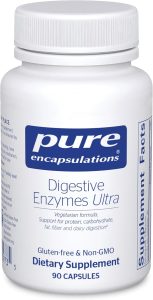
This is the easy recommendation for reflux: a comprehensive, vegetarian, HCl-free blend covering protein, carbohydrate, fibre and dairy, from a hypoallergenic brand with a strong reputation for clean formulation and third-party testing. No betaine HCl, minimal excipients, and a broad enough enzyme range to help most meals. If you just want one reliable, reflux-friendly enzyme, start here.
Enzymedica Digest Gold — best high-potency plant-based
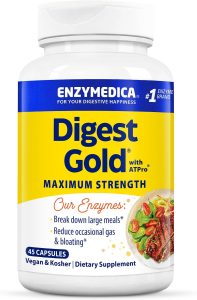
Enzymedica is a specialist enzyme brand, and Digest Gold is its flagship: a strong, plant-based, HCl-free formula aimed at heavier meals. If a basic blend isn’t touching your post-meal fullness, the higher potency here is the logical step up. It’s pricier per capsule, but you’re paying for enzyme strength rather than filler.
Zenwise Digestive Enzymes — best value (with probiotics)
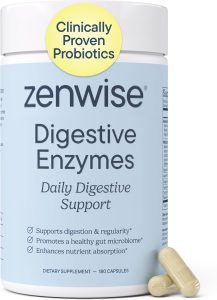
A hugely popular, well-priced everyday blend that pairs plant enzymes with prebiotics and probiotics, aimed squarely at gas and bloating — the pressure side of reflux. The big count and low cost per serving make it the value pick for daily use. It’s HCl-free and gentle, though it does include bromelain and papain (fruit proteases), which a small number of very sensitive people prefer to avoid.
Bean-Zyme Alpha-Galactosidase — best targeted for gas from beans and veg
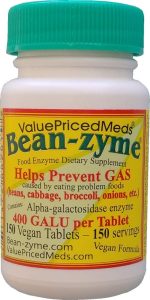
If your bloating is driven specifically by beans, lentils, cabbage, broccoli and other high-fibre vegetables, this is the precise tool — alpha-galactosidase (the enzyme in Beano) breaks down the particular carbohydrates that ferment into gas. It’s a generic, low-cost version of the branded product. Especially handy if you’re eating more plants or following a low-FODMAP approach and want to reintroduce these foods without the gas-and-pressure penalty.
NOW Super Enzymes — best for fatty meals and low stomach acid (with a caveat)
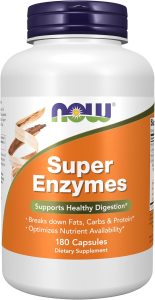
A strong, comprehensive formula with pancreatin, ox bile and bromelain — the ox bile makes it a good option if fat digestion is your weak spot, for instance after gallbladder removal. The important caveat for this site: it also contains betaine HCl, so it’s the one product here I’d approach carefully if you have acid-sensitive reflux or LPR. Consider it if low stomach acid or fat malabsorption is genuinely your issue — otherwise stick to the HCl-free picks above.
How to use digestive enzymes for reflux
- Take them with meals — usually at the start of eating — so they’re present as food arrives. Follow the label dose.
- Match the enzyme to the meal. A broad blend for mixed meals; alpha-galactosidase for beans and veg; lactase if dairy is your trigger.
- Check for HCl if you’re acid-sensitive, and skip products that contain it unless low acid is confirmed.
- Focus them on your worst meals — the big, fatty or late ones — rather than every bite.
- Judge by bloating and fullness, not by heartburn. If enzymes help your reflux, it’ll be through feeling lighter and less pressured after eating.
If your main issue is a stomach that empties slowly, enzymes are only part of the answer — there’s more on that in gastroparesis and acid reflux. And enzymes sit within a wider toolkit; see my roundup of supplements for LPR.
Conclusion
The best digestive enzymes for reflux are plant-based, HCl-free blends that help you digest meals more completely and take the bloating-and-pressure edge off — and for most people that’s Pure Encapsulations Digestive Enzymes Ultra, with Enzymedica Digest Gold as the high-potency step-up and Zenwise the value option. Add a targeted enzyme like alpha-galactosidase for specific gassy foods, and approach HCl-containing formulas cautiously unless low stomach acid is truly your problem. Keep the framing right: enzymes ease a driver of reflux, they don’t cure it.
Because the driver they don’t touch is the acid itself, enzymes only work as part of a bigger plan. The Wipeout Food Reference Guide is the essential reference for which foods and drinks are safe for acid reflux and LPR, with their pH values laid out — the foundation an enzyme sits on top of.
And if you want to actually calm reflux at the source rather than manage it meal by meal, the Wipeout Diet Plan is the complete, in-depth system — it tackles the portion, timing and food choices that drive the pressure enzymes only partly relieve. I built it first and foremost around LPR, the stubborn throat-based form that responds worst to medication, but because it works on the same underlying reflux mechanisms it’s just as effective for GERD, heartburn and everyday acid reflux.
Frequently Asked Questions
Do digestive enzymes help acid reflux?
Indirectly. Enzymes don’t reduce acid or heal the throat, but by helping meals digest more completely they can cut the gas, bloating and fullness that raise abdominal pressure and drive reflux. They help most when your reflux comes with heaviness and bloating rather than pure acid burn, and the trial evidence is strongest for functional dyspepsia rather than reflux itself.
Which digestive enzymes are best for reflux?
A plant-based, HCl-free blend is best for reflux. Pure Encapsulations Digestive Enzymes Ultra is a good comprehensive choice, Enzymedica Digest Gold is the high-potency option, and Zenwise is the value pick with added probiotics. Avoid formulas containing betaine HCl unless you’ve established that low stomach acid is your issue.
Can digestive enzymes make reflux worse?
They can if they contain betaine hydrochloride (HCl), which adds stomach acid and may aggravate acid-sensitive reflux or LPR. Plain plant-based enzyme blends without HCl are much less likely to cause problems. Always check the ingredient list, and start with a low dose to see how you respond.
When should I take digestive enzymes?
Take them with meals, typically right at the start of eating, so the enzymes are present as food enters the stomach. Follow the dose on the label, and focus them on your heaviest, fattiest or largest meals, where the digestive benefit — and the reduction in pressure — matters most.
Are digestive enzymes or probiotics better for bloating and reflux?
They target different things and can be complementary. Enzymes help break food down at the point of eating; probiotics support the gut microbiome over time. Some products, like Zenwise, combine both. For reflux-related bloating, an HCl-free enzyme blend is a sensible starting point, with probiotics as a longer-term addition.
Research & References
- A randomised, double-blind, placebo-controlled trial found that a multi-enzyme complex significantly improved the symptoms of functional dyspepsia — bloating, fullness and upper-gut discomfort — compared with placebo Majeed et al., Journal of Medicinal Food, 2018.

David Gray
12 years living with LPR · Consultant & researcher
I've lived with LPR for twelve years — the misdiagnoses, the PPI courses that did nothing, the slow work of figuring out what actually helps. Wipeout Reflux is where I translate the research into plain terms for people stuck in the same place. Every claim here is sourced to peer-reviewed work, and I consult one-to-one with LPR sufferers.