
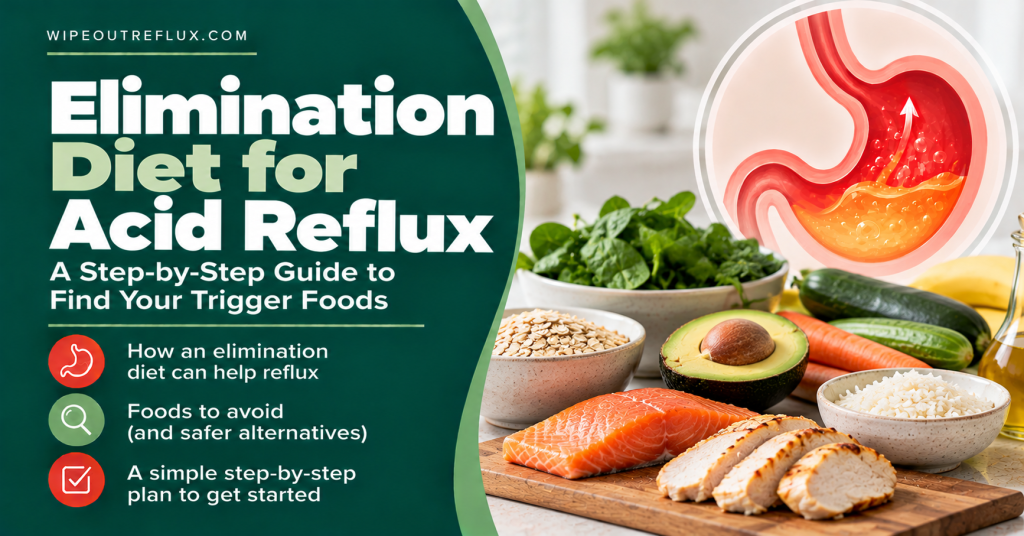
An elimination diet for acid reflux works in two phases. First, you remove the most common reflux triggers for 2 to 4 weeks, until your symptoms settle. Then you bring foods back one at a time, a few days apart, and watch what happens. The goal isn’t to live on a short list of “safe” foods forever. It’s to find out which foods you react to, so you can avoid only those and eat everything else.
That second phase is the one most people skip, and it’s what makes the diet work. Reflux triggers vary a lot from person to person. One person’s coffee is another person’s tomato sauce, and a generic “foods to avoid” list will always cut out things you could happily eat. A structured eliminate-then-reintroduce approach replaces guesswork with your own data.
Key Takeaways
- A reflux elimination diet has two phases: remove common triggers for 2 to 4 weeks, then reintroduce them one at a time.
- The reintroduction phase is what identifies your personal triggers. Skipping it leaves you on a needlessly restricted diet.
- Common triggers work in different ways. Fat, chocolate, peppermint, caffeine and alcohol relax the lower esophageal sphincter. Coffee stimulates acid. Citrus, tomatoes and fizzy drinks add acid directly. Onions and beans add gas.
- How much you eat matters as well as what you eat. Large, high-calorie meals increase acid exposure, even in healthy people.
- For silent reflux (LPR), a stricter low-acid version helps, because acidic food can reactivate pepsin in the throat.
- Evidence for diet in reflux is growing. Low-acid, plant-based and low-sugar diets have all improved symptoms in studies, but trials of elimination diets themselves are still limited.
- Reintroduce one food every 3 days, starting with a small portion, and keep everything else steady.
- Don’t over-restrict. Cutting out too much for too long can cause weight loss and makes the diet hard to keep up.
What Is an Elimination Diet for Acid Reflux?
An elimination diet is a structured experiment. You take out the foods most likely to cause your symptoms and give your esophagus, and your throat if you have LPR, time to calm down. Then you test foods one by one. If a food brings symptoms back, it’s a trigger for you. If it doesn’t, it goes back on the menu.
It’s worth being clear about what this is not. It isn’t an allergy elimination diet like the six-food elimination diet used for eosinophilic esophagitis (EoE), which removes milk, wheat, soy, eggs, nuts and seafood because they drive an immune reaction. Reflux triggers mostly act on mechanics: the valve at the bottom of your esophagus, how much acid your stomach makes, and how acidic the food is.
The EoE research is still a useful proof of concept, though. In a large group of adults who completed the six-food diet followed by structured reintroduction, most had only one or two foods that were actually causing the problem. Milk, wheat and soy were the most common [Zalewski et al., American Journal of Gastroenterology, 2022]. In other words, a broad elimination followed by careful reintroduction usually narrows things down to a short list. That’s the same idea we’re applying to reflux.
Does an Elimination Diet Work for Reflux? What the Evidence Says
I’ll be honest about the research, because this is where most diet articles overpromise.
A widely cited 2006 review concluded that only weight loss and raising the head of the bed had good evidence for GERD. It found physiological evidence that chocolate, high-fat meals, tobacco and alcohol lower the pressure of the lower esophageal sphincter (LES), but no published trials showing that cutting them out improved symptoms [Kaltenbach et al., Archives of Internal Medicine, 2006].
The picture has improved since then:
- Low-acid diet for LPR. In a small study of people whose silent reflux hadn’t responded to medication, a strict low-acid diet, with no foods or drinks below pH 5 for at least two weeks, improved symptoms in 19 of 20 [Koufman, Annals of Otology, Rhinology & Laryngology, 2011]. This is the basis of the Koufman diet.
- Diet vs PPIs for LPR. In 184 people with LPR, a plant-based, Mediterranean-style diet with alkaline water and standard reflux precautions lowered Reflux Symptom Index scores by 39.8%, compared with 27.2% for PPIs [Zalvan et al., JAMA Otolaryngology–Head & Neck Surgery, 2017].
- Cutting sugar for GERD. In a 9-week randomized trial of 98 people with GERD, cutting simple sugars improved acid exposure on pH monitoring as well as heartburn, regurgitation and sleep [Gu et al., American Journal of Gastroenterology, 2022].
A 2019 review summed it up well. Elimination of food groups is common practice for reflux, but the evidence supports broader changes too: less sugar, more fiber and better eating habits [Newberry and Lynch, Journal of Thoracic Disease, 2019]. That’s why a good elimination diet changes how you eat as well as what you eat.
Why Certain Foods Trigger Reflux
Understanding the mechanism makes the elimination phase much easier to follow, because you can see why each food is on the list. Triggers fall into a few groups.
Foods that relax the valve
The lower esophageal sphincter is the muscular valve that keeps stomach contents down. Fatty meals, chocolate, peppermint, alcohol and caffeine can all lower its pressure, making it easier for stomach contents to escape upward. See caffeine and acid reflux and is peppermint tea good for acid reflux.
Foods that add acid
Citrus fruit and juice, tomatoes, vinegar and most fizzy drinks bring their own acid with them. In a survey of nearly 400 people with heartburn, the more acidic a citrus drink was, the more heartburn people reported from it [Feldman and Barnett, Gastroenterology, 1995]. You can check individual foods on my food pH chart.
Foods that stimulate acid
Coffee increases stomach acid production, and decaf does too, because the compounds responsible aren’t only caffeine. Interestingly, a meta-analysis of 15 studies found no overall link between coffee intake and GERD [Kim et al., Diseases of the Esophagus, 2014]. That’s exactly why testing matters. Coffee is a strong trigger for some people and makes no difference to others. See is coffee bad for acid reflux.
Foods that cause gas and pressure
Raw onion is one of the best-documented triggers. In a pH-monitoring study, adding a slice to a hamburger made no difference in people without reflux but significantly increased reflux and heartburn in people who already had it [Allen et al., American Journal of Gastroenterology, 1990]. Highly fermentable carbohydrates found in beans, onions, garlic and “prebiotic” fibers also increased LES relaxations and reflux episodes in a controlled study [Piche et al., Gastroenterology, 2003]. If this group turns out to be your main problem, a low-FODMAP diet for acid reflux may suit you better.
The meal itself
This is the trigger nobody puts on a list. In healthy volunteers, a large balanced meal caused as much reflux as an equally large high-fat meal, and much more than a smaller meal. The authors concluded that cutting the calorie load of meals mattered more than cutting fat [Colombo et al., Scandinavian Journal of Gastroenterology, 2002]. Timing matters too. People who went to bed within 3 hours of dinner had more than seven times the odds of GERD compared with those who waited 4 hours or more [Fujiwara et al., American Journal of Gastroenterology, 2005].
So if you eliminate every trigger food but still eat one huge meal at 9pm, you may conclude the diet “doesn’t work” when the real problem was never the food.
Why LPR is different
With silent reflux, the damage in the throat is driven largely by pepsin, a digestive enzyme that can lodge in throat tissue and become active again when it meets acid. Acidic food and drink can reactivate pepsin that is already there, even without a reflux event. That’s why the LPR version of an elimination diet sets a stricter acid threshold. I explain the mechanism in how pepsin reactivates in the throat.
Phase 1: The Elimination Phase (2 to 4 Weeks)
For the elimination phase, remove the common triggers all at once rather than one at a time. If you cut out one food a week, it can take months to get anywhere.
What to remove
- Coffee and other caffeinated drinks, including tea, energy drinks and cola
- Alcohol
- Carbonated drinks, including sparkling water
- Citrus fruit and juices: oranges, grapefruit, lemon, lime, pineapple
- Tomatoes in all forms, including sauces, ketchup and soup
- Chocolate and cocoa
- Peppermint and spearmint, including mint tea and strong mint gum
- Fried and very fatty foods, including fatty cuts of meat, creamy sauces and pastry
- Spicy food, especially chili and hot sauces. See spicy food and acid reflux.
- Raw onion and garlic
- Vinegar and vinegar-based dressings and pickles
- Foods with a lot of added sugar, such as sweets, pastries and sugary drinks
What to build meals around
The elimination phase only works if you’re still eating well. Build meals around:
- Lean protein: chicken, turkey, white fish, salmon and eggs. See is chicken good for acid reflux.
- Gentle starches: oats, rice, potatoes, sweet potatoes, quinoa and wholegrain bread. See are Quaker oats good for acid reflux.
- Cooked vegetables: carrots, green beans, broccoli, zucchini, spinach and squash.
- Low-acid fruit: bananas, melon, pears and sweet apples. See are bananas acidic or alkaline.
- Modest healthy fats: a little olive oil, avocado or nut butter.
- Drinks: water, alkaline water, chamomile tea and plant milks without added acids.
For a full breakdown, see my guides to LPR foods to eat and LPR foods to avoid.
Change how you eat, too
- Eat smaller meals, and more of them if you need to.
- Finish your last meal at least 3 hours before bed. See how long before bed should you stop eating.
- Eat slowly and stop before you’re stuffed.
How long should the elimination phase last?
For heartburn-type GERD, two weeks is often enough to see a clear change. For LPR, give it closer to four weeks. Throat tissue takes longer to settle, and symptoms like throat clearing or a lump sensation fade slowly. See the LPR recovery timeline. Start reintroducing foods once your symptoms have clearly improved and stayed that way for about a week.
If nothing has changed after four weeks of doing this properly, that’s useful information too. Diet may not be your main driver, and it’s worth looking at other factors with a professional.
Phase 2: Reintroduction, Where You Find Your Triggers
This is the part that gives you answers. The rules are simple, but they need patience:
- One food at a time. If you add coffee and tomatoes in the same week and your symptoms come back, you’ve learned nothing.
- Start small, then go normal. Have a small portion on day one. If you’re fine, have a normal portion on day two.
- Wait 3 days before the next food. Reflux reactions aren’t always immediate. Throat symptoms in particular can show up the next day.
- Keep everything else the same. Same meal sizes, same meal times, same sleep. Otherwise you can’t tell what caused a change.
- Write it down. Record what you ate, when, and any symptoms over the following 24 to 48 hours.
- If a food causes symptoms, take it back out. Wait until you’re back to baseline before testing the next one.
The delay between eating and symptoms is the mistake almost everyone makes. I cover it in detail, along with a simple diary format, in how to track your acid reflux triggers.
What order should you reintroduce foods?
Start with the foods you miss most and the ones least likely to cause trouble. Getting a few “wins” early keeps you motivated. A sensible order is:
- Garlic and onion, cooked
- Moderately fatty foods, such as a richer cut of meat or cheese
- Mild spices
- Decaf coffee, then regular coffee, or tea
- Chocolate
- Tomatoes
- Citrus
- Alcohol and fizzy drinks last
Dose matters
Reintroduction results are rarely all-or-nothing. You might handle one coffee with breakfast but not two on an empty stomach. Or a little tomato in a dish but not a bowl of tomato soup. Once you know your triggers, test the amount as well, because that’s what lets you eat normally again.
Phase 3: Your Personal Long-Term Diet
By the end, you should have three groups:
- Fine: foods you can eat freely.
- Limit: foods that are OK in small amounts or at certain times.
- Avoid: clear triggers.
Most people end up with a much shorter “avoid” list than they expected. That’s the point. It’s also worth retesting avoided foods every few months, especially if you have LPR, because tolerance often improves as the throat heals.
Common Mistakes With Reflux Elimination Diets
- Skipping reintroduction. Staying on the elimination list indefinitely is unnecessary and hard to sustain.
- Cutting too much. Reflux can already make eating difficult. Over-restricting can tip you into unwanted weight loss. See acid reflux and weight loss.
- Ignoring portion size and timing. A safe food in a huge late meal can still cause reflux.
- Testing too fast. Reintroducing a new food every day makes the results impossible to read.
- Testing during a flare. If something else has set you off, such as illness or stress, wait until you’re settled. See acid reflux flare-up.
- Swapping one trigger for another. Peppermint tea instead of coffee is a common example. It’s a trigger too.
Want the Elimination Diet Done for You?
Planning two to four weeks of trigger-free meals and then a careful reintroduction is a lot of work. That’s exactly what the Wipeout Diet Plan does for you. It follows this eliminate-then-reintroduce structure. It starts with a stricter healing phase built from a complete safe-food list, with a full two-week meal plan and recipes for breakfast, lunch, dinner, snacks and drinks. Once you’re feeling better, it walks you through bringing foods back gradually toward a normal diet. It also covers the parts that usually get missed: meal size, timing, eating out and shopping.
Conclusion
An elimination diet is the most reliable way to find your own reflux triggers. Remove the common ones for 2 to 4 weeks, eat smaller, earlier meals while you do it, then bring foods back one at a time, three days apart, and write down what happens. The research on single “bad foods” is mixed, which is exactly why a personal test beats a generic list. Low-acid, plant-forward and low-sugar eating all have evidence behind them, and most people find their true trigger list is shorter than they feared.
If you want a structured version you can start tomorrow, the Wipeout Diet Plan is my in-depth, step-by-step program. It has a stricter healing phase with a complete two-week meal plan, then guided reintroduction so you finish with a diet that’s actually yours. It was designed first and foremost around LPR, the harder-to-treat throat form, but because it targets the same underlying reflux mechanisms, it works just as well for GERD and classic heartburn.
If you’d rather build your own elimination list, the Wipeout Food Reference Guide is the essential companion. It covers reflux- and LPR-friendly foods and drinks with their pH values, so you can check what’s safe during each phase.
Frequently Asked Questions
How long should an elimination diet for acid reflux last?
The elimination phase usually lasts 2 weeks for heartburn-type GERD and closer to 4 weeks for LPR. Reintroduction then takes several more weeks, because you test one food every 3 days.
What foods do you eliminate for acid reflux?
The usual list is coffee and caffeine, alcohol, fizzy drinks, citrus, tomatoes, chocolate, mint, fried and fatty foods, spicy food, raw onion and garlic, vinegar and high-sugar foods.
How long after eating a trigger food do reflux symptoms start?
Heartburn can start within an hour. Throat symptoms from LPR, such as hoarseness, throat clearing or mucus, are often delayed until later that day or the next morning. That’s why you should wait 3 days between foods.
Is an elimination diet better than just avoiding trigger foods?
Yes, for most people. A generic avoid list cuts out foods you may tolerate perfectly well. The reintroduction phase shows which ones actually affect you, so your long-term diet is less restrictive.
Can an elimination diet help silent reflux (LPR)?
Yes. A strict low-acid diet improved symptoms in 19 of 20 people with LPR that hadn’t responded to medication. For LPR, keep the elimination phase low-acid and give it closer to 4 weeks.
Should I stop my reflux medication during an elimination diet?
Not without talking to your doctor. Many people do the elimination diet while staying on medication, then reduce it gradually once symptoms are controlled. Stopping PPIs suddenly can cause rebound acid.
What if my symptoms don’t improve on an elimination diet?
If four weeks of careful elimination, smaller meals and no late eating make no difference, food probably isn’t your main driver. Look at other factors such as a hiatal hernia, medications or sleep position, and get your symptoms properly assessed.
Research & References
- Kaltenbach et al., Archives of Internal Medicine, 2006. An evidence-based review found that weight loss and head-of-bed elevation improved GERD, and that chocolate, fat, alcohol and tobacco lowered LES pressure, but there were no trials yet of dietary elimination.
- Koufman, Annals of Otology, Rhinology & Laryngology, 2011. A strict low-acid diet (no foods below pH 5) for at least two weeks improved symptoms in 19 of 20 patients with PPI-resistant LPR.
- Zalvan et al., JAMA Otolaryngology–Head & Neck Surgery, 2017. In 184 people with LPR, a plant-based Mediterranean-style diet with alkaline water reduced RSI scores by 39.8%, compared with 27.2% on PPIs.
- Gu et al., American Journal of Gastroenterology, 2022. In a 9-week randomized trial of 98 people with GERD, reducing simple sugars improved acid exposure on pH monitoring and reflux symptoms.
- Newberry and Lynch, Journal of Thoracic Disease, 2019. A review of diet in GERD noting that sequential food elimination is common, but evidence also supports less sugar, more fiber and changes to eating habits.
- Zalewski et al., American Journal of Gastroenterology, 2022. In adults with eosinophilic esophagitis who completed a six-food elimination diet and reintroduction, 69% had a single food trigger. Milk, wheat and soy were the most common.
- Feldman and Barnett, Gastroenterology, 1995. In 394 people with heartburn, the titratable acidity of citrus drinks correlated with the amount of heartburn reported.
- Kim et al., Diseases of the Esophagus, 2014. A meta-analysis of 15 case-control studies found no significant overall association between coffee intake and GERD.
- Allen et al., American Journal of Gastroenterology, 1990. Raw onion added to a meal increased reflux episodes, acid exposure and heartburn in people with heartburn but not in healthy controls.
- Piche et al., Gastroenterology, 2003. Fermentable fructo-oligosaccharides increased transient LES relaxations, reflux episodes and symptoms in people with GERD, compared with placebo.
- Colombo et al., Scandinavian Journal of Gastroenterology, 2002. In healthy volunteers, a higher-calorie balanced meal caused as much reflux as an equally caloric high-fat meal and more than a lower-calorie meal.
- Fujiwara et al., American Journal of Gastroenterology, 2005. A dinner-to-bed time of under 3 hours was associated with 7.45 times the odds of GERD, compared with 4 hours or more.

David Gray
12 years living with LPR · Consultant & researcher
I've lived with LPR for twelve years — the misdiagnoses, the PPI courses that did nothing, the slow work of figuring out what actually helps. Wipeout Reflux is where I translate the research into plain terms for people stuck in the same place. Every claim here is sourced to peer-reviewed work, and I consult one-to-one with LPR sufferers.