
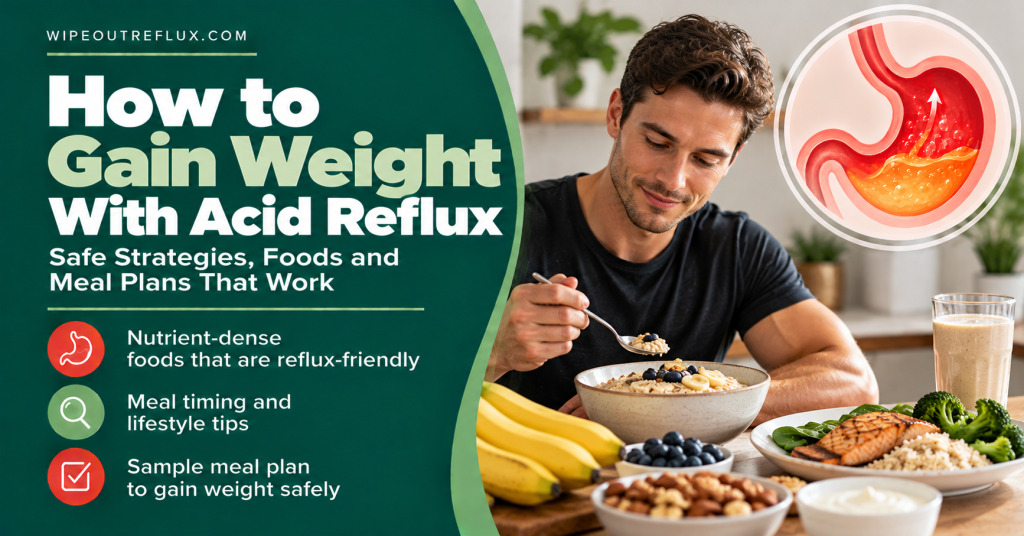
To gain weight with acid reflux, spread your calories across five or six smaller meals and snacks instead of two or three big ones. Build them from calorie-dense, low-acid foods like oats, rice, potatoes, bananas, nut butters, eggs, salmon and olive oil. Eat most of your food earlier in the day, so you’re not lying down on a full stomach. Fat is the hard part: it’s the easiest way to add calories, but it’s also a classic reflux trigger. The answer is small amounts spread out, not a big fatty meal.
The reason this works is surprisingly specific. Studies on meal composition show that the total calorie load of a meal drives how much acid reaches your esophagus. That means you can eat more in a day while refluxing less, as long as no single meal is too big.
Key Takeaways
- Bigger, higher-calorie meals cause more reflux, so add calories by eating more often, not by eating larger meals.
- In one study, the calorie density of meals drove acid exposure, while fat content drove how often people felt symptoms.
- Aim for 5 to 6 eating occasions a day, each a comfortable size.
- Rely on starches and protein for most of the extra calories, and add fat in small amounts throughout the day.
- Good calorie-dense, reflux-friendly foods include oats, rice, pasta, potatoes, bananas, dates, nut butters, avocado, eggs, salmon, chicken, yogurt and olive oil.
- Front-load your eating. Finish your last meal or snack 3 hours before bed.
- Smoothies and shakes are useful, but choose low-acid, low-sugar versions and sip them slowly.
- Unexplained weight loss, trouble swallowing or persistent vomiting should be checked by a doctor before you focus on gaining weight.
Why Reflux Makes It Hard to Keep Weight On
I’ve covered why reflux causes weight loss in detail in acid reflux and weight loss, but the short version is that several things stack up:
- Fear of eating. When food reliably causes heartburn or a burning throat, you start eating less without realizing it.
- Over-restriction. Cut out coffee, citrus, tomatoes, chocolate, fried food, spicy food, onions and garlic all at once, and a lot of your usual calories go with them.
- Feeling full quickly. Bloating, nausea and early fullness make normal portions feel too big.
- Difficulty swallowing, if reflux has inflamed or narrowed the esophagus. See can acid reflux make it hard to swallow.
The first two are the most common, and they’re fixable. You don’t need to eat triggers to gain weight. You need to eat enough of the right foods, in the right pattern.
One important caveat: if you’re losing weight without trying, and especially if you’re also having trouble swallowing, vomiting regularly or seeing blood, get that checked by a doctor first. Most of the time it’s simply reduced eating, but those symptoms deserve a proper look before you treat it as a diet problem.
The Mechanism: Why Meal Size Matters More Than You Think
This is the part most “how to gain weight” advice gets wrong for reflux. The usual tip is to add big, rich meals. That’s close to the worst thing you can do.
In a study of healthy volunteers, three meals were tested: a high-fat meal, a balanced meal with the same number of calories, and a smaller balanced meal. The two larger meals caused similar amounts of reflux, and both caused more than the smaller one. The researchers concluded that reflux advice should focus on reducing the calorie load of each meal rather than its fat content [Colombo et al., Scandinavian Journal of Gastroenterology, 2002].
A later study in people with GERD separated the two factors. Higher-calorie meals increased acid exposure in the esophagus. Higher-fat meals didn’t increase acid exposure, but they did increase how often people felt reflux symptoms [Fox et al., Clinical Gastroenterology and Hepatology, 2007].
Put those together and you get two practical rules:
- Keep each meal moderate in calories, and make up the total by eating more often.
- Don’t make fat the main source of extra calories. Use it, but in small doses spread across the day.
A full stomach also stretches and puts pressure on the lower esophageal sphincter, which is why overeating causes acid reflux even with “safe” foods.
How Much Extra Should You Eat?
For steady weight gain, most people need roughly 300 to 500 extra calories a day. That’s about one extra snack and a slightly bigger breakfast. It’s not a dramatic change, which is good news for your reflux. Expect gradual progress, around a pound or so every week or two at most. Going faster usually means overeating, and that means more reflux.
It’s also worth aiming for a healthy weight rather than as much as possible. Excess weight is one of the strongest risk factors for reflux. In a meta-analysis, a BMI over 30 almost doubled the odds of GERD symptoms [Hampel et al., Annals of Internal Medicine, 2005].
The Best Calorie-Dense Foods for Acid Reflux
These foods give you the most calories for the least reflux risk. Most are low in acid and gentle on the stomach.
Starches: your main calorie source
- Oats. Cook them in milk or oat milk, and add banana and a spoon of nut butter for an easy 500-calorie breakfast. See are Quaker oats good for acid reflux.
- Rice. Calorie-dense, bland and easy to digest. See is rice acidic or alkaline.
- Pasta with olive oil, chicken and vegetables rather than tomato sauce. See is pasta good for acid reflux.
- Potatoes, baked, boiled or mashed, not fried. See are potatoes acidic.
- Quinoa, for extra protein. See is quinoa acid or alkaline.
- Wholegrain bread and plain bagels. See is bread good for acid reflux.
Protein: builds healthy weight, not just fat
- Eggs, scrambled, boiled or poached. See are eggs good for acid reflux.
- Chicken and turkey, including thighs, which have more calories than breast. Remove the skin if fat bothers you. See is chicken good for acid reflux.
- Salmon, which has calories and healthy fats in one. See is salmon good for acid reflux.
- Plain yogurt and kefir, if dairy suits you. See is yogurt good for acid reflux.
- Protein powder in smoothies. Unflavored or vanilla is usually best. See does protein powder cause acid reflux.
Fats: small amounts, often
Fat has more than twice the calories of carbohydrate or protein per gram, so a little goes a long way. The trick is a teaspoon or tablespoon at a time, never a fat-heavy meal.
- Nut butters. Almond butter is often better tolerated than peanut butter. See almond butter and acid reflux and is peanut butter good for acid reflux.
- Nuts, a small handful as a snack. See what nuts are good for acid reflux.
- Avocado, a quarter to a half at a time. See avocado for acid reflux.
- Olive oil drizzled over rice, potatoes, pasta and vegetables. See does olive oil cause acid reflux.
Fruit and easy extras
- Bananas, the ideal reflux snack. See are bananas acidic or alkaline.
- Dates and other dried fruit, for concentrated calories. See are dates acidic.
- Granola without chocolate or citrus.
- Honey in porridge or yogurt, in modest amounts. See is manuka honey good for acid reflux.
For a full list of safe foods with their pH values, the Wipeout Food Reference Guide lets you check anything quickly.
Foods to Avoid, Even Though They’re High in Calories
The usual weight-gain foods are often the worst for reflux:
- Fried food and fast food. Very high in fat and calories at once. See is fried food bad for acid reflux.
- Pizza, with tomato sauce, cheese and fat together.
- Chocolate, milkshakes and ice cream in large portions.
- Creamy, rich sauces and large portions of cheese.
- Sugary drinks and sweets. In a randomized trial, cutting simple sugars improved reflux on pH monitoring [Gu et al., American Journal of Gastroenterology, 2022], so loading up on sugar for calories works against you.
- Alcohol, which adds calories but relaxes the LES.
The Eating Pattern That Works
Eat five or six times a day
Three main meals plus two or three snacks lets you eat noticeably more in total without any single meal being large. It’s the most important change in this whole article.
Front-load your day
Make breakfast and lunch your biggest meals. People who go to bed within 3 hours of dinner have much higher odds of GERD [Fujiwara et al., American Journal of Gastroenterology, 2005]. So the extra calories should go in early, with nothing in the last 3 hours before bed. See how long before bed should you stop eating.
Use liquid calories carefully
Smoothies are an easy way to add 300 to 500 calories, but a large volume of liquid still fills the stomach. Sip them over 15 to 20 minutes rather than downing them. Make them with banana, oats, nut butter, protein powder and oat or dairy milk, and leave out citrus, pineapple and berries if they bother you. See my acid reflux smoothie recipes. Ready-made nutrition drinks can help, but check the sugar content.
Eat slowly and sit up
Eat slowly, chew well and stay upright for a while after eating. Calorie-dense foods tend to be filling, and rushing them makes discomfort more likely.
A Sample Weight-Gain Day for Reflux
- Breakfast (8am): porridge made with milk, a sliced banana and a tablespoon of almond butter.
- Mid-morning (10:30am): plain yogurt with granola and honey.
- Lunch (1pm): chicken, rice and roasted carrots and zucchini with a drizzle of olive oil.
- Afternoon (4pm): a banana-oat-protein smoothie, sipped slowly, or toast with avocado.
- Dinner (6:30pm): baked salmon, a baked potato and green beans.
- Evening (8pm, at least 3 hours before bed): a small handful of almonds and a few dates.
That adds up to far more than most people with reflux eat in a day, but no meal is big enough to overload the stomach. For more ideas, see breakfast recipes for acid reflux and snacks for the LPR diet.
If you’d rather not plan it all yourself, the Wipeout Diet Plan includes a full two-week meal plan with recipes for meals, snacks and drinks. It’s easy to scale up by adding the extra snacks above.
If Your Reflux Is Mostly in Your Throat (LPR)
With silent reflux, the same rules apply, with one more filter: acidity. Acidic foods can reactivate pepsin in the throat, so choose low-acid calorie sources: oats, rice, potatoes, bananas, melon, eggs, fish and chicken. Skip acidic smoothie ingredients and fizzy drinks entirely. See LPR foods to eat.
Conclusion
Gaining weight with acid reflux isn’t about eating triggers or forcing down big meals. It’s about eating more often. The research shows that the calorie load of each meal drives how much acid reaches your esophagus, and that fat drives how much you feel it. So the strategy is five or six moderate meals and snacks, built on starches and protein, with fat added in small doses, most of it eaten earlier in the day. Add 300 to 500 calories a day, aim for a healthy weight rather than as much as possible, and get any unexplained weight loss checked first.
If you want this worked out for you, the Wipeout Diet Plan is my complete, in-depth guide. It covers which foods to build meals around, a full two-week meal plan with recipes, and how to time and size meals so you can eat enough without paying for it. It was originally designed around silent reflux, but because it targets the same root causes, it works equally well for classic heartburn and GERD.
For a lighter starting point, the Wipeout Food Reference Guide is the essential companion. It lists reflux- and LPR-friendly foods and drinks with their pH values, which is ideal for building your own high-calorie shopping list.
Frequently Asked Questions
How can I gain weight if I have acid reflux?
Eat five or six smaller meals and snacks a day instead of a few large ones. Choose calorie-dense, low-acid foods like oats, rice, potatoes, bananas, nut butters, eggs and salmon, and eat most of your food earlier in the day.
Why does fat make reflux worse if I need the calories?
Fat slows stomach emptying and is linked to more frequent reflux symptoms. Small amounts spread through the day, like a spoon of nut butter or a drizzle of olive oil, are usually fine. Large fatty meals are the problem.
Are protein shakes good for gaining weight with reflux?
They can be. Choose an unflavored or vanilla powder, blend it with banana, oats and milk, and sip it slowly. Avoid shakes with chocolate, mint, citrus or a lot of added sugar.
What should I eat before bed to gain weight with reflux?
Ideally nothing in the last 3 hours before bed. Move those calories to an earlier snack instead. Lying down on a full stomach is one of the most reliable ways to trigger reflux.
Can acid reflux cause weight loss?
Yes, usually indirectly, because people eat less to avoid symptoms or cut out too many foods. Unexplained weight loss with trouble swallowing or vomiting should be checked by a doctor.
Is peanut butter good for gaining weight with acid reflux?
In small amounts, yes. It’s very calorie-dense, but some people find it triggers reflux. Almond butter is often better tolerated. Stick to one or two tablespoons at a time.
How fast can I gain weight with acid reflux?
Slowly is best: around a pound every week or two. Adding 300 to 500 calories a day through extra snacks is enough. Gaining faster usually means eating larger meals, which makes reflux worse.
Research & References
- Colombo et al., Scandinavian Journal of Gastroenterology, 2002. In healthy volunteers, a higher-calorie balanced meal caused as much reflux as an equally caloric high-fat meal and more than a lower-calorie meal. The authors recommended reducing the calorie load of meals.
- Fox et al., Clinical Gastroenterology and Hepatology, 2007. In people with GERD, high-calorie diets increased esophageal acid exposure, while high-fat diets increased the frequency of reflux symptoms.
- Fujiwara et al., American Journal of Gastroenterology, 2005. A dinner-to-bed time of under 3 hours was associated with 7.45 times the odds of GERD, compared with 4 hours or more.
- Gu et al., American Journal of Gastroenterology, 2022. In a 9-week randomized trial of 98 people with GERD, reducing simple sugars improved acid exposure on pH monitoring and reflux symptoms.
- Hampel et al., Annals of Internal Medicine, 2005. A meta-analysis found obesity was associated with higher odds of GERD symptoms (OR 1.94 for BMI over 30).

David Gray
12 years living with LPR · Consultant & researcher
I've lived with LPR for twelve years — the misdiagnoses, the PPI courses that did nothing, the slow work of figuring out what actually helps. Wipeout Reflux is where I translate the research into plain terms for people stuck in the same place. Every claim here is sourced to peer-reviewed work, and I consult one-to-one with LPR sufferers.