
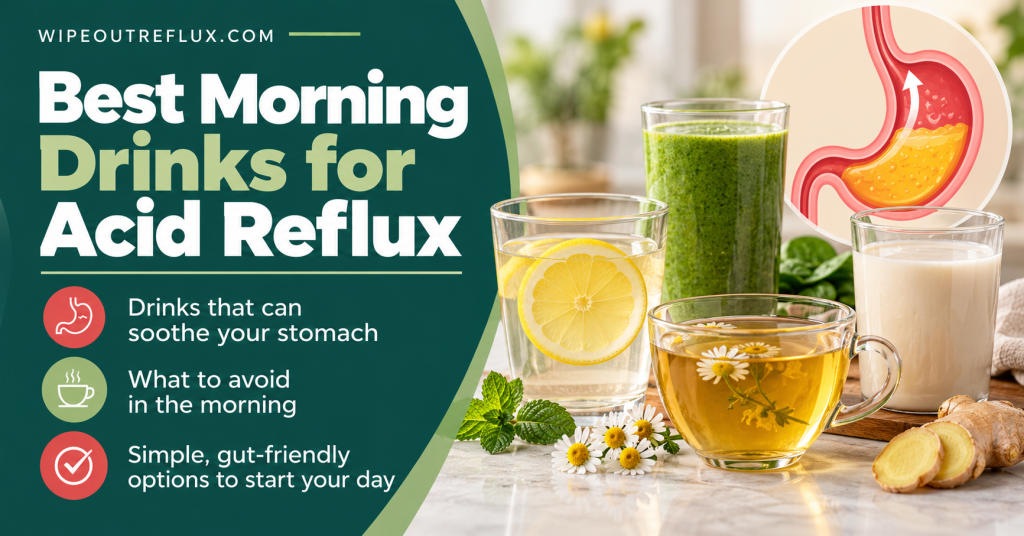
The best morning drinks for acid reflux are alkaline water, warm plain water, chamomile or Throat Coat tea, oat or almond milk, a caffeine-free coffee alternative like chicory, and a non-citrus smoothie. If you can’t give up coffee, a low-acid decaf after food is the safest compromise.
What you drink first thing matters more than at any other time of day. Your stomach is empty and at its most acidic, and if you have silent reflux, pepsin has been sitting in your throat overnight. The usual “healthy” morning habits, such as lemon water, orange juice and coffee on an empty stomach, are some of the worst things you can do.
Heads-up: some links below are affiliate links, which means I may earn a small commission if you buy through them, at no extra cost to you. I only recommend products I’d genuinely suggest to readers.
Key Takeaways
- Mornings are a high-risk window: your stomach is empty, acid has built up overnight, and pepsin left in your throat is ready to be reactivated.
- Alkaline water at pH 8.8 or above is the best first drink for LPR. In lab testing it permanently deactivated pepsin.
- Warm plain water, chamomile, Throat Coat and marshmallow root tea are gentle, low-acid options.
- Oat and almond milk make a good base for a morning latte or smoothie.
- Chicory-based coffee alternatives give you the ritual and the roasted taste without caffeine.
- Decaf coffee caused far less reflux than regular coffee in a study of reflux patients.
- Avoid lemon water, apple cider vinegar, orange juice and coffee on an empty stomach.
- Drinks are only part of it. What you eat with them, and when, decides how your morning goes.
Why Mornings Are Different
I used to wake up with a throat that felt like sandpaper and a voice that took an hour to warm up. For years I blamed whatever I’d eaten the night before. It took me a long time to realize that what I was drinking in the first hour was making it worse.
Three things make the morning a special case:
- Your stomach is empty. There’s no food to buffer acid, so anything acidic or irritating hits a bare stomach lining.
- You’ve spent hours lying down. Any reflux overnight had gravity on its side, and you weren’t swallowing much to clear it.
- Pepsin is waiting. Pepsin that reached your throat overnight sits there inactive. It stays stable at a near-neutral pH and switches back on when acid comes along [Johnston et al., The Laryngoscope, 2007]. An acidic first drink is exactly that trigger.
I go through the full list of causes in why is my acid reflux worse in the morning. This article is about what to put in your mug.
The Best Morning Drinks for Acid Reflux
1. Alkaline water (pH 8.8 or higher): the best first drink
If you have silent reflux, this is the one I’d start every day with. Ordinary tap and bottled water usually sits between about pH 6.7 and 7.4, which isn’t enough to affect pepsin. In lab testing, natural bicarbonate water at pH 8.8 irreversibly deactivated human pepsin and also had good acid-buffering capacity [Koufman and Johnston, Annals of Otology, Rhinology and Laryngology, 2012].
That’s a test-tube result, not a clinical trial, but the logic fits the morning perfectly. A glass on waking rinses the throat while pepsin is still sitting there.
- Evamor Artesian Water is a naturally alkaline bicarbonate water, the same type used in the pepsin study.
- Essentia Ionized Alkaline Water (pH 9.5+) is easy to find and a good everyday option.
More detail in is alkaline water good for acid reflux.
2. Warm plain water
If alkaline water isn’t practical, a mug of warm water is the next best thing. It’s neutral, it helps clear the esophagus, and it’s soothing on a dry morning throat. Keep it warm rather than very hot. See does drinking hot water help acid reflux.
3. Chamomile tea
Chamomile is caffeine-free, low in acid and gentle on the stomach. It’s a good swap if you’re used to a cup of tea with breakfast. Let it cool a little before drinking, and skip versions blended with citrus peel or hibiscus.
I like Traditional Medicinals Organic Chamomile. More in is chamomile tea good for acid reflux.
4. Throat Coat or marshmallow root tea
These are the ones I reach for when my throat is raw in the morning. Marshmallow root and slippery elm are mucilages, which form a soft, slippery coating. Throat Coat combines both with licorice root.
- Traditional Medicinals Organic Throat Coat: choose the original, not the lemon echinacea version.
- Celebration Herbals Marshmallow Root Tea: a single-herb option.
Throat Coat contains real licorice, which can raise blood pressure if you drink a lot of it, so keep it to a cup or two a day if that’s a concern. I cover the herb in more depth in marshmallow root for acid reflux.
5. Oat milk or almond milk
Plant milks are a good base for a morning latte, a chicory “coffee” or a smoothie. Unsweetened oat and almond milk are both low in fat and low in acid. Check the label and avoid ones with added citric acid. Full-fat dairy milk can feel soothing at first but the fat may relax the valve at the top of your stomach.
See is oat milk good for acid reflux and does milk help acid reflux.
6. A chicory coffee alternative
For a lot of people, the hardest part of mornings with reflux is giving up coffee. Chicory-based herbal coffees are roasted and brewed like coffee, taste close to it, and have no caffeine.
Teeccino French Roast Chicory is the one I point readers to first. Make it with oat milk and it’s a convincing latte. I compare the options in coffee alternatives for acid reflux.
7. A non-citrus smoothie
If you struggle to eat first thing, a smoothie can be breakfast and a drink at once. Base it on banana, oats, a spoonful of nut butter and oat or almond milk. Leave out citrus, pineapple and berries if your throat is sensitive, and keep the portion moderate. A big cold smoothie on an empty stomach can be a lot for a sensitive stomach.
My recipes are in acid reflux smoothie recipes. The full list of low-acid fruits and how ripe they need to be is in the Wipeout Diet Plan.
If You Can’t Give Up Coffee
I’m realistic. Plenty of people aren’t going to drop coffee, and the evidence on it is more mixed than most reflux advice suggests. A large 2026 meta-analysis of 40 studies found GERD was only slightly more common in coffee drinkers (about 35% vs 31%), and the authors said the clinical significance was unclear [Muftah et al., Clinical and Translational Gastroenterology, 2026].
That said, caffeine matters for the individual. In a double-blind study of 17 reflux patients drinking coffee with breakfast, time spent with acid in the esophagus dropped from a median of 17.9% with regular coffee to 3.1% with decaf [Pehl et al., Alimentary Pharmacology and Therapeutics, 1997].
If you’re keeping coffee, here’s how to make it as kind as possible:
- Switch to decaf. This is the single biggest change. A low-acid decaf like Puroast Low Acid Decaf takes it a step further.
- Drink it after food, never on an empty stomach.
- Have one cup, not a pot. Smaller volume, less stomach distension.
- Add oat or almond milk rather than drinking it black.
- Have alkaline water first. Then coffee later in the morning, once your throat has had a rinse.
For LPR specifically, I’d still push you toward the chicory option, at least while your throat is healing. Coffee is acidic whatever its caffeine content. More in is decaf coffee bad for acid reflux.
Morning Drinks to Avoid
- Lemon water. The most popular morning ritual and one of the worst for reflux. Lemon juice is around pH 2, which is exactly what reactivates pepsin. See is lemon acid or alkaline.
- Apple cider vinegar shots. Another wellness trend that’s very acidic. See is apple cider vinegar acid or alkaline.
- Orange and grapefruit juice. Acidic and often drunk on an empty stomach. See is orange juice bad for acid reflux.
- Regular coffee on an empty stomach. Caffeine plus acid plus no food is the worst combination.
- Strong black tea. Caffeinated and astringent. If you love it, a weaker brew after food is better than a strong mug on waking.
- Energy drinks and sodas. Acidic, carbonated and caffeinated. See energy drinks and acid reflux.
- Peppermint tea. Often recommended for digestion, but peppermint can relax the lower esophageal sphincter. See is peppermint tea good for acid reflux.
These are the headline ones. There are dozens more drinks people ask me about, from kombucha to coconut water to protein shakes. The complete drinks list, with pH values and which ones are safe in the healing phase, is in the Wipeout Diet Plan.
A Simple Reflux-Friendly Morning Routine
- On waking: a glass of alkaline water, sipped slowly.
- With breakfast: chamomile, Throat Coat, or a chicory latte made with oat milk.
- If you take a PPI: take it 30 to 60 minutes before breakfast with plain water. See best time of day to take omeprazole.
- Mid-morning: decaf coffee after food if you really want it, or more water.
- All morning: sip, don’t gulp. Big volumes stretch the stomach.
Your drink is only half of breakfast, of course. For what to eat alongside it, see my breakfast recipes for acid reflux, and for the general drinks guide, what to drink with acid reflux.
Conclusion
The first drink of the day lands on an empty stomach and, if you have silent reflux, a throat that already has pepsin in it. That’s why the best morning drinks are the gentle, low-acid ones: alkaline water first, then warm water, chamomile, Throat Coat, oat or almond milk, a chicory coffee alternative, or a non-citrus smoothie. Lemon water, juice, vinegar shots and coffee on an empty stomach are the habits to drop. If coffee is staying, make it decaf, have it after food and keep it to one cup.
Getting your morning drinks right is a good start, but it’s one small piece. The Wipeout Diet Plan gives you the whole picture: the complete list of safe drinks and foods with their pH values, a 2-week meal plan with breakfasts already worked out, and the reasoning behind every choice so you’re not guessing. I designed it around silent reflux, the throat-based kind I’ve lived with for twelve years, but because it targets the same root causes it works just as well for GERD and regular heartburn. If you want to stop reacting to symptoms each morning and start preventing them, this is where I’d begin.
If you’d rather start with a quick reference, the Wipeout Food Reference Guide lists the foods and drinks that are safe for acid reflux and LPR, along with their pH values.
Frequently Asked Questions
What is the best thing to drink in the morning for acid reflux?
Alkaline water at pH 8.8 or higher, especially if you have silent reflux, because it can deactivate pepsin in the throat. Warm plain water, chamomile tea and Throat Coat tea are good alternatives.
Is lemon water good for acid reflux in the morning?
No. Lemon juice is around pH 2 and is one of the most acidic things you can drink. It can reactivate pepsin left in your throat overnight. Swap it for alkaline or warm plain water.
Can I drink coffee in the morning with acid reflux?
Some people can, especially if they switch to decaf, drink it after food and keep it to one cup. Decaf caused much less reflux than regular coffee in one study. If you have LPR, a chicory coffee alternative is a safer choice while you heal.
Should I drink water before breakfast with acid reflux?
Yes, a glass of water on waking helps clear your throat and esophagus. Sip it slowly rather than drinking a large amount at once, and make it alkaline water if you can.
Is milk good for acid reflux in the morning?
Low-fat or plant milks like oat and almond are usually fine. Whole milk may feel soothing at first, but its fat can relax the valve at the top of the stomach and make reflux worse later.
Is green tea OK in the morning with acid reflux?
It contains caffeine, so it can trigger reflux in some people. Decaf green tea is a gentler option. See my guide to green tea and acid reflux.
What should I avoid drinking first thing in the morning?
Lemon water, apple cider vinegar, orange or grapefruit juice, regular coffee on an empty stomach, strong black tea, energy drinks and peppermint tea.
Research & References
- [Johnston et al., The Laryngoscope, 2007] — Pepsin is inactive at pH 6.5 and above but stable until pH 8, and can be reactivated when the pH drops; detectable pepsin remains in laryngeal tissue after reflux.
- [Koufman and Johnston, Annals of Otology, Rhinology and Laryngology, 2012] — Natural bicarbonate artesian water at pH 8.8 irreversibly inactivated human pepsin in vitro and had good acid-buffering capacity compared with common bottled waters.
- [Muftah et al., Clinical and Translational Gastroenterology, 2026] — Meta-analysis of 40 studies (122,074 people) found coffee drinking was associated with a small increase in GERD (OR 1.18) but not Barrett’s esophagus, with unclear clinical significance.
- [Pehl et al., Alimentary Pharmacology and Therapeutics, 1997] — In 17 reflux patients, decaffeinated coffee with breakfast cut esophageal acid exposure from a median of 17.9% to 3.1% compared with regular coffee.

David Gray
12 years living with LPR · Consultant & researcher
I've lived with LPR for twelve years — the misdiagnoses, the PPI courses that did nothing, the slow work of figuring out what actually helps. Wipeout Reflux is where I translate the research into plain terms for people stuck in the same place. Every claim here is sourced to peer-reviewed work, and I consult one-to-one with LPR sufferers.