
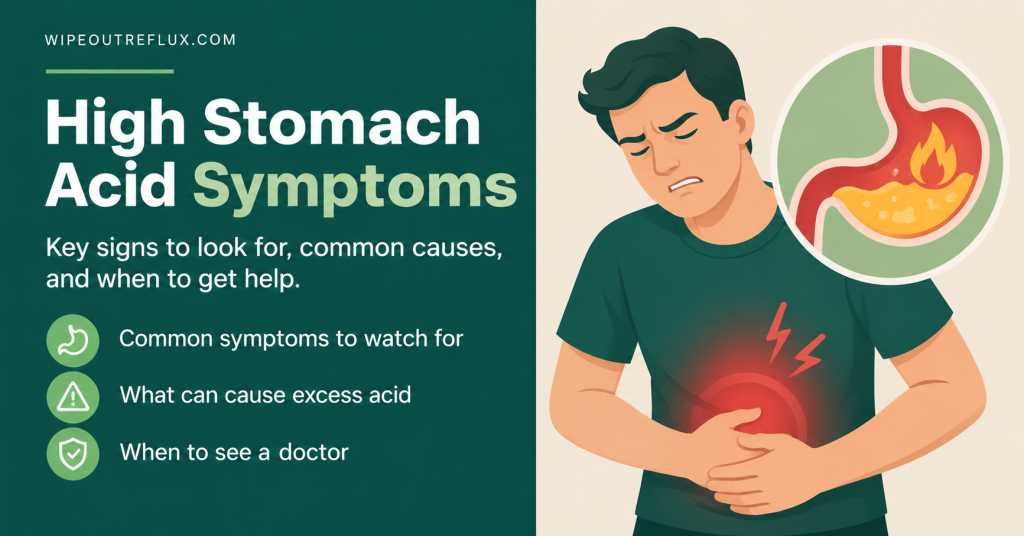
The most common symptoms of high stomach acid (hyperchlorhydria) are a burning or gnawing pain in the upper stomach, heartburn, indigestion, nausea, bloating, pain that’s worse on an empty stomach and eases with food, and in more severe cases diarrhea, stomach or duodenal ulcers and unexplained weight loss.
The main causes of genuinely high stomach acid are H. pylori infection, rebound acid after stopping a PPI, and much more rarely Zollinger-Ellison syndrome, a gastrin-producing tumor. Some people also produce more acid for no obvious reason.
But here’s the thing most people don’t realize: having too much acid is not the usual cause of acid reflux. Most people with heartburn and GERD make a normal amount of stomach acid. The problem is that acid is getting to the wrong place. And low stomach acid can cause many of the same symptoms. That’s why it’s worth understanding the difference before you treat it.
Key Takeaways
- Symptoms of high stomach acid include upper abdominal burning, heartburn, indigestion, nausea, pain on an empty stomach, ulcers and sometimes diarrhea.
- The most common cause of high acid is H. pylori infection in the lower stomach, which drives up gastrin and acid production.
- Stopping a PPI suddenly can cause rebound acid hypersecretion, temporarily pushing acid above normal levels.
- Zollinger-Ellison syndrome is rare but causes very high acid levels. Abdominal pain and diarrhea are its most common symptoms.
- Most people with GERD don’t have high stomach acid. Reflux is mostly about acid escaping through a weak or relaxing valve.
- Low stomach acid can cause bloating, burping and indigestion that feel similar, so symptoms alone can’t tell you which you have.
- Persistent pain, black stools, vomiting blood, difficulty swallowing or weight loss need prompt medical assessment.
What Is High Stomach Acid?
Your stomach naturally makes hydrochloric acid to break down food, activate the digestive enzyme pepsin and kill bacteria. Healthy stomach contents are very acidic, usually around pH 1.5 to 3.5. That’s normal and necessary.
High stomach acid, or hyperchlorhydria, means your stomach is producing more acid than usual. Doctors measure it using basal acid output (how much acid you make at rest). Production is controlled mainly by three signals: the hormone gastrin, histamine and the vagus nerve. Anything that ramps up those signals can increase acid.
High Stomach Acid Symptoms
Symptoms of excessive stomach acid tend to center on the upper abdomen:
- Burning or gnawing pain in the upper stomach, just below the breastbone.
- Pain that’s worse on an empty stomach, such as between meals or in the early hours of the morning, and often eases after eating or taking an antacid. This is classic of duodenal ulcers.
- Heartburn, a burning feeling rising up behind the breastbone.
- Indigestion, with a feeling of fullness or discomfort after meals.
- Nausea, and sometimes vomiting.
- Bloating and burping.
- Diarrhea, especially loose, fatty or frequent stools. Large amounts of acid entering the small intestine can inactivate the enzymes that digest fat.
- Reduced appetite and weight loss in more severe cases.
If high acid goes untreated for a long time, it can lead to:
- Stomach or duodenal ulcers, which can bleed or, rarely, perforate.
- Esophagitis, inflammation and erosion of the esophagus if acid refluxes upwards.
- Anemia from slow bleeding, causing tiredness and breathlessness.
If you’re unsure whether your pain is an ulcer or reflux, my guide to stomach ulcer or acid reflux walks through the differences.
What Causes High Stomach Acid?
1. H. pylori infection
H. pylori is a very common stomach bacterium. Where it settles matters. When the infection is mostly in the lower part of the stomach (the antrum), it disrupts the feedback system that normally switches gastrin off. The result is more gastrin and more acid.
In studies by El-Omar and colleagues, acid secretion in response to a gastrin-stimulating test was six times higher in H. pylori-positive duodenal ulcer patients and three times higher in H. pylori-positive healthy volunteers, and this fully resolved after the infection was cleared [El-Omar et al., Gut, 1995].
H. pylori is the single most important cause of high acid and duodenal ulcers, and it’s easily tested for with a breath, stool or blood test. Interestingly, when it infects the upper body of the stomach instead, it can reduce acid. I cover both sides in H. pylori and acid reflux.
2. Rebound acid after stopping a PPI
When you take a PPI like omeprazole, your body responds by raising gastrin and building up more acid-producing cells. When you stop suddenly, all that extra capacity is suddenly unopposed, and acid can temporarily rise above your normal level.
This is real even in people who never had reflux. In a randomized trial, 44% of healthy volunteers developed heartburn, regurgitation or indigestion after stopping 8 weeks of esomeprazole, compared with 15% on placebo [Reimer et al., Gastroenterology, 2009]. A systematic review confirmed rebound causes reflux-like symptoms in healthy volunteers, though it’s less clear how much it affects people with reflux disease [Lødrup et al., Scandinavian Journal of Gastroenterology, 2013].
Rebound is temporary, but it can last weeks, and it convinces a lot of people they can’t live without their PPI. Tapering slowly makes a big difference. My guide to getting off PPIs and avoiding acid rebound explains how.
3. Zollinger-Ellison syndrome
This rare condition is caused by a tumor, usually in the pancreas or duodenum, that pumps out gastrin. The result is extremely high acid production, severe ulcers and often diarrhea.
In a study of 261 patients, the most common presenting symptoms were abdominal pain (75%) and diarrhea (73%), with heartburn in 44% and weight loss in 17%. The most common misdiagnoses were ordinary peptic ulcer disease and GERD [Roy et al., Medicine, 2000].
Clues that suggest Zollinger-Ellison syndrome include ulcers that are multiple, keep coming back, or are in unusual places, ulcers combined with chronic diarrhea, and symptoms that return quickly when PPIs are stopped.
4. Idiopathic acid hypersecretion
Some people simply produce more acid than average without a clear cause. In a study of 228 GERD patients, average basal acid output was higher than in healthy subjects, and between 19% and 35% of the patients (depending on severity) had acid hypersecretion. Those with higher acid output needed higher doses of acid-reducing medication [Collen et al., Digestive Diseases and Sciences, 1994].
So high acid does play a role for a minority of people with reflux, particularly those with more severe disease like Barrett’s esophagus.
5. Other causes
- Systemic mastocytosis and mast cell disorders, where excess histamine stimulates acid production. More in histamine intolerance, MCAS and acid reflux.
- Certain medications and smoking, which can increase acid or weaken the stomach’s defenses.
- Stress, which doesn’t massively increase acid but can make you more sensitive to it.
High Stomach Acid vs Acid Reflux: The Big Misconception
This is the part I most want readers to understand, because it changes how you should treat your symptoms.
Most acid reflux isn’t caused by too much acid. It’s caused by acid going the wrong way. The lower esophageal sphincter, the valve at the top of your stomach, relaxes when it shouldn’t, or is weakened by a hiatal hernia, extra weight, large meals or pressure from below. Even a completely normal amount of acid will then burn your esophagus and throat, which have nowhere near the stomach’s protection.
That’s why the Collen study above found high acid in only a minority of people with reflux. Most had normal acid levels. It’s also why PPIs relieve heartburn without fixing the reflux itself. They reduce how acidic the refluxate is, but the valve is still letting it through.
With silent reflux (LPR), acid levels matter even less. The main damage comes from pepsin, a digestive enzyme that travels up with reflux and sticks to throat tissue. Even weakly acidic reflux and acidic foods can reactivate it. That’s the reason I focus so heavily on diet and not just acid suppression. I explain it fully in what is pepsin.
High Stomach Acid vs Low Stomach Acid
To make things more confusing, low stomach acid (hypochlorhydria) can cause symptoms that feel very similar:
- Both can cause indigestion, bloating, burping, nausea and a sense of fullness.
- High acid is more likely to cause sharp, burning upper stomach pain that’s worse when hungry and eases with food or antacids, plus ulcers and diarrhea.
- Low acid is more often linked with heaviness after meals, undigested food in stools, nutrient deficiencies (B12, iron), and age, autoimmune gastritis or long-term PPI use.
Because the symptoms overlap so much, you can’t reliably tell which one you have from symptoms alone, and online “tests” like the baking soda burp test aren’t reliable. If you suspect either, see a doctor rather than self-treating with acid-raising supplements like betaine HCl, which can be harmful if you actually have high acid or an ulcer. My article does low stomach acid cause acid reflux covers the evidence.
How Is High Stomach Acid Diagnosed?
Depending on your symptoms, a doctor may recommend:
- H. pylori testing with a breath, stool or blood test. This is usually the first step.
- Endoscopy to look for ulcers, inflammation or esophagitis. See endoscopy for acid reflux.
- Fasting gastrin level if Zollinger-Ellison syndrome is suspected, ideally off PPIs, as they raise gastrin themselves.
- Gastric acid analysis or pH testing in specialist settings.
- Blood tests for anemia.
How to Lower High Stomach Acid
Medical treatment
- Treat H. pylori if present. Clearing it often normalizes acid output and heals ulcers.
- PPIs like omeprazole are the most effective way to reduce acid production.
- H2 blockers like famotidine reduce acid more gently. See famotidine vs omeprazole.
- Antacids and alginates neutralize acid or block it from rising, for quick relief. More in alginates for acid reflux.
- Stop NSAIDs like ibuprofen if you have ulcer symptoms, after checking with your doctor.
- Taper PPIs slowly rather than stopping suddenly, to avoid rebound acid.
Diet and lifestyle
- Eat smaller, regular meals rather than large meals or long gaps.
- Limit coffee, alcohol and spicy food, which can stimulate acid or irritate the stomach lining.
- Stop smoking, which increases acid and slows ulcer healing.
- Avoid eating late, and stop eating 3 hours before bed.
- Follow a low-acid, reflux-friendly diet, which reduces both stomach irritation and reflux. The Wipeout Diet Plan takes you through this step by step.
- Manage stress, as it heightens how much you feel acid-related pain.
When to See a Doctor
Get medical help promptly if you have:
- Vomiting blood, or vomit that looks like coffee grounds.
- Black, tarry stools.
- Severe or sudden stomach pain.
- Difficulty or pain swallowing.
- Unexplained weight loss.
- Persistent diarrhea with ulcer-type pain.
- Symptoms that don’t improve with treatment, or return quickly after stopping medication.
Conclusion
High stomach acid causes burning upper abdominal pain, heartburn, indigestion, nausea, pain on an empty stomach, and in more severe cases ulcers and diarrhea. The most common cause is H. pylori infection, followed by rebound acid after stopping a PPI. Rarely, it’s Zollinger-Ellison syndrome or idiopathic hypersecretion.
But for most people with heartburn, GERD or silent reflux, the issue isn’t too much acid. It’s acid, and pepsin, escaping to where it shouldn’t be. That’s why lowering acid with medication often relieves symptoms without fixing the underlying problem, and why diet and lifestyle changes matter so much.
The Wipeout Diet Plan is built around exactly this. It was designed first and foremost for LPR, where pepsin rather than acid quantity drives the damage, but because it tackles the same root mechanisms, it works equally well for GERD and classic heartburn. It shows you what to eat, what to avoid and how to reintroduce foods, so you can calm both stomach irritation and reflux and rely less on medication over time.
If you’d prefer to start with something lighter, the Wipeout Food Reference Guide is the essential companion, listing the foods and drinks that are safe for acid reflux and LPR along with their pH values, so you can check anything at a glance.
Frequently Asked Questions
What are the symptoms of high stomach acid?
Common symptoms include burning upper stomach pain, heartburn, indigestion, nausea, bloating, pain that’s worse on an empty stomach and eases with food, and sometimes diarrhea. Long-term high acid can cause stomach or duodenal ulcers.
What causes excessive stomach acid?
The most common cause is H. pylori infection in the lower stomach, which raises gastrin. Other causes include rebound acid after stopping a PPI, Zollinger-Ellison syndrome, mast cell disorders and idiopathic hypersecretion, where no cause is found.
Is acid reflux caused by too much stomach acid?
Usually not. Most people with reflux produce a normal amount of acid. Reflux happens because the valve between the stomach and esophagus lets acid escape. A minority of people with more severe reflux do have higher acid output.
How can I tell if I have high or low stomach acid?
Not reliably from symptoms alone, as both can cause bloating, burping and indigestion. Burning pain on an empty stomach that eases with food points more towards high acid. A doctor can arrange tests such as H. pylori testing, endoscopy or gastrin levels.
How do I reduce stomach acid naturally?
Eat smaller, regular meals, avoid eating late, limit coffee, alcohol and spicy food, stop smoking and manage stress. A low-acid, reflux-friendly diet helps protect both your stomach and esophagus. If H. pylori is present, it needs medical treatment.
Can stopping omeprazole cause high stomach acid?
Yes, temporarily. Stopping a PPI suddenly can cause rebound acid hypersecretion, leading to heartburn and indigestion for a few weeks. Tapering the dose gradually helps prevent this.
Can high stomach acid cause diarrhea?
Yes. Large amounts of acid entering the small intestine can inactivate digestive enzymes and damage the lining, causing loose or fatty stools. Diarrhea with ulcer-type pain is a classic sign of Zollinger-Ellison syndrome and should be checked by a doctor.
Research & References
- [El-Omar et al., Gut, 1995] — Showed stimulated acid secretion was six times higher in H. pylori-positive duodenal ulcer patients and three times higher in H. pylori-positive volunteers, resolving fully after eradication.
- [Reimer et al., Gastroenterology, 2009] — Randomized trial in 120 healthy volunteers in which 44% developed acid-related symptoms after stopping 8 weeks of esomeprazole, versus 15% on placebo.
- [Lødrup et al., Scandinavian Journal of Gastroenterology, 2013] — Systematic review concluding rebound acid hypersecretion after PPIs causes reflux-like symptoms in healthy volunteers, with less clear significance in reflux patients.
- [Roy et al., Medicine, 2000] — Prospective study of 261 Zollinger-Ellison syndrome patients finding abdominal pain (75%) and diarrhea (73%) were the most common presenting symptoms, with heartburn in 44%.
- [Collen et al., Digestive Diseases and Sciences, 1994] — In 228 GERD patients, basal acid output was higher on average than in controls, with 19% to 35% showing acid hypersecretion depending on disease severity.

David Gray
12 years living with LPR · Consultant & researcher
I've lived with LPR for twelve years — the misdiagnoses, the PPI courses that did nothing, the slow work of figuring out what actually helps. Wipeout Reflux is where I translate the research into plain terms for people stuck in the same place. Every claim here is sourced to peer-reviewed work, and I consult one-to-one with LPR sufferers.