
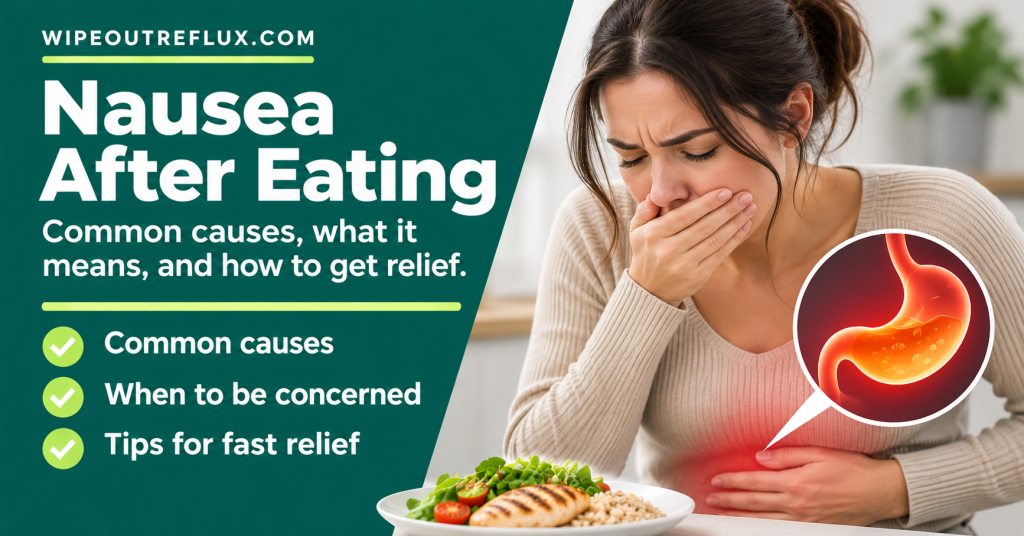
Feeling nauseous after eating is most often caused by eating too much or too fast, fatty or rich food, acid reflux, indigestion (functional dyspepsia), gastritis or a stomach bug. Other common causes are medications such as GLP-1 drugs, antibiotics, iron and metformin, early pregnancy, gallbladder problems, and slow stomach emptying (gastroparesis). Occasional nausea after a big meal is normal. Nausea that happens after most meals, wakes you at night, or comes with vomiting, weight loss, severe pain or black stools needs checking.
Nausea is one of the most frustrating digestive symptoms because it’s vague. It doesn’t point to a single organ the way chest burning points to reflux. The most useful way to narrow it down is to look at what comes with it and when it starts. Below I go through the common causes by pattern, what helps, and the warning signs that mean you shouldn’t wait.
Key Takeaways
- Overeating, eating quickly and high-fat meals are the most common everyday causes of nausea after eating.
- Nausea with burning, a sour taste or burping points toward reflux. Nausea with throat clearing, mucus or hoarseness points toward silent reflux (LPR).
- Feeling full very quickly, bloating and nausea after meals, without a structural cause, is called postprandial distress syndrome, a type of functional dyspepsia.
- Gastroparesis (slow stomach emptying) causes nausea, early fullness and sometimes vomiting of undigested food hours after eating.
- GLP-1 drugs such as Ozempic, Wegovy and Mounjaro commonly cause nausea, especially when starting or increasing the dose.
- Nausea after fatty meals, with pain under the right ribs, can be a gallbladder problem.
- Eating smaller, lower-fat meals, slowing down and staying upright after eating help most causes.
- Get urgent help for vomiting blood, black stools, severe abdominal or chest pain, signs of dehydration, or nausea with chest pressure or breathlessness.
Why Eating Can Trigger Nausea
When you eat, the stomach stretches, releases acid and digestive hormones, and gradually pushes food into the small intestine. Nausea can come from any part of that going wrong: the stomach stretching too much, emptying too slowly, being irritated or inflamed, or contents moving the wrong way, up into the esophagus. Nerve signals between the gut and the brain, which are affected by stress and anxiety, can also turn up nausea even when nothing is physically wrong.
Common Causes of Nausea After Eating
1. Eating too much, too fast or too rich
Large portions, fast eating and high-fat meals stretch the stomach and slow its emptying. Nausea comes on during or soon after the meal and usually settles within an hour or two. This is the most common cause and the easiest to fix. See does overeating cause reflux?
2. Acid reflux and silent reflux
Reflux often causes nausea alongside heartburn, a sour or bitter taste, regurgitation and burping, typically after large or fatty meals or when lying down. With silent reflux (LPR), nausea can appear with throat symptoms instead: throat clearing, mucus, hoarseness or a lump sensation. See silent reflux and nausea.
3. Functional dyspepsia
If you regularly feel uncomfortably full after normal-sized meals, fill up after a few bites, or feel nauseous and bloated after eating, and tests come back normal, this may be functional dyspepsia. The Rome IV criteria call the meal-related form postprandial distress syndrome [Stanghellini et al., Gastroenterology, 2016]. It’s common and real. It involves how the stomach relaxes and senses food, not damage you can see. See functional dyspepsia.
4. Gastritis and ulcers
Inflammation of the stomach lining from H. pylori, NSAIDs such as ibuprofen, or alcohol can cause nausea with a burning or gnawing upper abdominal pain, sometimes worse after eating. See gastritis vs acid reflux, the gastritis diet and stomach ulcer or acid reflux?
5. Gastroparesis (slow stomach emptying)
In gastroparesis, food stays in the stomach too long without any blockage. Typical symptoms are nausea, early fullness, bloating, and sometimes vomiting of undigested food several hours after eating. Diabetes and previous stomach surgery are common causes, and certain medicines can contribute. Diagnosis needs a gastric emptying study [Camilleri et al., American Journal of Gastroenterology, 2022]. See gastroparesis and acid reflux.
6. Medications, especially GLP-1 drugs
GLP-1 medications (semaglutide in Ozempic and Wegovy, tirzepatide in Mounjaro and Zepbound) deliberately slow stomach emptying, and nausea is their most common side effect. A network meta-analysis of 39 studies with over 33,000 people without diabetes found that all the GLP-1 drugs studied significantly increased the risk of nausea [Ismaiel et al., International Journal of Obesity, 2025]. It’s usually worst when starting or increasing the dose, and after large or fatty meals. See Ozempic and reflux.
Other common culprits include antibiotics, iron tablets, metformin, some painkillers and supplements taken on an empty stomach. Check the timing against when you started any new medicine.
7. Gallbladder problems
Gallstones can cause nausea and a steady, often severe pain under the right ribs or in the upper middle abdomen, typically after a fatty meal, lasting from 30 minutes to several hours. It sometimes spreads to the right shoulder blade. Fever, yellowing of the skin or eyes, or pain that doesn’t settle need urgent care. If you’ve had your gallbladder removed, see acid reflux after gallbladder removal.
8. Pregnancy
Nausea is one of the earliest signs of pregnancy and often comes on around meals, not only in the morning. Later in pregnancy, heartburn and reflux become a common cause. See acid reflux and pregnancy. Persistent vomiting with inability to keep fluids down needs medical care.
9. Food poisoning and stomach bugs
Nausea coming on hours after a particular meal, often with vomiting, diarrhea or cramps, suggests food poisoning or a viral infection. Some people feel queasy for a week or two afterward. See reflux after a stomach virus.
10. Food intolerances and IBS
Lactose intolerance, high-FODMAP foods and IBS can cause nausea with bloating, gas and bowel changes. A food and symptom diary is the best way to spot patterns. See IBS and acid reflux.
11. Stress and anxiety
Anxiety can trigger nausea through the gut-brain connection, and it also makes digestive sensations feel stronger. It’s common to notice nausea before or after eating on stressful days. See health anxiety and reflux.
Narrowing It Down: What Comes With the Nausea?
| Nausea plus… | Possible causes |
|---|---|
| Chest burning, sour taste, burping, worse lying down | Acid reflux |
| Throat clearing, mucus, hoarseness, lump in throat | Silent reflux (LPR) |
| Full after a few bites, bloating, normal tests | Functional dyspepsia |
| Burning or gnawing upper abdominal pain | Gastritis or ulcer |
| Vomiting undigested food hours later, early fullness | Gastroparesis |
| Recently started or increased a GLP-1 or other new medicine | Medication side effect |
| Pain under the right ribs after fatty meals | Gallbladder |
| Diarrhea, cramps, sudden onset after a meal | Food poisoning or a stomach bug |
| Bloating, gas, bowel changes with specific foods | Intolerance or IBS |
| Missed period | Pregnancy |
What Helps Nausea After Eating
- Eat smaller meals more often rather than two or three large ones.
- Slow down and chew thoroughly. Put your fork down between bites.
- Cut back on fat and fried food, which slows stomach emptying.
- Stay upright for 2 to 3 hours after eating. A gentle walk can help.
- Sip fluids between meals rather than drinking a lot with food.
- Try ginger: fresh ginger tea or a small piece of crystallized ginger. See is ginger good for reflux?
- Avoid strong smells, very sweet food and alcohol when nauseous.
- Treat reflux if that’s the cause. An alginate such as Gaviscon Advance after meals can help where reflux is driving nausea.
- Review your medications with your doctor or pharmacist, especially anything recently started.
When to See a Doctor
Get urgent help if nausea after eating comes with:
- Vomiting blood or material that looks like coffee grounds, or black, tarry stools
- Severe abdominal pain, especially if constant
- Chest pressure, breathlessness, sweating, or pain in the arm, jaw or neck. Heart problems can present as nausea and “indigestion”. See heartburn or heart attack?
- Inability to keep fluids down, or signs of dehydration
- Fever with yellowing of the skin or eyes
Book an appointment if you have:
- Nausea after most meals for more than a couple of weeks
- Unintentional weight loss or loss of appetite
- Difficulty swallowing
- Repeated vomiting, especially of food eaten hours earlier
- New symptoms over age 50 to 55
Conclusion
Nausea after eating usually has a simple cause: too much, too fast or too fatty. When it keeps happening, the symptoms that come with it are the best clues. Burning and sour taste suggest reflux, early fullness suggests functional dyspepsia or gastroparesis, gnawing pain suggests gastritis, right-sided pain after fatty food suggests the gallbladder, and a new prescription suggests a side effect. Smaller, lower-fat meals eaten slowly and upright help almost every cause, and warning signs always need medical attention.
If reflux turns out to be behind your nausea, how and what you eat is the most powerful thing you can change. The Wipeout Diet Plan gives you a step-by-step, low-acid way to eat, with gentle meals that are easy on a sensitive stomach. I built it around LPR, the hardest form of reflux to control, and it works just as well for GERD and everyday heartburn.
Frequently Asked Questions
Why do I feel nauseous after eating every time?
Common reasons include eating large or fatty meals, acid reflux, functional dyspepsia, gastritis, slow stomach emptying, or medication side effects. If it happens after most meals for more than a couple of weeks, see a doctor to find the cause.
Can acid reflux cause nausea after eating?
Yes. Reflux commonly causes nausea along with heartburn, a sour taste, burping or regurgitation, especially after large or fatty meals or when lying down.
What helps nausea after eating quickly?
Sit upright, sip cool water or ginger tea, take slow deep breaths, and avoid lying down. A short, gentle walk can also help food move through the stomach.
Is nausea after eating a sign of something serious?
Usually not. It’s more concerning with weight loss, vomiting blood, black stools, severe pain, difficulty swallowing, or chest symptoms like pressure or breathlessness.
Can anxiety cause nausea after eating?
Yes. Stress and anxiety affect gut function and sensitivity through the gut-brain connection, and can cause nausea around meals even without a physical problem.
Why does Ozempic make me nauseous after eating?
GLP-1 drugs slow stomach emptying, so food stays in the stomach longer. Nausea is most common when starting or raising the dose and after large or fatty meals. Smaller, low-fat meals usually help.
Can gallbladder problems cause nausea after eating?
Yes. Gallstones can cause nausea with pain under the right ribs or in the upper middle abdomen, typically after fatty meals. Severe or persistent pain, fever or yellowing of the skin needs urgent assessment.
Research & References
- The Rome IV classification of gastroduodenal disorders, defining functional dyspepsia and its meal-related subtype, postprandial distress syndrome [Stanghellini et al., Gastroenterology, 2016].
- The American College of Gastroenterology clinical guideline on gastroparesis, covering its symptoms, risk factors, diagnosis by gastric emptying testing, and management [Camilleri et al., American Journal of Gastroenterology, 2022].
- A systematic review and network meta-analysis of 39 studies (33,354 people without diabetes) finding that all evaluated GLP-1 receptor agonists significantly increased the risk of nausea [Ismaiel et al., International Journal of Obesity, 2025].

David Gray
12 years living with LPR · Consultant & researcher
I've lived with LPR for twelve years — the misdiagnoses, the PPI courses that did nothing, the slow work of figuring out what actually helps. Wipeout Reflux is where I translate the research into plain terms for people stuck in the same place. Every claim here is sourced to peer-reviewed work, and I consult one-to-one with LPR sufferers.