
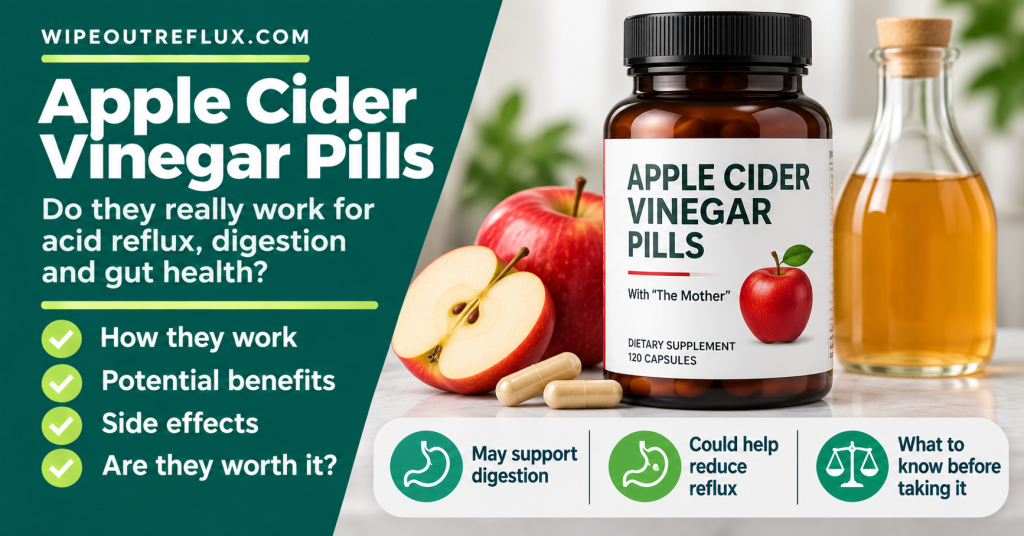
Apple cider vinegar pills aren’t a good idea if you have acid reflux, especially silent reflux (LPR). They deliver concentrated acid, there’s little evidence they help reflux, and one documented case found a tablet lodged in a woman’s throat and injured her esophagus. When researchers tested eight brands afterward, they found wide variation in size, acidity and contents, and doubt over whether some contained apple cider vinegar at all. The best-supported benefit of vinegar is a modest reduction in blood sugar after meals, which isn’t a reflux benefit. If you want to try one anyway, take it upright with a full glass of water and stop if symptoms worsen.
Apple cider vinegar pills are hugely popular for weight loss, blood sugar and “gut health”, and many people with reflux wonder whether a capsule is gentler than drinking the liquid. Below I look at what’s actually in them, what the evidence shows, why they’re risky for the esophagus and throat, and what to do instead.
Key Takeaways
- Apple cider vinegar (ACV) pills contain dried vinegar powder, so they’re still a source of acid in the stomach and, if one lodges, in the esophagus.
- There’s no good clinical evidence that ACV pills or liquid treat acid reflux.
- The idea that reflux comes from too little stomach acid applies to a small minority of people at most, and adding acid can worsen symptoms for most.
- A reported case of esophageal injury from an ACV tablet led researchers to test eight products. They found inconsistent pH, acid content and labeling.
- Supplements aren’t pre-approved for content, so what’s on the label may not match what’s in the capsule.
- A meta-analysis found vinegar modestly lowers blood sugar and insulin after meals, the most consistent benefit.
- With silent reflux, acidic exposure can reactivate pepsin in the throat, so acidic supplements are best avoided during healing.
- If you take ACV pills, swallow them upright with a full glass of water, never right before lying down, and stop if you get heartburn, throat pain or difficulty swallowing.
What’s in Apple Cider Vinegar Pills?
Most ACV pills contain dehydrated apple cider vinegar powder, typically a few hundred milligrams to around 500 mg per capsule or tablet, sometimes combined with other ingredients like cayenne, ginger or B vitamins. The active component in vinegar is acetic acid. Gummies usually contain a smaller amount of vinegar plus added sugar.
The quality problem is real. After a woman developed throat pain and difficulty swallowing from an ACV tablet that lodged in her throat, researchers analyzed eight ACV tablet products. They found considerable variability in tablet size, pH, acid content and label claims, and doubt remained over whether apple cider vinegar was actually an ingredient in some of them [Hill et al., Journal of the American Dietetic Association, 2005].
Supplements in the US aren’t approved for contents before sale, so if you do buy them, look for brands with independent third-party testing.
Do Apple Cider Vinegar Pills Help Acid Reflux?
The popular theory goes like this: reflux is caused by too little stomach acid, so adding acid “fixes” digestion and closes the lower esophageal sphincter. There’s no good clinical evidence for this. Most people with reflux produce normal amounts of acid, and the problem is acid and stomach contents going the wrong way. See does low stomach acid cause acid reflux?
For most people with reflux, adding acid makes things worse, not better. I cover the liquid form in detail in apple cider vinegar for acid reflux. The short version: some people report relief, but there are no good trials, and many people with reflux find vinegar a trigger.
Pills vs liquid for reflux
People often assume a capsule avoids the burn of liquid vinegar. It does avoid acid washing over your teeth and throat on the way down, which is a genuine advantage over the liquid. See acid reflux and tooth erosion. But the acid still ends up in your stomach, where it can be refluxed. And if a tablet sticks in the esophagus, it releases concentrated acid right against the lining.
The Esophagus Risk: Pills That Stick
Any pill can lodge in the esophagus, especially large tablets, pills taken with little water, or pills taken lying down or just before bed. When an acidic or irritating pill sticks, it can cause a local burn or ulcer, known as pill esophagitis. The documented ACV tablet case followed exactly this pattern [Hill et al., Journal of the American Dietetic Association, 2005].
People with reflux may be at higher risk, because inflammation, narrowing or slower movement in the esophagus makes it easier for pills to stick. See pill stuck in throat and trouble swallowing pills.
Why Silent Reflux Is a Special Case
With LPR, the main driver of throat damage is pepsin, a digestive enzyme that lodges in throat tissue and is reactivated by acid. Apple cider vinegar is strongly acidic. See is apple cider vinegar acidic? Anything that adds acid to the system, or brings it into contact with the throat, works against healing. That’s why low-acid eating plans for LPR exclude vinegar. See the LPR diet and food pH chart.
What Apple Cider Vinegar Pills Might Actually Do
The most consistent benefit of vinegar is on blood sugar. A meta-analysis of clinical trials found that consuming vinegar with a meal modestly reduced the rise in blood glucose and insulin afterward [Shishehbor et al., Diabetes Research and Clinical Practice, 2017]. Most of those studies used liquid vinegar, not pills, and the effect is modest.
Evidence for weight loss is limited and mixed, and claims about detox, immunity and “alkalizing” the body aren’t supported.
Who Should Avoid ACV Pills
- People with acid reflux, silent reflux (LPR), esophagitis or Barrett’s esophagus
- Anyone with difficulty swallowing or a history of food or pills sticking
- People with gastritis or stomach ulcers
- People with gastroparesis
- People taking diabetes medication or insulin, who should talk to their doctor first because of the effect on blood sugar
- People on diuretics or digoxin, or with low potassium, who should check with a pharmacist
- Pregnant or breastfeeding women, unless their provider agrees
If You Still Want to Try Them
- Choose a third-party-tested brand.
- Swallow each capsule upright with a full glass of water (8 oz).
- Take them with a meal, never on an empty stomach, and never within an hour of lying down.
- Prefer capsules over large, hard tablets.
- Stop straight away if you notice heartburn, throat burning, chest pain or pain on swallowing.
- Seek urgent help if a pill feels stuck and you can’t swallow saliva.
Better Options for Reflux
- An alginate after meals and at bedtime, such as Gaviscon Advance, which physically blocks reflux. See alginates for acid reflux.
- Not eating for 3 hours before bed, and raising the head of the bed
- A low-acid diet, especially for throat symptoms
- Short-term acid reducers, if needed and with medical advice
Conclusion
Apple cider vinegar pills don’t treat acid reflux, and for many people with reflux, particularly silent reflux, they’re more likely to hurt than help. They deliver acid, product quality is inconsistent, and a tablet that sticks can injure the esophagus. Their best-supported effect is a modest drop in blood sugar after meals, which doesn’t help reflux. If you choose to take them, swallow them upright with plenty of water and stop at the first sign of trouble.
If you’re looking for a natural way to calm reflux, food choices make a far bigger difference than any vinegar supplement. The Wipeout Diet Plan gives you a step-by-step, low-acid way to eat. I built it around LPR, the hardest form of reflux to control, and it works just as well for GERD and everyday heartburn.
Frequently Asked Questions
Do apple cider vinegar pills help acid reflux?
There’s no good clinical evidence that they do. Most people with reflux don’t have low stomach acid, and adding acid often worsens symptoms.
Are apple cider vinegar pills better than liquid for reflux?
Pills avoid acid washing over your teeth and throat, but they still add acid to your stomach, and a tablet that sticks in the esophagus can cause injury. Neither is recommended for reflux.
Can apple cider vinegar pills damage your esophagus?
Yes. A documented case found an apple cider vinegar tablet lodged in the throat caused esophageal injury. Taking pills upright with plenty of water reduces the risk.
Can apple cider vinegar pills cause heartburn?
They can, especially in people who already have reflux. Stop taking them if you notice heartburn or throat burning.
Are apple cider vinegar gummies better for reflux?
Gummies usually contain less vinegar plus added sugar. They’re less likely to lodge in the esophagus, but they still offer no proven reflux benefit and add acid.
What are the real benefits of apple cider vinegar pills?
The most consistent evidence is for a modest reduction in blood sugar and insulin after meals, mostly from studies of liquid vinegar. Evidence for weight loss is limited.
When should I take apple cider vinegar pills?
If you take them, take them with a meal, upright, with a full glass of water, and never shortly before lying down.
Research & References
- A report of esophageal injury from an apple cider vinegar tablet and an analysis of eight ACV tablet products, finding wide variability in tablet size, pH, acid content and label claims, and doubt over whether some contained apple cider vinegar [Hill et al., Journal of the American Dietetic Association, 2005].
- A systematic review and meta-analysis finding that vinegar consumed with a meal significantly reduced postprandial glucose and insulin responses [Shishehbor et al., Diabetes Research and Clinical Practice, 2017].

David Gray
12 years living with LPR · Consultant & researcher
I've lived with LPR for twelve years — the misdiagnoses, the PPI courses that did nothing, the slow work of figuring out what actually helps. Wipeout Reflux is where I translate the research into plain terms for people stuck in the same place. Every claim here is sourced to peer-reviewed work, and I consult one-to-one with LPR sufferers.