
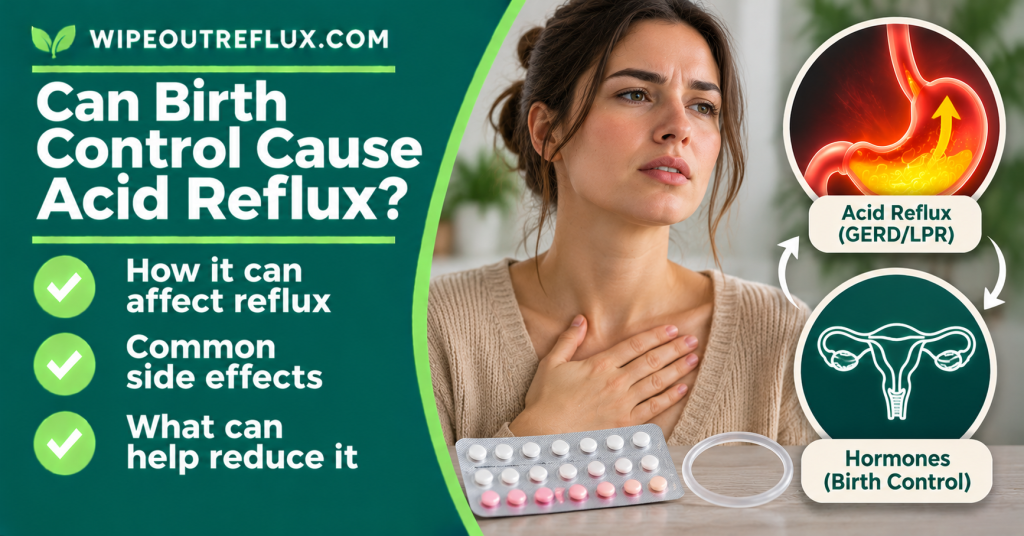
Birth control and hormone replacement therapy (HRT) can both contribute to acid reflux, though the evidence is stronger for HRT than for the pill. Female hormones, especially progesterone and estrogen together, can relax the lower esophageal sphincter, the valve that keeps stomach acid out of the esophagus. That’s the same mechanism behind heartburn in pregnancy. Large studies show that women using estrogen-based HRT are more likely to have reflux, and the risk rises with higher doses and longer use.
For birth control, the picture is more mixed. A very large US database study found combined pills were linked to a modestly higher risk of GERD, while the progestin-only implant (Nexplanon) wasn’t. But a Swedish twin study found no link with the pill at all. So hormonal birth control isn’t a guaranteed reflux trigger, but if your heartburn started or got worse soon after starting a new method, the timing is worth taking seriously, and there are good options to discuss with your doctor.
Key Takeaways
- Progesterone, particularly combined with estrogen, can lower the pressure of the lower esophageal sphincter and make reflux easier.
- In one early study, women’s LES pressure roughly halved during the part of their pill cycle that included a progestin.
- Postmenopausal hormone use was linked to a 41–66% higher risk of reflux symptoms in the Nurses’ Health Study, rising with estrogen dose and duration.
- Combined oral contraceptives were linked to a modestly higher GERD risk in one large database study, but not in a Swedish twin study.
- The progestin-only implant Nexplanon wasn’t linked to higher GERD risk in the same database study.
- Normal monthly hormone swings don’t appear to affect the LES or acid exposure in healthy women.
- If reflux starts with a new hormone method, talk to your doctor about the dose, formulation or delivery route rather than stopping suddenly.
How Female Hormones Affect Reflux
Your lower esophageal sphincter (LES) is a ring of smooth muscle at the bottom of the esophagus. It’s meant to stay closed most of the time and open briefly when you swallow. Anything that relaxes that muscle makes it easier for acid and pepsin to escape upward.
Progesterone is a smooth-muscle relaxant. That’s useful in pregnancy, where it helps keep the uterus calm, but it also relaxes other smooth muscle, including the LES and the gut wall. Estrogen seems to boost progesterone’s effects, and may affect the gut in its own right.
The classic evidence comes from studies in the 1970s:
- In women taking an older-style sequential pill, LES pressure stayed normal while they took estrogen alone. But when the progestin was added, LES pressure dropped from around 18–21 mmHg to about 9 mmHg, roughly halving [Van Thiel et al., Gastroenterology, 1976].
- In pregnant women, LES pressure fell progressively as progesterone and estrogen rose, reaching its lowest point at 36 weeks and returning to normal after delivery. Stomach acid production didn’t change [Van Thiel et al., Gastroenterology, 1977].
That second point is important. Hormone-related reflux isn’t about making more acid. It’s about the valve becoming less effective at keeping normal amounts of acid where they belong. I cover the pregnancy side of this in acid reflux and pregnancy, and how the valve works in the lower esophageal sphincter and acid reflux.
What about your monthly cycle?
Interestingly, the natural rise and fall of progesterone over a normal menstrual cycle doesn’t seem to be enough to matter. A study in 19 healthy women found no difference in LES pressure or 24-hour acid exposure between the low-progesterone and high-progesterone phases [Alvarez-Sánchez et al., The American Journal of Gastroenterology, 1999].
Many women still notice their reflux changes around their period, often because of bloating, cravings, pain relievers and other factors. I explore that in acid reflux and your period. But it suggests that the higher, steadier hormone levels of pregnancy and some medications are more likely to affect the LES than normal cycles.
Can Birth Control Cause Acid Reflux?
It can in some women, but the research isn’t consistent.
Combined pills (estrogen plus progestin)
- A US database study of more than 23 million premenopausal women found that combined oral contraceptives were an independent risk factor for GERD after adjusting for obesity, smoking, alcohol and NSAIDs. The adjusted increase in risk was modest, about 16% [Saleh et al., Neurogastroenterology and Motility, 2023].
- A Swedish study of more than 21,000 twins, which could control for genetic factors, found that oral contraceptive use was not associated with reflux symptoms [Nordenstedt et al., Gastroenterology, 2008].
Modern pills also contain much lower hormone doses than the ones used in the 1970s studies, which may be part of the reason the effect seems smaller today.
There’s another angle worth knowing. A large 2025 database study found combined pills were associated with a higher risk of developing gastroparesis (slow stomach emptying) and symptoms like early fullness [Khalil et al., Digestive and Liver Disease, 2025]. Slow emptying is itself a reflux driver, as I explain in gastroparesis and acid reflux. These were observational studies, so they can’t prove cause and effect.
Progestin-only methods
In the same US database study, women using the Nexplanon implant (a progestin-only method) had a slightly lower risk of GERD than women not using contraception [Saleh et al., Neurogastroenterology and Motility, 2023]. That’s a surprising result given progesterone’s relaxing effect, and the authors called for more research. It may reflect the steady, low dose from an implant, or differences between the women who choose each method.
There’s very little research on other progestin-only methods, such as the mini-pill, hormonal IUDs or the contraceptive injection, and reflux.
Nausea isn’t the same as reflux
Nausea is a well-known side effect of combined pills, especially in the first few months. Most side effects of hormonal contraception settle within three to five months of continued use [Grossman Barr, American Family Physician, 2010]. Some women describe this queasy, upper-stomach discomfort as heartburn, so it’s worth paying attention to whether you have true burning or regurgitation.
Can HRT Cause Acid Reflux?
The evidence here is more consistent, especially for estrogen.
- Nurses’ Health Study: among more than 51,000 postmenopausal women, current estrogen-only users had 66% higher odds of reflux symptoms, and combined estrogen-plus-progesterone users had 41% higher odds, compared with women who’d never used hormones. The risk increased with higher estrogen doses and longer use. Even selective estrogen receptor modulators (SERMs) and over-the-counter hormone products were linked with more reflux [Jacobson et al., Archives of Internal Medicine, 2008].
- Swedish twin study: ever using estrogen HRT increased the risk of reflux symptoms by 32%, even after accounting for genetic factors and body weight [Nordenstedt et al., Gastroenterology, 2008].
- UK GP records: in a study of menopausal women using validated medical records rather than questionnaires, estrogen-only HRT was linked to a 49% higher chance of a GERD diagnosis, and progestogen users were more likely to be prescribed PPIs [Close et al., BMC Gastroenterology, 2012].
Interestingly, estrogen-only HRT comes up as a risk factor in all three studies, which suggests estrogen may affect reflux in its own right, not just by boosting progesterone.
Menopause itself brings changes that affect reflux too, including weight gain around the middle, poorer sleep and changes in the gut. I go into these in menopause and acid reflux.
Should You Stop Your Birth Control or HRT?
No, not without talking to your doctor. Birth control and HRT both have important benefits, and the increase in reflux risk is usually modest. Stopping contraception suddenly risks pregnancy, and stopping HRT can bring back menopausal symptoms.
Instead, it’s worth discussing:
- Timing: did your reflux start or clearly worsen within weeks of starting or changing a method?
- Dose: the HRT data show risk rising with estrogen dose, so the lowest effective dose may help.
- Formulation: switching between combined and progestin-only contraception, or between pill types, may be an option.
- Delivery route: transdermal HRT (patches, gels and sprays) bypasses the stomach and liver. There isn’t direct evidence that it causes less reflux, but some women find non-oral options easier on their digestion overall, and it’s a reasonable thing to ask about.
- Giving it time: nausea and other side effects of new contraception often settle within a few months.
How to Reduce Hormone-Related Reflux
Because hormones mainly weaken the valve rather than increasing acid, the most effective strategies are the ones that take pressure off the LES and reduce how much reflux reaches it.
- Eat smaller meals. A stretched stomach pushes harder on a weaker valve.
- Finish eating three hours before bed, and raise the head of the bed if night-time symptoms are an issue.
- Limit foods that relax the LES further, especially chocolate, mint, alcohol, coffee and fatty or fried food. Stacking these on top of a hormone effect can tip you over the edge.
- Use an alginate after meals and at bedtime. Alginates form a physical raft on top of stomach contents, which is ideal when the valve itself is the weak point. See alginates for acid reflux.
- Keep an eye on weight around the middle, which adds pressure from below, particularly after menopause.
- Take pills with plenty of water and stay upright afterward, as with any tablet.
- Track your symptoms alongside any hormone changes. It’s the best way to spot a real pattern.
A structured approach makes this much easier. The Wipeout Diet Plan walks you through which foods relax the LES, how to time your meals and how to build reflux-friendly days without guesswork.
When to See a Doctor
Get advice if you have:
- Reflux that started with a new hormone treatment and isn’t settling after a few months
- Heartburn more than twice a week, or needing antacids most days
- Difficulty swallowing, food sticking, vomiting or unexplained weight loss
- Chest pain, especially if it’s new or comes with exertion, breathlessness or sweating
- Upper abdominal pain on combined pills or HRT, which should always be assessed, because hormones can rarely affect the gallbladder and liver too
For other medications that commonly affect reflux, see medications that make acid reflux worse.
Conclusion
Female hormones can make acid reflux more likely, mainly by relaxing the lower esophageal sphincter rather than by increasing acid. The effect is clearest in pregnancy and with HRT: several large studies link estrogen-based hormone therapy to more reflux symptoms, with risk rising with higher doses and longer use. For birth control, the evidence is less consistent. Combined pills have been linked to a modestly higher GERD risk in one large study but not another, while the progestin-only implant wasn’t linked to more reflux.
If your reflux seems to have started with a new pill, patch or HRT, don’t stop it on your own. Talk to your doctor about dose, formulation or delivery route, and give new contraception a few months to settle. In the meantime, focus on what helps a weakened valve: smaller meals, an earlier dinner, fewer LES-relaxing foods and an alginate when you need it.
That’s exactly where the Wipeout Diet Plan comes in. It’s my complete, in-depth guide to calming reflux through food, meal timing and daily habits. I built it primarily around silent reflux, the throat-based form many women develop around menopause, but because it targets the same underlying mechanisms, it helps GERD, heartburn and classic acid reflux just as well.
Frequently Asked Questions
Can the pill cause heartburn?
Some women notice heartburn on combined pills. One large study linked them to a modestly higher GERD risk, but another found no link. Nausea in the first few months is more common and often settles.
Can HRT cause acid reflux?
Yes. Several large studies link estrogen-based HRT to more reflux symptoms, with the risk rising with higher doses and longer use.
Why do hormones cause acid reflux?
Progesterone, and estrogen to some extent, relax smooth muscle, including the lower esophageal sphincter that keeps acid in the stomach. They don’t appear to increase acid production.
Does progesterone-only birth control cause less reflux?
In one large database study, the Nexplanon implant wasn’t linked to higher GERD risk, unlike combined pills. There’s little research on other progestin-only methods.
Will my reflux go away if I stop HRT?
It may improve if hormones were a major factor, but menopause itself also affects reflux. Talk to your doctor before stopping, and consider adjusting dose or route first.
Does estrogen patch HRT cause less reflux than tablets?
There isn’t direct research comparing them for reflux. Transdermal HRT avoids passing through the gut, and it’s a reasonable option to discuss with your doctor.
Can birth control cause silent reflux?
If hormones relax the LES enough to allow reflux, it can travel high enough to reach the throat in some people. There’s no specific research on birth control and LPR.
Research & References
- [Van Thiel et al., Gastroenterology, 1976] — LES pressure was unchanged during the estrogen-only phase of a sequential pill but fell significantly to about 9 mmHg when progestin was added.
- [Van Thiel et al., Gastroenterology, 1977] — LES pressure fell progressively during pregnancy, lowest at 36 weeks, while acid secretion was unchanged; pressure normalized after delivery.
- [Alvarez-Sánchez et al., The American Journal of Gastroenterology, 1999] — In 19 healthy women, normal menstrual progesterone fluctuations didn’t change LES pressure or 24-hour esophageal acid exposure.
- [Saleh et al., Neurogastroenterology and Motility, 2023] — US database analysis finding combined oral contraceptives an independent GERD risk factor (adjusted OR 1.16), while Nexplanon was associated with slightly lower risk (OR 0.90).
- [Nordenstedt et al., Gastroenterology, 2008] — Swedish twin study: estrogen HRT raised reflux symptom risk by 32% independent of genetics and BMI, while oral contraceptives weren’t associated with reflux.
- [Jacobson et al., Archives of Internal Medicine, 2008] — Nurses’ Health Study of 51,637 postmenopausal women: current estrogen-only (OR 1.66) and combined (OR 1.41) hormone use linked to reflux symptoms, rising with dose and duration.
- [Close et al., BMC Gastroenterology, 2012] — UK GP records study finding estrogen-only HRT associated with GERD diagnosis (adjusted OR 1.49) and greater PPI use among progestogen users.
- [Khalil et al., Digestive and Liver Disease, 2025] — Propensity-matched cohort linking combined oral contraceptives to higher risk of gastroparesis (OR 1.29) and early satiety in premenopausal women.
- [Grossman Barr, American Family Physician, 2010] — Review noting most adverse effects of hormonal contraceptives, including nausea, usually resolve within three to five months.

David Gray
12 years living with LPR · Consultant & researcher
I've lived with LPR for twelve years — the misdiagnoses, the PPI courses that did nothing, the slow work of figuring out what actually helps. Wipeout Reflux is where I translate the research into plain terms for people stuck in the same place. Every claim here is sourced to peer-reviewed work, and I consult one-to-one with LPR sufferers.