
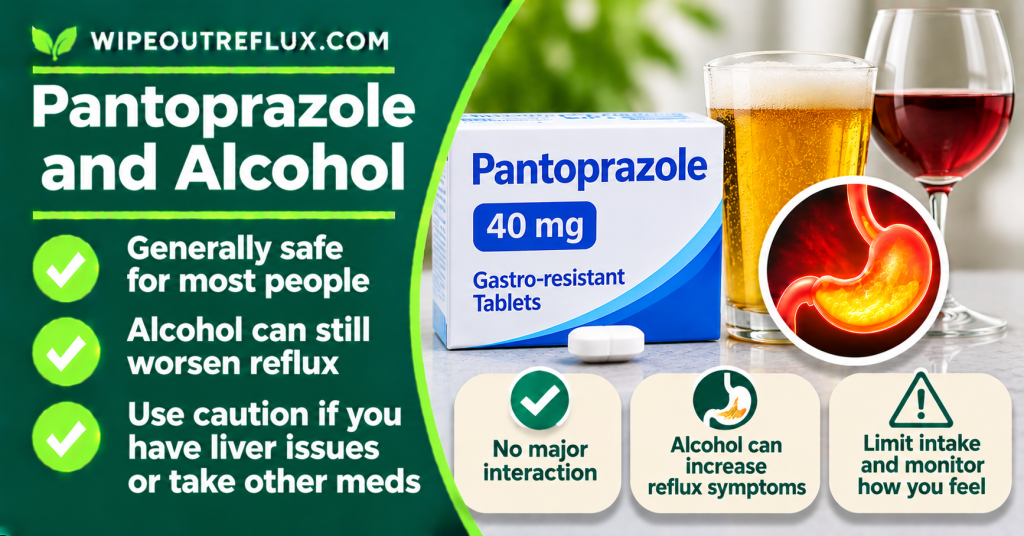
Yes, you can usually drink alcohol while taking pantoprazole. There’s no known harmful interaction between them. Interaction studies found pantoprazole didn’t change how the body handles alcohol, and it doesn’t make you more drunk.
The catch is that alcohol works directly against what pantoprazole is trying to do. It relaxes the valve that keeps stomach contents down, slows the clearing of acid from the esophagus, and irritates the stomach lining. So while a drink won’t react with the tablet, it can undo much of the progress pantoprazole is making, especially if you’re taking it to heal esophagitis, gastritis or an ulcer.
Key Takeaways
- There’s no known dangerous interaction between pantoprazole and alcohol. Studies found pantoprazole didn’t affect ethanol’s pharmacokinetics.
- PPIs, unlike some older H2 blockers, don’t interfere with how your stomach breaks down alcohol.
- Alcohol lowers lower esophageal sphincter pressure and impairs acid clearance, so reflux still happens even when acid is suppressed.
- Beer and wine stimulate acid strongly. Spirits don’t, though they still relax the sphincter.
- If pantoprazole was prescribed to heal an ulcer, gastritis or erosive esophagitis, avoiding alcohol during treatment gives it the best chance.
- Heavy drinking and long-term PPI use can both lower magnesium levels, which is worth knowing if you do both.
- Pantoprazole doesn’t stop reflux or pepsin reaching the throat, so drinking is still a common silent reflux trigger.
Does Pantoprazole Interact With Alcohol?
No meaningful interaction has been found. When pantoprazole was being developed, it went through a series of interaction studies with commonly used substances. Ethanol was one of them, and pantoprazole didn’t affect its pharmacokinetics or effects [Steinijans et al., International Journal of Clinical Pharmacology and Therapeutics, 1996].
This matters because some older acid reducers did cause problems. Ranitidine and cimetidine blocked an enzyme in the stomach lining that breaks down a little alcohol before it reaches the bloodstream, and in one study ranitidine raised peak blood alcohol by 34% [DiPadova et al., JAMA, 1992].
PPIs as a group don’t seem to do this. Omeprazole didn’t affect gastric alcohol metabolism or blood alcohol levels in volunteers [Roine et al., Digestive Diseases and Sciences, 1992], and lansoprazole and omeprazole both left alcohol metabolism unchanged in another study [Battiston et al., Pharmacology & Toxicology, 1997].
So from a safety point of view, a drink on pantoprazole is no different from a drink without it. Pantoprazole is also known for having very few drug interactions in general. My guide to pantoprazole for acid reflux covers why it’s so widely prescribed.
Why Alcohol Still Causes Reflux on Pantoprazole
Pantoprazole reduces how much acid your stomach makes. It doesn’t stop stomach contents from moving up into your esophagus. Alcohol, on the other hand, makes that upward movement more likely in several ways.
It relaxes the sphincter
The lower esophageal sphincter is the ring of muscle that acts as a one-way valve. Alcohol lowers its pressure and weakens the muscle contractions that push refluxed material back down [Bujanda, American Journal of Gastroenterology, 2000]. Even in healthy young adults without reflux, 11 out of 12 refluxed more after a social amount of alcohol [Kaufman and Kaye, Gut, 1978].
It slows clearance at night
When volunteers drank 4 oz of scotch three hours after their evening meal and then went to bed, acid exposure in the esophagus went up and their ability to clear it while lying down was impaired [Vitale et al., JAMA, 1987]. Since pantoprazole is usually taken in the morning, its effect is often weakest overnight, which is exactly when a late drink does the most damage.
Fermented drinks push acid up
Beer and wine raised stomach acid output to 57% to 95% of the maximum in healthy volunteers, while distilled spirits had no significant effect [Teyssen et al., Gut, 1997]. Pantoprazole blunts this, because it acts at the final step of acid production, but it doesn’t remove the problem entirely. Wine also increases reflux directly, with white wine worse than red in one study [Pehl et al., Scandinavian Journal of Gastroenterology, 1998].
The more you drink, the more reflux you get
A meta-analysis of 29 studies found that drinkers had about 1.5 times the odds of GERD and 1.8 times the odds of reflux esophagitis, with risk climbing as consumption rose [Pan et al., Alcohol and Alcoholism, 2019].
When You Should Avoid Alcohol on Pantoprazole
Moderate drinking on pantoprazole is usually fine for people treating ordinary heartburn. There are situations where it’s worth avoiding alcohol altogether, at least for the treatment period.
You’re healing erosive esophagitis
Pantoprazole 40 mg is typically given for 8 weeks to heal an inflamed esophagus. Alcohol increases reflux and irritates the lining directly, so drinking during that window can slow healing. See erosive esophagitis.
You have a stomach ulcer or gastritis
Pantoprazole is often prescribed after alcohol has inflamed the stomach lining. It’s very effective at protecting the stomach. In a trial of aspirin users with previous ulcers, none of those on pantoprazole had their ulcers come back over 48 weeks [Ng et al., Gastroenterology, 2010]. But continuing to drink keeps irritating the tissue it’s trying to heal. If your symptoms are in your upper stomach rather than your chest, read stomach ulcer or acid reflux.
You have liver disease
Pantoprazole is broken down by the liver. If heavy drinking has affected your liver, ask your doctor to review all your medications, pantoprazole included.
You drink heavily and have been on pantoprazole for a long time
Long-term PPI use is linked with low magnesium in some people, and heavy alcohol use also depletes magnesium. The two together may add up. Signs include muscle cramps, tremors, palpitations and fatigue. My article on PPIs and low magnesium explains what to watch for, and pantoprazole side effects covers the rest.
Pantoprazole, Alcohol and Silent Reflux
If your reflux shows up in your throat (hoarseness, throat clearing, a lump sensation), alcohol is a bigger deal. Pantoprazole makes refluxed material less acidic, but it doesn’t stop it reaching the throat, and it doesn’t stop pepsin, the enzyme that does much of the damage to throat tissue. I cover this in why PPIs don’t work for LPR.
For people with LPR, a single evening of drinking can bring back symptoms for days. If you’re in the early, healing phase, it’s worth taking a break from alcohol altogether. The Wipeout Diet Plan covers the wider food and drink side of getting LPR under control.
How to Drink Smarter on Pantoprazole
- Keep taking pantoprazole as prescribed. Don’t skip a dose because you’re drinking. The interaction concern simply isn’t there.
- Choose spirits with a still, non-citrus mixer over beer, white wine or champagne. See whiskey or vodka for acid reflux.
- Drink with a moderate meal rather than on an empty stomach.
- Finish at least three hours before bed and raise the head of your bed. See acid reflux at night.
- Take an alginate before bed on drinking nights. It forms a protective raft that physically limits reflux. See alginates for acid reflux.
- Keep the total low. The link between amount and reflux is dose-dependent.
Seek urgent help if you vomit blood or something that looks like coffee grounds, have black stools, or develop severe stomach pain after drinking.
Conclusion
There’s no harmful interaction between pantoprazole and alcohol. It won’t change how drunk you get, and alcohol won’t make the tablet toxic. That’s the reassuring part.
The less reassuring part is that alcohol works against pantoprazole on almost every front. It relaxes the sphincter, slows acid clearance at night and, in the case of beer and wine, stimulates acid production. Pantoprazole can turn down the acid, but it can’t stop the reflux. If you’re taking it to heal something (esophagitis, gastritis or an ulcer), the best thing you can do is avoid alcohol until you’re healed.
Over the long term, the people who tolerate an occasional drink best are those who have brought their reflux under control at the source, not those depending on a pill to cancel out every trigger. That’s what the Wipeout Diet Plan is for. It’s my complete, in-depth guide to the foods, drinks, meal timing and habits that reduce reflux day to day. I built it first and foremost for silent reflux, the throat-based kind, but because it targets the same root causes, it works just as well for GERD and everyday heartburn.
Frequently Asked Questions
Can I drink alcohol while taking pantoprazole?
Yes, in moderation. There’s no harmful interaction. Alcohol can still worsen the reflux pantoprazole is treating.
How long after taking pantoprazole can I drink alcohol?
There’s no required gap. Take pantoprazole before breakfast as usual. For reflux reasons, drink with food and stop at least three hours before bed.
Does alcohol stop pantoprazole from working?
Not directly. Pantoprazole still lowers acid. But alcohol increases reflux, which pantoprazole can’t prevent, so symptoms often return on drinking days.
Can I drink on pantoprazole 40 mg?
The dose doesn’t change the interaction picture. But 40 mg is often prescribed to heal esophagitis or ulcers, which is a good reason to avoid alcohol during treatment.
Is pantoprazole good for alcohol gastritis?
PPIs like pantoprazole are commonly prescribed to help the stomach lining heal after alcohol-related gastritis. They work best if you stop or significantly cut down drinking at the same time.
Is pantoprazole hard on the liver?
Pantoprazole is processed by the liver, but it’s generally well tolerated. People with significant liver disease should have their medications reviewed by a doctor.
What’s the safest drink for reflux on pantoprazole?
Spirits with a still, low-acid mixer are usually gentler than beer, white wine or champagne, because fermented drinks strongly stimulate acid. All alcohol still relaxes the sphincter.
Research & References
- [Steinijans et al., International Journal of Clinical Pharmacology and Therapeutics, 1996] — Review of interaction studies finding pantoprazole did not affect the pharmacokinetics or pharmacodynamics of ethanol or a wide range of other drugs.
- [DiPadova et al., JAMA, 1992] — Ranitidine raised peak blood alcohol by 34% and cimetidine had a larger effect, while famotidine had no significant effect.
- [Roine et al., Digestive Diseases and Sciences, 1992] — A week of omeprazole did not affect peak blood alcohol or gastric first-pass metabolism of alcohol.
- [Battiston et al., Pharmacology & Toxicology, 1997] — Lansoprazole and omeprazole did not affect ethanol metabolism, unlike cimetidine.
- [Bujanda, American Journal of Gastroenterology, 2000] — Review concluding alcohol promotes GERD by reducing lower esophageal sphincter pressure and esophageal motility.
- [Kaufman and Kaye, Gut, 1978] — 11 of 12 healthy volunteers refluxed more after social-drinking amounts of alcohol.
- [Vitale et al., JAMA, 1987] — 4 oz of scotch after an evening meal increased esophageal acid exposure and impaired clearance while lying down.
- [Teyssen et al., Gut, 1997] — Fermented drinks raised acid output to 57–95% of maximal, while distilled drinks had no significant effect.
- [Pehl et al., Scandinavian Journal of Gastroenterology, 1998] — White and red wine both increased esophageal acid exposure versus water, with white wine worse.
- [Pan et al., Alcohol and Alcoholism, 2019] — Meta-analysis of 29 studies: drinkers had 1.48 times the odds of GERD and 1.78 times the odds of reflux esophagitis, with a dose-response relationship.
- [Ng et al., Gastroenterology, 2010] — No ulcer recurrence on pantoprazole 20 mg over 48 weeks in aspirin users with prior ulcers, versus 20% on high-dose famotidine.

David Gray
12 years living with LPR · Consultant & researcher
I've lived with LPR for twelve years — the misdiagnoses, the PPI courses that did nothing, the slow work of figuring out what actually helps. Wipeout Reflux is where I translate the research into plain terms for people stuck in the same place. Every claim here is sourced to peer-reviewed work, and I consult one-to-one with LPR sufferers.