
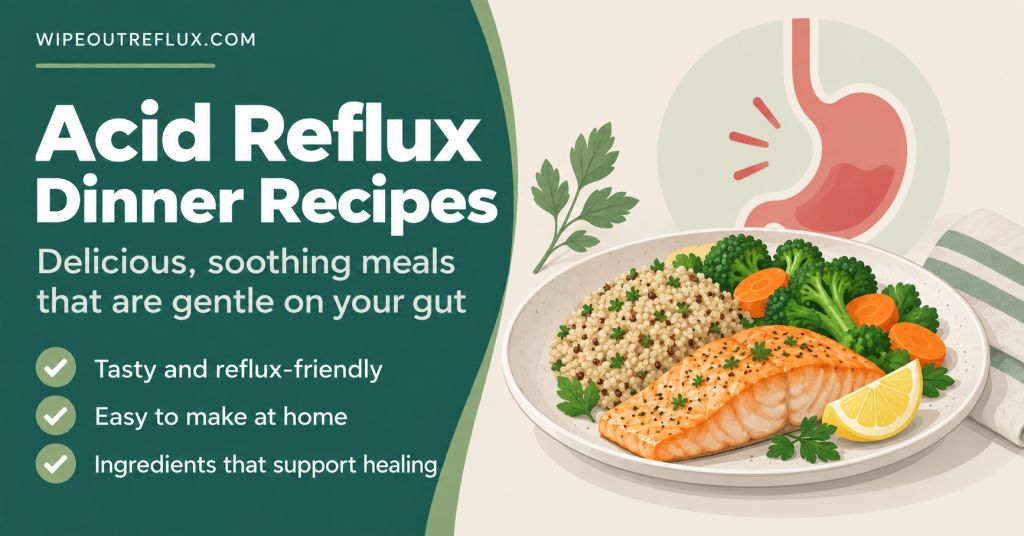
A reflux-friendly dinner comes down to three things: what’s on the plate, how much of it, and how long before bed you eat it. Get those right and dinner stops being the meal that wrecks your night. The recipes below are all built on low-acid, gentle ingredients — lean proteins, non-citrus vegetables, whole grains and mild seasonings — and they deliberately skip the usual triggers: tomatoes, raw onion and garlic, chili, heavy cream and citrus.
But before the recipes, one section earns its place at the top, because dinner is the meal most tied to nighttime reflux. Portion size and timing matter as much as ingredients — a “safe” meal eaten too late or too large will still come back to haunt you when you lie down.
Key Takeaways
- Dinner is the meal most linked to nighttime reflux, so timing and portion size matter as much as the ingredients.
- Leave at least 3 hours between finishing dinner and lying down — eating close to bedtime clearly raises reflux risk.
- Keep portions moderate and lower in fat; large, fatty meals relax the valve that’s meant to keep acid down.
- Build dinners around lean protein, low-acid vegetables and whole grains, and skip tomato, citrus, raw onion and garlic, chili and heavy cream.
- The 5 recipes below are all low-acid and LPR-friendly, including a mild Indian-style curry.
- These are a starting point — the same principles let you adapt almost any dinner.
Why Dinner Is the Reflux Danger Meal
When you lie down, you lose gravity’s help. During the day, an upright posture keeps stomach contents where they belong; at night, a full stomach and a horizontal body make it far easier for acid to travel up. That’s why the same meal that’s fine at lunchtime can trigger symptoms after a late dinner.
The timing effect is well documented. Research looking at the gap between the evening meal and bedtime found that a short dinner-to-bed interval is associated with a significantly higher risk of reflux disease [Fujiwara et al., American Journal of Gastroenterology, 2005]. The practical rule that comes out of it: finish eating at least three hours before you lie down. If you go to bed at 11, aim to have dinner done by 8.
Portion size and fat matter too. Large, rich meals both stretch the stomach and relax the lower esophageal sphincter — the valve at the top of the stomach. A study comparing low-fat and high-fat meals found the high-fat version worsened sphincter function and reflux [Pehl et al., American Journal of Gastroenterology, 1999]. So a moderate, lower-fat dinner isn’t just about calories — it directly reduces the reflux you’ll feel later. For more on the nighttime angle, see how long before bed to stop eating and my guide to acid reflux at night.
How to Build a Reflux-Friendly Dinner
Every recipe below follows the same simple template, and once you have it, you can adapt almost any meal:
- Lean protein: skinless chicken or turkey, white fish, salmon, eggs, tofu or well-cooked legumes.
- Low-acid vegetables: zucchini, green beans, carrots, spinach, bok choy, broccoli, sweet potato, peas.
- A gentle whole grain or starch: rice, quinoa, oats, couscous, potato or sweet potato.
- Mild flavor, not fire: fresh herbs, ginger, a little olive oil — and skip tomato, citrus, raw onion and garlic, chili, black pepper heat, and heavy cream.
The LPR foods to eat and foods to avoid lists are the fuller reference if you want to swap ingredients in or out.
5 Acid Reflux Dinner Recipes
1. Herb-Baked Salmon with Rice and Green Beans
Serves 2 · Prep 10 minutes · Cook 20 minutes
Salmon is one of the best proteins for reflux: its omega-3 fats are anti-inflammatory, and because you’re baking rather than frying, the overall fat load stays moderate. The trick to keeping it reflux-friendly is flavoring with fresh herbs and a little olive oil rather than the lemon that usually comes with salmon — you won’t miss it.
Ingredients
- 2 salmon fillets (about 140g each), skin on
- 1 tbsp olive oil, plus a little extra
- 2 tbsp fresh dill, finely chopped
- 2 tbsp fresh parsley, finely chopped
- 1 cup white or brown rice
- 200g green beans, trimmed
- Salt, to taste
Method
- Heat the oven to 400°F (200°C) and line a baking tray. Rinse the rice and set it cooking according to the packet — brown rice takes longer, so start it first.
- Pat the salmon fillets dry (dry fish crisps rather than steams). Place them skin-side down on the tray, brush the tops with olive oil, season lightly with salt, and press the chopped dill and parsley over the surface.
- Bake for 12–15 minutes. The salmon is done when it flakes easily with a fork and has just turned opaque in the center — pull it a touch early rather than late, as it keeps cooking off the heat.
- While it bakes, steam the green beans for 4–5 minutes until bright and tender-crisp, then toss with a few drops of olive oil and a little salt.
- Serve the salmon over the rice with the beans alongside, scattered with any leftover herbs.
Reflux tip: if you normally reach for lemon, try a small splash of the rice’s cooking water with extra dill stirred through instead — it brightens the fish without adding acid.
2. One-Pan Roast Chicken Thighs with Carrots and Potatoes
Serves 2–3 · Prep 10 minutes · Cook 40 minutes
A proper comfort-food traybake with no trigger ingredients and only one pan to wash. Using skinless, boneless thighs keeps the fat down while staying far more forgiving and tender than breast in the oven. Everything roasts together, so the vegetables pick up the savory juices from the chicken.
Ingredients
- 4 skinless, boneless chicken thighs
- 3 carrots, cut into thick batons
- 4 small potatoes, quartered
- 1.5 tbsp olive oil
- 2 sprigs fresh rosemary, leaves chopped
- 2 sprigs fresh thyme, leaves stripped
- Salt, to taste
Method
- Heat the oven to 400°F (200°C). Put the carrots and potatoes in a large roasting tray, toss with 1 tablespoon of the olive oil, half the herbs and a little salt, and spread them in a single layer.
- Roast the vegetables on their own for 15 minutes to give them a head start — they take longer than the chicken.
- Meanwhile, rub the chicken thighs with the remaining olive oil, herbs and a little salt.
- Take the tray out, nestle the thighs among the part-roasted vegetables, and return everything to the oven for a further 20–25 minutes.
- It’s ready when the chicken is cooked through (no pink in the middle, juices run clear) and the potatoes are golden at the edges. Let it rest for a couple of minutes before serving.
Reflux tip: flavor comes from the herbs here rather than the garlic and onion a traybake usually leans on. If you tolerate the gentle background sweetness of cooked onion, you can add a few wedges — but leave them out during a flare.
3. Ginger Chicken and Bok Choy Stir-Fry
Serves 2 · Prep 15 minutes · Cook 10 minutes
Most stir-fries are a reflux minefield of garlic, chili and soy, but this one leans on ginger — one of the few pungent flavors that’s actually soothing for the gut — so you get a quick, savory weeknight dinner that stays gentle. Have everything chopped before you start, because stir-frying moves fast.
Ingredients
- 2 chicken breasts, thinly sliced
- 2 heads bok choy, leaves separated and stalks sliced
- 1 thumb-sized piece fresh ginger, peeled and grated
- 1 tbsp olive or sesame oil
- 3–4 tbsp low-sodium chicken stock
- 1 cup rice, to serve
- Salt, to taste
Method
- Get the rice cooking first so it’s ready when the stir-fry is.
- Heat the oil in a large pan or wok over medium-high heat. Add the sliced chicken in a single layer and let it sit for a minute before stirring, so it browns rather than stews. Cook for 4–5 minutes until nearly cooked through.
- Add the grated ginger and stir for about 30 seconds until fragrant — don’t let it catch and burn.
- Add the thicker bok choy stalks first with the splash of stock, cook for 2 minutes, then add the leaves and cook another 1–2 minutes until wilted and the chicken is fully cooked.
- Season lightly with salt and serve over the rice.
Reflux tip: skip the soy sauce and chili that usually finish a stir-fry. If you want a little savory depth, a teaspoon of extra low-sodium stock reduced down does the job without the salt spike or the heat.
Want a full week of dinners like these, not just five? These recipes follow the exact template inside the Wipeout Diet Plan, which includes a complete two-week meal plan with recipes — breakfasts, lunches, dinners and snacks — so you’re never staring into the fridge wondering what’s safe. It was built around LPR and silent reflux but works just as well for GERD and everyday heartburn, because it targets the same underlying mechanisms.
4. Turkey and Zucchini Meatballs (No Tomato)
Serves 3–4 · Prep 20 minutes · Cook 20 minutes
Meatballs without the tomato sauce that usually makes pasta night a reflux trap. Lean turkey keeps the fat down, and grated zucchini keeps the meatballs moist so they don’t dry out without a sauce to sit in. They’re dressed simply with olive oil and herbs instead.
Ingredients
- 400g lean ground turkey
- 1 small zucchini, grated and squeezed dry in a clean cloth
- 3 tbsp breadcrumbs
- 1 egg
- 2 tbsp fresh basil, chopped
- 2 tbsp fresh parsley, chopped
- 1 tbsp olive oil, plus extra to dress
- 300g pasta of choice
- Salt, to taste
Method
- Heat the oven to 400°F (200°C) and line a tray. Squeezing the grated zucchini dry really matters — wet zucchini makes the mix sloppy and the meatballs fall apart.
- In a bowl, combine the turkey, dried zucchini, breadcrumbs, egg, chopped herbs and a little salt. Mix with your hands just until it comes together; over-mixing makes tough meatballs.
- Roll into small, even balls (about 20). Place on the tray and bake for 18–20 minutes until cooked through and lightly golden. (You can also pan-fry them gently in the olive oil, turning to brown all sides.)
- Meanwhile, cook the pasta until just tender and reserve a cup of the cooking water before draining.
- Toss the pasta with a tablespoon of olive oil, the fresh herbs and a splash of the reserved pasta water to loosen it into a light glossy coating, then serve the meatballs on top.
Reflux tip: for a creamier finish without tomato or heavy cream, stir a spoonful of ricotta through the hot pasta — it melts into a mild, low-acid sauce.
5. Mild Coconut Chicken Curry (Indian-Style, No Tomato or Chili)
Serves 3–4 · Prep 15 minutes · Cook 25 minutes
Proof that you don’t have to give up curry with reflux — this version builds its warmth from coconut milk and gentle ground spices rather than the tomato, chili, raw onion and garlic that usually set off symptoms. It’s mild, creamy and genuinely satisfying.
Ingredients
- 2 chicken breasts, cut into bite-sized pieces
- 1 can (400ml) coconut milk
- 1 tsp ground coriander
- ½ tsp ground turmeric
- ½ tsp ground cumin (optional, if tolerated)
- 1 thumb-sized piece fresh ginger, grated
- 2 carrots, sliced
- 150g green beans, halved
- 1 tbsp olive oil
- 1 cup rice, to serve
- Salt, to taste
Method
- Start the rice cooking. Warm the olive oil in a pan over medium heat and add the grated ginger and the ground spices, stirring for about a minute until fragrant — toasting the spices briefly deepens the flavor and means you need no chili or onion for depth.
- Add the chicken pieces and stir to coat them in the spices, cooking for 3–4 minutes until they turn opaque on the outside.
- Pour in the coconut milk, add the carrots, and bring to a gentle simmer. Cook for 10 minutes.
- Add the green beans and simmer for a further 8–10 minutes, until the chicken is cooked through and the sauce has thickened slightly. Season with salt.
- Serve over the rice.
Reflux tip: ginger and turmeric do the flavor work here, both of which are gentle on reflux. Leave out the cumin if strong spices bother you, and use light coconut milk if you want to keep the meal lower in fat. For more in this style, the Mediterranean approach to reflux and my roundup of the best acid reflux cookbooks are good next stops.
Make Any Dinner More Reflux-Friendly
Beyond the recipes, a few habits make any evening meal safer:
- Eat earlier. The three-hour buffer before bed is the single most effective change.
- Serve smaller portions. If you’re still hungry, add more low-acid vegetables rather than more of the rich stuff.
- Stay upright afterwards. A gentle walk beats collapsing on the sofa.
- Go easy on drinks with dinner. Large volumes of fluid, and especially fizzy or alcoholic drinks, add to the pressure.
Conclusion
A good reflux dinner is really a combination of the right ingredients, a moderate portion, and enough time before bed to digest — the five recipes above give you ready-made examples, but the principles behind them are what let you cook freely without triggering symptoms every night. Master the template — lean protein, low-acid vegetables, a gentle grain, mild flavors, eaten early — and dinner stops being the meal you dread.
If you’d like this taken further than a handful of recipes, the Wipeout Diet Plan builds the whole approach into a structured system, with a full two-week meal plan and recipes across every meal, plus the framework for adapting your own favorites. It was designed first for LPR and silent reflux but works just as well for GERD and everyday heartburn. And when you’re improvising your own dinners, the Wipeout Food Reference Guide is the companion to keep on your phone — check any ingredient against it and you’ll know its pH and whether it’s safe before it goes in the pan.
Cook gently, eat early, and let your evenings settle.
Frequently Asked Questions
What can I eat for dinner with acid reflux?
Build the meal around lean protein (chicken, turkey, white fish, salmon, tofu), low-acid vegetables (zucchini, carrots, green beans, spinach, sweet potato), and a gentle grain like rice, quinoa or oats. Avoid tomato, citrus, raw onion and garlic, chili and heavy cream, and keep the portion moderate.
How long before bed should I eat dinner?
Aim for at least three hours between finishing dinner and lying down. Eating close to bedtime is strongly linked to nighttime reflux, because lying down with a full stomach makes it easy for acid to travel up.
Are there GERD-friendly dinner ideas that aren’t bland?
Yes — ginger, fresh herbs, coconut milk and gentle roasting all add plenty of flavor without triggering reflux. The mild coconut chicken curry and ginger chicken stir-fry above show you can keep dinners interesting while staying low-acid.
Can I eat pasta or curry with acid reflux?
Both can work if you adapt them. For pasta, skip the tomato sauce and dress it with olive oil, herbs and vegetables, as in the turkey meatball recipe. For curry, use a coconut base with mild spices and no tomato or chili, like the Indian-style recipe above.
Research & References
- Study finding that a short interval between the evening meal and bedtime is associated with a significantly higher risk of gastro-esophageal reflux disease [Fujiwara et al., American Journal of Gastroenterology, 2005].
- Study comparing low-fat and high-fat meals, finding the high-fat meal worsened lower esophageal sphincter function and gastroesophageal reflux [Pehl et al., American Journal of Gastroenterology, 1999].

David Gray
12 years living with LPR · Consultant & researcher
I've lived with LPR for twelve years — the misdiagnoses, the PPI courses that did nothing, the slow work of figuring out what actually helps. Wipeout Reflux is where I translate the research into plain terms for people stuck in the same place. Every claim here is sourced to peer-reviewed work, and I consult one-to-one with LPR sufferers.