
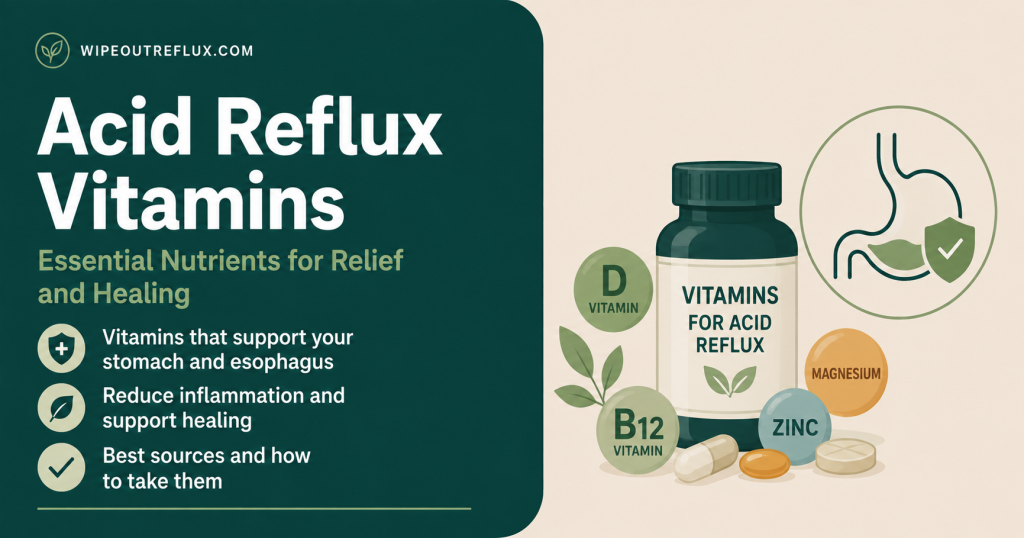
When people ask me about “acid reflux vitamins,” they’re usually asking one of two things — and the honest answer is that both matter. Some vitamins and supplements may genuinely help calm reflux, while others are among the most common hidden causes of heartburn. The same pill cabinet can hold both your friend and your trigger.
On the helpful side, the standouts with real research behind them are melatonin and the B vitamins, with a handful of mucosal-support supplements playing a supporting role. On the trigger side, the usual offenders are iron and vitamin C — and, importantly, the problem is often not the vitamin itself but how you take it. There’s also a third angle worth knowing: long-term reflux and the acid-blocking medications used to treat it can quietly deplete certain vitamins, especially B12 and magnesium.
Let me walk through all three — what may help, what may hurt, and how to take any of it safely. One quick note first: I’m not a doctor, and this isn’t medical advice. Supplements can interact with medications and with each other, and deficiencies need proper testing, so treat what follows as a map for a conversation with your doctor or pharmacist, not a substitute for one.
Key Takeaways
- Vitamins cut both ways for reflux — some may help, others commonly trigger heartburn.
- The best-evidenced helpers are melatonin and B vitamins: in one study, a melatonin-and-B-vitamin supplement eased reflux symptoms as well as (or better than) omeprazole.
- Vitamin D is the nuanced one — it may support the valve muscle, but the evidence is mixed and high doses trigger reflux in some people.
- Iron and vitamin C are the most common vitamin triggers, largely because they can irritate or chemically burn the oesophagus.
- How you take a supplement matters as much as what it is — pills swallowed with too little water, or lying down, can lodge and injure the oesophagus.
- Long-term reflux medication (PPIs) can deplete vitamin B12 and magnesium, so monitoring matters if you take them for years.
- Supplements are a supporting act — calming reflux at its source with diet does the heavy lifting. Always check with your doctor before starting anything.
Vitamins and supplements that may help reflux
Let’s start with the good news. A few supplements have genuine evidence or a sound mechanism behind them — though none is a magic bullet, and they work best alongside the dietary changes that actually settle reflux. You’ll find my fuller rundown in supplements for LPR, but here are the ones people ask about most.
Melatonin
Melatonin is best known for sleep, but it’s one of the more interesting supplements for reflux. It appears to help tighten the lower oesophageal sphincter and protect the lining of the gut, and the research is surprisingly strong. In one study, a supplement combining melatonin with B vitamins and amino acids produced complete symptom relief in every patient over 40 days, compared with about two-thirds of those on omeprazole alone Pereira, Journal of Pineal Research, 2006. That doesn’t mean melatonin replaces medication, but it’s a promising, low-risk option to discuss with your doctor. I go deeper in melatonin for acid reflux.
B vitamins (B6, B12 and folate)
The B vitamins rarely get mentioned in reflux conversations, but they were a core part of that same study — the supplement that outperformed omeprazole contained vitamin B6, B12 and folic acid alongside the melatonin Pereira, Journal of Pineal Research, 2006. B vitamins support healthy nerve and muscle function, including the nerves that coordinate the valve and the wave-like motion that clears the oesophagus. They’re also the vitamins most likely to run low if you’re on long-term acid suppression, which we’ll come to.
Vitamin D — the nuanced one
Vitamin D is where it gets complicated, so it’s worth being honest. There’s a plausible idea that low vitamin D weakens muscle function, including the tone of the valve that holds acid down — which would make a deficiency worth correcting. But the population evidence linking low vitamin D directly to reflux is mixed and inconclusive, and to muddy things further, some people find that high-dose vitamin D actually brings on reflux. I unpack both sides in vitamin D and silent reflux and can vitamin D cause acid reflux. The sensible approach: correct a genuine deficiency under guidance, but don’t megadose in the hope of fixing reflux.
Zinc and magnesium
Two minerals round out the helpful list. Zinc — particularly as zinc-carnosine — helps protect and repair the stomach and oesophageal lining, which is why it’s popular for reflux and gastritis. Magnesium is mildly alkaline and is the active ingredient in many antacids, so adequate magnesium supports acid buffering; it’s also one of the minerals depleted by long-term PPI use. Neither is a cure, but both are reasonable parts of a supportive routine.
Beyond true vitamins, several other supplements help many people — DGL liquorice, probiotics and digestive enzymes among them. They’re worth knowing about, but they’re a supporting act. The foundation that actually calms reflux is diet, which is what my Wipeout Diet Plan is built around.
Vitamins and supplements that can trigger reflux
Now the other side of the cabinet. Some supplements are well-known heartburn triggers — and a couple can do real damage to the oesophagus if taken carelessly.
Iron
Iron is probably the most notorious. Iron supplements, especially ferrous sulfate, can irritate the stomach lining and cause heartburn, and if a tablet lingers in the oesophagus it can produce a direct chemical injury — documented cases describe real ulceration and tissue damage from iron pills Abraham et al., Case Reports in Gastroenterology, 2020. If you need iron and it bothers your reflux, options include taking it with food, using a gentler formulation, or a liquid form — all worth discussing with your doctor rather than simply pushing through the discomfort.
Vitamin C (ascorbic acid)
The clue is in the name: ascorbic acid is acidic, and high-dose vitamin C tablets are a recognised cause of heartburn and even pill-induced oesophagitis, where the pill’s acidity burns the oesophageal lining on the way down Pill-Induced Esophagitis From Dietary Supplements, ACG Case Reports Journal, 2019. If you take vitamin C and notice reflux, a buffered (non-acidic) form, a lower dose, or getting more of it from food can make a real difference.
Other common culprits
A few others come up regularly: large multivitamins taken on an empty stomach, potassium supplements, and some fish-oil capsules (the fat and the “repeat” can nudge reflux). None are guaranteed triggers — but if you started a new supplement and your reflux worsened around the same time, it’s worth suspecting.
It’s often how you take them, not just what
Here’s the point that ties the trigger list together, and it’s the most useful thing in this article. Many supplement-related reflux problems aren’t really about the vitamin — they’re about technique. Pills that are swallowed with too little water, or taken just before lying down, can get stuck in the oesophagus and sit there, releasing their contents against the delicate lining. That’s the mechanism behind pill-induced oesophagitis, and it shows up as chest pain and heartburn Pill-Induced Esophagitis From Dietary Supplements, ACG Case Reports Journal, 2019.
The fix is simple: take pills upright, with a full glass of water, and stay upright for a while afterward. That one habit prevents a surprising share of “this vitamin gives me heartburn” complaints — and it matters even more for anyone with a sensitive or already-inflamed oesophagus.
The flip side: reflux medication can deplete vitamins
There’s one more connection between vitamins and reflux that often gets missed. The proton pump inhibitors (PPIs) many people take for reflux — omeprazole, esomeprazole and the rest — work by shutting down stomach acid, and that acid is needed to absorb certain nutrients. Over the long term, PPI use has been linked to vitamin B12 deficiency in large studies Lam et al., JAMA, 2013, and it can also lower magnesium, iron and calcium absorption.
This doesn’t mean PPIs are dangerous or that you should stop them — but if you’ve been on one for years, it’s worth having your B12 and magnesium checked, which I cover in omeprazole and B12 deficiency and omeprazole and low magnesium. It’s also one of the reasons many people want to reduce their reliance on these drugs over time; if that’s you, do it carefully and with guidance, as I explain in getting off PPIs and acid rebound.
How to take vitamins safely with reflux
Whatever you’re taking, a few habits keep supplements from becoming a trigger:
- Swallow pills upright with a full glass of water. This alone prevents most pill-induced irritation.
- Don’t take supplements right before lying down. Give them time to clear the oesophagus and stomach.
- Take irritating ones (iron, vitamin C) with food. A buffer softens the impact on your stomach.
- Choose gentler forms. Buffered vitamin C, liquid or slow-release iron, and chelated minerals are often easier to tolerate.
- Introduce one thing at a time. That way, if something worsens your reflux, you’ll know exactly what.
- Get deficiencies confirmed first. Test, don’t guess — especially for B12, vitamin D, iron and magnesium.
- Loop in your doctor or pharmacist. Particularly if you take reflux medication or other prescriptions.
Conclusion
So, “acid reflux vitamins” isn’t a single answer — it’s three. A few, like melatonin and the B vitamins, have real promise for easing reflux. A couple, mainly iron and vitamin C, are common triggers, usually because of how they’re taken rather than what they are. And the medications used to suppress reflux can themselves deplete B12 and magnesium over time. Knowing which is which — and taking every pill upright with plenty of water — puts you back in control of your own cabinet.
But it’s worth being clear-eyed about the ceiling here: no vitamin fixes reflux on its own. Supplements can support the lining, tighten the valve a little, or correct a deficiency, but they’re working against the tide if the underlying reflux is never addressed. That’s why the real work is calming reflux at its source, and it’s exactly what my Wipeout Diet Plan is built to do — the complete, in-depth system for getting reflux under control for good. I designed it first and foremost around LPR, the stubborn throat-based kind that’s hardest to treat, but because it works on the same underlying reflux mechanisms, it’s just as effective for GERD, heartburn and everyday acid reflux.
And for the everyday question of what’s actually safe to eat and drink while you’re settling things down, the Wipeout Food Reference Guide is the essential companion — it lays out the real pH values of foods and drinks for acid reflux and LPR, so your diet is working with your supplements, not against them. Fix the foundation, take your vitamins wisely, and check in with your doctor before you start — that’s the combination that actually works.
Frequently Asked Questions
What vitamins are good for acid reflux?
Melatonin and the B vitamins (B6, B12 and folate) have the best evidence — a supplement combining them eased reflux at least as well as omeprazole in one study. Zinc (as zinc-carnosine) supports the gut lining, and magnesium helps buffer acid. Correcting a genuine vitamin D deficiency may also help, though the evidence is mixed. Always confirm deficiencies and check with your doctor first.
What vitamins can cause acid reflux?
Iron and vitamin C are the most common culprits. Iron can irritate the stomach and even injure the oesophagus if a tablet lingers, and vitamin C (ascorbic acid) is acidic enough to trigger heartburn or pill-induced oesophagitis. Large multivitamins on an empty stomach and some fish-oil capsules can also provoke symptoms.
Why does my vitamin give me heartburn?
Often it’s how you take it, not the vitamin itself. Pills swallowed with too little water or just before lying down can stick in the oesophagus and irritate the lining, causing chest pain and heartburn. Taking supplements upright, with a full glass of water, and staying upright afterward prevents most of this.
Can acid reflux medication cause vitamin deficiency?
Yes, over the long term. Because PPIs like omeprazole suppress the stomach acid needed to absorb certain nutrients, extended use has been linked to vitamin B12 deficiency and can also lower magnesium, iron and calcium. If you’ve taken a PPI for years, it’s worth having your B12 and magnesium levels checked.
Should I take supplements or fix my diet for reflux?
Diet first. Supplements can support healing and correct deficiencies, but they can’t out-muscle a diet that keeps triggering reflux. The most effective approach is to calm reflux at its source through diet and lifestyle, then use well-chosen supplements as a supporting layer — ideally with your doctor’s input.
Research & References
- A supplement combining melatonin with vitamin B6, B12, folic acid and amino acids produced complete symptom regression in 100% of GERD patients over 40 days, compared with 65.7% of those taking omeprazole — evidence that melatonin and B vitamins can meaningfully help reflux Pereira, Journal of Pineal Research, 2006.
- A case report and review documented esophageal injury and ulceration from ferrous sulfate iron tablets, illustrating how iron supplements can irritate the gut and damage the oesophagus Abraham et al., Case Reports in Gastroenterology, 2020.
- A review of pill-induced esophagitis from dietary supplements — including acidic ascorbic acid (vitamin C) — found it typically presents with retrosternal chest pain and heartburn, and is driven by pills contacting the oesophageal lining, especially when taken with too little water or while lying down Pill-Induced Esophagitis From Dietary Supplements, ACG Case Reports Journal, 2019.
- A large case-control study found that long-term use of acid-suppressing medication (PPIs and H2 blockers) was associated with an increased risk of vitamin B12 deficiency, since stomach acid is needed to absorb B12 Lam et al., JAMA, 2013.

David Gray
12 years living with LPR · Consultant & researcher
I've lived with LPR for twelve years — the misdiagnoses, the PPI courses that did nothing, the slow work of figuring out what actually helps. Wipeout Reflux is where I translate the research into plain terms for people stuck in the same place. Every claim here is sourced to peer-reviewed work, and I consult one-to-one with LPR sufferers.