
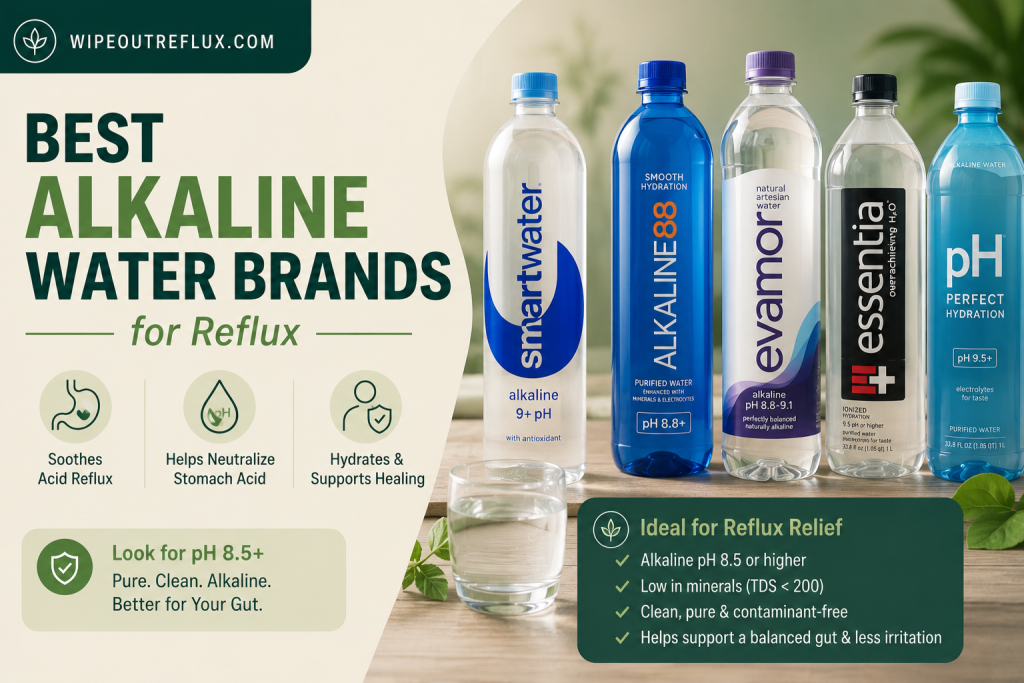
If you’re buying alkaline water specifically for reflux, one number matters more than the brand on the label: the pH needs to be 8.8 or higher. That’s the threshold at which alkaline water has been shown to deactivate pepsin, the enzyme behind throat-based reflux damage. Plenty of “alkaline” waters sit below it and won’t do that job.
By that standard, the best US brands for reflux are Essentia (pH 9.5), Smartwater Alkaline (pH 9+), Perfect Hydration (pH 9.5), Alkaline88 (pH 8.8) and Evamor (naturally ~pH 9). Popular names like Fiji, Icelandic Glacial and Flow are lovely waters but sit below the reflux threshold, so they’re not the ones to reach for here.
Here’s why that 8.8 line exists, which brands clear it, and the honest limits of what alkaline water can and can’t do for reflux.
Key Takeaways
- For reflux, aim for alkaline water at pH 8.8 or above — that’s the level shown to irreversibly deactivate pepsin.
- Best US brands that hit the threshold: Essentia (9.5), Smartwater Alkaline (9+), Perfect Hydration (9.5), Alkaline88 (8.8) and Evamor (~9).
- Below-threshold waters — Fiji (~7.7), Icelandic Glacial (~8.4), Flow (~8.1) — are fine to drink but don’t reach the pepsin-deactivating point.
- The benefit is most relevant to LPR (silent reflux), where pepsin in the throat drives symptoms.
- Alkaline water also has an acid-buffering effect, which can soothe acute symptoms.
- The pepsin evidence is from lab (in vitro) studies, so treat alkaline water as a helpful adjunct, not a cure.
- In a clinical study, a plant-based diet plus alkaline water matched PPIs for improving reflux symptoms.
- Alkaline water works best as part of a wider anti-reflux approach, not on its own.
Why pH 8.8 is the number that matters
Most articles about alkaline water for reflux skip the one fact that actually decides whether it’s worth buying. So here it is first.
The key player in throat-based reflux is pepsin — a digestive enzyme that travels up with reflux and lodges in the throat and voice box, where it reactivates whenever it meets acid and quietly damages tissue. It’s the reason pepsin, not just acid, is the villain in silent reflux.
In laboratory studies, water at pH 8.8 did something ordinary water can’t: it irreversibly deactivated human pepsin — switching it off for good — and also showed a useful acid-buffering capacity. Crucially, the researchers noted that pepsin stays stable at the neutral pH of most tap and bottled waters (around 6.7 to 7.4), so those wouldn’t be expected to affect it at all Koufman & Johnston, Annals of Otology, Rhinology & Laryngology, 2012. That single study is why 8.8 is the line, and why a water’s exact pH matters far more than the word “alkaline” on the bottle. I unpack the science in full in alkaline water for LPR.
Best alkaline water brands for reflux (US)
These clear the pH 8.8 threshold, so they’re the ones worth choosing specifically for reflux.
Essentia — best overall
Essentia is the easiest recommendation: a consistent pH of 9.5 or higher, ionized and supplemented with electrolytes, and available almost everywhere from supermarkets to gas stations. That combination of a comfortably-above-threshold pH and near-universal availability makes it the default pick for most reflux drinkers. It comes in a range of bottle sizes, which helps if you’re following a protocol of sipping through the day.
Smartwater Alkaline — most widely available premium option
The alkaline version of Smartwater runs at pH 9+, with added electrolytes for a smooth taste, and shares Smartwater’s huge distribution. If you like the taste and see it on every shelf, it’s a reliable above-threshold choice — just be sure to grab the Alkaline line specifically, not standard Smartwater, which is neutral.
Perfect Hydration — high pH at a friendlier price
Perfect Hydration advertises pH 9.5, purified through reverse osmosis and remineralised, and typically costs less than Essentia. A strong value option if you’re drinking it daily and want to keep the cost down without dropping below the threshold.
Alkaline88 — best for buying in bulk
Alkaline88 sits right at pH 8.8 — the exact therapeutic threshold — and is infused with Himalayan pink salt minerals. It’s widely sold in larger bottles and multipacks, making it a practical choice for households getting through a lot of water. Because it’s at the threshold rather than well above it, Essentia or Perfect Hydration have a little more headroom, but 8.8 is still the line the research draws.
Evamor — best naturally alkaline
Evamor is a naturally alkaline artesian water, generally around pH 8.8–9.1, drawn from a protected underground source rather than ionized. If you prefer a naturally occurring alkalinity with a natural mineral profile over a processed one, this is the pick.
Popular brands that fall short for reflux
These are perfectly good waters — just not the right tool for the pepsin job, because they sit below pH 8.8:
- Icelandic Glacial (~pH 8.4) — excellent, clean-tasting water, but under the threshold.
- Flow (~pH 8.1) — naturally alkaline and eco-friendly packaging, still below the line.
- Fiji (~pH 7.7) — a lovely mineral water, but barely alkaline; effectively neutral for pepsin purposes.
None of these will harm you and all are fine for general hydration — they just won’t deliver the specific pepsin-deactivating effect you’re presumably buying alkaline water for. If general hydration is your aim, my guide to the best water for acid reflux covers the wider picture.
The honest limits of alkaline water
I’d rather you use this well than expect too much of it, so here are the caveats that matter.
First, the pepsin evidence is in vitro — done in the lab, not in living patients — so while the mechanism is compelling, alkaline water is best treated as a helpful adjunct rather than a proven standalone treatment. Second, its effect is transient: once alkaline water reaches an acidic stomach it’s quickly buffered, so the benefit is greatest at the moment of drinking, as it washes through the throat and esophagus. That’s why sipping it regularly — especially after meals and after reflux episodes — makes more sense than drinking a single large glass. And third, the pepsin angle means alkaline water is most relevant to LPR and silent reflux, where throat pepsin is the problem, though its buffering can also soothe classic heartburn in the moment.
For a fuller, myth-free breakdown of what it can and can’t do, I keep an honest guide at is alkaline water good for acid reflux, and a companion piece on the portable alkaline water drops some people use to boost regular water’s pH.
Where alkaline water really shines: alongside diet
Here’s the most encouraging evidence, and it reframes how to use alkaline water. Rather than a magic bottle, it’s a strong team player.
In a clinical study, patients treated with a plant-based, Mediterranean-style diet plus alkaline water did at least as well as patients on PPIs — 62.6% achieved a meaningful drop in their reflux symptom score, compared with 54.1% on the medication Zalvan et al., JAMA Otolaryngology–Head & Neck Surgery, 2017. Alkaline water wasn’t doing that alone — it was paired with a genuine dietary overhaul. But it shows the direction of travel: alkaline water plus the right eating pattern can rival medication for reflux symptoms. It’s a natural companion to a Mediterranean-style anti-reflux diet.
Conclusion
When you’re buying alkaline water for reflux, ignore the marketing and read the pH. The research draws a clear line at 8.8 — the point where alkaline water deactivates pepsin and buffers acid — and the US brands that clear it are Essentia, Smartwater Alkaline, Perfect Hydration, Alkaline88 and Evamor. Well-known waters like Fiji, Icelandic Glacial and Flow are perfectly nice but sit below the threshold, so they’re not the ones to rely on here. Essentia is the easiest all-round choice thanks to its 9.5 pH and availability.
Keep your expectations calibrated, though. The pepsin evidence is from the lab, and alkaline water’s effect is fleeting once it hits the stomach — so it works best sipped regularly, aimed mostly at throat-based silent reflux, and treated as an adjunct rather than a fix. Its most impressive results come not on its own but paired with the right diet, where the evidence shows it can rival medication.
That pairing is the real lesson. If you want alkaline water to earn its place, put it alongside an eating approach built for reflux — and that’s exactly what the Wipeout Food Reference Guide gives you: the essential reference for which foods and drinks are safe with acid reflux and LPR, and their pH values, so your water sits within a coherent plan. And for the complete, structured method, the Wipeout Diet Plan goes much deeper. It was built first and foremost around LPR — the stubborn, throat-based form of reflux where pepsin, and therefore alkaline water, matters most — but because it works on the same underlying mechanisms, it’s just as effective for classic GERD and heartburn. Pour the right water into the right diet, and you give yourself the best shot at lasting relief.
Frequently Asked Questions
What is the best alkaline water for acid reflux?
Essentia is the best all-round choice: a consistent pH of 9.5, well above the therapeutic threshold, and widely available. Smartwater Alkaline, Perfect Hydration, Alkaline88 and Evamor also clear the pH 8.8 mark that matters for reflux. Choose based on availability and price, since all of these are above the effective threshold.
What pH of alkaline water do I need for reflux?
At least pH 8.8. That’s the level shown in lab studies to irreversibly deactivate pepsin, the enzyme responsible for throat-based reflux damage. Waters below that — including most bottled and tap water at pH 6.7 to 7.4 — aren’t expected to affect pepsin, so they don’t offer the same specific benefit.
Does alkaline water actually cure reflux?
No. It can help — by deactivating pepsin as it passes through the throat and by buffering acid — but the pepsin evidence is from lab studies and the effect is short-lived once the water reaches the stomach. It’s best used as an adjunct alongside dietary and lifestyle changes, not as a standalone cure.
Is Fiji or Icelandic Glacial good for reflux?
They’re excellent waters for general drinking but fall below the reflux threshold — Fiji is around pH 7.7 and Icelandic Glacial around 8.4, both under the 8.8 needed to deactivate pepsin. For reflux specifically, choose a higher-pH brand like Essentia or Perfect Hydration.
When should I drink alkaline water for reflux?
Sip it through the day, and particularly after meals and after any reflux episode, so it washes pepsin from the throat and buffers acid when symptoms are most likely. Because its effect is transient, regular smaller amounts work better than one large glass.
Is alkaline water better than PPIs for reflux?
Not on its own, but the combination is striking: in a clinical study, a plant-based Mediterranean-style diet plus alkaline water performed at least as well as PPIs for reducing reflux symptoms. The takeaway isn’t that water beats medication — it’s that the right diet plus alkaline water can rival it.
Research & References
- In vitro study showing that pH 8.8 alkaline water irreversibly deactivated human pepsin and had a hydrochloric acid–buffering capacity far exceeding conventional-pH waters, whereas neutral tap and bottled waters (pH 6.7–7.4) would not be expected to affect pepsin Koufman & Johnston, Annals of Otology, Rhinology & Laryngology, 2012.
- Clinical comparison finding that a plant-based, Mediterranean-style diet with alkaline water achieved reflux symptom improvement at least equal to proton pump inhibitors in patients with laryngopharyngeal reflux (62.6% vs 54.1% reaching a clinically meaningful reduction) Zalvan et al., JAMA Otolaryngology–Head & Neck Surgery, 2017.

David Gray
12 years living with LPR · Consultant & researcher
I've lived with LPR for twelve years — the misdiagnoses, the PPI courses that did nothing, the slow work of figuring out what actually helps. Wipeout Reflux is where I translate the research into plain terms for people stuck in the same place. Every claim here is sourced to peer-reviewed work, and I consult one-to-one with LPR sufferers.