
If you have reflux and you’re buying pH test strips, here’s the single most useful thing to know before you spend a penny: the strips are far more valuable for testing what goes into you — your water, coffee, juice and other drinks — than for testing your saliva or urine to gauge some notion of “body pH.” Testing your drinks tells you something objective and actionable; testing your body pH mostly doesn’t.
With that in mind, the best pH test strips for reflux are the ones matched to the job. For checking acidic foods and drinks against the thresholds that matter, you want a wide-range universal strip like these pH 1–14 wide-range strips. For finer readings around neutral — useful for confirming alkaline water — a saliva/urine strip like JNW Direct’s 4.5–9.0 strips does the job cheaply.
Below I’ll explain the pH numbers that actually matter for reflux, then give you my picks by use case — and an honest take on the “body pH” idea so you don’t waste money on the wrong thing.
Key Takeaways
- For reflux, the most useful job a pH strip does is testing your drinks and water — not your saliva or urine.
- The numbers that matter: below pH 4 reactivates throat pepsin, below pH 5 is the strict low-acid-diet cut-off, and alkaline water needs pH 8.8+ to deactivate pepsin.
- Best overall value: JNW Direct pH Test Strips (4.5–9.0), with fine enough resolution to check alkaline water too.
- Best for testing acidic foods and drinks: a wide-range universal 1–14 strip, which can read the pH 2–5 danger zone the narrow strips can’t.
- The popular idea of tracking “body pH” through saliva or urine has weak scientific support — your blood pH is tightly controlled regardless of diet.
- For an actual reflux test, salivary pepsin (Peptest) tells you far more than a pH strip ever will.
- pH strips are a cheap, handy tool — just use them to make smart choices about what you drink, not to diagnose yourself.
What pH strips can and can’t tell you about reflux
Let me set expectations honestly, because this is where most guides go wrong.
A pH strip measures the acidity of a liquid, and it does that well. Dip it in a glass of orange juice and it’ll turn the colour of “very acidic,” because it is. That’s genuinely useful information when you’re deciding what to drink with reflux. What a strip can’t do is tell you the state of your body. The popular “alkaline” idea — that you can read your body’s acidity off your saliva or urine and correct it with diet — runs into a hard fact of physiology: your blood pH is held in an extremely narrow range (about 7.35 to 7.45) no matter what you eat, because drifting outside it would be dangerous. Urine pH shifts with what your kidneys are excreting, and saliva pH bounces around with meals and time of day, but neither is a window onto “how acidic you are,” and neither is a validated measure of reflux.
So the strips are a tool for testing intake, not for diagnosing yourself. Used that way, they’re excellent value. Used to chase a “body pH” number, they’ll mostly generate anxiety. If you want an actual reflux-relevant test you can do at home, the one worth knowing about measures salivary pepsin rather than pH — I cover it in the Peptest guide.
The pH numbers that actually matter for reflux
Here’s what makes pH strips genuinely useful: reflux has a few specific pH thresholds, and a strip lets you check where your drinks fall against them.
Below pH 4 — the pepsin danger zone. In silent reflux, pepsin lodged in the throat reactivates when acid arrives, and human pepsin stays active up to around pH 4 Johnston et al., The Laryngoscope, 2007. Any drink you strip-test that comes in below 4 is one that can wake pepsin up in your throat. More on that in how pepsin reactivates in the throat and what is pepsin.
Below pH 5 — the low-acid-diet line. Strict LPR protocols exclude anything below pH 5 during the healing phase, giving a small safety margin above the pepsin threshold. A strip lets you sort your drinks into “above 5” and “below 5” for yourself — see the Koufman diet.
pH 8.8+ — the alkaline-water target. Alkaline water only deactivates pepsin once it’s at pH 8.8 or above Koufman & Johnston, Annals of Otology, Rhinology & Laryngology, 2012. Many “alkaline” waters fall short, and a strip is the easiest way to check whether the bottle you’re paying extra for actually clears the line. I list the ones that do in best alkaline water brands.
That’s the real case for owning pH strips with reflux: you can test your coffee, your juice, your fizzy water and your “alkaline” bottle, and know exactly where each sits. You can cross-check against my food pH chart too.
Best pH test strips for reflux
My picks are grouped by what you actually want to do. Prices and exact listings change, so check the current details on Amazon — and note the range each strip covers, because that’s what decides whether it’s right for your purpose.
JNW Direct pH Test Strips — best overall value
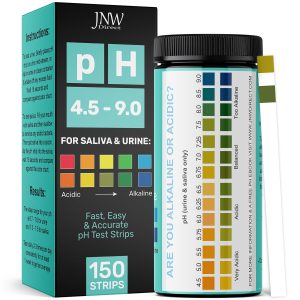
A 4.5–9.0 range in 0.25 steps, 150 strips to a pack, and a clear colour chart make these the easy default. The narrow range is actually a feature here: because the readings are finer around neutral, they’re good for confirming whether your alkaline water genuinely sits up near 9. What they won’t do is read a strongly acidic drink accurately — anything below 4.5 just reads as “off the bottom of the scale.” For most people wanting one affordable, everyday strip, this is the pick.
Hydrion pH Strips — best trusted brand for precision
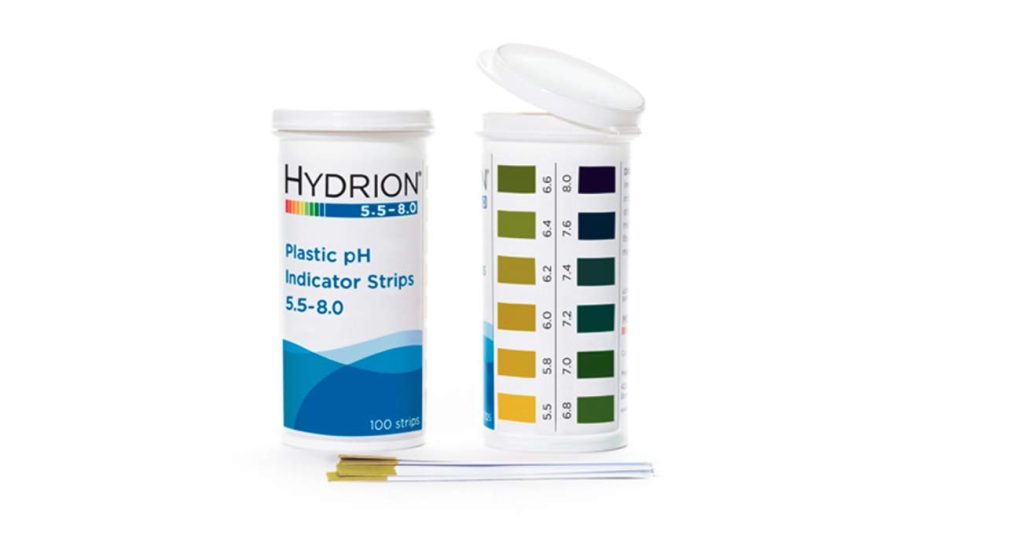
Hydrion is a long-established name in pH paper, used in labs and classrooms, and the strips are known for consistent, easy-to-read colour changes. If you found cheaper strips gave you ambiguous in-between colours that were hard to call, Hydrion is the upgrade. It’s the choice for anyone who wants readings they can trust rather than squint at.
Just Fitter pH Test Strips — best for alkaline-diet followers
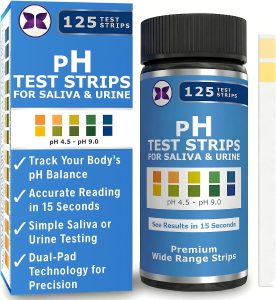
These are the strips most associated with the alkaline-diet crowd, and they come with a well-made colour chart and downloadable guides. I’d gently flag that the “track your body pH” premise they’re marketed on is weaker than the marketing suggests — but if you specifically want saliva/urine strips with good support materials and a big user base, they’re the popular choice, and they read the same near-neutral range well.
Wide-Range pH 1–14 Strips — best for testing acidic foods and drinks
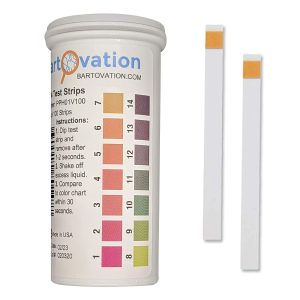
This is the one I’d actually reach for as a reflux sufferer. A full 1–14 range means it can read the strongly acidic drinks that matter most — coffee, cola, juice, kombucha, wine — which the narrow saliva strips can’t. The trade-off is coarser resolution, so it’s better for sorting drinks into acidic/neutral/alkaline bands than for splitting hairs at pH 8.8. Pair it with a narrow-range strip if you want both jobs covered.
Esee pH Strips 0–14 — best budget bulk option
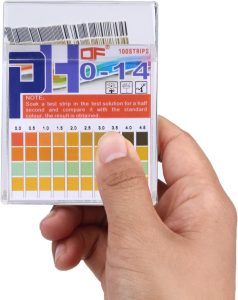
If you just want plenty of full-range strips to test drinks around the house without overthinking it, these offer a 0–14 range with tighter-than-usual 0.5 gradations at a low price per strip. A sensible, cheap way to start checking what you drink against the reflux thresholds before committing to a pricier brand.
The honest take on saliva and urine “body pH”
Because so many of these strips are sold on the promise of tracking your body’s acidity, it’s worth being straight about it. Your body doesn’t have a single pH you can read off a strip. Blood is held tightly around 7.4 by your lungs and kidneys; urine pH reflects what those kidneys are clearing at that moment; saliva pH shifts with eating and the time of day. None of these predicts reflux, and “acidifying” or “alkalising” your body through diet in the way the alkaline-diet marketing implies isn’t how the physiology works — a point I unpack in is alkaline water good for acid reflux.
That doesn’t make the strips useless — it just means you should point them at your glass, not your tongue. If you enjoy tracking your urine pH out of curiosity, no harm done; just don’t treat the number as a verdict on your reflux or your health.
How to use pH strips well for reflux
- Test your regular drinks. Coffee, tea, juice, fizzy water, wine, and any “alkaline” water — dip a strip and see where each falls against pH 4, 5 and 8.8.
- Use the right range for the job. Wide-range strips for acidic drinks; narrow near-neutral strips for confirming alkaline water.
- Read the colour promptly under good light, and compare against the chart within the time the maker specifies — strips keep changing if you wait.
- Keep them dry. Humidity ruins strips, so reseal the vial and don’t touch the pads with wet fingers.
- Don’t diagnose with them. For reflux answers, a salivary pepsin test or a proper assessment beats any pH strip.
Conclusion
The best pH test strips for reflux aren’t the ones with the flashiest “balance your body” marketing — they’re the ones that let you check your drinks against the numbers that genuinely matter: pH 4 for pepsin, pH 5 for the low-acid line, and pH 8.8 for alkaline water. A wide-range 1–14 strip handles acidic drinks best, while a fine near-neutral strip like JNW Direct is ideal for confirming alkaline water and offers the best all-round value. Skip the idea that a strip can read your “body pH” — point it at your glass instead, and it becomes a genuinely handy little tool.
Testing individual drinks is a great habit, but it’s a slow way to learn which foods and drinks are safe — and it can’t tell you the pH of everything in your kitchen. That’s exactly what the Wipeout Food Reference Guide is for: the essential reference to which foods and drinks are safe for acid reflux and LPR, with their pH values already laid out, so you don’t have to strip-test your way through the supermarket.
And if you want to stop measuring individual items and actually calm reflux at the source, the Wipeout Diet Plan is the complete, in-depth system — it builds the pH thinking into a full method so you’re not testing everything by hand. I designed it first and foremost around LPR, the stubborn throat-based form where these pH thresholds matter most, but because it works on the same underlying mechanisms it’s just as effective for GERD, heartburn and everyday acid reflux.
Frequently Asked Questions
What are the best pH test strips for acid reflux?
For reflux, the best strips are the ones matched to what you’re testing. A wide-range 1–14 universal strip is best for checking acidic drinks like coffee and juice, while a fine near-neutral strip such as JNW Direct (4.5–9.0) is best for confirming that alkaline water reaches pH 8.8+. Hydrion is the pick if you want lab-trusted, easy-to-read results.
Can pH strips diagnose acid reflux?
No. pH strips measure the acidity of liquids, not the state of your body, and neither saliva nor urine pH reliably reflects reflux. For an actual home reflux test, a salivary pepsin test (Peptest) is far more informative. Use pH strips to check what you drink, not to diagnose yourself.
Should I test my saliva or urine pH for reflux?
It’s of limited value. Your blood pH is tightly regulated around 7.4 regardless of diet, and saliva and urine readings fluctuate for reasons unrelated to reflux. Tracking them rarely tells you anything useful about your symptoms. Testing your drinks against the pH thresholds that matter is a much better use of the strips.
What pH should my drinks be if I have reflux?
Aim to keep everyday drinks above pH 5, since strict low-acid diets exclude anything below that, and be especially wary of drinks below pH 4, which can reactivate throat pepsin. If you drink alkaline water for reflux, it needs to be pH 8.8 or higher to deactivate pepsin. A pH strip lets you check each of these for yourself.
How do I use pH test strips on drinks?
Dip the strip briefly in the drink, or hold a drop against the pad, then compare the colour to the chart within the time the maker specifies — usually a few seconds. Use good lighting, don’t touch the pads with wet fingers, and keep the strips in a sealed, dry container so humidity doesn’t spoil them.
Research & References
- A study of human pepsin found the enzyme is maximally active in acidic conditions and retains significant activity up to around pH 4, remaining stable and reactivatable by acid even after exposure to higher pH — the basis for the pH 4 threshold when testing drinks Johnston et al., The Laryngoscope, 2007.
- An in vitro study showed that water at pH 8.8 irreversibly deactivated human pepsin and buffered acid, whereas neutral-pH waters did not — the reason alkaline water for reflux needs to reach pH 8.8, and why a strip is useful for checking it Koufman & Johnston, Annals of Otology, Rhinology & Laryngology, 2012.

David Gray
12 years living with LPR · Consultant & researcher
I've lived with LPR for twelve years — the misdiagnoses, the PPI courses that did nothing, the slow work of figuring out what actually helps. Wipeout Reflux is where I translate the research into plain terms for people stuck in the same place. Every claim here is sourced to peer-reviewed work, and I consult one-to-one with LPR sufferers.