
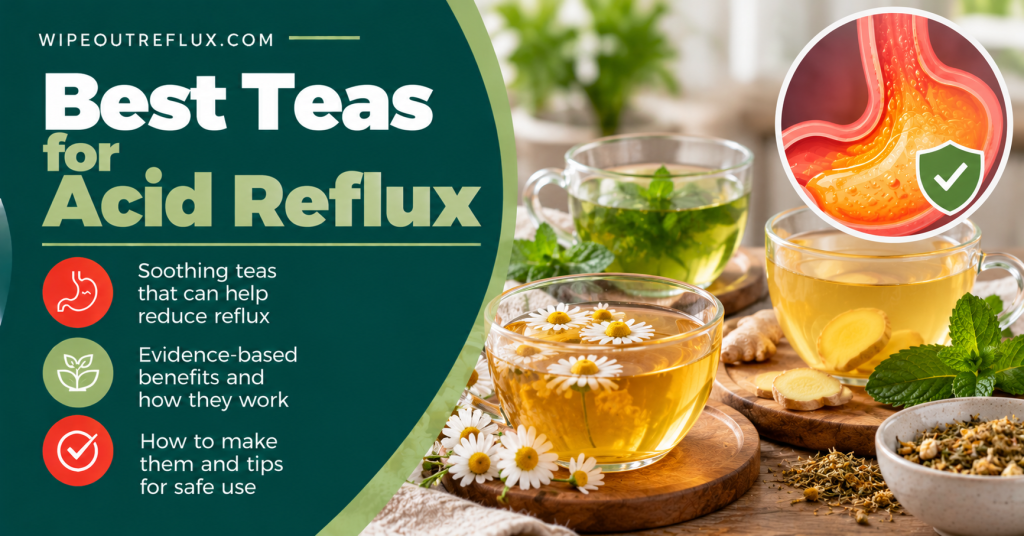
The best teas for acid reflux are caffeine-free herbal teas that are gentle on the stomach: chamomile, a weak ginger tea, licorice root (ideally deglycyrrhizinated), marshmallow root, slippery elm, fennel and rooibos. They’re naturally low in acid, contain no caffeine, and several have soothing or coating properties that many people with reflux find helpful.
If your acid reflux is severe or you have LPR (silent reflux), the safest options are chamomile, marshmallow root and slippery elm. They’re caffeine-free, low in acid and gentle on an irritated throat, and they’re the teas I’d start with while your symptoms settle.
The teas most likely to cause problems are peppermint and spearmint, strong caffeinated black and green teas (including matcha and Earl Grey), tart hibiscus, and anything with lemon or citrus. Bottled iced teas are often surprisingly acidic too.
How you drink tea matters almost as much as which tea you choose. Let it cool to warm rather than scalding, skip the lemon, avoid big mugs right before bed, and keep it plain or with a little honey.
Key Takeaways
- Caffeine-free herbal teas are generally the safest choice for acid reflux and GERD.
- Chamomile, ginger, licorice root, marshmallow root, slippery elm, fennel and rooibos are the most reflux-friendly options.
- For severe acid reflux or LPR, the safest choices are chamomile, marshmallow root and slippery elm.
- Peppermint and spearmint can relax the valve at the top of the stomach and commonly trigger reflux.
- Black, green, matcha and Earl Grey teas contain caffeine, which bothers some people with reflux more than others.
- Hibiscus, lemon and fruit teas are acidic and can sting an irritated throat, which matters most for silent reflux.
- Bottled iced teas are often very acidic, with an average pH around 3.5 in one study.
- Whole licorice root tea can raise blood pressure if drunk regularly; DGL licorice avoids this.
- Drink tea warm rather than very hot, without lemon, and not in large amounts right before bed.
Why Tea Choice Matters for Acid Reflux
Tea can either soothe reflux or quietly make it worse, depending on four things:
- Caffeine. Caffeine is a well-known reflux trigger for many people. A 12 oz cup of black tea contains around 71 mg and green tea around 37 mg, compared with 113 to 247 mg for brewed coffee [US Food and Drug Administration, Spilling the Beans, 2024]. Most herbal teas contain none.
- Acidity. Many teas, especially fruit, hibiscus and bottled teas, are acidic. A study measuring US drinks found ready-to-drink teas ranged from pH 2.85 to 5.18, with an average of 3.48 [Reddy et al., The Journal of the American Dental Association, 2016]. That’s more acidic than many people realize.
- Effects on the sphincter. Some herbs, peppermint in particular, are thought to relax the lower esophageal sphincter, the valve that normally keeps stomach contents down.
- Temperature. Very hot drinks irritate the esophagus, and drinking tea very hot over many years is linked to esophageal damage (more on this below).
Acidity matters most if you have silent reflux (LPR). The stomach enzyme pepsin can stick to throat tissue and switch back on when something acidic arrives, including acidic drinks [Johnston et al., The Laryngoscope, 2007]. That’s why a “healthy” cup of hibiscus or lemon tea can leave a reflux-irritated throat feeling raw.
The Best Teas for Acid Reflux
The safest teas for severe acid reflux or LPR
If your reflux is severe, or it mainly affects your throat, stick to chamomile, marshmallow root and slippery elm. These three are the safest options: no caffeine, low acid, no ingredients known to relax the sphincter, and marshmallow root and slippery elm add a soothing coating that many people with a raw throat find comforting. Once your symptoms have calmed down, you can test the other teas below one at a time.
1. Chamomile tea
Chamomile is probably the most popular tea for reflux, and with good reason. It’s caffeine-free, mild, low in acid and calming, which makes it a good evening choice. Many people find it settles their stomach after a meal. To be honest, there’s very little direct research on chamomile and reflux specifically, so think of it as a gentle, low-risk option rather than a treatment. More in is chamomile tea good for acid reflux.
Tip: chamomile is in the same plant family as ragweed, so avoid it if you have a ragweed allergy.
2. Ginger tea (weak)
Ginger is a traditional remedy for nausea and indigestion. In a small randomized trial, ginger sped up stomach emptying in people with functional dyspepsia [Hu et al., World Journal of Gastroenterology, 2011]. Faster stomach emptying means less food sitting in the stomach waiting to reflux, which is a plausible reason it helps some people.
The catch is dose. A few slices of fresh ginger steeped in hot water is gentle, but very strong ginger tea or large amounts can cause heartburn in some people. Start weak and see how you feel. See is ginger good for acid reflux.
3. Licorice root tea (preferably DGL)
Licorice root has a long history as a soothing remedy for the stomach and throat, and it has a naturally sweet taste that makes tea enjoyable without sugar. There’s an important caveat, though: regular licorice contains glycyrrhizin, which can raise blood pressure and lower potassium. A meta-analysis found that regular licorice intake raised systolic blood pressure by about 5 mmHg on average, even at modest doses [Penninkilampi et al., Journal of Human Hypertension, 2017].
If you want licorice regularly, choose deglycyrrhizinated licorice (DGL), which has the glycyrrhizin removed. Avoid regular licorice tea if you have high blood pressure, heart or kidney disease, or are pregnant. I cover DGL in detail in DGL for acid reflux and LPR.
4. Marshmallow root tea
Marshmallow root is rich in mucilage, a gel-like substance that forms a slippery coating when mixed with water. Many people with throat irritation from silent reflux find it soothing. For the most mucilage, steep it in cool or room-temperature water for a few hours rather than boiling it. Research in reflux specifically is limited. See marshmallow root for acid reflux.
5. Slippery elm tea
Slippery elm works in a similar way to marshmallow root: its inner bark forms a soothing, coating gel. It’s often used for sore throats and is a popular choice among people with LPR. Like other coating herbs, take it a couple of hours apart from medication, as it may slow absorption. More in slippery elm for acid reflux.
6. Fennel tea
Fennel tea is caffeine-free, mildly sweet and traditionally used to ease bloating and gas after meals. If burping and bloating are part of your reflux picture, it’s worth trying. I look at it more closely in is fennel tea good for acid reflux.
7. Rooibos tea
Rooibos, or red bush tea, is a South African herbal tea that tastes closer to black tea than most herbals, making it a great swap if you miss your regular cuppa. It’s naturally caffeine-free and low in tannins, so it tends to be gentle on the stomach. You can even drink it with a splash of milk or a plant milk such as almond milk.
Honorable mentions
- Decaf green tea: a lower-caffeine way to keep drinking green tea. See is decaffeinated green tea good for acid reflux
- Turmeric tea: well tolerated by some, but strong or spicy blends can irritate others. See turmeric and acid reflux
- Cinnamon tea: mild and caffeine-free in small amounts. See does cinnamon help acid reflux
Teas to Avoid or Limit With Acid Reflux
Peppermint and spearmint tea
This one surprises people, because peppermint is famous for soothing the gut. It does help with some lower-gut problems like cramping and IBS. But peppermint is widely reported to relax the lower esophageal sphincter, and it’s one of the most commonly reported reflux triggers. If you have reflux, it’s usually best avoided. See is peppermint tea good for acid reflux.
Black tea
Black tea contains caffeine and tannins, and it’s a trigger for some people with reflux. Interestingly, in one study regular tea didn’t cause more reflux than water, while regular coffee did [Wendl et al., Alimentary Pharmacology & Therapeutics, 1994]. So many people can tolerate a weak cup of black tea, especially earlier in the day, but it’s worth testing rather than assuming. Earl Grey adds bergamot, a citrus oil, which can be an extra irritant for some. See is Earl Grey tea acidic.
Green tea and matcha
Green tea has less caffeine than black tea, but it’s not caffeine-free, and matcha in particular can be strong because you consume the whole powdered leaf. If you’re sensitive, try decaf green tea instead. More in is green tea good for acid reflux and is matcha good for acid reflux.
Hibiscus and fruit teas
Hibiscus gives a tea that lovely ruby color and tart flavor, but that tartness comes from acid. Many fruit and “berry” teas contain hibiscus, rosehip or citric acid. They’re a common hidden irritant, especially for throat symptoms. See is hibiscus tea acidic.
Lemon tea and bottled iced teas
Adding lemon makes any tea more acidic. Bottled and canned iced teas are often sweetened, flavored with citric acid and surprisingly acidic, with an average pH around 3.5 in one analysis [Reddy et al., The Journal of the American Dental Association, 2016]. If you have LPR, these are among the first drinks I’d cut. In people with stubborn LPR, a strict low-acid diet improved symptoms in 95% [Koufman, Annals of Otology, Rhinology & Laryngology, 2011], and cutting acidic drinks is a big part of that.
Chai and strong spiced teas
Traditional chai combines black tea (caffeine), strong spices and often full-fat milk and sugar. Each can be a trigger on its own. A lighter, rooibos-based chai with a plant milk is usually much better tolerated.
Quick Guide: Which Teas Are Best for Reflux?
- Safest for severe reflux or LPR: chamomile, marshmallow root, slippery elm
- Usually well tolerated: chamomile, weak ginger, DGL licorice, marshmallow root, slippery elm, fennel, rooibos, honeybush
- Test carefully: weak black tea, green tea, decaf teas, turmeric, cinnamon
- Usually best avoided: peppermint, spearmint, strong black tea, matcha, Earl Grey, hibiscus, lemon tea, fruit teas, bottled iced teas, traditional chai
How to Drink Tea Without Triggering Reflux
- Let it cool to warm. Very hot drinks irritate the esophagus. In a large study from northern Iran, drinking tea very hot was associated with eight times the odds of esophageal cancer compared with drinking it warm, and letting tea stand for four minutes or more after pouring lowered the risk [Islami et al., BMJ, 2009]. A few minutes’ wait is an easy habit. See does drinking hot water help acid reflux.
- Skip the lemon. A drop of honey is a gentler way to add flavor. See is manuka honey good for acid reflux.
- Keep evening cups small. A big mug of any liquid right before bed adds volume to your stomach just as you lie down.
- Brew it weaker. Shorter steeping times mean less caffeine and fewer tannins in caffeinated teas.
- Go easy on full-fat milk and sugar. A splash of plant milk is usually better tolerated.
- Introduce one new tea at a time. That way, if something triggers symptoms, you know what it was.
Can Tea Cure Acid Reflux?
No tea will cure reflux, and I’d be wary of anything marketed as a “reflux tea” that promises to. The right tea can soothe symptoms, replace triggering drinks like coffee and peppermint, and become a calming part of your routine. But the bigger wins come from what you eat, when you eat it and how you sleep.
Swapping coffee for a reflux-friendly tea is often one of the easiest first changes people make, and it can make a noticeable difference on its own. See coffee alternatives for acid reflux and caffeine and acid reflux. For the bigger picture on drinks, read acid reflux: what to drink.
Tea is just one piece. My Wipeout Diet Plan covers every drink and food choice across the day, with exactly what to have during the calming phase and how to reintroduce favorites like your morning brew without setting off symptoms.
Conclusion
The best teas for acid reflux are caffeine-free herbal teas that are low in acid: chamomile, weak ginger, DGL licorice, marshmallow root, slippery elm, fennel and rooibos. Peppermint, strong caffeinated teas, hibiscus, lemon and bottled iced teas are the ones most likely to cause trouble, particularly if your reflux affects your throat. And however good the tea, drinking it warm rather than scalding, without lemon and not in big mugs before bed makes a real difference.
If you want to go beyond tea and get your reflux properly under control, the Wipeout Diet Plan is where I’d point you. It’s the complete approach I’ve built from twelve years of managing reflux myself, covering exactly what to eat and drink, when, and how to find your personal triggers. I originally created it for silent reflux, where acidic drinks matter most, but since it targets the same root causes it works just as well for GERD and everyday heartburn.
If you’d like a quick reference to keep handy, the Wipeout Food Reference Guide is the essential companion. It lists the foods and drinks that are safe for acid reflux and LPR, including their pH values, so you can check any tea, juice or snack in seconds.
Frequently Asked Questions
What tea is best for acid reflux?
Caffeine-free herbal teas are usually best. Chamomile, weak ginger, DGL licorice, marshmallow root, slippery elm, fennel and rooibos are the most reflux-friendly. If you have severe acid reflux or LPR, the safest options are chamomile, marshmallow root and slippery elm.
Is herbal tea good for GERD?
Most herbal teas are a good choice for GERD because they’re caffeine-free and gentle. The main exceptions are peppermint and spearmint, which can relax the lower esophageal sphincter, and tart herbal blends containing hibiscus, rosehip or citrus, which are acidic.
Is chamomile tea good for acid reflux?
Chamomile is generally well tolerated. It’s caffeine-free, low in acid and calming, which makes it a popular evening drink. There isn’t much research on chamomile for reflux specifically, but it’s a low-risk option for most people.
Why is peppermint tea bad for acid reflux?
Peppermint is widely reported to relax the lower esophageal sphincter, the valve that keeps stomach contents down, making it easier for acid to rise. Although it can help lower-gut problems like IBS, it’s a common reflux trigger.
Is green tea OK for acid reflux?
Green tea has less caffeine than black tea or coffee, so some people tolerate it, especially a weak cup earlier in the day. If it bothers you, decaf green tea or a caffeine-free herbal tea is a better choice. Matcha tends to be stronger.
Can I drink black tea with acid reflux?
Some people can. In one study, regular tea didn’t increase reflux compared with water, unlike coffee. Try a weak cup earlier in the day without lemon and see how you feel. If it triggers symptoms, switch to rooibos, which tastes similar but is caffeine-free.
Should I drink tea before bed with acid reflux?
A small cup of caffeine-free tea like chamomile can be fine, but avoid large mugs within an hour or two of bed, as extra volume in your stomach can encourage reflux when you lie down. Avoid caffeinated tea in the evening.
Research & References
- [US Food and Drug Administration, Spilling the Beans, 2024] — Typical caffeine per 12 oz: black tea 71 mg, green tea 37 mg, brewed coffee 113 to 247 mg.
- [Reddy et al., The Journal of the American Dental Association, 2016] — Measured the pH of a wide range of US beverages; 17 ready-to-drink teas ranged from pH 2.85 to 5.18 with a mean of 3.48.
- [Johnston et al., The Laryngoscope, 2007] — Showed pepsin stays stable at throat pH and can be reactivated by acid, explaining why acidic drinks can irritate the throat in laryngopharyngeal reflux.
- [Hu et al., World Journal of Gastroenterology, 2011] — Randomized double-blind study in 11 people with functional dyspepsia finding 1.2 g of ginger accelerated gastric emptying and stimulated antral contractions compared with placebo.
- [Penninkilampi et al., Journal of Human Hypertension, 2017] — Meta-analysis of 18 studies finding chronic licorice (glycyrrhizic acid) intake raised systolic blood pressure by about 5.45 mmHg and lowered plasma potassium, even at modest doses.
- [Wendl et al., Alimentary Pharmacology & Therapeutics, 1994] — Regular coffee caused significantly more reflux than water, while regular tea did not differ from water; decaffeinating coffee reduced reflux.
- [Koufman, Annals of Otology, Rhinology & Laryngology, 2011] — In 20 patients with PPI-resistant LPR, a strict diet eliminating foods and drinks below pH 5 for at least two weeks improved symptoms in 95%.
- [Islami et al., BMJ, 2009] — Population-based case-control study in northern Iran finding very hot tea associated with 8.16 times the odds of esophageal squamous cell carcinoma compared with warm tea, with lower risk when tea was left four or more minutes after pouring.

David Gray
12 years living with LPR · Consultant & researcher
I've lived with LPR for twelve years — the misdiagnoses, the PPI courses that did nothing, the slow work of figuring out what actually helps. Wipeout Reflux is where I translate the research into plain terms for people stuck in the same place. Every claim here is sourced to peer-reviewed work, and I consult one-to-one with LPR sufferers.