
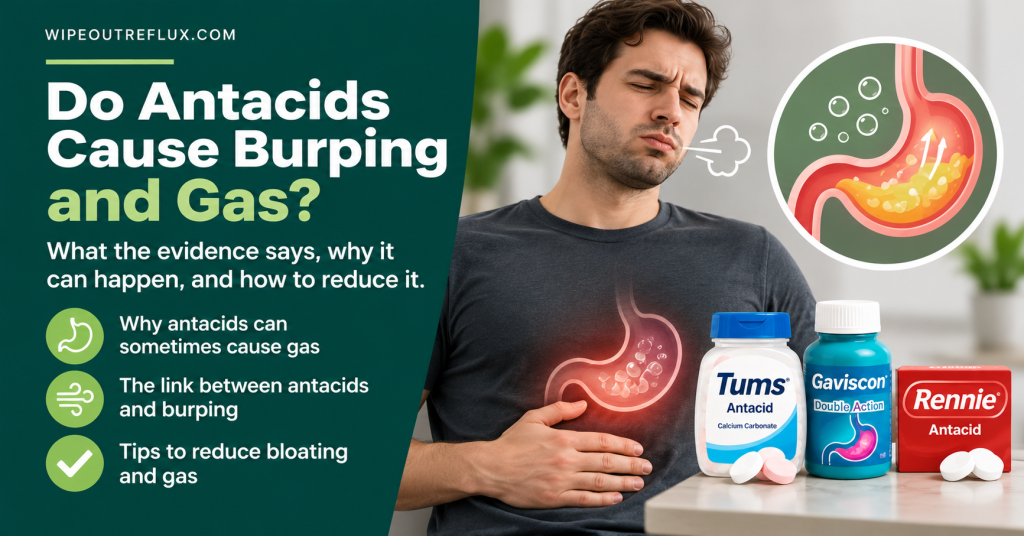
Yes, some antacids can make you burp. When calcium carbonate (Tums, Rolaids) or sodium bicarbonate (baking soda, Alka-Seltzer) neutralizes stomach acid, the chemical reaction releases carbon dioxide gas. That gas has to go somewhere, and most of it comes back up as a burp. Some people also notice bloating or extra gas lower down.
Not every antacid does this, though. Magnesium hydroxide and aluminum hydroxide neutralize acid without producing gas, so products based on them (like Maalox and Mylanta) are a better choice if burping bothers you. And antacids themselves don’t treat gas. If gas is your main problem, you need a different approach.
Key Takeaways
- Calcium carbonate and sodium bicarbonate antacids release carbon dioxide when they neutralize acid, which causes burping.
- Sodium bicarbonate (baking soda) produces the most gas and should never be taken after a very large meal.
- Magnesium hydroxide and aluminum hydroxide antacids don’t produce gas.
- Calcium and aluminum can cause constipation, which can lead to bloating and gas lower down.
- Some chewable antacids contain sorbitol, a sweetener that can cause gas and bloating.
- Antacids don’t treat gas. Simethicone-containing products are designed for that.
- Frequent burping can itself be linked to reflux, so the antacid may not be the whole story.
Why Some Antacids Make You Burp
It’s simple chemistry. Antacids are bases that react with the hydrochloric acid in your stomach. Which by-products you get depends on the ingredient:
- Calcium carbonate (Tums, Rolaids) + stomach acid → calcium chloride + water + carbon dioxide
- Sodium bicarbonate (baking soda, Alka-Seltzer) + stomach acid → sodium chloride + water + carbon dioxide
- Magnesium hydroxide + stomach acid → magnesium chloride + water (no gas)
- Aluminum hydroxide + stomach acid → aluminum chloride + water (no gas)
That carbon dioxide is the same gas that makes soda fizzy. A 2022 review of antacids notes that both calcium carbonate and sodium bicarbonate release carbon dioxide during the reaction and lists gas and bloating among their drawbacks [Garg et al., Journal of International Medical Research, 2022].
How much gas are we talking about?
More than you might think. Based on the chemistry, 1 gram of calcium carbonate, the amount in a single Tums Ultra Strength tablet, can release up to roughly a quarter of a liter of carbon dioxide if it fully reacts with acid. That’s about a cup of gas from one tablet. Some of it dissolves and gets absorbed, but chew two or three tablets and it’s easy to see why you burp.
How much you burp also depends on how much acid is in your stomach. The more acid there is to neutralize, the more vigorous the reaction. That’s why antacids taken in the middle of a bad bout of heartburn after a big meal often cause the most burping.
Which Antacids Cause the Most Burping?
Sodium bicarbonate: the most gas
Baking soda and Alka-Seltzer are the worst offenders. They react extremely quickly and produce a lot of gas in one go, which is why they cause big, almost immediate burps. Alka-Seltzer also fizzes in the glass, but it still reacts with any acid in your stomach once you drink it.
There’s a serious safety point here too. Taking baking soda after a very large meal, when the stomach is already stretched, has been linked to rare cases of stomach rupture. A 2022 review found sodium bicarbonate was involved in 10 of 36 reported cases of spontaneous stomach rupture, and the authors stressed the need to warn people about using it this way [Han et al., Journal of Eating Disorders, 2022]. It’s rare, but it’s a good reason not to reach for baking soda when you feel painfully full. I cover the other drawbacks in baking soda for heartburn.
Calcium carbonate: moderate gas
Tums, Rolaids and most store-brand chewables produce noticeable but more modest burping. Calcium carbonate dissolves a little more slowly than bicarbonate, so the gas comes out more gradually. For most people it’s a burp or two, nothing more. More in are Tums safe for acid reflux.
Magnesium and aluminum hydroxide: little or no gas
Liquid antacids like Maalox and Mylanta are built mainly on magnesium hydroxide and aluminum hydroxide, which don’t release gas when they neutralize acid. If antacids make you burp, these are the easiest switch. Check the label, though, because some versions also contain calcium carbonate. See my guides to Maalox and Mylanta.
Alginates (Gaviscon): gas that gets trapped
Alginate products like Gaviscon are interesting. Many contain sodium or potassium bicarbonate on purpose, because the carbon dioxide it releases gets trapped in the alginate gel and turns it into a foam that floats on top of your stomach contents [Mandel et al., Alimentary Pharmacology & Therapeutics, 2000]. So the gas is part of how the raft works, and much of it stays put rather than coming up as a burp. More in alginates for acid reflux.
Can Antacids Cause Gas and Bloating Lower Down?
Yes, in a few ways:
- Constipation. Calcium and aluminum antacids slow your bowels. When stool sits in your colon for longer, bacteria have more time to ferment it, which means more gas and bloating. Magnesium does the opposite and can cause loose stools.
- Sugar alcohols. Some chewable and sugar-free antacids, including some Tums Smoothies products, contain sorbitol. Sorbitol isn’t fully absorbed and is fermented by gut bacteria, which can cause gas, bloating and loose stools, especially in larger amounts.
- Carbon dioxide that doesn’t come up. Some of the gas from carbonate antacids can pass further down instead of being burped out, adding to bloating.
If you notice gas and bloating mostly the day after taking antacids, constipation or sweeteners are the more likely culprits than the antacid reaction itself. I’ve covered the constipation side in do acid reducers cause constipation.
Do Antacids Help With Gas?
Not really. Antacids neutralize acid. They don’t break down gas bubbles or reduce fermentation in your gut. If your discomfort is a burning feeling, an antacid makes sense. If it’s pressure, bloating or trapped wind, it won’t help much, and a carbonate antacid could even add to the gas.
That’s why some antacids are combined with simethicone, an anti-foaming agent that helps small gas bubbles merge so they’re easier to pass or burp out. You’ll see these sold as “antacid plus anti-gas.” Simethicone is also sold on its own as Gas-X. I look at whether it helps reflux in does Gas-X help acid reflux.
Is It the Antacid or the Reflux Making You Burp?
This is worth thinking about, because burping and reflux are closely linked. There are two very different kinds of burp:
- Gastric belches are your stomach venting air through a brief relaxation of the lower esophageal sphincter, the same type of relaxation that lets acid escape. That’s why burping and heartburn often go together.
- Supragastric belches are a habit where air is sucked into the esophagus and pushed straight back out, often many times in a row. They’re often linked to stress or anxiety and can make reflux symptoms worse [Kessing et al., The American Journal of Gastroenterology, 2014].
If you were burping a lot before you took anything, the antacid isn’t the cause. I explain the connection in acid reflux and burping and acid reflux and gas. If you can’t burp at all, that’s a separate condition, covered in can’t burp (R-CPD). And if your burps smell like rotten eggs, see sulfur burps.
How to Avoid Burping From Antacids
- Switch to a hydroxide antacid. Magnesium and aluminum hydroxide liquids don’t produce gas.
- Try an alginate instead. Rafts block reflux rather than just neutralizing it, so you may need fewer doses overall.
- Avoid baking soda and Alka-Seltzer, especially after a big meal.
- Take the lowest dose that works. Start with one or two tablets rather than three or four.
- Don’t wash it down with fizzy drinks. That adds even more gas. See is sparkling water bad for acid reflux.
- Check the inactive ingredients for sorbitol and other sugar alcohols if you get bloating.
- Sit upright for a while after taking it, so gas can escape easily without carrying acid with it.
The Bigger Picture
If you’re taking antacids often enough that the burping has become a problem, that’s a sign the reflux itself needs more attention. Antacids only mop up acid that’s already there, and they last around an hour. They don’t reduce how often reflux happens.
The most effective way to need fewer antacids is to cut down the reflux at the source, and that mostly comes down to what and when you eat. Large, fatty meals, fizzy drinks, alcohol and late-night eating all drive both reflux and burping. The Wipeout Diet Plan takes you through a low-acid way of eating that calms both. If you have a lot of bloating, a low FODMAP approach may also be worth a look.
When to See a Doctor
See a doctor if you need antacids most days for more than two weeks, if burping or bloating is persistent and getting worse, or if you have difficulty swallowing, unexplained weight loss, vomiting, black stools or severe abdominal pain. Get urgent help if you feel painfully bloated and unable to burp or vomit after a very large meal.
Conclusion
Antacids can cause burping and gas, but it depends on the ingredient. Calcium carbonate (Tums, Rolaids) and sodium bicarbonate (baking soda, Alka-Seltzer) release carbon dioxide when they neutralize acid, and that gas usually comes back up as a burp. Magnesium and aluminum hydroxide antacids don’t, so they’re the easiest switch. Antacids can also cause gas lower down through constipation or sweeteners like sorbitol, and they don’t actually treat gas. Avoid baking soda after big meals, as rare cases of stomach rupture have been reported.
If you’re burping a lot and reaching for antacids daily, the antacid is usually a symptom of the problem rather than the problem itself. Bringing the reflux under control means you’ll need fewer antacids, and you’ll burp less too. Small changes like eating smaller meals and cutting out fizzy drinks often make a noticeable difference within days.
That’s where the Wipeout Diet Plan comes in. I originally built it for LPR, the throat-based kind of reflux that’s notoriously hard to treat, but because it targets the same root causes, it works just as well for everyday heartburn, burping and bloating. It shows you exactly what to eat, what to cut and how to time your meals, so you’re not stuck relying on tablets to put the fire out.
Frequently Asked Questions
Why do Tums make me burp?
Tums contain calcium carbonate, which reacts with stomach acid to produce carbon dioxide gas. That gas builds up in your stomach and escapes as a burp. The more acid there is to neutralize, the more gas is produced.
Which antacid doesn’t cause gas?
Antacids based on magnesium hydroxide and aluminum hydroxide, like many versions of Maalox and Mylanta, don’t release gas when they neutralize acid. Check the label, as some products also contain calcium carbonate.
Is burping after taking an antacid a good sign?
It shows the antacid is reacting with acid, but it isn’t necessary for it to work. Hydroxide antacids neutralize acid just as well without any burping.
Can antacids cause bloating?
Yes. Carbonate antacids release gas, calcium and aluminum can cause constipation that leads to bloating, and some chewables contain sorbitol, which can cause gas. Switching products often helps.
Do antacids help with gas?
No. Antacids neutralize acid but don’t break down gas bubbles. Products that combine an antacid with simethicone are designed to help with gas, and simethicone is also sold on its own.
Is it safe to take baking soda for gas?
It’s best avoided. Baking soda produces a lot of carbon dioxide and is high in sodium. Taken after a very large meal, it has been linked to rare cases of stomach rupture.
Why do I burp so much with acid reflux?
Burping and reflux share a mechanism: the lower esophageal sphincter briefly relaxes to vent air, and acid can escape at the same time. Some people also develop a habit of supragastric belching, which can make reflux symptoms worse.
Research & References
- [Garg et al., Journal of International Medical Research, 2022] — Review of antacids noting that calcium carbonate and sodium bicarbonate release carbon dioxide during neutralization, with flatulence, gas and bloating among their limitations.
- [Han et al., Journal of Eating Disorders, 2022] — Case reports and literature review of 36 spontaneous stomach ruptures, 10 of which involved sodium bicarbonate, mostly after very large meals.
- [Mandel et al., Alimentary Pharmacology & Therapeutics, 2000] — Review explaining how bicarbonate in alginate products generates carbon dioxide that becomes trapped in the gel, forming a floating raft.
- [Kessing et al., The American Journal of Gastroenterology, 2014] — Review of the mechanisms, diagnosis and treatment of excessive belching, distinguishing gastric belches from supragastric belches.

David Gray
12 years living with LPR · Consultant & researcher
I've lived with LPR for twelve years — the misdiagnoses, the PPI courses that did nothing, the slow work of figuring out what actually helps. Wipeout Reflux is where I translate the research into plain terms for people stuck in the same place. Every claim here is sourced to peer-reviewed work, and I consult one-to-one with LPR sufferers.