
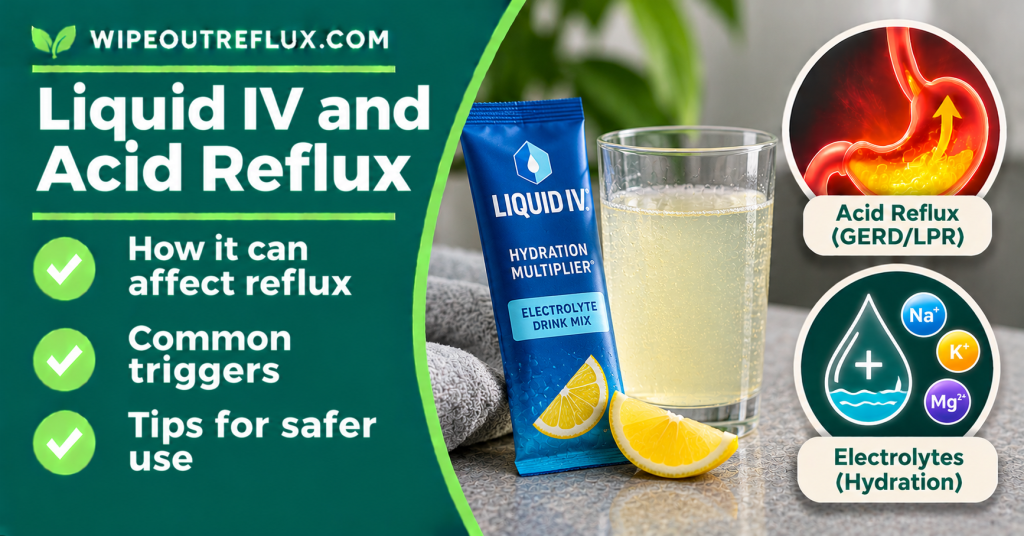
Electrolyte powders like Liquid IV and LMNT can cause acid reflux in some people, but it’s not the electrolytes themselves. Sodium, potassium and magnesium don’t trigger heartburn. The usual culprits are the added acids, mainly citric acid and malic acid, which give fruity flavors their tang and make the drink acidic. Liquid IV also has 11 g of sugar per stick, and LMNT packs 1,000 mg of sodium into each serving, which is a lot to drink in one go.
Whether an electrolyte drink bothers you depends on the flavor, how strong you mix it and how quickly you drink it. People with silent reflux (LPR) tend to be the most sensitive, because acidic drinks can reactivate pepsin in the throat. The most reflux-friendly options are unflavored powders with no added acid, a more diluted mix, or simple alternatives like coconut water or water with a pinch of salt.
Key Takeaways
- Electrolytes themselves (sodium, potassium, magnesium) don’t cause reflux. Added acids and sugar are the usual triggers.
- Most flavored electrolyte powders contain citric acid, malic acid or both. LMNT’s Raw Unflavored is a notable exception.
- In a US study, 93% of 379 commercial drinks had a pH below 4, which is acidic enough to reactivate pepsin.
- A strict low-acid diet that cut out foods and drinks below pH 5 improved symptoms in 95% of people with stubborn LPR.
- Concentrated sugary drinks empty from the stomach more slowly, which may increase the chance of reflux.
- Very high salt intake has been linked to reflux symptoms in population studies.
- Choose unflavored or low-acid options, dilute more, sip slowly and avoid drinking large amounts close to bedtime.
What’s Actually in Liquid IV and LMNT?
Here’s a rough comparison of the two most popular powders, based on their labels:
- Liquid IV Hydration Multiplier: about 500 mg sodium, 370 mg potassium and 11 g of sugar per stick, mixed into 16 oz of water. Flavored versions contain citric acid and natural flavors, plus added vitamin C (ascorbic acid) and B vitamins. There is also a sugar-free version.
- LMNT: 1,000 mg sodium, 200 mg potassium and 60 mg magnesium per stick, with no sugar. Flavored versions contain citric acid or malic acid, natural flavors and stevia. The Raw Unflavored version contains just the salts.
- Pedialyte and similar oral rehydration drinks: usually contain dextrose, citric acid and potassium and sodium citrate.
From a reflux point of view, the electrolytes are the harmless part. Potassium citrate and sodium citrate are actually alkalizing salts, not acids. The ingredients to watch are the acids, the sugar and, with LMNT, the large salt dose.
Why Electrolyte Drinks Can Trigger Reflux
1. Citric acid and malic acid
Citric and malic acid are added to make fruity flavors taste bright and tangy. They also lower the drink’s pH. Most commercial drinks are surprisingly acidic. When researchers measured 379 drinks bought in US stores, 93% had a pH below 4.0, and 39% were below 3.0 [Reddy et al., Journal of the American Dental Association, 2016].
For heartburn-type reflux, an acidic drink can irritate an already inflamed esophagus. For silent reflux, there’s an extra problem. Pepsin, the digestive enzyme that comes up with refluxed stomach contents, can bind to throat tissue. It goes inactive at a neutral pH but stays stable, and it can be reactivated when the pH drops again [Johnston et al., The Laryngoscope, 2007]. An acidic drink washing over your throat may do exactly that. I explain this in how pepsin reactivates in the throat.
This is why a low-acid diet can help so much in LPR. In a study of 20 people whose LPR hadn’t responded to twice-daily PPIs plus a bedtime H2 blocker, cutting out all foods and drinks below pH 5 for at least two weeks improved symptoms in 19 of them [Koufman, Annals of Otology, Rhinology and Laryngology, 2011]. Most flavored electrolyte drinks wouldn’t pass that test. See is citric acid bad for acid reflux.
2. Sugar and concentration
Liquid IV relies on sugar (glucose) to help the gut absorb sodium and water. That’s useful for rehydration, but more concentrated sugary drinks empty from the stomach more slowly. In a classic study, a concentrated glucose drink took around 130 minutes to half-empty from the stomach, compared with about 17 minutes for a dilute one, and the amount of carbohydrate appeared to matter more than the overall concentration of dissolved particles [Vist and Maughan, Journal of Physiology, 1995].
Liquid IV isn’t as concentrated as the strong solution in that study, but the principle holds. The more sugar per glass, the longer it sits in your stomach. Mixing it with more water than the label suggests can help. See is sugar acid or alkaline.
3. High salt
LMNT’s 1,000 mg of sodium per stick is designed for heavy sweaters and low-carb diets, and it’s nearly half the recommended daily limit. In a Norwegian study of more than 43,000 people, those who always added extra salt to food had 70% higher odds of reflux symptoms than those who never did [Nilsson et al., Gut, 2004]. That’s an association, not proof, and one packet of LMNT is different from a lifelong salty diet. But if you’re using several sticks a day without sweating much, it’s worth reconsidering. See is salt acidic or alkaline.
4. Sweeteners and flavorings
Sugar-free versions use stevia or other sweeteners, which most people tolerate well, though some notice bloating. Strong mint, citrus or “chili” flavors (LMNT has a Mango Chili) may also trigger symptoms in sensitive people. See artificial sweeteners and acid reflux.
5. How you drink it
Chugging 16 to 32 oz of anything quickly stretches your stomach, and a stretched stomach triggers more relaxations of the valve that keeps acid down. Sparkling electrolyte drinks add gas too. A systematic review found that carbonated drinks cause a brief drop in esophageal pH and may transiently lower valve pressure, though there’s no direct evidence they cause reflux disease [Johnson et al., Alimentary Pharmacology and Therapeutics, 2010]. See can drinking a lot of water cause acid reflux.
Liquid IV vs LMNT vs Others for Acid Reflux
- LMNT Raw Unflavored: the best of the popular powders for reflux, because it has no added acid, sugar or flavoring. It tastes salty, so dilute it well. Watch the total sodium if you use more than one a day.
- Flavored LMNT: no sugar, but contains citric or malic acid. Often fine diluted in 32 oz rather than 16 oz.
- Liquid IV (regular): contains citric acid, vitamin C and 11 g of sugar. Generally the more likely of the two to cause problems.
- Liquid IV Sugar-Free: removes the sugar, but still contains acid and flavorings.
- Gatorade and sports drinks: acidic, sugary and often consumed in large volumes. See can Gatorade cause heartburn.
- Pedialyte: useful when you’re genuinely ill with vomiting or diarrhea, but contains citric acid.
- Electrolyte drinks with caffeine: some hydration and “energy” mixes add caffeine, which can also trigger reflux. See energy drinks and acid reflux.
How to Pick a Reflux-Friendly Electrolyte Drink
- Check the ingredients for citric acid, malic acid, ascorbic acid and phosphoric acid. The fewer acids, the better.
- Choose unflavored where possible. You can add a slice of cucumber or a few mint-free herbs for taste.
- Dilute more than the label says. Doubling the water lowers the acidity of each sip and the concentration of sugar.
- Test it. Inexpensive pH strips will tell you how acidic your mix is. Aim for pH 5 or above if you have LPR. See the best pH test strips for acid reflux.
- Sip, don’t chug. Spread it across an hour or more.
- Don’t drink it right before bed or lying down.
- Match it to your needs. Most people who aren’t exercising hard, sweating heavily or unwell don’t need an electrolyte drink every day. Plain water and normal meals provide plenty of electrolytes.
Reflux-Friendly Electrolyte Alternatives
- Coconut water: naturally rich in potassium, mildly acidic to near-neutral, and usually well tolerated. Choose plain, unsweetened. See is coconut water good for acid reflux.
- Homemade electrolyte water: 16 oz of water, a small pinch of salt (about 1/8 teaspoon) and a teaspoon of honey or maple syrup. No acid needed.
- Bananas, potatoes and yogurt with water: food is a perfectly good source of potassium and sodium after moderate exercise.
- Broth: a mug of low-acid chicken or vegetable broth is a warm, salty electrolyte drink.
- Magnesium: if you’re using electrolytes for magnesium, a supplement may suit you better. See magnesium for acid reflux.
For everyday hydration, low-acid water is still the gold standard. See the best water for acid reflux.
Electrolytes, Exercise and Reflux
Many people reach for electrolyte drinks around workouts, which is also when reflux can strike. Bouncing, bending and straining during exercise raise abdominal pressure. Drinking a large volume of an acidic, sugary drink just before or during a run combines two triggers. Try sipping a diluted, unflavored mix in small amounts, and leave at least an hour between a big drink and intense exercise. See exercise and acid reflux.
Drinks are an easy blind spot for reflux, because people focus on food. The Wipeout Diet Plan covers both, including which drinks to choose and which to avoid.
Conclusion
Liquid IV, LMNT and other electrolyte powders can cause acid reflux, but not because of the electrolytes. Sodium, potassium and magnesium are harmless to your esophagus. The usual triggers are the added citric and malic acids, the sugar in drinks like Liquid IV, the very high sodium in LMNT, and drinking large amounts quickly. Most commercial drinks are acidic enough to reactivate pepsin, which makes flavored electrolyte drinks a particular issue for people with silent reflux.
You don’t have to give them up. Choose an unflavored or low-acid option, dilute it more than the label suggests, sip it slowly, test it with pH strips if you have LPR, and avoid drinking it close to bedtime. And ask yourself whether you need it at all. If you aren’t sweating heavily or unwell, water and good food usually provide all the electrolytes you need.
If you want a clear list of reflux-friendly drinks and foods, plus a plan for putting them together, the Wipeout Diet Plan is my complete guide. I designed it primarily for LPR, where acidic drinks cause so much trouble, but it works on the same root causes behind GERD and heartburn, so it helps just as much there.
Frequently Asked Questions
Can Liquid IV cause acid reflux?
It can for some people. It contains citric acid, vitamin C and 11 g of sugar per stick, which can trigger heartburn or throat symptoms, especially if mixed strong or drunk quickly.
Is LMNT bad for acid reflux?
Flavored LMNT contains citric or malic acid, which can bother sensitive people. LMNT Raw Unflavored has no added acid, so it’s usually the better choice for reflux.
Do electrolytes help acid reflux?
Electrolytes don’t treat reflux directly. Staying hydrated supports saliva, which helps clear acid, but plain water does this just as well for most people.
What is the best electrolyte drink for acid reflux?
An unflavored powder with no added acid, coconut water, or homemade water with a pinch of salt and a little honey. Dilute well and sip slowly.
Is citric acid in electrolyte powders bad for LPR?
It can be. Citric acid lowers a drink’s pH, and acidic drinks may reactivate pepsin in the throat. People with LPR are usually advised to avoid drinks below pH 5.
Is Pedialyte okay for acid reflux?
It contains citric acid, so it’s not ideal every day. But if you’re dehydrated from vomiting or diarrhea, rehydration comes first. Sip it slowly.
Is coconut water better than Liquid IV for reflux?
For most people with reflux, yes. Plain coconut water is rich in potassium, has no added acid and is usually well tolerated in moderate amounts.
Research & References
- [Reddy et al., Journal of the American Dental Association, 2016] — Of 379 commercially available US beverages, 93% had a pH below 4.0 and 39% were below 3.0.
- [Johnston et al., The Laryngoscope, 2007] — Human pepsin is inactive at pH 6.5 and above but remains stable and can be reactivated when the pH drops again.
- [Koufman, Annals of Otology, Rhinology and Laryngology, 2011] — In 20 PPI-resistant LPR patients, eliminating foods and drinks below pH 5 for at least 2 weeks improved symptoms in 19 and lowered both RSI and RFS scores.
- [Vist and Maughan, Journal of Physiology, 1995] — Concentrated glucose drinks emptied from the stomach much more slowly than dilute ones, with carbohydrate content having more influence than osmolality.
- [Nilsson et al., Gut, 2004] — Always adding extra table salt was associated with 1.7 times the odds of reflux symptoms in a large Norwegian population.
- [Johnson et al., Alimentary Pharmacology and Therapeutics, 2010] — A systematic review found carbonated drinks cause a brief pH drop and possibly a transient fall in LES pressure, but no direct evidence that they cause GERD.

David Gray
12 years living with LPR · Consultant & researcher
I've lived with LPR for twelve years — the misdiagnoses, the PPI courses that did nothing, the slow work of figuring out what actually helps. Wipeout Reflux is where I translate the research into plain terms for people stuck in the same place. Every claim here is sourced to peer-reviewed work, and I consult one-to-one with LPR sufferers.