
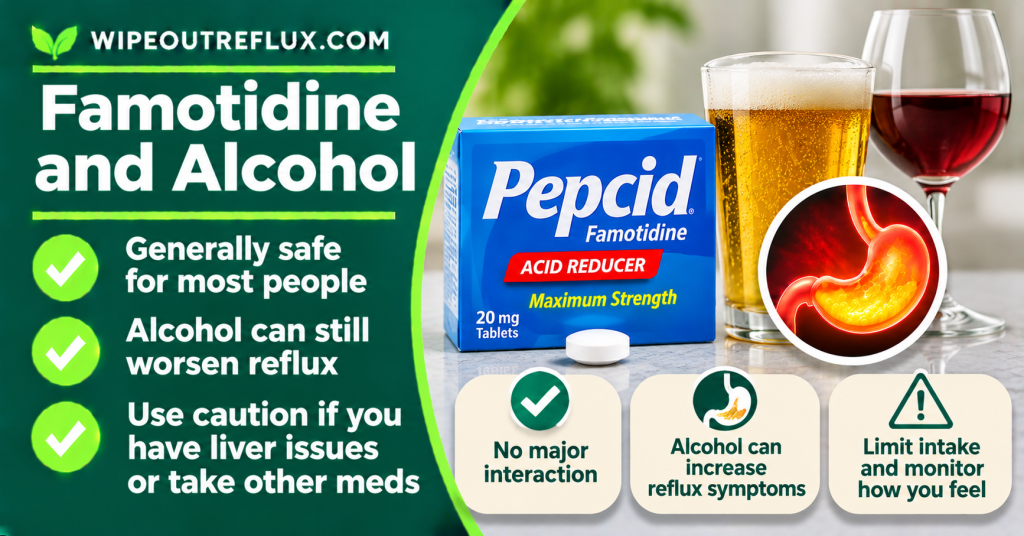
Yes, you can generally drink alcohol while taking famotidine (Pepcid). There’s no dangerous interaction between them. Unlike older acid reducers such as cimetidine and ranitidine, famotidine doesn’t block the stomach enzyme that breaks down some alcohol, so in most studies it didn’t raise blood alcohol levels in any meaningful way.
The real issue is that alcohol makes reflux worse in several ways that famotidine can’t fully counter. It relaxes the valve at the bottom of your esophagus, slows the clearing of acid, and some drinks strongly stimulate acid production. Famotidine taken an hour before drinking can soften the blow, but it won’t stop the reflux itself.
Key Takeaways
- There’s no known harmful interaction between famotidine and alcohol in normal amounts.
- Famotidine doesn’t inhibit gastric alcohol dehydrogenase, which is why it behaves differently from cimetidine and ranitidine.
- One small study found a modest rise in blood alcohol under specific conditions, but researchers judged it clinically unimportant. Longer-term studies found no effect.
- Alcohol lowers the pressure of the lower esophageal sphincter and slows acid clearance, so more reflux happens.
- Beer and wine strongly stimulate acid. Distilled spirits don’t, although they still relax the sphincter.
- Taking famotidine 15 to 60 minutes before drinking works better than taking it once heartburn starts.
- Famotidine doesn’t prevent a hangover and doesn’t stop pepsin reaching your throat.
Is It Safe to Drink Alcohol on Famotidine?
From an interaction point of view, yes. To understand why famotidine is in the clear, it helps to know why some of its relatives weren’t.
Your stomach lining contains an enzyme called alcohol dehydrogenase that breaks down a small portion of the alcohol you drink before it reaches your bloodstream. This is called first-pass metabolism. In the early 1990s, researchers found that some H2 blockers interfered with that enzyme, so more alcohol got through.
In a study published in JAMA, a week of ranitidine raised peak blood alcohol levels by 34% after a moderate drink, and cimetidine had an even larger effect. Famotidine, which doesn’t inhibit gastric alcohol dehydrogenase, had no significant effect [DiPadova et al., JAMA, 1992].
A two-month study in people with duodenal ulcers taking famotidine 40 mg at bedtime also found no change in blood alcohol levels after a drink with lunch [Casini et al., American Journal of Gastroenterology, 1994].
The one study that found an effect
To be thorough, one study did find a small effect. In 24 men selected specifically because they had high first-pass alcohol metabolism, three days of famotidine 40 mg raised peak blood alcohol by 23% after a small drink taken after breakfast. The absolute levels involved were very low, and the authors concluded that effects like this only appear under specific experimental conditions and seem unimportant clinically [Burnham et al., Alimentary Pharmacology & Therapeutics, 1994].
A review of the whole area reached the same conclusion. Any effect of H2 blockers on blood alcohol is minor and limited to small drinks in specific groups of people, and famotidine was one of the drugs that didn’t show the effect in most studies [Gugler, Drug Safety, 1994].
So famotidine won’t make you noticeably drunker. Still, don’t drive after drinking whatever medication you’re on.
How Alcohol Makes Reflux Worse
This is the part that matters more. Alcohol triggers reflux through several separate mechanisms, and famotidine only addresses one of them.
1. It relaxes the lower esophageal sphincter
The lower esophageal sphincter is the muscular valve that keeps stomach contents down. A review in the American Journal of Gastroenterology concluded that alcohol promotes reflux by lowering the pressure of this valve and impairing the muscle movements that clear the esophagus [Bujanda, American Journal of Gastroenterology, 2000].
You don’t have to drink heavily for this to happen. In a controlled study of healthy young adults with no reflux symptoms, 11 of 12 refluxed more after a social-drinking amount of alcohol [Kaufman and Kaye, Gut, 1978].
2. It slows acid clearance, especially lying down
When people drank 4 oz of scotch three hours after dinner and then went to bed, alcohol increased acid exposure in the esophagus and impaired its ability to clear acid while lying down [Vitale et al., JAMA, 1987]. That’s why a nightcap is one of the worst habits for reflux.
3. Beer and wine turn up acid production
Fermented drinks like beer and wine raised stomach acid output to 57% to 95% of the stomach’s maximum in a study of healthy volunteers, while distilled drinks like whisky and rum didn’t significantly increase it [Teyssen et al., Gut, 1997]. This is one area where famotidine genuinely helps, because it turns down histamine-driven acid production.
Wine also causes reflux directly. Both white and red wine increased acid exposure in the esophagus compared with water, with white wine having the bigger effect [Pehl et al., Scandinavian Journal of Gastroenterology, 1998].
4. Over time, more drinking means more reflux
A meta-analysis of 29 studies found that drinkers had about 1.5 times the odds of GERD, and the risk rose steadily with the amount consumed [Pan et al., Alcohol and Alcoholism, 2019].
Can You Take Famotidine Before Drinking?
Yes, and this is where famotidine can be genuinely useful. Taken in advance, it lowers the acid that’s waiting in your stomach before the alcohol relaxes the valve.
In fact, one of the trials that supported OTC famotidine used a chili-and-wine test meal. Taking famotidine one hour beforehand made heartburn milder and roughly halved the use of rescue antacids compared with placebo [Gottlieb et al., American Journal of Therapeutics, 1995].
The OTC label recommends taking it 15 to 60 minutes before the food or drink that triggers your heartburn. Famotidine starts working in about 30 to 60 minutes, so an hour ahead is ideal. My guide to famotidine dosage covers timing and daily limits.
Two things to keep in mind:
- It’s a damage limiter, not a free pass. Famotidine makes refluxed liquid less acidic. It doesn’t stop the reflux, and it doesn’t stop pepsin coming up with it.
- Don’t stack doses to keep drinking. Stick to the label limit of two tablets in 24 hours.
Famotidine, Alcohol and Silent Reflux
If your symptoms are in your throat rather than your chest, alcohol deserves extra caution. With silent reflux, even small amounts of refluxed material carrying pepsin can irritate the larynx, and famotidine doesn’t stop that from happening. I explain why in what is pepsin.
Alcohol is a common LPR trigger, partly because most drinking happens in the evening, close to bedtime. If you do drink, choose your drink carefully. My comparison of whiskey or vodka for acid reflux and my guide to beer and acid reflux go through the options. And if drinking keeps setting off your throat, the Wipeout Diet Plan shows you how to calm things down at the source first.
How to Drink Smarter on Famotidine
- Take famotidine about an hour before your first drink, not after symptoms start.
- Choose spirits with a still, non-citrus mixer over beer, white wine or champagne.
- Drink with food rather than on an empty stomach, but avoid a huge, fatty meal.
- Stop at least three hours before bed, and raise the head of your bed if night-time symptoms are an issue. See acid reflux at night.
- Keep an alginate handy. It forms a raft on top of your stomach contents and is one of the best add-ons after drinking. See alginates for acid reflux.
- Alternate with water and keep the total down. The dose-response link is real.
When to Avoid Alcohol on Famotidine
Moderate drinking is usually fine on famotidine, but it’s better to avoid alcohol, or check with your doctor, if:
- You’re taking famotidine for a stomach ulcer, gastritis or erosive esophagitis that’s still healing.
- You have kidney disease, because famotidine is cleared by the kidneys and side effects such as dizziness or confusion are more likely.
- You get dizziness or headaches from famotidine, since alcohol can add to them. See famotidine side effects.
- You’re drinking heavily or daily. That’s a reflux problem no tablet will fix, and cutting back on alcohol is worth considering.
Get medical help straight away for vomiting blood, black stools or severe stomach pain after drinking.
Conclusion
Famotidine and alcohol don’t have a dangerous interaction. Unlike some older acid reducers, famotidine doesn’t meaningfully raise blood alcohol levels, and taking it an hour before a drink can make heartburn milder. That’s the good news.
The less welcome news is that alcohol attacks reflux from several angles at once. It relaxes the valve that keeps acid down, slows clearance, and, with beer and wine, ramps up acid production. Famotidine only softens one part of that, which is why people often still get symptoms on drinking nights, especially when the drinks come late in the evening.
The people who handle the occasional drink best are those who have calmed their reflux at the source, rather than relying on a tablet to cancel out every trigger. The Wipeout Diet Plan is my complete, in-depth guide to doing that, covering the foods, drinks, timing and habits that keep reflux under control day to day. It was built first for LPR, the harder-to-treat throat-based kind, but because it works on the same underlying mechanisms, it helps GERD and everyday heartburn just as well. Get those foundations in place and a night out stops being such a gamble.
Frequently Asked Questions
Can I drink alcohol while taking famotidine?
Yes, in moderation. There’s no dangerous interaction. The main downside is that alcohol can worsen the reflux famotidine is treating.
Does famotidine increase blood alcohol levels?
Not meaningfully. Most studies found no effect, and one small study found a modest rise under specific conditions that researchers considered clinically unimportant.
How long after taking famotidine can I drink?
There’s no safety gap needed. For the best heartburn protection, take it 15 to 60 minutes before your first drink.
Can I take Pepcid after drinking?
Yes, but it works better beforehand. If heartburn has already started, an antacid or alginate will act faster.
Does Pepcid help with a hangover?
Not with the hangover itself. It may ease acid-related stomach discomfort, but it doesn’t help dehydration, headache or how quickly you clear alcohol.
Is famotidine better than omeprazole if I drink?
For an occasional drink, famotidine is convenient because it can be taken just beforehand. For frequent heartburn, a PPI controls acid better. Neither interacts dangerously with alcohol. See omeprazole and alcohol for that side of the comparison.
What’s the best alcohol to drink with acid reflux?
Distilled spirits with a still, low-acid mixer tend to be gentler than beer, white wine or champagne, because fermented drinks strongly stimulate acid. All alcohol still relaxes the sphincter.
Research & References
- [DiPadova et al., JAMA, 1992] — A week of ranitidine raised peak blood alcohol by 34% and cimetidine had an even greater effect, while famotidine had no significant effect.
- [Casini et al., American Journal of Gastroenterology, 1994] — Two months of bedtime famotidine 40 mg or ranitidine 300 mg did not affect blood alcohol levels after a small post-meal drink.
- [Burnham et al., Alimentary Pharmacology & Therapeutics, 1994] — In men selected for high first-pass metabolism, famotidine raised peak plasma alcohol by 23%; the effect was judged clinically unimportant.
- [Gugler, Drug Safety, 1994] — Review concluding any H2 blocker effect on blood alcohol is minor and limited to specific conditions, with famotidine not showing the effect in most studies.
- [Bujanda, American Journal of Gastroenterology, 2000] — Review concluding alcohol promotes GERD by reducing lower esophageal sphincter pressure and impairing esophageal motility.
- [Kaufman and Kaye, Gut, 1978] — 11 of 12 healthy volunteers refluxed more after social-drinking amounts of alcohol.
- [Vitale et al., JAMA, 1987] — 4 oz of scotch after an evening meal increased esophageal acid exposure and impaired acid clearance while lying down.
- [Teyssen et al., Gut, 1997] — Fermented drinks raised gastric acid output to 57–95% of maximal, while distilled drinks had no significant effect.
- [Pehl et al., Scandinavian Journal of Gastroenterology, 1998] — White and red wine both increased esophageal acid exposure versus water, with white wine causing more reflux.
- [Pan et al., Alcohol and Alcoholism, 2019] — Meta-analysis of 29 studies finding drinkers had 1.48 times the odds of GERD with a dose-response relationship.
- [Gottlieb et al., American Journal of Therapeutics, 1995] — Famotidine taken one hour before a chili-and-wine test meal reduced heartburn and rescue antacid use versus placebo.

David Gray
12 years living with LPR · Consultant & researcher
I've lived with LPR for twelve years — the misdiagnoses, the PPI courses that did nothing, the slow work of figuring out what actually helps. Wipeout Reflux is where I translate the research into plain terms for people stuck in the same place. Every claim here is sourced to peer-reviewed work, and I consult one-to-one with LPR sufferers.