
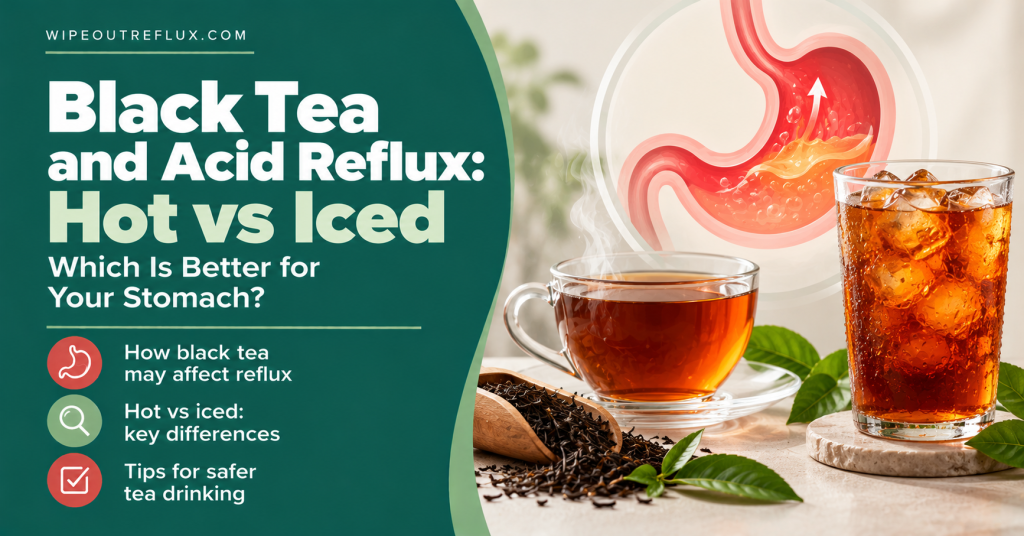
Plain black tea is one of the gentler caffeinated drinks for acid reflux. Brewed at home, it’s only mildly acidic, at around pH 5, and it has much less caffeine than coffee. Many people with reflux handle a weak cup, especially with milk, without much trouble.
Iced tea is a different story, and it depends on where it comes from. Home-brewed iced tea is the same drink served cold. Bottled and canned iced teas usually aren’t. Most have added citric acid and sugar, which can drop them to around pH 3, as acidic as many soft drinks. In a study of US beverages, bottled and ready-to-drink teas ranged from pH 2.85 to 5.18, with an average of just 3.48 [Reddy et al., The Journal of the American Dental Association, 2016].
So is iced tea acidic? Bottled iced tea usually is. If you have silent reflux, that’s the version I’d avoid.
Key Takeaways
- Freshly brewed black tea is mildly acidic, around pH 5, and is usually tolerated better than coffee.
- Black tea has about 71 mg of caffeine per 12 oz, compared with 113 to 247 mg in brewed coffee.
- In a pH-monitoring study, regular tea caused no more reflux than water, while coffee did.
- Large studies give mixed results: heavy tea drinkers had slightly more reflux symptoms in one big US cohort, and a meta-analysis found no overall link.
- Bottled iced teas averaged around pH 3.5 and some were below 3, mainly because of added citric acid.
- For silent reflux, drinks below about pH 4 to 5 can reactivate pepsin in the throat.
- The safest way to drink it is weak, not too hot, with milk, and away from bedtime.
- Home-brewed iced tea without lemon or citric acid is far gentler than bottled versions.
Is Black Tea Acidic?
Brewed black tea is mildly acidic, usually somewhere around pH 5. For comparison, coffee measured about pH 5.1 in the same US beverage study [Reddy et al., The Journal of the American Dental Association, 2016], while lemonade and cola sit far lower, at around pH 2.5 to 3. See my food pH chart for more.
A few things change the pH of your cup:
- Brewing time. A long, stewed brew pulls out more tannins and other compounds, making a stronger, more bitter cup.
- Milk. Milk is close to neutral, so it raises the pH of tea and softens it. See does milk help acid reflux.
- Lemon. A slice of lemon drops the pH noticeably. Lemon juice is around pH 2 to 2.5.
- Flavorings. Fruit-flavored black teas often contain citric acid or dried citrus peel.
For a related flavored blend, see is Earl Grey tea acidic. Bergamot oil is the main difference.
Is Black Tea Good for Acid Reflux?
It’s not a remedy, but it’s one of the more reflux-friendly caffeinated drinks. Here’s why, and where the catches are.
Less caffeine than coffee
Caffeine is one of the reasons hot drinks trigger reflux. According to the FDA, a 12 oz serving of black tea has about 71 mg of caffeine. The same amount of regular brewed coffee has 113 to 247 mg [US Food and Drug Administration, Spilling the Beans, 2024].
That’s still more caffeine than green tea, at about 37 mg. If caffeine is your main trigger, green tea or decaf black tea is a better swap. I cover caffeine in more depth in caffeine and acid reflux.
Tea caused no more reflux than water in testing
The most direct evidence comes from a study that measured reflux with pH monitoring after people drank coffee, tea, decaffeinated versions or plain water. Regular coffee caused significantly more reflux than water. Regular tea didn’t differ from water [Wendl et al., Alimentary Pharmacology & Therapeutics, 1994].
That matches what I’ve seen with readers and in my own LPR. Plenty of people who can’t touch coffee get on fine with a weak cup of tea.
Heavy drinking is where it changes
The bigger studies are more mixed. In the Nurses’ Health Study II, which followed over 48,000 women, those drinking more than six servings of tea a day had a 26% higher risk of reflux symptoms than those drinking none. Coffee and soda showed similar increases. Swapping two servings a day of tea for water lowered risk by about 4% [Mehta et al., Clinical Gastroenterology and Hepatology, 2021].
Interestingly, in that study, decaf tea was linked to slightly more risk than regular tea. That suggests something other than caffeine may be involved, or that people already prone to reflux switch to decaf.
A meta-analysis of 30 studies found no overall link between tea and GERD. It did find a higher risk in East Asian studies, but most of the studies were cross-sectional, so cause and effect can’t be shown [Cao et al., Medicine, 2019].
My take: one or two weak cups a day is unlikely to be the thing holding your reflux back. Six strong mugs a day might be.
Is Iced Tea Acidic?
This is where tea becomes a real problem for reflux, and it’s mostly down to what manufacturers add.
Bottled and canned iced tea
Most sweetened bottled iced teas list citric acid on the label. It’s added for a tart, “lemony” taste and as a preservative. Many also have added lemon juice. The result is a drink far more acidic than tea itself.
In the US beverage study, ready-to-drink teas had an average pH of 3.48, and the most acidic were below pH 3 [Reddy et al., The Journal of the American Dental Association, 2016]. That puts many bottled teas in the same range as fruit juices and sodas, not hot tea. Diet versions aren’t better, because the acid is still there.
Bottled teas also tend to be high in sugar, and they’re easy to drink in large amounts. A 20 oz bottle is nearly two mugs of tea in one go. For more on the additive itself, see is citric acid bad for acid reflux.
Home-brewed iced tea
Iced tea you brew yourself, then chill, has the same pH as hot tea, around 5. Leave out the lemon and you’ve got a much gentler drink than anything in a bottle. Cold brewing, where you steep tea in cold water in the fridge for several hours, gives a smoother, less bitter result.
Sweet tea and fast-food iced tea
Unsweetened iced tea from a fountain is usually brewed tea, so it’s similar to homemade. Sweet tea adds a lot of sugar but not much acid. The problem is the lemon wedge that comes with it, and flavored versions like raspberry or peach, which often use acidic syrups.
Why Acidity Matters More for Silent Reflux
If you have classic heartburn, a drink’s caffeine and fat content often matter more than its pH. With silent reflux, acidity matters a lot.
Pepsin, the digestive enzyme that travels up with reflux, can lodge in the tissues of your throat. It’s inactive at neutral pH but can be switched back on by acid. Human pepsin is active up to around pH 6.5 and can be reactivated from a stable, inactive state at pH 7.5 [Johnston et al., The Laryngoscope, 2007].
That means an acidic drink can irritate your throat on the way down, even without any reflux happening. A strict low-acid diet, keeping foods and drinks above pH 5, improved symptoms in most people with silent reflux whose symptoms hadn’t responded to medication alone [Koufman, Annals of Otology, Rhinology & Laryngology, 2011]. That’s the same principle behind the Wipeout Diet Plan.
Brewed black tea sits right around that pH 5 line. Bottled iced tea at pH 3 is well below it. For more on this mechanism, read how pepsin reactivates in the throat.
How to Drink Black Tea With Acid Reflux
If you love black tea, you don’t have to give it up. These changes make the biggest difference:
- Brew it weaker. Steep for two to three minutes, not five, and take the bag out.
- Add milk. It raises the pH and dilutes the tea. Low-fat milk or a plant milk like almond milk is gentler than full-fat milk or cream.
- Skip the lemon. It’s the quickest way to make tea acidic.
- Let it cool a little. Very hot drinks can irritate an already sore throat.
- Keep it to one or two cups. Spread them out rather than drinking several in a row.
- Not too close to bed. The caffeine can disturb sleep, and reflux is often worse lying down.
- Try decaf if caffeine is your trigger. But note that decaf didn’t help in the large US study, so judge it by your own symptoms.
For iced tea, brew your own and chill it, or cold brew it. If you buy bottled, read the label and choose an unsweetened tea that lists only water and tea, with no citric acid or lemon juice.
Better Drinks If Black Tea Bothers You
If even weak tea gives you symptoms, try these instead:
- Chamomile tea, which is caffeine-free and close to neutral.
- Decaffeinated green tea, if you want a “real” tea with less caffeine.
- Ginger tea made from fresh root, if it suits you. See is ginger good for acid reflux.
- Plain or alkaline water.
I’d avoid peppermint tea, which can relax the valve at the top of the stomach. For a full list, see what to drink with acid reflux.
Conclusion
Black tea is one of the better caffeinated choices for acid reflux. Brewed fresh, it’s only mildly acidic, has much less caffeine than coffee and, in pH testing, caused no more reflux than water. A weak cup with milk and no lemon is something most people with reflux can enjoy.
Iced tea is where you need to be careful. Home-brewed iced tea is fine, but most bottled and canned versions contain citric acid and sit around pH 3, acidic enough to reactivate pepsin in an irritated throat. If you have silent reflux, that’s the one to cut out.
Drinks are only one piece of the picture. The Wipeout Diet Plan is my complete, step-by-step plan for what to eat and drink, and when, to calm reflux down and let your throat heal. It started as a plan for silent reflux, the throat-based kind that’s hardest to treat, but because it targets the same causes, it works just as well for GERD and heartburn.
If you’d rather start with a quick reference, the Wipeout Food Reference Guide is the essential companion. It lists the foods and drinks that are safe for acid reflux and LPR, with their pH values, so you can check a drink before you pour it.
Frequently Asked Questions
Is black tea better than coffee for acid reflux?
Usually, yes. Black tea has less caffeine, is slightly less acidic, and in pH-monitoring testing caused no more reflux than water, while coffee did. Very heavy tea drinking is still linked to more reflux symptoms.
Is iced tea bad for acid reflux?
Bottled and canned iced tea often is, because most contain citric acid and sit around pH 3. Home-brewed iced tea without lemon is much gentler, at around pH 5.
Does milk in tea help acid reflux?
It can. Milk raises the pH of tea and dilutes it, so a milky cup is gentler on the throat. Low-fat or plant milk is better than cream, since fat can relax the lower esophageal sphincter.
Is decaf black tea better for reflux?
If caffeine triggers your symptoms, decaf is worth trying. But in a large study of US women, decaf tea wasn’t linked to less reflux than regular tea. Let your own symptoms guide you.
Is sweet tea acidic?
Plain sweet tea is mostly brewed tea and sugar, so it’s only mildly acidic. Bottled sweet tea often contains citric acid, and a lemon wedge makes any sweet tea far more acidic.
What is the pH of black tea?
Freshly brewed black tea is usually around pH 5. Adding milk raises it, and adding lemon lowers it significantly. Bottled black teas can be as low as pH 3.
Can I drink black tea with silent reflux?
Many people can, in moderation. Keep it weak, add milk, skip lemon and avoid bottled versions. If your throat is very irritated, a caffeine-free herbal tea like chamomile is safer while it heals.
Research & References
- [Reddy et al., The Journal of the American Dental Association, 2016] — Measured the pH of a wide range of US beverages; 17 ready-to-drink teas ranged from pH 2.85 to 5.18 with a mean of 3.48, while coffee measured about pH 5.1.
- [US Food and Drug Administration, Spilling the Beans, 2024] — Typical caffeine per 12 oz: black tea 71 mg, green tea 37 mg, brewed coffee 113 to 247 mg.
- [Wendl et al., Alimentary Pharmacology & Therapeutics, 1994] — Regular coffee caused significantly more reflux than water, while regular tea did not differ from water; decaffeinating coffee reduced reflux.
- [Mehta et al., Clinical Gastroenterology and Hepatology, 2021] — In 48,308 women, more than six servings a day of tea was linked to a 26% higher risk of reflux symptoms; replacing two servings with water lowered risk by about 4%.
- [Cao et al., Medicine, 2019] — Meta-analysis of 30 studies found no significant overall association between tea and GERD, with a higher risk seen in East Asian studies.
- [Johnston et al., The Laryngoscope, 2007] — Human pepsin is active up to about pH 6.5, inactive but recoverable up to pH 7.5, and irreversibly inactivated at pH 8.
- [Koufman, Annals of Otology, Rhinology & Laryngology, 2011] — A strict low-acid diet improved symptoms in most people with silent reflux that hadn’t responded to medication alone.

David Gray
12 years living with LPR · Consultant & researcher
I've lived with LPR for twelve years — the misdiagnoses, the PPI courses that did nothing, the slow work of figuring out what actually helps. Wipeout Reflux is where I translate the research into plain terms for people stuck in the same place. Every claim here is sourced to peer-reviewed work, and I consult one-to-one with LPR sufferers.