
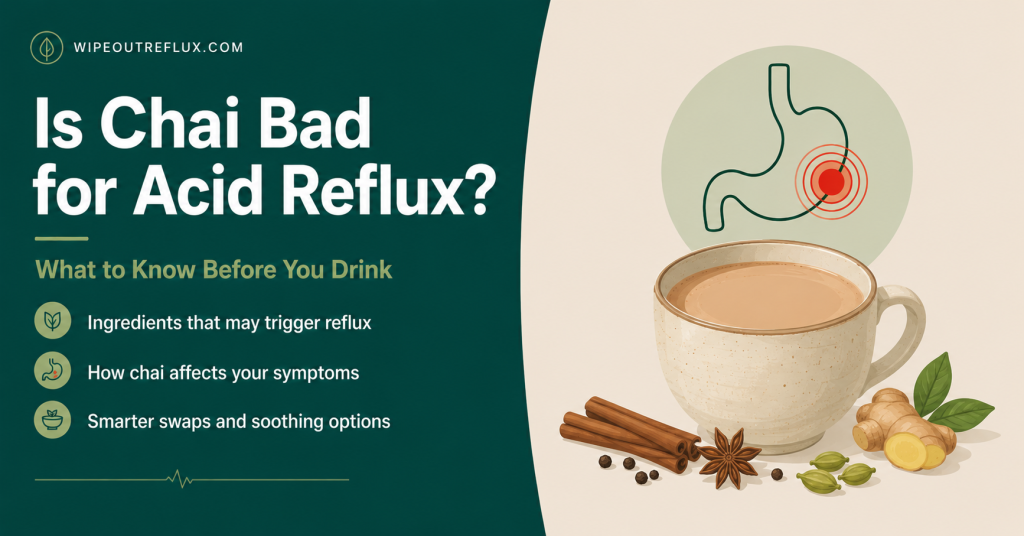
Chai is a genuinely mixed bag for reflux, which is exactly why blanket answers about it fall flat. A traditional masala chai is three different things stacked into one cup: a black tea base with caffeine, a blend of warming spices, and often a generous amount of milk. Each of those layers pulls in a different direction. The spices are where it gets interesting — some, like ginger and cardamom, are among the friendlier things you can put in a warm drink for digestion, while others, like black pepper and clove, can irritate an already-sensitive throat or oesophagus. The caffeine and the milk add their own considerations on top.
So whether chai helps you or bothers you depends heavily on how it’s made and which version you’re drinking — a ginger-forward, lightly spiced chai on oat milk behaves very differently from a strong, peppery, full-fat-milk chai latte drunk on an empty stomach.
This guide breaks chai down into its parts — the spices that help, the ones that trigger, the caffeine, and the milk — so you can build or order a cup that works with your reflux rather than against it.
Key Takeaways
- Chai is really three things in one cup — black tea (caffeine), a spice blend, and usually milk — and each layer affects reflux differently.
- The helpful spices: ginger (traditionally settling, can speed gastric emptying) and cardamom are the friendliest, and cinnamon is generally well tolerated.
- The trigger spices: black pepper contains piperine, which activates the same TRPV1 “heat” receptors as chilli, and clove is a warming irritant — both can bother a sensitive throat or oesophagus.
- The black tea base contains caffeine, which relaxes the lower oesophageal sphincter — less than coffee, but still a factor if you drink it strong or late.
- Milk matters: full-fat dairy adds a fat load that slows stomach emptying; a modest amount of low-fat or plant milk is gentler.
- A strong, peppery chai latte on full-fat milk, drunk late or on an empty stomach, is the worst-case version.
- A lighter, ginger-forward chai, mild on pepper and clove, on a little low-fat or oat milk, earlier in the day, is very manageable for most people.
- Decaf or a rooibos-based “chai” removes the caffeine issue entirely while keeping the spice character.
Is Chai Bad for Acid Reflux?
Chai isn’t straightforwardly bad or good — it depends on the recipe. Because it combines caffeine, a spice mix that contains both soothing and irritating members, and often milk, the same drink can be gentle in one form and a trigger in another. That’s genuinely different from something like coffee, where the mechanisms all point the same way. With chai, you can tune the cup.
The most useful way to approach it is to look at the four components separately — the spices, the caffeine, and the milk — because the fix for each is different. Once you know which part of your chai is causing trouble, you can adjust that one thing rather than giving up the drink entirely. Let’s go layer by layer, starting with the spices, since that’s where chai is most distinctive.
The Spices That Help
The good news is that the backbone spices of a classic chai lean friendly. Ginger is the standout. It has a long traditional use for settling the stomach, and in healthy volunteers it accelerated gastric emptying and stimulated the stomach’s natural contractions [Wu et al., European Journal of Gastroenterology & Hepatology, 2008] — and faster emptying theoretically works against reflux rather than for it. A ginger-forward chai is, on the spice front, one of the more reflux-reasonable warm drinks you can have. My full guide to ginger for acid reflux covers the evidence.
Cardamom is the other friendly one — a warming, aromatic spice with traditional digestive use and no known reflux-triggering mechanism. Cinnamon rounds out the gentle group; it’s generally well tolerated and adds sweetness and warmth without irritation. If you want a chai that leans on its friendliest spices, build it around ginger, cardamom, and cinnamon and go easy on the others.
The Spices That Trigger
Now the ones to watch. Black pepper is a standard chai ingredient, and it contains piperine — a compound that activates TRPV1 receptors, the same heat-and-pain sensors that chilli’s capsaicin acts on. Those receptors line the oesophagus, and stimulating them can provoke a burning sensation and reflux symptoms in people who already have GERD, much as spicy food does [Capsaicin induction of esophageal symptoms, Revista de Gastroenterología de México, 2010]. A heavily peppered chai is essentially delivering a mild version of that same irritant.
Clove is the other one to be cautious with. It’s a strongly warming, aromatic spice, and in larger amounts it can irritate the throat and oesophageal lining, which matters especially for silent reflux where the throat tissue is already sensitised. Neither black pepper nor clove is a disaster in the small quantities used in a well-balanced chai — but if your chai is heavy on either, and you’re getting symptoms, that’s the first thing to dial back. For the broader picture on how pungent spices behave, see my guide to spicy food and acid reflux.
The Caffeine in the Black Tea Base
Underneath the spices, chai is built on black tea, and black tea contains caffeine. Caffeine relaxes the lower oesophageal sphincter — the valve that holds stomach contents down — which is a genuine reflux mechanism. The reassuring part is that a cup of black tea generally contains less caffeine than a cup of coffee, so chai sits below coffee on this measure. But “less than coffee” isn’t “none,” and a strong, long-brewed chai, or several cups across the day, adds up. My guide to caffeine and acid reflux explains how the sphincter effect scales with the dose.
The practical implications are the same as for any caffeinated drink: keep it earlier in the day, don’t brew it to maximum strength if you’re symptomatic, and watch your cumulative caffeine. If the caffeine is your main issue, a decaffeinated black tea chai or a naturally caffeine-free rooibos-based chai keeps all the spice character while removing the sphincter concern entirely.
The Milk Question
Most chai is served with milk, and milk brings a fat consideration. Full-fat dairy adds a meaningful fat load, and fat relaxes the lower oesophageal sphincter and slows gastric emptying via the release of the hormone cholecystokinin — the same mechanism behind most fatty-food reflux. A rich, full-fat chai latte is therefore working against you on the fat front as well as the caffeine one. My guide to whether milk helps acid reflux covers the nuance — milk can feel briefly soothing but the fat can rebound.
The fix is simple: use a modest amount of low-fat dairy or a low-fat plant milk. Oat milk is a popular chai base and, in moderate quantity, is far gentler than full cream. Almond milk is another low-fat option. Keep the volume sensible — a huge milky latte is a bigger fat load than a small cup regardless of which milk you choose.
Building a Reflux-Friendly Chai
Put the layers together and a gentle chai almost designs itself:
- Lead with ginger and cardamom: Make these the dominant spices — they’re the friendly ones — with cinnamon for warmth.
- Go light on black pepper and clove: Reduce or omit the two irritant spices, especially during active symptoms or if you have LPR.
- Brew it moderate, not maximal: A shorter steep on the black tea keeps the caffeine down. Or use decaf black tea, or a rooibos base for zero caffeine.
- Choose a low-fat milk, in moderation: A modest splash of oat, almond, or low-fat dairy rather than a large full-cream latte.
- Skip drinking it on an empty stomach and late at night: Have chai with or after food, earlier in the day, so neither the caffeine nor the fat is working against you while you’re lying down — see acid reflux at night.
- Mind the sugar: Many shop-bought chai lattes are very sweet. Sugar isn’t a direct reflux trigger for most, but big sugary drinks tend to come in big volumes, which is its own problem.
If you’d rather not fiddle with recipes, a caffeine-free rooibos chai using ginger, cardamom, and cinnamon gives you almost all the chai experience with the fewest reflux levers pulled. And if you’re trying to place chai within a whole reflux-friendly routine, the Wipeout Diet Plan maps out where spiced and caffeinated drinks fit.
Frequently Asked Questions
Is chai tea bad for acid reflux?
It depends on how it’s made. Chai combines caffeinated black tea, a spice blend, and usually milk. Ginger and cardamom are friendly spices; black pepper and clove can irritate; the caffeine can relax the lower oesophageal sphincter; and full-fat milk adds a fat load. A light, ginger-forward chai on low-fat milk is manageable for most people, while a strong, peppery, full-cream chai latte is more likely to trigger symptoms.
Which chai spices are good for acid reflux?
Ginger is the best — it’s traditionally settling and can speed gastric emptying. Cardamom is also friendly, and cinnamon is generally well tolerated. Building your chai around these three, while going easy on black pepper and clove, gives you the most reflux-friendly cup.
Which chai spices trigger reflux?
Black pepper is the main one — its piperine activates the same TRPV1 heat receptors in the oesophagus that chilli does. Clove is the other, as a strong warming spice that can irritate the throat and oesophageal lining in larger amounts. Reducing both is the first adjustment to make if a peppery chai bothers you.
Does chai have less caffeine than coffee?
Usually, yes. Chai is made with black tea, which generally contains less caffeine per cup than coffee. That makes chai gentler on the caffeine-driven sphincter relaxation than coffee — but it’s not caffeine-free, so a strong or late chai can still contribute to reflux. Decaf or rooibos chai removes the caffeine entirely.
Can I drink chai with silent reflux (LPR)?
Yes, with a careful recipe. For LPR, minimise the irritant spices (black pepper, clove), keep the caffeine low or switch to decaf/rooibos, use a modest amount of low-fat milk, and have it earlier in the day. A gentle ginger-and-cardamom chai fits LPR management far better than a strong, peppery one.
Is a chai latte worse than plain chai for reflux?
It can be, mainly because of the milk. A chai latte typically uses more milk — often full-fat — adding a fat load that relaxes the sphincter and slows stomach emptying. A smaller chai with a modest splash of low-fat or oat milk is gentler than a large full-cream latte.
Conclusion
Chai rewards a bit of attention because, unlike most trigger drinks, you can tune it. The spices that define it are split — ginger and cardamom are on your side, cinnamon is neutral-to-friendly, while black pepper and clove are the ones that can irritate a sensitive throat or oesophagus. Layered on top are the caffeine from the black tea base (real, but less than coffee) and the fat from milk (bigger in a full-cream latte than in a lightly milked cup). Adjust those levers and chai shifts from a potential trigger to a warm, comforting drink that most people with reflux can enjoy.
If chai is one thread in a wider effort to calm your reflux, the surest progress comes from working on the whole pattern rather than one drink at a time. The Wipeout Diet Plan is the more comprehensive resource for that — originally designed around LPR, the harder-to-treat throat-based reflux, but because it targets the same root causes it works just as well for GERD and everyday heartburn, and it shows where spiced, caffeinated, and milky drinks sit in a day. The Wipeout Reflux Food Reference Guide is the essential companion, giving you the reflux ratings for tea, the individual chai spices, and the milk options — so you can build a cup you already know will sit well.
Research & References
Wu KL et al. (2008). Effects of ginger on gastric emptying and motility in healthy humans. European Journal of Gastroenterology & Hepatology. Ginger accelerated gastric emptying and stimulated antral contractions in healthy volunteers, supporting ginger — a core chai spice — as a digestion-friendly ingredient that works with, rather than against, reflux management. [Wu et al., European Journal of Gastroenterology & Hepatology, 2008]
Capsaicin induction of esophageal symptoms in different phenotypes of gastroesophageal reflux disease (2010). Revista de Gastroenterología de México. Capsaicin, which acts on TRPV1 receptors, produced oesophageal symptoms in 90% of GERD patients versus 35% of controls. Piperine in black pepper activates the same TRPV1 pathway, explaining why a heavily peppered chai can provoke burning and reflux symptoms. [Revista de Gastroenterología de México, 2010]
Cohen S. (1975). Gastric acid secretion and lower-esophageal-sphincter pressure in response to coffee and caffeine. New England Journal of Medicine. This study documented caffeine’s effect on lower oesophageal sphincter pressure, the mechanism by which the caffeine in chai’s black tea base can contribute to reflux — though black tea generally delivers less caffeine than coffee. [Cohen S., New England Journal of Medicine, 1975]

David Gray
12 years living with LPR · Consultant & researcher
I've lived with LPR for twelve years — the misdiagnoses, the PPI courses that did nothing, the slow work of figuring out what actually helps. Wipeout Reflux is where I translate the research into plain terms for people stuck in the same place. Every claim here is sourced to peer-reviewed work, and I consult one-to-one with LPR sufferers.