
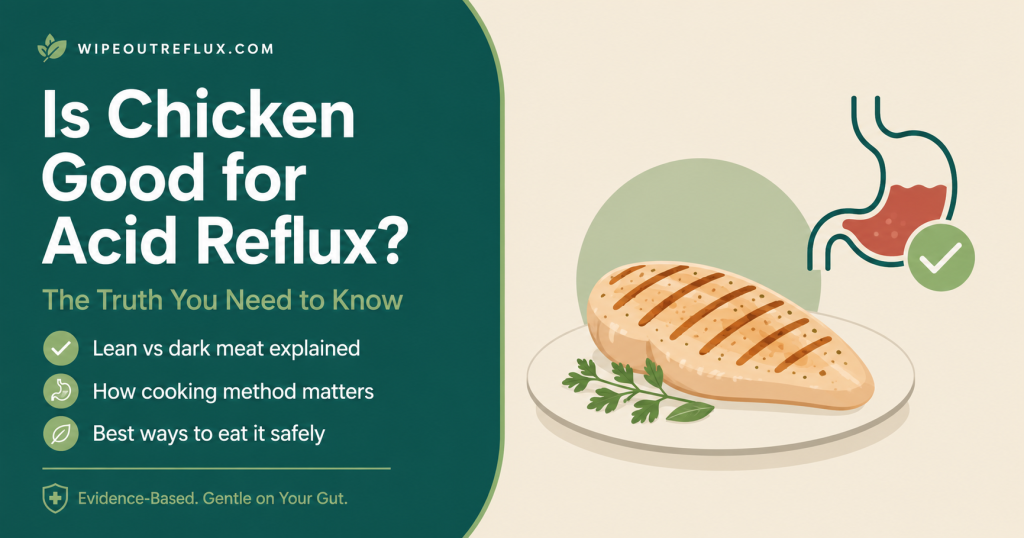
Yes — chicken is one of the better protein choices if you have acid reflux, but only in the right form. Skinless breast, baked, grilled or poached, is about as safe as protein gets: it’s not acidic, it’s low in fat, and it doesn’t sit in the stomach for long. Fried chicken, chicken skin, wings and creamy chicken dishes are a different food entirely, and any of them can trigger heartburn reliably.
So the honest answer isn’t really about chicken. It’s about fat and portion size. The meat itself is close to neutral; almost everything that makes chicken a problem is added to it during cooking.
Below is what actually matters — which cuts to choose, why the skin is the single biggest variable, which cooking methods to use and avoid, how much to eat in one sitting, and the marinades that quietly undo all of it.
Key Takeaways
- Skinless chicken breast is one of the safest proteins for reflux — lean, near-neutral in pH, and quick to leave the stomach.
- Chicken isn’t acidic. Its pH sits around neutral, so it isn’t irritating raw material for a damaged oesophagus.
- Fat is the variable that decides everything: it slows stomach emptying, which keeps volume and pressure sitting against the valve for longer.
- Removing the skin roughly halves the fat content of a portion.
- Breast is leanest; thigh and drumstick are notably fattier but still workable in smaller portions.
- Bake, grill, poach, steam or air-fry. Avoid deep-frying and heavy cream sauces.
- Portion size matters as much as the cut — a large meal triggers reflux regardless of how lean it is.
- Marinades are the hidden trap: tomato, citrus, vinegar, garlic and chilli undo an otherwise safe meal.
- Rotisserie chicken is fine if you take the skin off; fried chicken and wings are among the most reliable reflux triggers there are.
Why Chicken Is a Good Starting Point
Three things work in chicken’s favour, and they’re worth understanding rather than just accepting.
It isn’t acidic. Chicken sits close to neutral on the pH scale, roughly 6 to 6.5. That matters if your oesophagus or throat lining is already inflamed, because acidic foods cause direct irritation on contact regardless of whether they trigger reflux. Chicken doesn’t do that. Compare it with tomato-based or citrus-marinated dishes and the difference is immediate.
Lean protein empties the stomach reasonably quickly. The longer food sits in your stomach, the longer there’s volume and pressure pushing against the lower oesophageal sphincter, and the longer the window in which reflux can happen. Protein itself isn’t the problem; fat is what slows gastric emptying down, so a lean protein moves through at a sensible pace.
Protein is genuinely useful for healing. If you’re recovering from oesophageal or laryngeal irritation, tissue repair needs adequate protein. Cutting protein intake to avoid reflux triggers is a common mistake — the goal is choosing the right sources, not eating less protein.
That’s why chicken appears on essentially every reflux-friendly food list, including our own LPR foods to eat.
The Skin Is the Single Biggest Decision
If you change one thing, change this. Chicken skin is mostly fat, and removing it dramatically alters the meal.
A skinless roasted chicken breast contains roughly 3 to 4 grams of fat per 100g. Leave the skin on and that climbs to around 9 grams. Thigh with skin lands higher again, in the region of 15 grams. In other words, the same bird can be a lean meal or a fatty one depending on a decision that takes two seconds.
Why does this matter so much? Fat is the component of a meal that most reliably slows gastric emptying. A slower-emptying stomach stays fuller for longer, which means more volume, more pressure and a longer period during which reflux can occur. Fatty meals are also more likely to provoke the transient sphincter relaxations that let stomach contents through.
It’s worth being precise here, because reflux advice routinely overstates the fat story. When researchers deliberately separated the two variables, oesophageal acid exposure was significantly higher after high-calorie meals than low-calorie ones, while the frequency of symptoms tracked with fat percentage instead Fox et al., Clinical Gastroenterology and Hepatology, 2007. And a controlled study that raised the fat content of a meal while holding calories constant found no increase in reflux episodes, acid exposure or sphincter relaxations at all Penagini et al., Gut, 1998.
So fat isn’t the villain it’s usually painted as — but chicken skin, frying oil and cream sauces are the densest sources of calories you can add to a plate, and calorie load is the thing most consistently linked to acid exposure. The practical advice lands in the same place either way: keep it lean, and keep it modest.
Which Cut to Choose
Ranked from safest, roughly:
- Skinless breast. The leanest option and the default choice. Mild, versatile, and about as low-risk as a protein gets.
- Skinless thigh. Noticeably fattier than breast but much more forgiving to cook, and more flavourful without needing heavy sauces. Fine in a sensible portion.
- Skinless drumstick. Similar to thigh. Workable.
- Anything with skin on. Manageable occasionally if the portion is small and the rest of the meal is light.
- Wings. High skin-to-meat ratio, almost always fried, and usually coated in something acidic or spicy. Among the worst options.
Don’t over-restrict to breast alone if you find it dry and end up compensating with sauce — a skinless thigh with herbs beats a dry breast drowned in creamy dressing.
Cooking Method Matters More Than the Chicken
Best: poaching, steaming, baking, grilling, and air-frying. All of these cook without adding meaningful fat, and poaching in particular keeps breast moist without needing a sauce.
Acceptable: pan-frying in a small amount of oil, roasting, slow-cooking. Use a teaspoon or two of oil rather than a generous pour.
Avoid: deep-frying and breaded fried chicken. This is the clearest single distinction in the whole article. Deep-frying loads the food with fat and pushes the calorie density of the meal up sharply — exactly the two things most associated with post-meal reflux. Fried chicken is a genuinely reliable trigger, not a cautious-sounding suggestion. More on the mechanism in is fried food bad for acid reflux.
Creamy sauces belong in the same category. A chicken breast is lean; a chicken breast in a butter-and-cream sauce is not.
The Marinade Trap
This catches people constantly. You do everything right — skinless breast, grilled, sensible portion — and still get symptoms, because of what the chicken was sitting in.
Common problem ingredients:
- Tomato-based sauces and barbecue glazes. Acidic, and often sugary and concentrated on top of it.
- Lemon and lime juice. Standard in chicken marinades and among the most acidic things in a kitchen.
- Vinegar and vinaigrettes. Same problem.
- Garlic and onion, especially raw or in large quantities. Common triggers through a sphincter effect rather than acidity.
- Chilli and hot sauce. Doesn’t appear to increase reflux mechanically, but directly irritates already-inflamed tissue — which feels the same from where you’re sitting.
- Heavy salt and stock cubes. Not a direct trigger for most people, but worth moderating.
Safer flavouring: fresh or dried herbs (thyme, rosemary, oregano, parsley, basil), a little olive oil, ginger, turmeric, fennel seed, a small amount of maple or honey, and garlic-infused oil if you tolerate it — the infused oil carries flavour without the fructans that cause trouble.
Portion and Timing
A modest portion of lean chicken is unlikely to cause problems. A very large one might, no matter how lean, simply because meal volume and calorie load are themselves reflux triggers.
A reasonable target is a palm-sized portion, roughly 100 to 150g cooked, as part of a balanced plate with vegetables and a whole grain rather than a plate dominated by meat. If you’re eating substantially more than that in one sitting, size alone may be the issue — see does overeating cause acid reflux.
Timing matters too. Protein takes a while to digest, so a large chicken dinner shortly before bed gives you the worst combination: a full stomach and a horizontal position. Aim to finish eating around three hours before lying down — the reasoning is in how long before bed you should stop eating. Chewing thoroughly helps as well, since chicken is a dense protein and larger pieces sit longer.
Common Situations
Rotisserie chicken. Fine, provided you remove the skin. The meat underneath is simply roasted chicken. Check for heavy seasoning rubs, which are often paprika-and-garlic heavy.
Chicken soup. One of the better options when symptoms are active — warm, easy to digest, low in fat if you skim it, and gentle on an irritated throat. Detail in is chicken noodle soup good for acid reflux.
Chicken sandwiches and wraps. Depends entirely on preparation. Grilled chicken with salad is fine. Crispy or breaded chicken with mayonnaise is not.
Chicken curry. The chicken isn’t the issue — the cream, coconut milk, chilli and tomato base usually are.
Eating out. Grilled or roasted chicken is one of the more reliably safe things on most menus. Ask for sauce on the side and skip anything described as crispy, breaded or smothered. More in eating out with acid reflux.
If Chicken Still Triggers You
Some people react to plain, well-prepared chicken. A few possibilities worth considering.
Portion size is the most common explanation — try halving it before concluding chicken is the problem. Eating speed is next; dense protein eaten quickly sits heavily. It may also not be the chicken at all but what came with it, so it’s worth isolating the variable properly before eliminating a useful protein source.
If lean chicken genuinely causes symptoms consistently, oily fish is the obvious alternative and brings anti-inflammatory benefits alongside — see what fish is good for acid reflux. Eggs, turkey, tofu and legumes are all reasonable options too.
Conclusion
Chicken is a genuine ally for most people with reflux, and it’s one of the few foods where you can eat it freely provided you control how it’s prepared. Skinless, baked or grilled, herb-seasoned and served in a sensible portion, it’s about as safe a protein as exists — not acidic, not heavy, and useful for the tissue repair that a damaged oesophagus or larynx actually needs. Fried, skin-on, sauced or supersized, it moves straight onto the trigger list. The bird is neutral; the cooking decides.
That’s the pattern with most reflux foods, and it’s why blanket “avoid” lists are so unhelpful — they tell you a food is bad without telling you that a small preparation change usually makes it fine. Working out which foods are genuinely off-limits and which just need handling differently is most of the work of eating well with reflux.
That’s exactly what the Wipeout Diet Plan is built around — a structured way to reduce reflux episodes through what and how you eat, rather than a list of prohibitions. I designed it primarily for LPR and silent reflux, the throat-based form that responds worst to medication, but since it targets the same underlying mechanisms it works just as well for GERD and everyday heartburn. And for the day-to-day decisions, the Wipeout Food Reference Guide is the practical companion — the full list of foods and drinks that are safe for acid reflux and LPR with their actual pH values, so you can check a marinade or a side dish before it becomes a problem rather than after.
Frequently Asked Questions
Is chicken acidic?
No. Chicken sits close to neutral, around pH 6 to 6.5, so it isn’t irritating to an inflamed oesophagus the way tomato or citrus is. Any acidity in a chicken dish almost always comes from the marinade or sauce.
Is grilled chicken good for acid reflux?
Yes, it’s one of the best preparations. Grilling adds no fat and keeps the meal lean. Just watch what it’s marinated in — lemon, vinegar and barbecue glazes are the usual culprits.
Can I eat fried chicken with acid reflux?
It’s one of the more reliable triggers, so it’s best avoided while symptoms are active. Deep-frying adds substantial fat and drives up the calorie density of the meal, both of which are associated with more post-meal reflux. If you want the texture, air-frying gets you most of the way there.
Is chicken skin bad for acid reflux?
It’s the fattiest part of the bird and roughly doubles the fat in a portion. Removing it is the single most effective change you can make to a chicken meal. Rotisserie chicken with the skin taken off is perfectly reasonable.
Is chicken breast or thigh better?
Breast is leaner and the safer default. Thigh is fattier but more forgiving to cook and tastier without heavy sauces, so it’s a fair trade in a smaller portion — particularly if dry breast leads you to reach for dressing.
Is chicken soup good for acid reflux?
Generally yes, and it’s a good choice during a flare. It’s warm, easy to digest, soothing on an irritated throat, and low in fat if you skim it. Avoid heavily creamy versions and go easy on tomato-based ones.
How much chicken can I eat at once?
A palm-sized portion, roughly 100 to 150g cooked, is a sensible guide. Meal size is itself a reflux trigger, so a very large portion can cause symptoms even when the chicken is perfectly lean.
Why does chicken give me heartburn even when it’s plain?
Usually portion size, eating speed, or something else on the plate rather than the chicken itself. Try halving the portion, eating more slowly and chewing thoroughly before ruling it out. If it persists, oily fish, eggs or plant proteins are good alternatives.
Research & References
- Fox et al., Clinical Gastroenterology and Hepatology, 2007 — Randomised crossover study separating dietary fat content from calorie density in patients with reflux symptoms. Oesophageal acid exposure was significantly greater after high-calorie meals than low-calorie meals, whereas the frequency of reflux symptoms was driven by the fat percentage of the meal rather than its calorie load.
- Penagini et al., Gut, 1998 — Controlled study in healthy subjects and patients with reflux disease comparing a high-fat meal (52% of calories from fat) with a balanced meal (24%) matched for total energy. Increasing fat content did not increase reflux episodes, oesophageal acid exposure, the rate of transient lower oesophageal sphincter relaxations, or basal sphincter pressure.
- Katz et al., The American Journal of Gastroenterology, 2022 — ACG clinical guideline for the diagnosis and management of gastro-oesophageal reflux disease, which recommends weight loss, avoiding late evening meals and selective rather than blanket elimination of trigger foods, noting that routine avoidance of foods on the basis of general lists is not supported by evidence.

David Gray
12 years living with LPR · Consultant & researcher
I've lived with LPR for twelve years — the misdiagnoses, the PPI courses that did nothing, the slow work of figuring out what actually helps. Wipeout Reflux is where I translate the research into plain terms for people stuck in the same place. Every claim here is sourced to peer-reviewed work, and I consult one-to-one with LPR sufferers.