
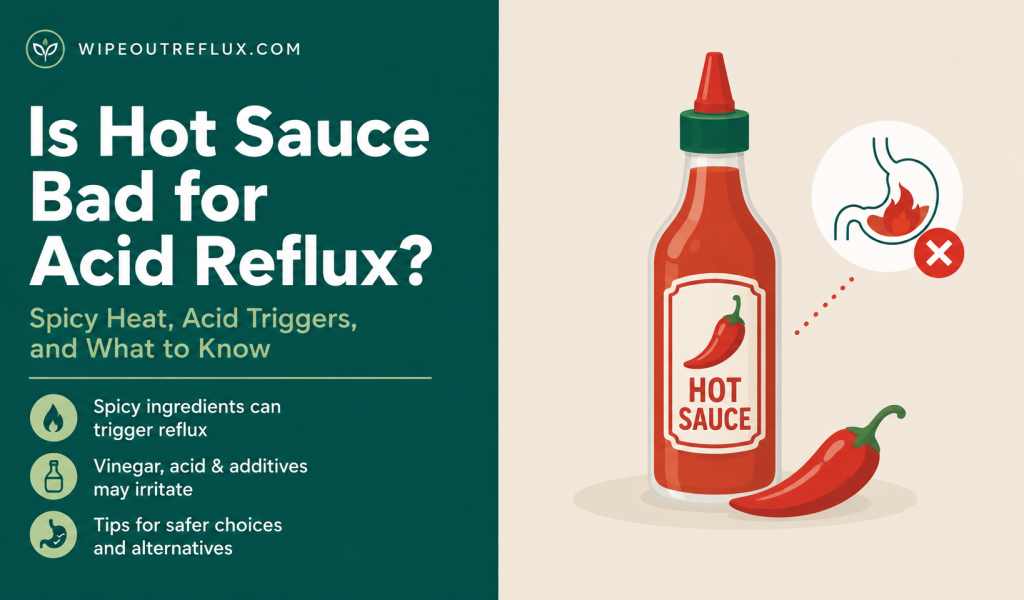
For most people with reflux, yes — hot sauce and sriracha tend to aggravate symptoms. But the reason is more interesting than the usual one-word answer of “capsaicin.” Capsaicin, the compound that makes chillies hot, genuinely can provoke reflux symptoms. Yet most hot sauces cause trouble through a second route that gets ignored: they’re built on vinegar, which makes them acidic in their own right. Sriracha adds sugar and garlic on top. So a dash of hot sauce is usually delivering heat and acid at once.
That distinction matters, because it changes what you do about it. If capsaicin were the whole story, a milder chilli would fix everything. Once you realise the vinegar base is doing much of the damage, you understand why even a “not that spicy” hot sauce can still bite, and why the answer is about both heat and acidity.
Key Takeaways
- Hot sauce and sriracha aggravate reflux through two mechanisms, not one: capsaicin (heat) and vinegar (acid).
- Capsaicin can trigger oesophageal symptoms directly, especially in people who already have reflux.
- Most hot sauces are vinegar-based and genuinely acidic, which matters as much as the chilli — particularly for silent reflux (LPR).
- Sriracha also contains sugar and garlic, adding further to the picture.
- Because the acidity is a big part of it, switching to a milder-but-still-vinegary sauce only solves half the problem.
- There’s some evidence that regular chilli exposure may reduce sensitivity over time, but during active reflux, hot sauce reliably makes things worse.
- Using far less, or switching to non-acidic flavour (herbs, mild spices), is more effective than just going milder.
Capsaicin: Real, But Only Half the Story
Capsaicin is the active compound in chillies, and it does have a direct effect. It activates heat- and pain-sensing receptors in the lining of the oesophagus, which can produce exactly the burning sensation reflux sufferers are trying to avoid. When researchers dripped capsaicin directly into the oesophagus, it induced symptoms in 90% of GERD patients compared with just 35% of healthy controls, with chest burning the most common complaint [Herrera-López et al., Revista de Gastroenterología de México, 2010]. So the reputation isn’t unfair — an already-sensitive oesophagus reacts more strongly to capsaicin. The wider picture on chilli heat is in spicy food and acid reflux.
There’s an interesting wrinkle worth being honest about: some evidence suggests that regular, repeated chilli exposure can desensitise those receptors over time, which is why lifelong chilli-eaters often tolerate heat that would floor someone else. But that’s a slow adaptation in people without active symptoms — during a flare, or with an inflamed oesophagus, capsaicin reliably aggravates things. It’s not a reason to push through heat while your reflux is bad.
The Vinegar Nobody Talks About
Here’s the part that gets missed. Pick up almost any bottle of hot sauce — Tabasco, Frank’s, Cholula, most Louisiana-style sauces — and the first or second ingredient is vinegar. It’s what gives them their tang and preserves them, and it makes them genuinely acidic, often down around pH 3 or below. That’s acid hitting your oesophagus and throat directly, entirely separate from the heat.
This is why capsaicin isn’t the whole story. Even a mild hot sauce with modest chilli content can still be strongly acidic from the vinegar. So if you swap a fiery sauce for a gentler one but it’s still vinegar-based, you’ve only addressed half the problem. Vinegar’s role in reflux is covered in is vinegar acid or alkaline, and hot sauces sit firmly on any condiments to avoid list for exactly this double reason. You can see where they fall on the food pH chart.
Sriracha’s Extra Ingredients
Sriracha deserves its own mention because it isn’t just chilli and vinegar. It also contains sugar — often a lot — and garlic. The sugar makes it moreish and easy to overuse; garlic is a common reflux trigger for many people. So sriracha stacks four things: capsaicin, vinegar acidity, sugar and garlic. It tastes milder and sweeter than a straight hot sauce, which can fool you into using more of it, when in reality it’s carrying several triggers at once.
Hot Sauce and Silent Reflux (LPR)
If your reflux is the throat-based, silent kind, both mechanisms hit where you’re most vulnerable. The capsaicin irritates sensitive throat tissue, and the vinegar acidity feeds the pepsin problem. In LPR, pepsin lodged in the throat can be reactivated by acidic food and drink, keeping symptoms going — and human pepsin stays partly active well above the pH people assume [Johnston et al., The Laryngoscope, 2007]. A low-acid diet removing everything below about pH 5 improved symptoms in the large majority of treatment-resistant LPR patients [Koufman, Annals of Otology, Rhinology & Laryngology, 2011]. A vinegar-based hot sauce at around pH 3 sits far below that line. If your throat’s already irritated, this is a combination to avoid — background in what is pepsin. Clinical guidance likewise supports identifying and avoiding personal trigger foods, with spicy foods among the usual reports [Katz et al., The American Journal of Gastroenterology, 2022].
What to Do About It
Tackling both the heat and the acid is the key — the same get-to-the-real-trigger approach the Wipeout Diet Plan takes with flavourings that seem harmless but stack up:
- Use far less. Both the heat and the acid scale with the amount, so a few drops instead of a good shake genuinely reduces the hit.
- Don’t just go milder — go less acidic. Swapping a hot sauce for a milder but still vinegar-based one only fixes half the problem. Flavour with herbs, a little smoked paprika, cumin or other non-chilli, non-vinegar spices instead.
- Watch the sriracha portion. Its sweetness masks how much you’re using — and it brings sugar and garlic along with the heat and acid.
- Avoid it during a flare. Whatever your long-term tolerance, hot sauce on an inflamed oesophagus or throat is asking for trouble. It sits near the top of most LPR foods to avoid lists.
- Mind the company. Hot sauce usually goes on fried food, and its cousins salsa and ketchup stack their own triggers — so the sauce is often one part of a difficult plate.
Conclusion
Hot sauce and sriracha are, for most people with reflux, aggravators — but capsaicin is only half the reason. The heat can irritate a sensitive oesophagus directly, yet the vinegar these sauces are built on makes them genuinely acidic too, and sriracha piles on sugar and garlic. That’s why simply choosing a milder sauce often disappoints: you’ve dialled down the heat but left the acid untouched. The more effective move is to use far less, and to reach for non-acidic flavour — herbs and mild spices — rather than another vinegar-based bottle. And while regular chilli-eaters may build some tolerance over time, that’s no reason to push through heat while your reflux is active.
Untangling which part of a food is actually causing your symptoms — the heat, the acid, the fat or the way it’s served — is exactly what the Wipeout Diet Plan is built to help you do, so you can make swaps that work rather than ones that only look sensible. I designed it first and foremost for LPR and silent reflux, the stubborn throat-based form that medication so often fails to touch, but because it works on the same underlying mechanisms it applies just as well to GERD and everyday heartburn. And the Wipeout Food Reference Guide is the practical companion for exactly this question — which foods and drinks are safe for acid reflux and LPR, with their real pH values, so the acid hiding in a hot sauce never catches you out.
Frequently Asked Questions
Is hot sauce bad for acid reflux?
For most people with reflux, yes. Hot sauce aggravates symptoms through two routes at once: capsaicin, which can irritate a sensitive oesophagus, and vinegar, which makes most hot sauces genuinely acidic. Even a mild sauce can bite because of the vinegar, so both the heat and the acidity matter.
Is it the capsaicin or the vinegar in hot sauce that causes reflux?
Both, which is why capsaicin isn’t the whole story. Capsaicin activates heat and pain receptors in the oesophagus and can trigger burning, while the vinegar base makes hot sauce acidic — often around pH 3. Switching to a milder but still vinegary sauce only addresses the heat, leaving the acid in place.
Is sriracha bad for acid reflux?
It can be, and it stacks more than you’d think. Sriracha combines capsaicin, vinegar acidity, sugar and garlic, so it carries several triggers at once. Its sweetness makes it taste milder and encourages using more, which means more of all four. Use it sparingly, or choose non-acidic flavourings instead.
Does building up a tolerance to spicy food help with reflux?
There’s some evidence that regular chilli exposure can reduce sensitivity over time, which is why lifelong chilli-eaters often tolerate more heat. But that adaptation happens in people without active symptoms — during a flare or with an inflamed oesophagus, capsaicin still aggravates things, and the vinegar in hot sauce remains acidic regardless.
What can I use instead of hot sauce with reflux?
Reach for non-acidic, non-chilli flavour: herbs, a little smoked paprika, cumin, or other mild spices add depth without heat or vinegar. If you want a hint of warmth, a very small amount of a milder spice is gentler than any vinegar-based hot sauce, which brings acidity along with the heat.
Can I have hot sauce with silent reflux (LPR)?
It’s best avoided. Both the capsaicin and the vinegar acidity hit the throat where LPR is most sensitive, and at around pH 3 a vinegar-based hot sauce sits well below the pH 5 threshold used in low-acid diets, so it can reactivate throat-bound pepsin. Non-acidic seasonings are a much safer way to add flavour.
Research & References
- Herrera-López et al., Revista de Gastroenterología de México, 2010 — Study perfusing capsaicin into the oesophagus, which induced symptoms in 90% of GERD patients versus 35% of healthy controls, chest burning being most frequent — direct evidence that capsaicin provokes oesophageal symptoms in reflux.
- Johnston et al., The Laryngoscope, 2007 — Laboratory work showing human pepsin retains proteolytic activity well above pH 4, the basis for why the vinegar acidity in hot sauce (around pH 3) matters in silent reflux, where it can reactivate throat-bound pepsin.
- Koufman, Annals of Otology, Rhinology & Laryngology, 2011 — Prospective study of treatment-resistant LPR patients on a strict low-acid diet removing everything below pH 5; 95% improved — the pH threshold that places vinegar-based hot sauces firmly on the acidic side to avoid.
- Katz et al., The American Journal of Gastroenterology, 2022 — ACG clinical guideline suggesting identification and avoidance of individual trigger foods for symptom control, with spicy foods among the commonly reported triggers.

David Gray
12 years living with LPR · Consultant & researcher
I've lived with LPR for twelve years — the misdiagnoses, the PPI courses that did nothing, the slow work of figuring out what actually helps. Wipeout Reflux is where I translate the research into plain terms for people stuck in the same place. Every claim here is sourced to peer-reviewed work, and I consult one-to-one with LPR sufferers.