
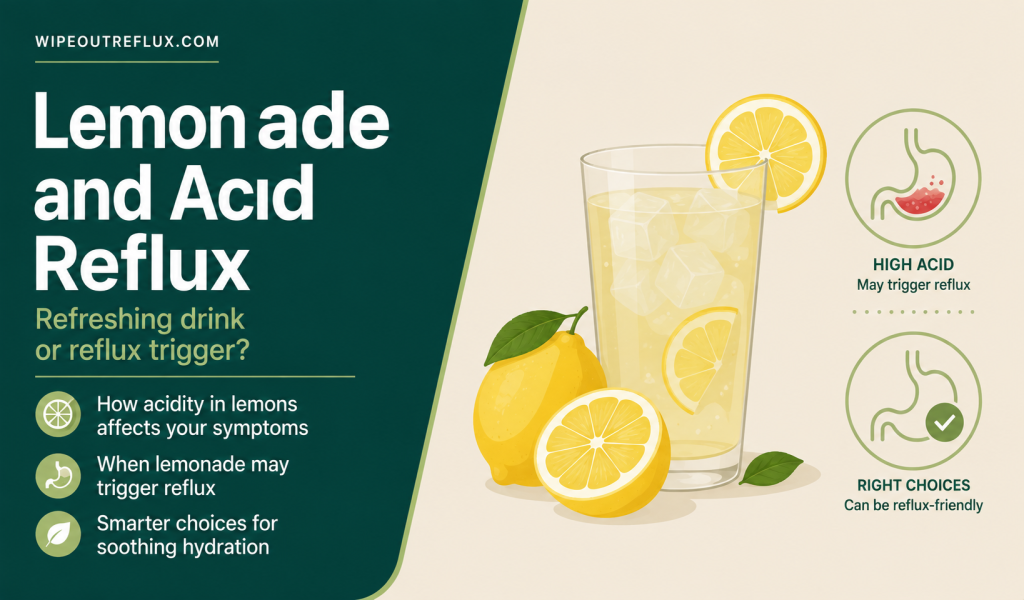
I’ll be blunt: lemonade is one of the worst drinks you can choose if you have acid reflux. It’s built from lemon juice, which is among the most acidic things in your kitchen — sitting at around pH 2, roughly the same acidity as your own stomach acid. Pour that over ice, add sugar, and you’ve made a drink almost perfectly designed to provoke heartburn.
You may have heard that lemon is “alkalizing” and therefore fine for reflux. That myth trips up a lot of people, and I’ll explain exactly why it doesn’t hold up where reflux is concerned. The short version: whatever lemon does to your body’s chemistry hours later, on the way down it’s an acid bath for your oesophagus and throat — and for silent reflux in particular, that’s a real problem.
So if reflux is your issue, regular lemonade is a drink to skip. Let me walk through why, bust the alkaline myth, and give you what to reach for instead.
Key Takeaways
- Lemonade is highly acidic — lemon juice sits around pH 2, similar to stomach acid — making it a strong reflux trigger.
- The acidity of citrus drinks is directly linked to how much heartburn people report, so lemonade is a predictable culprit.
- The “lemon is alkaline” claim refers to how it’s metabolised in the body; in your throat and oesophagus, lemonade is unmistakably acidic.
- For LPR (silent reflux), citric acid is doubly bad because it can reactivate pepsin, the enzyme that damages your throat.
- The added sugar in lemonade offers no benefit and can worsen overall symptoms for some people.
- Diluted, low-sugar versions are less harsh but still acidic — they’re a lesser evil, not a green light.
- Better swaps include still water, low-acid herbal teas, and melon or cucumber-infused water.
Why lemonade triggers acid reflux
It comes down to acidity, and lemonade has it in spades. Lemon juice measures around pH 2 — you can read the full breakdown in is lemon acid or alkaline — and its dominant acid is citric acid, one of the acids most reliably linked to reflux symptoms. Even diluted into lemonade, the drink stays firmly in acidic territory.
This isn’t guesswork. When researchers measured the acidity of 38 popular beverages and matched them against heartburn reported by nearly 400 people, the titratable acidity of citrus drinks and juices correlated clearly with how much heartburn people experienced Feldman & Barnett, Gastroenterology, 1995. Lemonade sits squarely in that high-acid citrus category. An acidic drink can pull the pH of your oesophagus down below 4 within moments of swallowing, which is exactly the environment that produces the burn. It’s one of the drinks I flag in foods and drinks to avoid.
The “lemon is alkaline” myth — and why it fails here
This is the claim that confuses everyone, so let’s settle it. There’s a popular idea that lemon is “alkalizing”: that once your body metabolises it, the leftover mineral residue is alkaline-forming. There’s a kernel of truth to that in terms of what lemon does to your urine pH hours after digestion.
But it’s the wrong lens for reflux. Reflux damage happens on contact — as the acidic liquid passes through your throat and oesophagus — not hours later in your bloodstream. And on contact, lemonade is acidic, full stop. Whatever systemic “alkalizing” effect lemon may have downstream does nothing to protect the tissue it just washed over on the way down. Judging lemonade by its supposed metabolic aftereffect instead of its actual pH in your throat is how people talk themselves into a drink that predictably burns. For the same reason, I’m cautious about the broader alkaline-water hype too, which I unpack in is alkaline water good for acid reflux.
Why lemonade is especially bad for silent reflux (LPR)
If your reflux is throat-based — hoarseness, throat clearing, a lump sensation — lemonade is even more of a problem, and the reason is an enzyme called pepsin. When you reflux, pepsin gets deposited in the delicate tissues of your throat, where it can linger for hours. It’s dormant at neutral pH, but drop the pH with something acidic and it springs back to life, resuming its tissue-damaging activity.
That’s the trap with lemonade for LPR: every acidic sip can reactivate pepsin that’s already sitting in your throat, doing fresh damage. This is precisely why low-acid eating and drinking helps — a strict low-acid diet improved symptoms in 95% of patients with stubborn silent reflux in one study Koufman, Annals of Otology, Rhinology & Laryngology, 2011. Cutting acidic triggers like lemonade is exactly the kind of foundation my Wipeout Diet Plan is built on. I explain the enzyme in depth in what is pepsin, and if you’re not sure whether you have LPR or classic heartburn, my GERD vs LPR guide will help.
What about the sugar?
Lemonade’s problem isn’t only the acid. Most versions are loaded with sugar, and while sugar itself isn’t strongly acidic, large amounts do your reflux no favours — sugary drinks can contribute to symptoms and offer nothing helpful in return. You can read where sugar sits on the acid scale in is sugar acid or alkaline. So even a “natural” homemade lemonade combines two things you don’t want: a heavy acid load and a sugar spike.
Is any lemonade okay?
If you truly love it, the least-bad approach is heavy dilution: a small splash of lemon in a large glass of water with little or no sugar is far gentler than a full-strength glass. It’s still acidic, so it’s a lesser evil rather than a safe choice — but for a mild, occasional refluxer it may be tolerable in small amounts, away from bedtime and not on an empty stomach.
For anyone with frequent symptoms or LPR, though, I’d leave it alone. There’s no version of a citrus drink that’s genuinely reflux-friendly, and it’s rarely worth the flare. The honest move is to find a swap you enjoy instead.
Better drinks to reach for instead
You can get refreshment without the acid hit:
- Still water, plain or infused with low-acid additions like cucumber, melon or a few mint leaves for flavour without the acidity.
- Low-acid herbal teas such as chamomile or ginger, served warm or cooled.
- Coconut water or plain still water for everyday hydration — see my full rundown of what to drink with acid reflux and the best water for reflux.
- Diluted low-acid fruit like watermelon blended with water, if you want something fruity without the citrus.
The goal is a drink that quenches your thirst without dragging your throat’s pH down — and there are plenty that do exactly that.
Conclusion
So, lemonade and acid reflux simply don’t mix. It’s one of the most acidic drinks around, its citric acid is directly tied to heartburn, and for silent reflux it can reactivate the very enzyme that damages your throat. The “lemon is alkaline” idea doesn’t rescue it, because reflux is about what touches your throat on the way down — and that’s pure acid. If you have frequent symptoms, this is an easy one to cut.
The bigger lesson is that cutting obvious triggers like lemonade is only half the battle — the real win is calming your reflux at the source so it stops reacting to every acidic slip. That’s exactly what my Wipeout Diet Plan is built for: the complete, in-depth system for getting reflux under control for good. I designed it first and foremost around LPR, the stubborn throat-based kind that’s hardest to treat, but because it works on the same underlying reflux mechanisms, it’s just as effective for GERD, heartburn and everyday acid reflux.
And for the everyday question of what’s actually safe to pour, the Wipeout Food Reference Guide is the essential companion — it lays out the real pH values of foods and drinks for acid reflux and LPR, so you can see at a glance what’s genuinely acidic instead of trusting myths like “alkalizing lemon.” Cut the obvious triggers, calm the root cause, and you stop having to police every glass.
Frequently Asked Questions
Is lemonade bad for acid reflux?
Yes, for most people it’s a strong trigger. Lemonade is highly acidic thanks to lemon juice (around pH 2) and its citric acid content, which is directly linked to heartburn. If you have reflux — especially frequent symptoms or LPR — it’s best avoided.
But isn’t lemon alkaline?
Lemon is often called “alkalizing” because of how it’s metabolised in the body, which can make urine more alkaline hours later. But that has nothing to do with reflux. In your throat and oesophagus, on contact, lemonade is acidic — and that contact acidity is what triggers symptoms and reactivates pepsin.
Can I drink diluted lemonade with reflux?
Heavily diluted, low-sugar lemon water is less harsh than full-strength lemonade, but it’s still acidic. For mild, occasional refluxers a small amount away from bedtime may be tolerable, but if you have frequent symptoms or LPR, it’s better skipped entirely.
Why is lemonade worse for silent reflux (LPR)?
Because acidic drinks can reactivate pepsin — an enzyme deposited in your throat during reflux that stays dormant at neutral pH but resumes damaging tissue when the pH drops. Every acidic sip of lemonade is a chance to switch that enzyme back on.
What can I drink instead of lemonade?
Still water (plain or infused with cucumber, melon or mint), low-acid herbal teas like chamomile or ginger, coconut water, or blended low-acid fruit like watermelon with water. These refresh without pulling your throat’s pH into the danger zone.
Research & References
- In a study measuring the acidity of 38 beverages against heartburn reported by nearly 400 people, the titratable acidity of citrus drinks and juices correlated with reported heartburn scores, and soft drinks — the lowest-pH beverages tested — also correlated strongly with heartburn Feldman & Barnett, Gastroenterology, 1995.
- A strict low-acid diet (removing foods and drinks below pH 5 for at least two weeks) improved symptoms in 95% of patients with stubborn, medication-resistant laryngopharyngeal reflux, supporting the role of dietary acid in reactivating throat pepsin Koufman, Annals of Otology, Rhinology & Laryngology, 2011.

David Gray
12 years living with LPR · Consultant & researcher
I've lived with LPR for twelve years — the misdiagnoses, the PPI courses that did nothing, the slow work of figuring out what actually helps. Wipeout Reflux is where I translate the research into plain terms for people stuck in the same place. Every claim here is sourced to peer-reviewed work, and I consult one-to-one with LPR sufferers.