
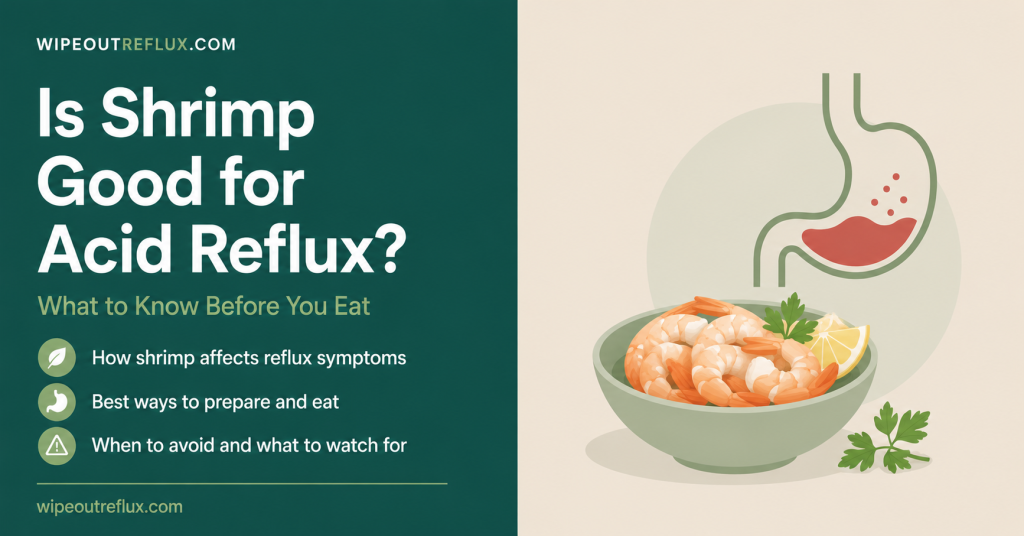
Yes — shrimp and most shellfish are genuinely good choices for acid reflux, as long as you watch how they’re cooked. Plain prawns, crab, lobster, scallops and mussels are lean, low-fat, non-acidic protein, which is close to the ideal profile for a reflux-friendly food. Steamed, grilled or boiled, they’re about as gentle as protein gets.
The trouble is that shellfish is so often served in its least reflux-friendly form: battered and deep-fried, drowned in garlic butter, dunked in tomato-and-horseradish cocktail sauce, or bound up in mayonnaise. In every one of those cases it isn’t the shellfish causing the burn — it’s what’s been done to it. Get the preparation right and shrimp is a food to lean on, not avoid.
Here’s what makes shellfish gentle, where it goes wrong, and how to eat it without the aftermath.
Key Takeaways
- Plain shrimp and shellfish are lean, low-fat, non-acidic protein — a naturally reflux-friendly food when cooked simply.
- Steaming, grilling, boiling and poaching keep them gentle; deep-frying and butter-heavy preparations are what cause problems.
- Fat and calorie density — not the shellfish itself — are the main dietary drivers of reflux, so fried shrimp, scampi and coconut shrimp are the risky forms.
- Cocktail sauce (tomato plus horseradish) is both acidic and spicy; Cajun and Old Bay seasonings add heat — the dips and rubs often trigger more than the shellfish.
- Shrimp is high in dietary cholesterol but low in saturated fat, and dietary cholesterol isn’t a meaningful reflux trigger.
- Shellfish can be high in histamine, which matters for the minority of people whose reflux overlaps with histamine intolerance.
- Grilled prawns, steamed mussels or a simple seafood dish with a squeeze of lemon left off is a safe, satisfying meal for most people with reflux.
Why Shellfish Is Naturally Gentle
Two things make plain shellfish one of the safer proteins for reflux.
First, it’s very low in fat. This is what matters most, because the most consistent dietary driver of reflux isn’t acidity — it’s fat and calorie density. In a controlled crossover study that separated the two, oesophageal acid exposure was higher after calorie-dense meals, and the frequency of symptoms tracked with the fat percentage of the meal [Fox et al., Clinical Gastroenterology and Hepatology, 2007]. Plain shrimp, crab and white fish are lean enough to sit right at the gentle end of that scale. Larger population work points the same way, tying higher total and saturated fat intake to more frequent reflux symptoms [El-Serag et al., Gut, 2005].
Second, it’s not acidic. Shellfish is close to neutral, so it won’t sting an inflamed oesophagus or throat the way citrus, vinegar or tomato does. That makes it a natural fit for the wider LPR foods to eat approach, and it sits comfortably alongside the lean fish covered in what fish is good for acid reflux.
Where Shellfish Goes Wrong: The Preparation
Deep-frying
This is the big one. Battered shrimp, popcorn shrimp, coconut shrimp, calamari and scampi in breadcrumbs all take a lean food and wrap it in fat. Fried food is one of the most reliably reported reflux triggers, and it shares the same underlying mechanism as any fatty meal — a large calorie load in a small volume. The detail is in is fried food bad for acid reflux. A plate of fried shrimp is a completely different proposition from the same shrimp steamed.
Butter and creamy sauces
Garlic butter prawns, lobster dripping with melted butter, scampi, and creamy seafood pasta all add a heavy dose of fat to something that started out lean. A little is fine; a pool of it is what tips the meal over. More in is butter bad for acid reflux.
Mayonnaise-based dishes
Prawn cocktail, seafood salad, shrimp po’boys and coronation-style fillings bind the shellfish in mayonnaise, which is almost pure fat. The shrimp is gentle; the dressing isn’t. See is mayonnaise bad for acid reflux.
The dips and seasonings
This is the part people miss. Classic cocktail sauce is tomato-based with horseradish — acidic and spicy at once. Cajun, blackened and Old Bay seasonings pile on heat, and spice is a common reflux trigger. And the near-automatic squeeze of lemon over seafood adds a hit of acid. None of these is the shellfish’s fault, but together they can turn a safe plate into a rough one. There’s a fuller list in condiments to avoid with acid reflux and more on heat in spicy food and acid reflux.
What About Cholesterol?
Shrimp has a reputation for being high in cholesterol, and it’s true — but it’s largely beside the point for reflux. Shrimp is high in dietary cholesterol while being low in saturated fat, and it’s saturated fat and overall calorie load, not dietary cholesterol, that the reflux evidence points to. The cross-sectional data showed only a weak, non-significant trend for cholesterol once fat and body weight were accounted for [El-Serag et al., Gut, 2005]. So the cholesterol in shrimp is a question for your wider heart-health picture, not a reason to expect heartburn.
Shellfish and Histamine
One genuine caveat, relevant to a minority of people: shellfish can be high in histamine, particularly if it isn’t perfectly fresh. For most people that’s a non-issue, but for those whose reflux overlaps with histamine intolerance, high-histamine foods can worsen symptoms. If shellfish reliably bothers you even when it’s plainly cooked, this is worth reading up on in the histamine intolerance and reflux link. For everyone else, freshness is the main thing — and it’s good practice with shellfish regardless.
How to Eat Shrimp and Shellfish With Reflux
A few habits keep shellfish on the safe side of the line — the same food-by-food thinking the Wipeout Diet Plan uses to keep proteins you enjoy on the menu:
- Choose the cooking method first. Steamed, grilled, boiled, poached or baked — all gentle. Battered and deep-fried — not.
- Keep the butter light. A little olive oil and herbs does the job without the fat load of a butter bath.
- Rethink the dip. Swap tomato-horseradish cocktail sauce for something gentler — a yoghurt-and-herb dip, or nothing at all. Go easy on Cajun and blackening rubs.
- Leave the lemon off, or ask for it on the side, so you control how much acid ends up on the plate.
- Watch the portion and the sides. Grilled prawns with rice and vegetables is a light, gentle meal; a fried-seafood platter with chips is the opposite.
- Mind the timing. As with any meal, don’t eat a big seafood dinner right before lying down — and if you’re eating out, eating out with acid reflux has more on ordering well.
Conclusion
Shrimp and shellfish are a rare thing on a reflux diet: a food that’s genuinely gentle in its natural state. Lean, low in fat, non-acidic and rich in protein, plainly cooked shellfish is something to lean on rather than avoid. The catch is that it’s so often served in its worst possible form — fried, buttered, or paired with acidic, spicy dips. Fix the preparation and you fix the problem. Grilled prawns, steamed mussels or a simple seafood dish, with the lemon and cocktail sauce kept in check, is a safe and satisfying meal for the large majority of people with reflux.
Learning which foods are safe as they are and which just need cooking differently is exactly what the Wipeout Diet Plan is designed to teach — it takes you through the real triggers, the safe proteins and the swaps that let you keep eating the foods you like. I built it first and foremost around LPR and silent reflux, the stubborn throat-based form that so often resists medication, but because it works on the same underlying mechanisms it helps GERD and everyday heartburn just as well. And the Wipeout Food Reference Guide is the practical companion for exactly these questions — which foods and drinks are safe for acid reflux and LPR, with their real pH values, so you can build a seafood meal that works rather than one that costs you an evening.
Frequently Asked Questions
Is shrimp good for acid reflux?
Yes, when it’s plainly cooked. Shrimp is lean, low in fat and non-acidic, which is close to the ideal profile for a reflux-friendly protein. Steamed, grilled or boiled shrimp is gentle; fried shrimp, garlic-butter prawns and prawn cocktail are where the trouble comes from — from the preparation, not the shrimp.
Is fried shrimp bad for acid reflux?
Yes, more than most people realise. Deep-frying wraps a lean food in fat, and fried, calorie-dense food is one of the most consistent reflux triggers. The same shrimp steamed or grilled is far gentler, so the cooking method matters far more than the shellfish itself.
Is shellfish acidic?
No. Prawns, crab, lobster, mussels and scallops are close to neutral on the pH scale, so they don’t irritate an inflamed throat or oesophagus the way acidic foods do. Any acidity in a shellfish meal usually comes from the lemon, the cocktail sauce or a vinegary dressing rather than the shellfish.
Does the cholesterol in shrimp cause reflux?
No. Shrimp is high in dietary cholesterol but low in saturated fat, and it’s saturated fat and calorie load, not dietary cholesterol, that the reflux evidence points to. The cholesterol in shrimp is a consideration for your overall heart health, not a cause of heartburn.
What’s the best way to cook shellfish for acid reflux?
Steaming, grilling, boiling, poaching and baking all keep shellfish gentle by adding no extra fat. Season lightly with herbs and a little olive oil rather than butter, skip the battered and deep-fried versions, and keep acidic, spicy dips to a minimum.
Can shellfish trigger reflux even when it’s plainly cooked?
Occasionally, for a small number of people. Shellfish can be high in histamine, and for those whose reflux overlaps with histamine intolerance that can worsen symptoms. If plainly cooked shellfish reliably bothers you, freshness and a possible histamine link are worth looking into; for most people, though, simply prepared shellfish is well tolerated.
Research & References
- Fox et al., Clinical Gastroenterology and Hepatology, 2007 — Randomised crossover study separating dietary fat from calorie density in people with reflux. Oesophageal acid exposure was greater after high-calorie meals and symptoms tracked the fat percentage — the reason lean shellfish is gentle and fried, buttered versions are not.
- El-Serag et al., Gut, 2005 — Cross-sectional study of 371 people linking higher total and saturated fat intake with more frequent reflux symptoms, while dietary cholesterol showed only a weak, non-significant trend — relevant to shrimp’s high-cholesterol, low-saturated-fat profile.
- Penagini et al., Gut, 1998 — Controlled study showing that raising a meal’s fat content at constant calories did not increase reflux, indicating fat is not a direct chemical trigger and that the calorie load added by frying and butter is what matters.
- Newberry & Chandar, Journal of Thoracic Disease, 2019 — Review of diet in reflux disease, identifying high-fat and fried foods as recognised aggravators and lean protein as a gentler choice — support for favouring plainly cooked shellfish over fried and butter-heavy preparations.

David Gray
12 years living with LPR · Consultant & researcher
I've lived with LPR for twelve years — the misdiagnoses, the PPI courses that did nothing, the slow work of figuring out what actually helps. Wipeout Reflux is where I translate the research into plain terms for people stuck in the same place. Every claim here is sourced to peer-reviewed work, and I consult one-to-one with LPR sufferers.