
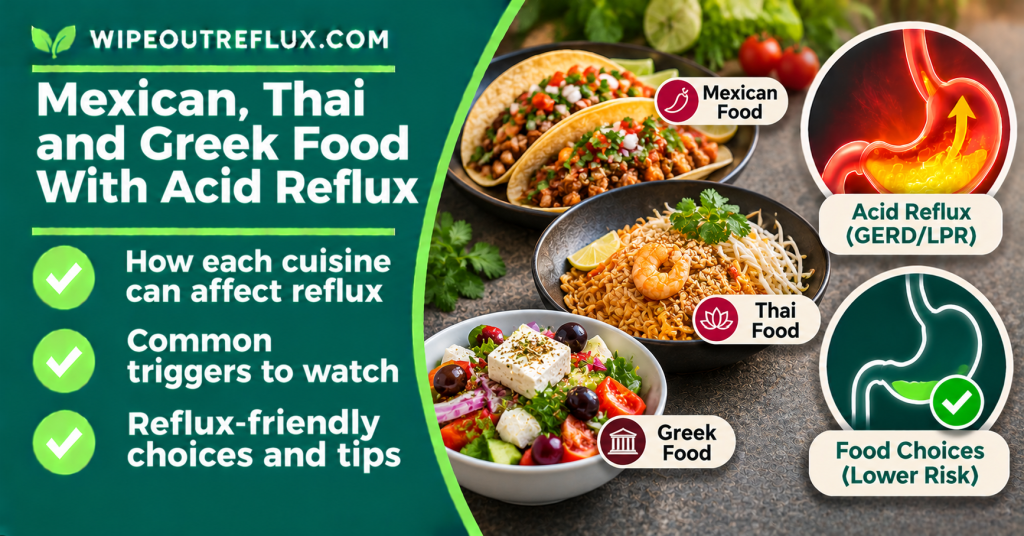
You can eat Mexican, Thai and Greek food with acid reflux, but each cuisine has its own set of traps. In Mexican food, it’s salsa, lime, chili, cheese, sour cream and fried chips, plus margaritas. In Thai food, it’s chili heat, lime, rich coconut curries and fried starters. Greek food is generally the gentlest of the three, built on grilled meat, fish, rice, vegetables and olive oil, but lemon, tomato, raw garlic and onion, fried appetizers and salty cheese can still cause trouble.
The common thread is that reflux comes from stacking triggers: acid, heat, fat, raw onion, alcohol and a big portion all in one meal. If you choose the grilled options, ask for sauces and salsas on the side, request mild, and keep the portion sensible, you can enjoy all three cuisines without heartburn.
Key Takeaways
- The main triggers across all three cuisines are acid (lime, lemon, tomato), chili heat, fat from frying and rich sauces, raw onion and garlic, alcohol and large portions.
- Chili caused more abdominal burning and a trend toward more heartburn in people with reflux, but not in healthy people.
- Raw onion significantly increased acid reflux and heartburn in people prone to heartburn.
- High-fat diets increased reflux symptoms, and high-calorie meals increased acid exposure.
- Mexican: choose grilled chicken or fish tacos on corn tortillas, rice and beans, and go easy on salsa, chips and cheese.
- Thai: ask for mild, choose chicken rice, satay, pad see ew or a mild curry, and skip tom yum and very spicy salads.
- Greek: souvlaki, grilled fish, rice and roasted vegetables are good choices. Watch lemon, tomato, raw garlic and fried starters.
The Triggers These Cuisines Share
Before going cuisine by cuisine, it helps to know which ingredients do the damage. Once you can spot them, you can navigate almost any menu.
Acid: lime, lemon and tomato
Lime is everywhere in Mexican and Thai food. Lemon is central to Greek cooking. Tomato features heavily in salsa, Greek salads and many sauces. Acidic foods irritate an inflamed esophagus and, for people with silent reflux, may reactivate pepsin in the throat. In a study of people with stubborn LPR, cutting out all foods and drinks below pH 5 improved symptoms in 19 out of 20 [Koufman, Annals of Otology, Rhinology and Laryngology, 2011]. See is lime acid or alkaline and are tomatoes bad for acid reflux.
Chili heat
Fresh and dried chilies are central to Mexican and Thai food. In a double-blind crossover study, 2 g of chili in capsules caused more abdominal burning and a trend toward more heartburn in people with non-erosive reflux, but had no effect on healthy volunteers [Patcharatrakul et al., Nutrients, 2020]. People with reflux seem to be more sensitive to chili. See spicy food and acid reflux.
Raw onion and garlic
Raw onion turns up in pico de gallo, Thai salads and Greek salads, and raw garlic is the base of tzatziki. In one study, adding a single slice of raw onion to a hamburger significantly increased reflux episodes, acid exposure and heartburn in people prone to heartburn [Allen et al., American Journal of Gastroenterology, 1990]. Cooked onion and garlic are usually better tolerated than raw. See is onion good for acid reflux.
Fat
Cheese, sour cream, fried chips, coconut milk and fried appetizers all add a lot of fat. In a study using multi-day pH monitoring, a high-fat diet increased reflux symptoms, and high-calorie meals increased acid exposure in the esophagus [Fox et al., Clinical Gastroenterology and Hepatology, 2007].
Alcohol
Margaritas, Thai beer and Greek wine or ouzo often come with these meals. A meta-analysis of 29 studies found drinkers had about 1.5 times the odds of GERD compared with non-drinkers or occasional drinkers, rising to about twice the odds in frequent drinkers [Pan et al., Alcohol and Alcoholism, 2019].
Mexican Food and Acid Reflux
Mexican food can be very reflux-friendly or very triggering, depending on how it’s assembled. The base ingredients, like corn tortillas, rice, beans, grilled meat and avocado, are mostly gentle. It’s the toppings and extras that cause trouble.
Mexican dishes most likely to trigger heartburn
- Salsa and pico de gallo: tomato, lime, raw onion and chili in one spoonful. See is salsa bad for acid reflux.
- Chips and queso: fried chips plus melted cheese, often eaten in large amounts before the meal arrives.
- Nachos and chimichangas: fried, cheesy and heavy.
- Enchiladas in red sauce: chili and tomato sauce, topped with cheese.
- Hot sauce and jalapeños. See is hot sauce bad for acid reflux.
- Ceviche: raw fish “cooked” in lime juice, so very acidic.
- Margaritas: tequila, lime and often a sugary mix. See gin or tequila for acid reflux.
Safer Mexican orders
- Grilled chicken or fish tacos on soft corn tortillas, topped with lettuce, a little avocado and cilantro instead of salsa
- Burrito bowl with rice, black beans, grilled chicken, lettuce and guacamole, with salsa and sour cream left off or on the side
- Chicken fajitas with the peppers and onions well cooked, and a small amount of cheese
- Rice and beans as sides. Beans can cause gas in some people, so keep the portion moderate. See are beans bad for acid reflux.
- Chicken tortilla soup if the broth isn’t very spicy or tomato-heavy
- Guacamole in moderation. Avocado is low in acid, though guac usually contains lime and raw onion. See avocado for acid reflux.
Tip: ask them to hold the chip basket, or take a small handful and move it away. It’s easy to eat a whole meal’s worth of fried chips before your food arrives.
Thai Food and Acid Reflux
Thai food balances sweet, sour, salty and spicy flavors in every dish. For reflux, the sour (lime, tamarind) and spicy (chili) elements are the problem, along with the coconut milk in many curries.
Thai dishes most likely to trigger heartburn
- Tom yum soup: lime, chili and lemongrass. Very acidic and spicy.
- Som tam (papaya salad) and larb: lime, chili, fish sauce and raw shallots.
- Green and red curries: often very spicy, and rich in coconut milk.
- Jungle curry and drunken noodles (pad kee mao): usually very hot.
- Fried spring rolls, fish cakes and fried wontons.
- Pad thai: tamarind, lime, peanuts and a fair amount of oil. Often tolerable in a modest portion without the lime and chili flakes.
- Thai iced tea: strong black tea with sweetened condensed milk.
Safer Thai orders
- Khao man gai (Thai chicken rice): poached chicken over rice cooked in broth. One of the gentlest dishes in Thai cuisine. Go easy on the dipping sauce.
- Chicken satay with a small amount of peanut sauce
- Pad see ew: wide rice noodles with soy sauce, egg and Chinese broccoli. No lime or tamarind, though it can be oily.
- Massaman or yellow curry, ordered mild: milder than green or red, but still rich, so have a smaller portion with plenty of rice.
- Stir-fried vegetables with chicken or tofu in a light oyster or garlic sauce
- Steamed jasmine rice
- Clear broth soups like gaeng jued, rather than tom yum or tom kha
Tip: Thai restaurants often have a spice scale. Ask for “mild” or “no spice” rather than assuming the default is safe. Ask for lime wedges on the side so you control how much goes in. Coconut milk is high in fat, so a creamy curry is better as a small portion. See is coconut milk good for acid reflux and is curry bad for acid reflux.
Greek Food and Acid Reflux
Greek food is generally the friendliest of the three. It’s based on grilled meat and fish, vegetables, grains, yogurt and olive oil, with little chili heat. A Mediterranean-style diet has also been linked to lower reflux risk. In an Albanian study of 817 adults, people eating a mostly non-Mediterranean diet (more red meat, fried food, sweets and fast food) had more than twice the odds of GERD [Mone et al., Diseases of the Esophagus, 2016].
Greek dishes most likely to trigger heartburn
- Lemon-heavy dishes: avgolemono (egg-lemon soup), lemon potatoes and lemon dressings. See is lemon acid or alkaline.
- Greek salad: tomato, raw red onion, olives, feta and a vinegar or lemon dressing.
- Tomato-based dishes: moussaka, pastitsio, stifado and gigantes in tomato sauce.
- Tzatziki in large amounts: yogurt is usually fine, but it contains raw garlic and sometimes mint.
- Fried starters: saganaki (fried cheese), fried calamari, fried zucchini and spanakopita.
- Lots of feta: salty and fairly high in fat. See does cheese cause acid reflux.
- Retsina, ouzo and red wine.
Safer Greek orders
- Chicken souvlaki with rice or pita, and the tzatziki on the side
- Grilled fish with olive oil and herbs, skipping the extra lemon. See what fish is good for acid reflux.
- Rice pilaf or orzo
- Roasted or grilled vegetables like zucchini, eggplant and potatoes without lemon
- Hummus in moderation, as it contains garlic and lemon. See is hummus good for acid reflux.
- Plain Greek yogurt with honey for dessert, instead of baklava
- A simple salad of lettuce, cucumber and herbs with olive oil only
Olive oil in normal amounts is usually well tolerated. See does olive oil cause acid reflux.
General Tips for Eating Out With Reflux
- Ask for sauces, salsas and dressings on the side. This one change removes most of the acid and heat.
- Order grilled, not fried.
- Ask for mild, and for lime or lemon wedges on the side.
- Skip raw onion on tacos, salads and toppings.
- Watch the pre-meal extras: chips, bread with dips and fried starters add up fast.
- Keep the portion moderate and take leftovers home.
- Limit alcohol, or choose a lower-acid option and have it with food.
- Eat earlier, and leave at least 3 hours before lying down.
- Carry an alginate to take after a bigger meal. See alginates for acid reflux.
For more on navigating restaurants, see eating out with acid reflux and is sushi bad for acid reflux.
Knowing which ingredients are safe makes every menu easier. The Wipeout Diet Plan takes you through the foods to eat and avoid in detail, so you can order with confidence.
Conclusion
Mexican, Thai and Greek food can all fit into a reflux-friendly diet. The trouble usually comes from the same handful of triggers: acid from lime, lemon and tomato, chili heat, fat from frying, cheese and coconut milk, raw onion and garlic, alcohol and large portions. Research backs up each of these. Chili and raw onion both increased symptoms in people with reflux but not in healthy people, and high-fat, high-calorie meals increased reflux.
Of the three, Greek food is usually the easiest to navigate, thanks to its grilled meats, fish, rice and olive oil. Mexican food works well if you build around grilled meat, corn tortillas, rice and beans and leave off the salsa, chips and heavy cheese. Thai food needs the most care because of its heat and acidity, but chicken rice, satay, pad see ew and mild curries are good options. Ask for sauces on the side, order mild, choose grilled over fried and keep portions sensible.
For the complete picture of what to eat and avoid, wherever you’re eating, the Wipeout Diet Plan is my in-depth guide. It was designed first and foremost for LPR, the throat-based reflux that lime, lemon and tomato aggravate so easily, but because it addresses the same underlying mechanisms, it works just as well for GERD and everyday heartburn.
Frequently Asked Questions
Is Mexican food bad for acid reflux?
It can be, mainly because of salsa, lime, chili, fried chips and heavy cheese. Grilled meat tacos on corn tortillas with rice, beans and avocado are usually well tolerated.
Is Thai food bad for acid reflux?
Many Thai dishes are spicy and acidic, which can trigger reflux. Thai chicken rice, chicken satay, pad see ew and mild curries are the safer choices.
Is Greek food good for acid reflux?
Greek food is generally one of the better cuisines for reflux. Grilled meat and fish, rice and vegetables are good choices. Watch lemon, tomato, raw garlic and fried starters.
Is guacamole okay for acid reflux?
Avocado itself is low in acid, but guacamole usually contains lime, raw onion and sometimes chili. A small amount is often fine. Homemade versions can leave those out.
Is tzatziki good for acid reflux?
The yogurt base is gentle, but tzatziki contains raw garlic and sometimes mint, which can trigger symptoms. Have a small amount on the side.
Is coconut curry bad for acid reflux?
Coconut milk is rich in fat, and many Thai curries are spicy. A mild massaman or yellow curry in a small portion with plenty of rice is the safest way to enjoy one.
What is the safest cuisine to eat out with acid reflux?
Greek and other Mediterranean-style restaurants usually offer the most reflux-friendly choices, thanks to grilled proteins, rice, vegetables and olive oil with little chili.
Research & References
- [Koufman, Annals of Otology, Rhinology and Laryngology, 2011] — In 20 PPI-resistant LPR patients, a strict diet eliminating foods and drinks below pH 5 improved symptoms in 19 and reduced RSI and RFS scores.
- [Patcharatrakul et al., Nutrients, 2020] — Chili increased abdominal burning and showed a trend toward more heartburn in non-erosive reflux patients, with no effect in healthy volunteers.
- [Allen et al., American Journal of Gastroenterology, 1990] — Raw onion significantly increased reflux episodes, acid exposure and heartburn in heartburn sufferers, but not in healthy people.
- [Fox et al., Clinical Gastroenterology and Hepatology, 2007] — High-calorie meals increased esophageal acid exposure and high-fat meals increased reflux symptom frequency.
- [Pan et al., Alcohol and Alcoholism, 2019] — A meta-analysis of 29 studies found drinkers had 1.48 times the odds of GERD, rising to 2.12 in frequent drinkers.
- [Mone et al., Diseases of the Esophagus, 2016] — In 817 adults in Tirana, a mostly non-Mediterranean diet was associated with 2.3 times the odds of GERD.

David Gray
12 years living with LPR · Consultant & researcher
I've lived with LPR for twelve years — the misdiagnoses, the PPI courses that did nothing, the slow work of figuring out what actually helps. Wipeout Reflux is where I translate the research into plain terms for people stuck in the same place. Every claim here is sourced to peer-reviewed work, and I consult one-to-one with LPR sufferers.