
It’s one of the most common questions I get from people newly dealing with silent reflux: is LPR actually worse than GERD? And the honest answer is that neither is simply “worse” — they’re the same underlying problem causing trouble in two different places, and each is worse in its own way.
Here’s the short version. LPR — silent reflux — is usually the more frustrating one to live with: it’s harder to diagnose, harder to treat, and its symptoms come from surprisingly little reflux. GERD, the classic heartburn kind, tends to carry the higher risk of serious damage to the esophagus itself, including the changes that can rarely lead to cancer. So “worse” really depends on whether you mean worse to deal with day to day, or more dangerous to your tissue over the long run.
Let me break down both sides properly, because understanding the difference genuinely changes how you approach treating either one.
Key Takeaways
- LPR and GERD are the same root problem — reflux — affecting different areas: GERD the esophagus, LPR the throat and voice box.
- LPR is usually harder to diagnose because it’s often “silent,” with no heartburn, and mimics many other throat and sinus conditions.
- The throat is far more sensitive than the esophagus — as few as three reflux episodes can injure the larynx, while the esophagus can shrug off dozens a day.
- LPR responds poorly to standard acid-blocking medication; in trials, PPIs performed no better than placebo for laryngeal symptoms.
- GERD carries the higher risk of serious esophageal complications — erosive esophagitis, stricture, Barrett’s esophagus and adenocarcinoma.
- Frequent reflux symptoms raise the risk of esophageal adenocarcinoma sharply, which is largely a GERD-driven danger.
- Both come from the same source, so the same reflux-control approach — diet and lifestyle first — helps whichever you have.
LPR and GERD are the same problem in different places
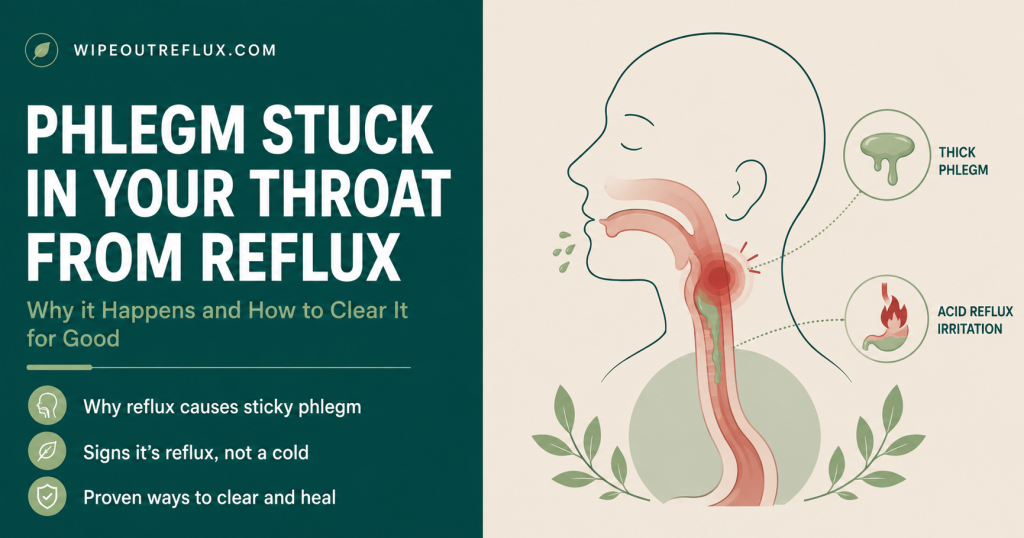
Before comparing them, it’s worth being clear that these aren’t two separate diseases — they’re two faces of reflux. In GERD, stomach contents flow up into the esophagus, and you feel it as heartburn, regurgitation and that burning behind the breastbone. In LPR, reflux travels further, past the upper esophageal sphincter and into the throat and larynx, where it shows up as hoarseness, throat clearing, a lump-in-the-throat feeling, chronic cough and post-nasal drip.
The defining twist is that LPR is frequently “silent” — more than half of people with it never get heartburn at all, which is exactly why it’s called silent reflux. That single fact drives most of the differences that follow. I’ve laid out the full symptom-by-symptom split in GERD vs LPR and the throat side specifically in LPR symptoms.
Why LPR is often the more frustrating one
If you ask people who’ve had both, many will tell you the silent kind was harder. Here’s why.
It’s much harder to diagnose
Because there’s often no heartburn, LPR doesn’t announce itself as reflux. Its symptoms — a hoarse voice, a persistent tickle, endless throat clearing, a cough — look identical to allergies, post-nasal drip, asthma or a lingering cold. People routinely spend months or years bouncing between doctors, tried on allergy sprays and inhalers, before anyone names reflux as the cause. GERD, by contrast, usually tells you what it is: you feel the burn. There are plenty of persistent myths about silent reflux that make this diagnostic confusion worse.
The throat is far more sensitive than the esophagus
This is the big one, and it’s genuinely counter-intuitive. You’d assume more acid means worse symptoms — but the larynx is injured by tiny amounts of reflux that the esophagus wouldn’t even notice. In the landmark investigation of LPR, the esophagus was shown to tolerate as many as fifty reflux episodes a day, while the delicate laryngeal tissue could be damaged by as few as three Koufman, The Laryngoscope, 1991.
The reason is defence. Your esophagus has built-in protections against reflux — a mucus layer, bicarbonate, and muscular waves that sweep acid back down. Your throat has almost none of that. On top of it, the real damage is done by pepsin, a stomach enzyme that sticks to the throat lining and reactivates every time it meets acid — from reflux or from acidic food and drink Johnston et al., The Laryngoscope, 2007. So a “small” amount of LPR can cause big, stubborn symptoms, while a similar amount of GERD might pass unnoticed.
It responds poorly to the standard treatment
Here’s where LPR really earns its reputation. GERD usually responds well to acid-suppressing medication — PPIs are genuinely effective for heartburn and for healing an inflamed esophagus. For LPR, they often disappoint. In a randomised, placebo-controlled trial, esomeprazole was no better than placebo for the signs and symptoms of chronic laryngitis Vaezi et al., The Laryngoscope, 2006. That’s a big part of why PPIs so often fail for LPR — the drug lowers acid, but it doesn’t neutralise the pepsin already in your throat, and it does nothing about the non-acid and gaseous reflux that still reaches the larynx.
It takes longer to heal and hits your quality of life
Put those together and LPR tends to drag on. Throat tissue heals slowly, the treatments are less reliable, and the symptoms — a broken voice, a constant need to clear your throat, a cough that won’t quit — wear on you in a way that intermittent heartburn often doesn’t. For many people, that day-to-day grind is what makes silent reflux feel like the worse deal.
Why GERD can be the more dangerous one
Now the other side of the ledger — because when it comes to serious, measurable harm, GERD is usually the one with more at stake. All that acid sitting against the esophagus, especially over years, can cause real structural damage.
Chronic acid exposure can produce erosive esophagitis (visible ulceration of the esophageal lining), scarring that narrows the esophagus into a stricture, and Barrett’s esophagus, a cellular change that carries a small but real risk of progressing to cancer. And the link between reflux and esophageal cancer is well established: people with frequent, long-standing reflux symptoms have been found to have roughly a sevenfold higher risk of esophageal adenocarcinoma than those without Lagergren et al., New England Journal of Medicine, 1999.
These are predominantly esophageal complications — GERD’s territory. LPR’s long-term cancer risk is far less established and generally considered lower, precisely because the pattern of reflux is different. So while LPR is more likely to make your daily life miserable, GERD is statistically more likely to do the kind of damage you can see on an endoscopy. There’s more perspective on this in can acid reflux cause cancer.
So, is LPR worse than GERD?
The honest answer is that it depends entirely on what you mean by worse, and there are two fair ways to look at it.
If you mean worse to live with — harder to diagnose, harder to treat, more disruptive to your voice and your days — then yes, LPR is often the tougher opponent. If you mean more dangerous to your tissue, with a clearer path to serious complications, then GERD generally carries the greater long-term risk. Neither wins outright, and framing it as a contest can be misleading. It’s more useful to say: LPR is usually the bigger nuisance, GERD the bigger structural threat.
None of this means silent reflux is harmless — untreated LPR causes genuine, lasting throat and voice problems, and I’ve written separately on whether silent reflux is dangerous. It just means the two conditions are risky in different currencies.
The overlap: plenty of people have both
One more thing worth saying, because it dissolves a lot of the worry: LPR and GERD aren’t mutually exclusive. Many people have both at once — heartburn and a hoarse throat — and plenty have one predominantly with a touch of the other. There’s no rule that you belong in one camp.
And here’s the reassuring part: for what you actually do about it, the distinction matters less than you’d think. Both are driven by the same thing — reflux escaping your stomach — so the foundation of managing either is the same.
What actually helps, whichever you have
Because they share a root cause, they share a solution. Reducing the reflux itself — and the acid load that keeps pepsin active — is what calms both the esophagus and the throat. That means a low-acid, reflux-friendly diet, not eating before bed, managing weight, and using barriers like alginates where helpful. Medication has its place, especially for GERD, but diet and lifestyle do the heavy lifting for LPR where drugs fall short.
This is exactly what the Wipeout Diet Plan is built around, and it’s the same approach whether your reflux shows up as heartburn, hoarseness or both. The low-acid reflux diet is the core of it.
Conclusion
So, is LPR worse than GERD? Not in any simple, one-answer way. Silent reflux is usually harder to spot, harder to treat and more wearing to live with, so on a day-to-day level it often feels worse. GERD, meanwhile, carries the greater risk of the serious esophageal complications you’d genuinely want to avoid. They’re two expressions of the same problem, each difficult in its own direction — which is why the goal isn’t to rank them but to get the underlying reflux under control before either has the chance to do lasting harm.
That’s where I’d focus, and it’s what the Wipeout Diet Plan is designed to do — the complete, in-depth system for calming reflux at its source. I built it first and foremost around LPR and silent reflux, the stubborn throat-based kind that responds so poorly to medication, but because it works on the very same mechanisms that drive heartburn, it’s just as effective for GERD and everyday acid reflux. Whichever side of the line you fall on — or if you’re on both — the approach is the same.
To make it easy to follow day to day, the Wipeout Food Reference Guide is the essential companion — a downloadable reference to which foods and drinks are safe for reflux and LPR and their pH values, so you can keep the acid load down without guessing. Stop comparing which is worse and start calming the reflux behind both — that’s what protects your throat and your esophagus at the same time.
This article is for general information only and is not medical advice. Persistent reflux symptoms — and especially ongoing hoarseness, difficulty swallowing or unexplained weight loss — should be assessed by a doctor.
Frequently Asked Questions
Is LPR harder to treat than GERD?
Generally yes. GERD usually responds well to acid-suppressing medication, while LPR often doesn’t — in trials, PPIs performed no better than placebo for laryngeal symptoms. LPR relies more heavily on diet, lifestyle and pepsin management, and its throat tissue heals more slowly, so it tends to take longer to bring under control.
Can you have LPR and GERD at the same time?
Yes, and it’s common. They’re two expressions of the same underlying reflux, so many people experience heartburn and throat symptoms together, or one mainly with a hint of the other. You don’t have to fit neatly into one category, and the core management is the same for both.
Is silent reflux more dangerous than heartburn?
Not in terms of serious structural damage. The major complications — erosive esophagitis, Barrett’s esophagus and esophageal cancer — are mostly linked to GERD’s heavy acid exposure in the esophagus. LPR is more disruptive day to day and causes real throat and voice problems, but its long-term cancer risk is considered lower and less established.
Why does LPR cause symptoms with so little acid?
Because the throat is far more sensitive than the esophagus. The esophagus has protective defences and can tolerate frequent reflux, whereas the larynx has almost none and can be injured by just a few episodes. The enzyme pepsin, which lodges in throat tissue and reactivates with acid, makes even small amounts of reflux damaging.
Do PPIs work for LPR?
Often not as well as people hope. PPIs reduce stomach acid, which helps heartburn and heals the esophagus, but they don’t neutralise the pepsin already in your throat or stop the non-acid reflux that still reaches the larynx. That’s why diet and lifestyle changes carry so much of the load in treating LPR.
Which is harder to diagnose, LPR or GERD?
LPR, by a wide margin. GERD usually declares itself through heartburn, whereas LPR is frequently silent and its symptoms mimic allergies, post-nasal drip, asthma and colds. Many people go months or years before reflux is identified as the cause of their throat symptoms.
Research & References
- In the landmark clinical and experimental investigation of reflux-related laryngeal disease, the esophagus was shown to tolerate as many as 50 reflux episodes a day, while the larynx could be injured by as few as three, establishing the larynx as far more susceptible to reflux than the esophagus Koufman, The Laryngoscope, 1991.
- Human pepsin binds to laryngeal tissue and, although inactive at throat pH, remains stable and is reactivated to a damaging state when re-exposed to acid, explaining why the throat is injured by minimal reflux Johnston et al., The Laryngoscope, 2007.
- In a randomised, placebo-controlled trial, esomeprazole twice daily was no more effective than placebo for the signs and symptoms of chronic posterior laryngitis, illustrating the limited response of laryngopharyngeal reflux to acid-suppressing medication Vaezi et al., The Laryngoscope, 2006.
- In a nationwide population-based study, people with frequent, long-standing reflux symptoms had roughly a sevenfold higher risk of esophageal adenocarcinoma than those without, underscoring the esophageal cancer risk associated with GERD Lagergren et al., New England Journal of Medicine, 1999.

David Gray
12 years living with LPR · Consultant & researcher
I've lived with LPR for twelve years — the misdiagnoses, the PPI courses that did nothing, the slow work of figuring out what actually helps. Wipeout Reflux is where I translate the research into plain terms for people stuck in the same place. Every claim here is sourced to peer-reviewed work, and I consult one-to-one with LPR sufferers.