
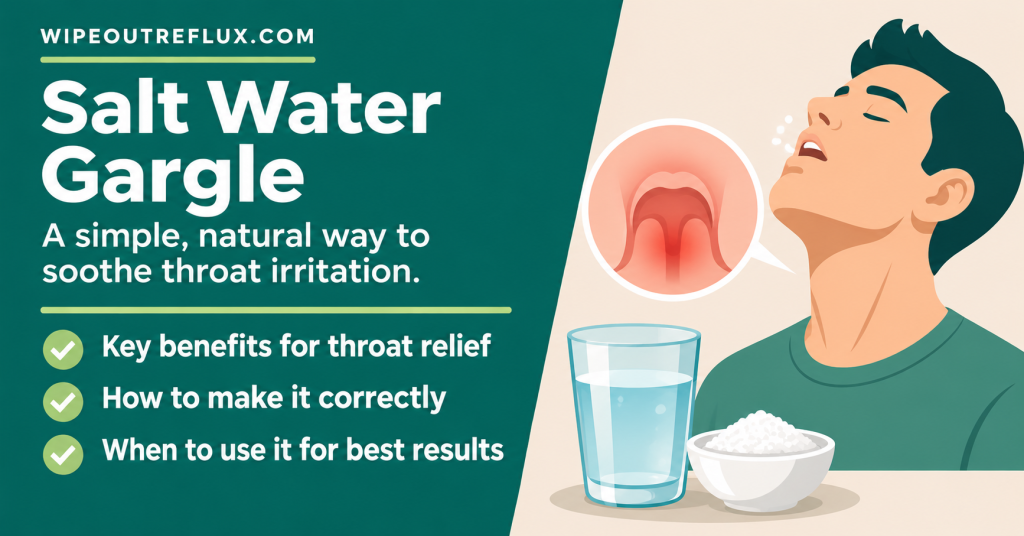
To make a salt water gargle, dissolve ¼ to ½ teaspoon of salt in 8 ounces (240 ml) of warm water. Gargle a mouthful for about 30 seconds and spit it out. Repeat until the cup is finished, up to three or four times a day. It’s a cheap, safe way to ease a sore throat, and there’s some trial evidence that regular gargling helps with colds. It won’t cure an infection, and it won’t fix a throat that’s sore because of reflux, which is the part most guides miss.
Salt water is one of the first things people reach for when a sore throat won’t settle, and plenty of people with silent reflux use it for months without lasting relief. There’s a good reason for that. Below is the correct ratio, how to do it properly, what the research shows, and how to tell when your sore throat is coming from your stomach rather than a cold.
Key Takeaways
- The standard ratio is ¼ to ½ teaspoon of salt per 8 oz (240 ml) of warm water. More salt isn’t better and can sting or dry the throat.
- Gargle for 15 to 30 seconds at a time, spit it out, and repeat until the cup is finished, up to three or four times a day.
- In a Japanese trial of 387 adults, gargling with plain water three times a day cut new respiratory infections by about 36%.
- A small pilot trial found that salt water gargling plus nasal rinsing shortened colds by about 1.9 days.
- Salt water soothes and cleans the throat temporarily. It doesn’t kill the viruses or bacteria deep in the tissue.
- If your sore throat keeps returning, is worse in the morning, or comes with throat clearing, hoarseness or a lump sensation, silent reflux (LPR) is a likely cause.
- Salt water doesn’t neutralize pepsin, the enzyme behind reflux throat damage. An alkaline rinse is the better choice for that.
- See a doctor for a sore throat with high fever, difficulty swallowing or breathing, drooling, a muffled voice, or one that lasts more than two weeks.
How to Make a Salt Water Gargle
The ratio
- Salt: ¼ to ½ teaspoon (roughly 1.5 to 3 grams). Start with ¼ teaspoon if your throat is raw.
- Water: 8 oz (240 ml, about one cup), warm but not hot. Warm water dissolves salt faster and feels more soothing.
- Type of salt: plain table salt, sea salt or kosher salt all work. Iodized salt is fine.
Step by step
- Stir the salt into the warm water until it fully dissolves.
- Take a mouthful, tilt your head back and gargle for 15 to 30 seconds. Making an “ahh” sound helps the water reach the back of the throat.
- Spit it out. Don’t swallow it.
- Repeat until the cup is finished.
- Do this up to three or four times a day, ideally after meals and before bed.
Common mistakes
- Too much salt. A very strong solution can sting and dry the tissue. If it burns, dilute it.
- Water that’s too hot. This can scald an already inflamed throat. Aim for comfortably warm.
- Swallowing it. The occasional sip won’t hurt, but repeatedly swallowing salt water adds sodium you don’t need, especially if you have high blood pressure.
- Gargling too briefly. A quick swish doesn’t reach the back of the throat.
Is it safe for children?
It’s safe once a child can reliably gargle and spit without swallowing, which is usually around age 6 or older. Younger children are better off with warm drinks and other comfort measures.
Does Gargling Salt Water Actually Work?
The honest answer is that it helps, but modestly.
How it’s thought to help
- Osmosis. Salt water draws excess fluid out of swollen throat tissue, which can briefly reduce swelling and pain.
- Rinsing. It loosens and clears mucus, debris and some of the microbes sitting on the surface of the throat.
- Soothing warmth. Warm liquid on an irritated throat simply feels better.
What the research shows
In a randomized trial in Japan, 387 healthy adults were assigned to gargle with plain water three times a day, gargle with povidone-iodine, or carry on as normal during winter. Water gargling reduced new upper respiratory infections by about 36% compared with no gargling (incidence rate ratio 0.64). Povidone-iodine didn’t produce a meaningful benefit [Satomura et al., American Journal of Preventive Medicine, 2005]. That study used plain water, which suggests much of the benefit comes from the act of rinsing itself.
In a small pilot trial in Edinburgh, 66 adults with a new cold were assigned to hypertonic salt water nasal rinsing plus gargling, or to usual care. The salt water group were ill for 1.9 fewer days, used 36% fewer over-the-counter medicines and passed the cold on to household members less often [Ramalingam et al., Scientific Reports, 2019]. It was an open-label pilot study, so the results need confirming, and it combined gargling with nasal rinsing, so gargling alone may do less.
Salt water won’t cure strep throat, which needs antibiotics, or a viral infection, which runs its course. It’s a comfort measure that may slightly shorten or prevent colds when used regularly.
When Your Sore Throat Isn’t an Infection: The Reflux Connection
This is where salt water often disappoints people.
If your sore throat keeps coming back, lasts for weeks, or comes without a fever, it may not be an infection at all. One of the most common causes of a persistent sore or burning throat is laryngopharyngeal reflux (LPR), or silent reflux. Small amounts of stomach contents reach the throat, often without any heartburn. See a sore throat that won’t go away and LPR symptoms.
Clues that reflux is behind your sore throat:
- It’s worse first thing in the morning
- You clear your throat constantly. See constant throat clearing.
- You have hoarseness or voice fatigue. See can reflux cause hoarseness?
- You feel a lump in your throat. See lump in the throat.
- You have post-nasal drip or sticky mucus. See silent reflux and post-nasal drip.
- Symptoms flare after certain foods, late meals or alcohol
- Rough patches on the back of the throat. See cobblestone throat.
Why salt water doesn’t fix a reflux throat
With LPR, the main culprit isn’t acid but pepsin, a digestive enzyme that lodges in throat tissue and is reactivated by acidic food and drink. Salt water is roughly neutral, so it doesn’t harm anything, but it also doesn’t inactivate pepsin. It may rinse a little away from the surface and soothe the tissue for a while, then the irritation returns at the next reflux event or acidic meal.
For a reflux throat, a rinse that’s genuinely alkaline is more logical, because pepsin is permanently inactivated at a high pH. I cover the options, including baking soda rinses and alkaline water, in gargling and throat rinses for pepsin and how to neutralize pepsin in the throat.
Even then, rinses deal with the symptom. What actually lets a reflux throat heal is reducing how much reflux reaches it: what you eat, when you eat, and how you sleep. See the LPR diet and how long a reflux sore throat takes to heal.
Other Ways to Soothe a Sore Throat
- Warm, non-acidic drinks such as chamomile tea or warm water with a little honey. See the best teas for acid reflux.
- Honey: a spoonful on its own (never for babies under 1).
- A humidifier, especially overnight in dry or heated rooms. See the best humidifiers for a dry, itchy throat.
- Lozenges, though some are acidic or mint-based, which can aggravate reflux. See throat lozenges and reflux.
- Demulcent herbs such as slippery elm and marshmallow root, which coat the throat. These are the main ingredients in Throat Coat tea.
- Resting your voice and staying well hydrated.
When to See a Doctor
Get urgent help if you have:
- Difficulty breathing or swallowing saliva, or you’re drooling
- A muffled “hot potato” voice, or you can’t open your mouth fully
- Severe pain on one side with swelling
See a doctor if you have:
- A fever over 101°F (38.3°C), or swollen glands with white patches on the tonsils (possible strep)
- A sore throat lasting more than two weeks
- Hoarseness lasting more than three weeks, especially if you smoke
- Pain on one side that keeps returning. See sore throat on one side.
- Blood in your saliva, or unexplained weight loss
Conclusion
A salt water gargle is simple: ¼ to ½ teaspoon of salt in 8 oz of warm water, gargled for 15 to 30 seconds and spat out, up to three or four times a day. It’s a safe, cheap way to ease a sore throat, and regular gargling has modest trial evidence for preventing and shortening colds.
But if your sore throat keeps coming back, especially with morning symptoms, throat clearing or hoarseness, salt water is only covering up the problem. Reflux is a very common hidden cause, and that needs a different approach: neutralizing pepsin and cutting down the reflux reaching your throat in the first place.
That second part is mostly about food. The Wipeout Diet Plan is the step-by-step, low-acid eating plan I built to heal my own LPR throat. It works just as well for GERD and everyday heartburn.
Frequently Asked Questions
How much salt do you put in a salt water gargle?
Use ¼ to ½ teaspoon of salt per 8 oz (240 ml) of warm water. Start at the lower end if your throat is raw.
How often should I gargle salt water?
Up to three or four times a day, for example after meals and before bed. More often isn’t more effective and can dry out the throat.
Can I swallow salt water after gargling?
It’s best to spit it out. Swallowing a little occasionally isn’t harmful, but regularly swallowing salt water adds unnecessary sodium.
Does salt water kill bacteria in the throat?
Not in any meaningful way. It rinses away some surface microbes and mucus, but it doesn’t treat infections like strep throat, which need antibiotics.
Is salt water gargling good for acid reflux?
It can soothe a reflux-irritated throat for a while, but it doesn’t neutralize pepsin or reduce reflux. An alkaline rinse plus diet changes is more effective for a reflux throat.
Is warm or cold salt water better for gargling?
Warm water dissolves the salt better and is more soothing for most people. Avoid hot water, which can irritate an inflamed throat.
Can I add baking soda to a salt water gargle?
Yes. A common mix is ¼ teaspoon of salt and ¼ teaspoon of baking soda in 8 oz of warm water. The baking soda makes the rinse alkaline, which is more relevant for reflux-related throat irritation.
Research & References
- A randomized trial of 387 healthy adults finding that gargling with water at least three times a day reduced the incidence of upper respiratory tract infections (incidence rate ratio 0.64), while povidone-iodine gargling showed no significant benefit [Satomura et al., American Journal of Preventive Medicine, 2005].
- A pilot randomized trial in which hypertonic saline nasal irrigation and gargling reduced cold duration by 1.9 days, over-the-counter medicine use by 36% and household transmission by 35% [Ramalingam et al., Scientific Reports, 2019].

David Gray
12 years living with LPR · Consultant & researcher
I've lived with LPR for twelve years — the misdiagnoses, the PPI courses that did nothing, the slow work of figuring out what actually helps. Wipeout Reflux is where I translate the research into plain terms for people stuck in the same place. Every claim here is sourced to peer-reviewed work, and I consult one-to-one with LPR sufferers.