
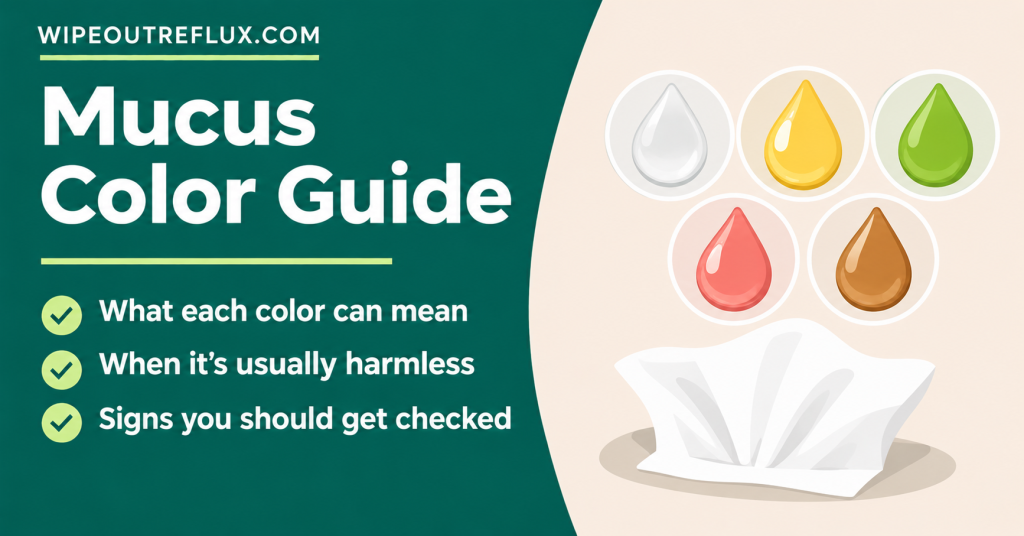
The color of the mucus in your throat gives you a rough clue about what’s going on, but it’s not a diagnosis. Clear or white mucus that feels thick and sticky, with no cold or fever, is the pattern most typical of reflux, especially laryngopharyngeal reflux (LPR, or silent reflux). Yellow and green mucus usually mean your immune system is fighting something, most often a cold or sinus infection, though the color alone can’t tell a virus from a bacterial infection.
Brown mucus most often comes from smoking, pollution or old blood, and black mucus usually means you’ve inhaled smoke, soot or dust. Pink or red mucus contains fresh blood. Brown, black or bloody mucus that you can’t explain, or that keeps coming back, is worth getting checked by a doctor.
Key Takeaways
- Clear or white, thick, sticky mucus that sits in your throat and makes you clear it all day is the color pattern that fits reflux best.
- Reflux doesn’t usually turn mucus yellow or green. Those colors come from white blood cells, which are a sign of inflammation or infection.
- Green mucus gets its color from an enzyme called myeloperoxidase, released by white blood cells called neutrophils.
- Mucus color is a poor way to tell a viral infection from a bacterial one. In one study, only 16% of yellow or green samples showed a bacterial infection.
- Brown mucus is often linked to smoking, pollution or old blood. Black mucus is usually from smoke, soot or dust.
- Pink, red or rust-colored mucus contains blood and should be checked, especially if you smoke.
- If your mucus is clear or white, the problem feels stuck in your throat, and it’s worse after meals or in the morning, reflux is a likely culprit.
Why Mucus Changes Color
Healthy mucus is mostly water, salts and proteins called mucins, which give it its gel-like texture. On its own, it’s clear. Your nose, sinuses, throat and airways make it all day to trap dust and germs and keep the lining moist. You swallow most of it without ever noticing.
Mucus changes color when something gets added to it. The most common addition is white blood cells. When your body fights an infection or deals with inflammation, it sends neutrophils to the area. These cells contain a green enzyme called myeloperoxidase. The more neutrophils in your mucus, the more yellow and then green it looks. Research in people with chronic lung disease found that sputum color graded on a color chart closely tracked myeloperoxidase and other markers of airway inflammation [Stockley et al., Thorax, 2001].
Other colors come from outside material (smoke, soot, dust or something you ate or drank) or from blood, either fresh (red) or old (brown).
Throat Mucus Color Chart: What Each Color Means
Clear mucus
Clear mucus is normal. You might notice more of it with allergies, a cold that’s just starting, cold air, spicy food, or irritation from reflux. Clear mucus on its own is rarely a concern.
Reflux link: Strong, if the mucus is thick and sticky rather than runny, sits at the back of your throat, and keeps you clearing your throat.
White mucus
White or cloudy mucus is usually just thicker mucus. When mucus is thicker or drier, it looks less transparent. Congestion, dehydration, dry air and some medicines can do this. White mucus can also be an early sign of a cold, before it turns yellow.
Reflux link: Strong. Thick white mucus that feels glued to your throat is one of the most common things people with silent reflux describe. Bubbly or foamy white mucus can also show up with reflux. It’s also common in asthma and some lung conditions, so mention it to your doctor if you’re short of breath.
Yellow mucus
Yellow mucus means white blood cells are present. It’s common in the middle stage of a cold, with sinus infections and with bronchitis. Thick yellow mucus that lasts a few days and then clears up is typical of a normal viral infection.
Reflux link: Weak. Reflux causes inflammation, but it doesn’t usually turn throat mucus yellow. If yours is yellow, look for an infection or sinus problem first.
Green mucus
Green mucus means a lot of neutrophils and myeloperoxidase. It’s most common with sinus infections, chest infections and the later stage of a cold. Many people assume green means bacteria and that they need antibiotics. The research doesn’t support that (more on this below).
Reflux link: Weak. Green mucus points to infection or significant inflammation, not reflux on its own. Long-term reflux can sometimes contribute to sinus problems, though. I cover that in my article on whether acid reflux can cause sinus infections.
Brown mucus
Brown mucus has two common causes. The first is inhaled material: tobacco smoke, wildfire smoke, heavy pollution or dust. The second is old blood, which turns brown as it breaks down, for example after a nosebleed or with very dry, cracked nasal passages. Dark drinks like coffee, cola or red wine can stain mucus brownish for a short time, too.
Reflux link: Weak. Reflux doesn’t turn mucus brown. If you smoke and you’re coughing up brown mucus regularly, that’s a reason to see your doctor, not just to treat reflux.
Black mucus
Black mucus is usually from smoke, soot, coal dust or heavy air pollution, or after being near a fire. It can also come from smoking drugs. Rarely, it’s a sign of a fungal infection, mostly in people with a weakened immune system.
Reflux link: None. If you can’t link black mucus to an obvious exposure, see a doctor.
Pink, red or rust-colored mucus
Pink or red streaks mean fresh blood. A small streak after a lot of coughing, a nosebleed or very dry air is common. Blood mixed into mucus that you cough up from your chest, frothy pink mucus, or blood that keeps coming back is different and needs medical attention.
Reflux link: Very weak. Constant throat clearing can irritate the lining enough to cause a tiny streak now and then, but you shouldn’t assume that’s the explanation. Get it checked.
Does Green or Yellow Mucus Mean You Need Antibiotics?
Not necessarily. In a German study of 241 people with an acute cough, only 16% of yellow or green sputum samples showed a bacterial infection, compared with 6% of clear samples. The researchers concluded that sputum color in people without chronic lung disease shouldn’t decide whether they get antibiotics [Altiner et al., Scandinavian Journal of Primary Health Care, 2009].
A larger study of more than 3,000 adults across 13 European countries found that doctors prescribed antibiotics more often for discolored sputum. But people with yellow or green sputum who got antibiotics didn’t recover any faster than those who didn’t [Butler et al., European Respiratory Journal, 2011].
So green mucus tells you there’s inflammation. It doesn’t tell you what’s causing it. How long it lasts, whether you have a fever, and whether you’re getting better or worse matter more than the exact shade.
What Reflux Mucus Looks and Feels Like
When people ask me whether their mucus is from reflux, texture and behavior tell me more than color. Reflux mucus tends to be:
- Clear or white, not yellow or green
- Thick and sticky, like a film or a glob that won’t shift
- Felt in the throat rather than the nose or chest
- Hard to clear, so you keep clearing your throat and it comes straight back
- Worse after meals, in the morning or when you lie down
- Present without a cold, fever or runny nose
- Often paired with hoarseness, a lump feeling in the throat, a chronic cough or a sore throat that won’t go away
Excess throat mucus is one of the core symptoms of LPR. It’s one of the nine items on the Reflux Symptom Index, the questionnaire doctors use to score LPR symptoms [Belafsky et al., Journal of Voice, 2002]. You can score yourself with my Reflux Symptom Index guide. In a study of 403 people with confirmed LPR, throat clearing, globus (a lump feeling), heartburn and excess throat mucus were the most sensitive symptoms, and together they picked up 96% of cases [Lechien et al., Otolaryngology–Head and Neck Surgery, 2022].
Why Reflux Causes Thick, Sticky Mucus
In LPR, small amounts of stomach contents reach the throat and voice box. That includes acid, but the bigger problem is pepsin, a digestive enzyme. Pepsin sticks to the throat lining and can be reactivated by acid later, even from food and drink. I explain this in detail in how pepsin reactivates in the throat.
Your throat responds to this irritation in two ways that explain the mucus:
- It makes more mucus to protect itself. Mucus is your throat’s first line of defense, so irritated tissue produces more of it.
- The mucus it makes is lower quality. Research from the lab of pepsin researcher Nikki Johnston found, in a small study, that people with reflux-related throat damage had lower levels of several protective mucin genes. Pepsin blocked the normal protective increase in these genes when cells were exposed to acid [Samuels et al., Annals of Otology, Rhinology and Laryngology, 2008].
The result is mucus that feels thick and sticky, but isn’t doing a good job of protecting your throat. Then there’s the throat-clearing cycle. Every forceful clear irritates your vocal cords a little more, which prompts more mucus, which makes you clear again. I cover how to break that loop in how to stop constant throat clearing from reflux.
Reflux, Post-Nasal Drip or Infection? How to Tell
These three get mixed up all the time, and they can overlap. Here’s a quick way to tell them apart:
- Reflux (LPR): clear or white, thick mucus felt in the throat. No runny nose or fever. Worse after meals and in the morning. Often hoarseness or a lump feeling.
- Post-nasal drip: mucus you can feel dripping down the back of your nose. Often a stuffy or runny nose, sneezing, or itchy eyes if allergies are involved. Usually worse at night lying flat.
- Infection: yellow or green mucus, often with a fever, aches, facial pain or a cough that started suddenly. Usually clears within one to three weeks.
Many people have reflux and post-nasal drip at the same time, and each can make the other feel worse. See my article on silent reflux and post-nasal drip for how to untangle them.
What to Do About Reflux Mucus
If your mucus is clear or white and the pattern fits reflux, the goal is to cut down how much refluxed material reaches your throat and to calm the lining. These are the steps that make the biggest difference:
- Stop eating 3 hours before bed. Night-time reflux is a big driver of morning mucus.
- Eat smaller meals. A full stomach pushes more contents upward.
- Cut back on the main triggers. Acidic drinks, alcohol, coffee, chocolate, fatty and fried foods, and mint are the usual suspects.
- Swallow or sip water instead of clearing your throat. A hard swallow or a sip of water moves mucus without hammering your vocal cords.
- Stay hydrated and use a humidifier if your air is dry. Thinner mucus is easier to clear.
- Consider an alginate after meals and before bed. Products like Gaviscon Advance form a raft on top of your stomach contents. See my guide to alginates for acid reflux.
Diet is the foundation, though, because it’s what you control every single day. The Wipeout Diet Plan walks you through exactly what to eat and what to avoid, step by step. For more on how mucus and reflux connect in general, read my article on GERD and mucus, and for practical ways to shift it, see phlegm stuck in your throat from acid reflux.
When to See a Doctor About Mucus
See a doctor if you have:
- Blood in your mucus, especially if it keeps happening or you smoke
- Brown or black mucus you can’t explain
- Yellow or green mucus with a high fever, shortness of breath or chest pain
- Discolored mucus that lasts more than three weeks or keeps coming back
- Hoarseness that lasts more than three weeks
- Trouble or pain when swallowing, unexplained weight loss or a lump in your neck
For throat symptoms that might be reflux but aren’t settling, my guide on when to see a doctor for LPR explains which specialist to ask for and what tests to expect.
Conclusion
Mucus color is a useful first clue, but not much more than that. Yellow and green mean inflammation, usually from an infection, but they can’t tell you whether that infection is viral or bacterial. Brown and black usually mean something you’ve breathed in, or old blood. Red or pink means fresh blood and needs checking. Clear or white mucus that’s thick, sticky and stuck in your throat, without any signs of a cold, is the pattern that points most strongly toward reflux.
If that sounds like you, the good news is that reflux mucus usually improves once you reduce what’s reaching your throat. That means changing when and what you eat, protecting your throat at night and breaking the throat-clearing habit. The Wipeout Diet Plan is my complete, in-depth guide to doing exactly that. I built it around LPR, the throat-based form of reflux behind most sticky-mucus complaints, though it targets the same root causes as GERD and heartburn, so it works just as well for those too. It gives you a full meal plan, the foods to cut and the ones to rely on, so you’re not guessing.
Frequently Asked Questions
What color is mucus from acid reflux?
Reflux mucus is usually clear or white. It tends to be thick and sticky and is felt at the back of the throat. Reflux doesn’t usually make mucus yellow or green.
What does brown mucus in the throat mean?
Brown mucus most often comes from smoking, inhaled pollution or dust, or old blood. Dark drinks can also stain it briefly. If it’s regular and you can’t explain it, see a doctor.
Does green mucus mean a bacterial infection?
Not reliably. Green comes from an enzyme in white blood cells, which show up in both viral and bacterial infections. Studies show mucus color is a poor guide to whether you need antibiotics.
Why is my mucus white and thick?
Thick white mucus is usually just thicker, drier mucus. Common causes include reflux, dehydration, dry air, congestion and the early stage of a cold. If it’s stuck in your throat and you keep clearing it with no other cold symptoms, reflux is a likely cause.
What does thick yellow mucus in the throat mean?
It usually means your immune system is fighting an infection, such as a cold, sinus infection or bronchitis. It typically clears within a week or two. See a doctor if it lasts longer or comes with a high fever.
Is black mucus dangerous?
Usually it comes from smoke, soot or dust and clears once the exposure stops. If you can’t link it to an exposure, or you have a weakened immune system, see a doctor.
Can reflux cause mucus without heartburn?
Yes. Silent reflux (LPR) often causes throat mucus, throat clearing and hoarseness without any heartburn. That’s why many people don’t realize reflux is behind their symptoms.
Research & References
- [Stockley et al., Thorax, 2001] — Sputum color graded on a nine-point chart correlated strongly with myeloperoxidase and other markers of neutrophil-driven airway inflammation.
- [Altiner et al., Scandinavian Journal of Primary Health Care, 2009] — Among 241 people with acute cough, 16% of yellow or green sputum samples and 6% of clear samples showed bacterial infection. Color wasn’t considered a basis for prescribing antibiotics.
- [Butler et al., European Respiratory Journal, 2011] — In 3,402 adults with acute cough across 13 countries, discolored sputum led to more antibiotic prescriptions but wasn’t linked to faster recovery with antibiotics.
- [Belafsky et al., Journal of Voice, 2002] — Development and validation of the nine-item Reflux Symptom Index, which includes excess throat mucus and throat clearing.
- [Lechien et al., Otolaryngology–Head and Neck Surgery, 2022] — In 403 people with LPR and 144 healthy controls, throat clearing, globus, heartburn and excess throat mucus were the most sensitive LPR symptoms; combined, they reached 96% sensitivity.
- [Samuels et al., Annals of Otology, Rhinology and Laryngology, 2008] — Several protective mucin genes were reduced in people with reflux-related laryngeal injury, and pepsin blocked their normal increase after acid exposure in the lab.

David Gray
12 years living with LPR · Consultant & researcher
I've lived with LPR for twelve years — the misdiagnoses, the PPI courses that did nothing, the slow work of figuring out what actually helps. Wipeout Reflux is where I translate the research into plain terms for people stuck in the same place. Every claim here is sourced to peer-reviewed work, and I consult one-to-one with LPR sufferers.