
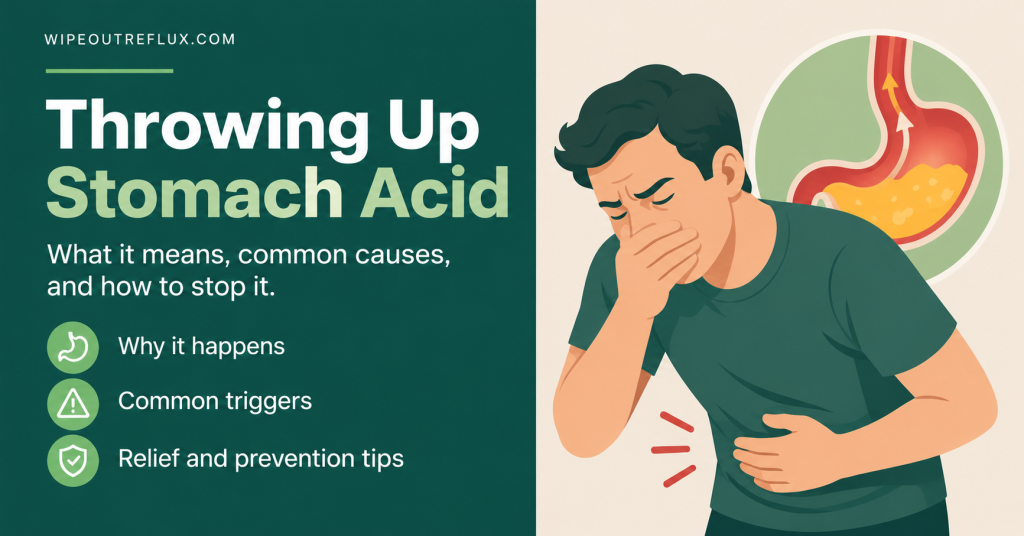
Throwing up stomach acid usually happens when you vomit on an empty or nearly empty stomach, so what comes up is mostly clear or foamy gastric juice rather than food. It tastes sour and burns your throat and mouth because stomach acid has a pH of around 1.5 to 3.5. If it’s yellow or green and bitter, it’s likely mixed with bile from the small intestine.
Common causes include acid reflux and GERD, gastritis, drinking alcohol, morning sickness, a stomach bug, migraine, cannabis use and some medications. A one-off episode after a heavy night or a virus usually isn’t a concern.
Straight afterwards, rinse your mouth with water or a mild baking soda solution, don’t brush your teeth for at least 30 minutes, and sip fluids slowly. If it keeps happening, or you see blood or coffee-ground-like material, get checked by a doctor promptly.
Key Takeaways
- Vomiting stomach acid typically happens on an empty stomach, which is why it’s often clear, frothy or yellow rather than food.
- Yellow or green vomit usually contains bile. That’s common after repeated vomiting and isn’t usually dangerous by itself.
- Bringing up sour liquid without nausea or retching is regurgitation, a classic symptom of GERD, not true vomiting.
- Common causes include GERD, gastritis, alcohol, pregnancy, stomach bugs, migraine, cannabis hyperemesis syndrome and medications.
- Acidic vomit softens tooth enamel. Rinse with water or baking soda solution and wait at least 30 to 60 minutes before brushing.
- Vomiting also exposes your throat to pepsin, a digestive enzyme that can keep irritating throat tissue after the episode.
- Seek urgent help for blood in vomit, coffee-ground vomit, severe abdominal or chest pain, signs of dehydration, or vomiting that won’t stop.
What Does It Mean When You Throw Up Stomach Acid?
Your stomach makes around 1.5 liters of gastric juice a day. It’s a mix of hydrochloric acid, the digestive enzyme pepsin, mucus and water. When you vomit after a meal, that acid is mixed in with food. When you vomit on an empty stomach, there’s nothing else to come up, so you get pure, sharp, sour gastric juice.
That’s why throwing up acid is so common:
- First thing in the morning, before you’ve eaten.
- After you’ve already vomited a few times and emptied your stomach.
- After a night of drinking, when alcohol has irritated the stomach and you’ve often eaten little.
- When you’ve skipped meals and acid has built up with nothing to work on.
What color is stomach acid vomit?
- Clear, white or foamy: mostly stomach acid, mucus and saliva.
- Yellow or green: stomach acid mixed with bile. When your stomach is empty and you keep retching, bile from the small intestine can be pushed back up. It tastes very bitter. I explain the difference in more detail in bile reflux vs acid reflux.
- Red, pink or streaked with blood: can come from a small tear in the lining after forceful vomiting. A few streaks after hard retching aren’t unusual, but more than that needs medical attention.
- Brown or like coffee grounds: may be partly digested blood. Seek medical help straight away.
Vomiting vs Regurgitation: An Important Difference
A lot of people who say they’re “throwing up stomach acid” are actually describing regurgitation, and it’s worth knowing which one you have because the causes are different.
Vomiting is forceful. You usually feel nauseous first, your stomach muscles contract and you retch.
Regurgitation is effortless. Sour or bitter liquid, sometimes with bits of food, rises into your throat or mouth without any nausea or heaving, often when you bend over, lie down or burp. The international Montreal consensus on GERD lists regurgitation, along with heartburn, as one of the two typical symptoms of reflux disease [Vakil et al., The American Journal of Gastroenterology, 2006].
There’s also water brash, where your mouth suddenly fills with salty saliva as a reflex to acid in your esophagus. I’ve covered both in water brash and regurgitation.
If you’re bringing up acid regularly without feeling sick, that points strongly towards reflux rather than a vomiting illness.
Common Causes of Throwing Up Stomach Acid
1. Acid reflux and GERD
Reflux is one of the most common reasons people bring up acid, especially at night or in the morning. Severe reflux can also trigger nausea and true vomiting, particularly if acid reaches the back of your throat and sets off your gag reflex. Coughing fits from reflux can do the same.
If yours is worst first thing, have a look at why acid reflux is often worse in the morning.
2. Silent reflux (LPR) and nausea
With LPR, reflux reaches your throat and voice box, often without heartburn. Many people with LPR feel nauseous, gag on mucus or feel a lump in their throat, and some end up retching up clear, acidic fluid in the morning. I go into this in silent reflux and nausea.
3. Gastritis and ulcers
Inflammation of the stomach lining, often from H. pylori, NSAIDs like ibuprofen or alcohol, can cause nausea, vomiting and a burning pain in the upper stomach. Ulcers can cause similar symptoms. If this sounds familiar, see gastritis vs acid reflux and stomach ulcer or acid reflux.
4. Alcohol
Alcohol irritates the stomach lining, increases acid secretion, relaxes the lower esophageal sphincter and acts on the brain’s vomiting center. Add an empty stomach and it’s a perfect recipe for vomiting acid. More on this in does quitting alcohol help acid reflux.
5. Stomach bugs and food poisoning
Viral gastroenteritis and food poisoning often start with vomiting food, then move on to clear or yellow liquid once your stomach is empty. These usually settle within a day or two. The main risk is dehydration.
6. Pregnancy
Morning sickness is very common in early pregnancy, and it often means vomiting on an empty stomach. Reflux also becomes more common as pregnancy progresses. If nausea is severe and you can’t keep fluids down, that may be hyperemesis gravidarum, which needs medical treatment. My guide to acid reflux and pregnancy covers safe ways to manage reflux.
7. Cannabis hyperemesis syndrome
This one is often missed. In regular, long-term cannabis users, cannabis can paradoxically cause repeated bouts of severe vomiting. A systematic review found the key features are regular cannabis use, cyclical nausea and vomiting, relief from hot showers or baths, and resolution after stopping cannabis, which appears to be the best treatment [Sorensen et al., Journal of Medical Toxicology, 2017].
8. Migraine and cyclic vomiting syndrome
Migraines can cause intense nausea and vomiting. Cyclic vomiting syndrome causes repeated episodes of vomiting separated by symptom-free periods, and it’s often linked to migraine.
9. Delayed stomach emptying
Gastroparesis, where the stomach empties slowly, is common in diabetes and can cause nausea, early fullness and vomiting. GLP-1 medications like Ozempic and Mounjaro also slow stomach emptying and commonly cause nausea and reflux. See does Ozempic cause heartburn and reflux.
10. Anxiety and stress
Anxiety can trigger nausea and retching, especially in the morning. Some people find they dry heave and bring up a little acid before stressful events.
11. Medications
NSAIDs, some antibiotics, iron tablets, opioids, chemotherapy and GLP-1 drugs can all cause nausea and vomiting.
Why Throwing Up Acid Burns So Much
Your esophagus and throat aren’t designed to handle acid. The stomach has a thick protective mucus layer. The esophagus has much less protection, and your throat and voice box have almost none.
That’s why vomiting acid leaves you with a burning throat, a hoarse voice, a sour taste and sometimes a cough. There’s another layer to this that most articles miss, and it’s something I bang on about a lot because it’s central to silent reflux: pepsin.
Pepsin is the enzyme in gastric juice that digests protein. When you vomit, pepsin is sprayed over your throat and voice box. Lab research shows pepsin stays stable at the pH found in the throat and can be reactivated later by acid, so it can keep damaging throat tissue after the original exposure [Johnston et al., The Laryngoscope, 2007].
That’s one reason a sore, raw throat can linger for days after a bout of vomiting, especially if you then eat or drink acidic things. I explain it fully in how pepsin reactivates in the throat.
What to Do After Throwing Up Stomach Acid
Protect your teeth
Stomach acid softens tooth enamel within minutes. Repeated exposure, whether from vomiting or reflux, causes dental erosion. A systematic review found a median 24% prevalence of dental erosion in people with GERD [Pace et al., Alimentary Pharmacology & Therapeutics, 2008].
- Rinse your mouth with water, or a solution of half a teaspoon of baking soda in a glass of water, to neutralize the acid.
- Don’t brush straight away. Brushing softened enamel wears it away faster. Wait at least 30 minutes, ideally an hour.
- Use a fluoride toothpaste when you do brush, and consider a fluoride mouthwash if this happens often.
- Chew sugar-free gum afterwards to boost saliva, your body’s natural acid buffer.
Soothe your throat
- Sip room-temperature water or a low-acid drink like chamomile tea.
- Avoid citrus, fizzy drinks, coffee and alcohol for a day or two, as these can reactivate pepsin.
- A dose of an alginate like Gaviscon Advance can help protect your throat and esophagus if you’re prone to reflux afterwards.
- Gargling with a baking soda solution or alkaline water may help neutralize any remaining acid and pepsin. See gargling and throat rinses for pepsin.
Rehydrate slowly
Gulping water straight after vomiting often brings it straight back up. Wait 15 to 30 minutes, then take small sips every few minutes. If you’ve vomited several times, an oral rehydration solution helps replace lost salts.
Ease back into food
Once you can keep fluids down, start with small amounts of bland, low-fat, low-acid food like plain crackers, toast, rice, oatmeal or a banana. Avoid fatty, spicy or acidic food until you’ve settled.
How to Stop Throwing Up Stomach Acid
If this keeps happening, it’s worth working out the cause rather than just managing each episode. If reflux is behind it, these are the changes that make the biggest difference:
- Don’t go too long without eating. An empty stomach full of acid is more likely to come back up. A small, low-acid snack can help.
- Stop eating 3 hours before bed, so your stomach has emptied before you lie down.
- Raise the head of your bed by 6 to 8 inches if you regurgitate at night or wake up gagging.
- Eat smaller meals and avoid large, fatty dinners.
- Cut back on alcohol, especially on an empty stomach.
- Follow a low-acid diet to calm both reflux and the throat irritation that makes you gag. The Wipeout Diet Plan walks you through this step by step.
- Use an alginate after meals and before bed if you regurgitate. It forms a physical barrier over your stomach contents. More in alginates for acid reflux.
- Review your medications with your doctor if nausea started after a new prescription.
- Stop cannabis if you use it regularly and have cyclical vomiting.
When to See a Doctor
Get urgent medical help if you:
- Vomit blood, or vomit that looks like coffee grounds.
- Have black, tarry stools.
- Have severe abdominal pain or chest pain.
- Can’t keep any fluids down for more than 12 to 24 hours, or show signs of dehydration (very dark urine, dizziness, confusion, a dry mouth and very little urine).
- Have vomiting with a severe headache, stiff neck or high fever.
- Vomit after a head injury.
Book a non-urgent appointment if you’re bringing up acid regularly, have difficulty or pain swallowing, are losing weight without trying, or have reflux symptoms most days. These can all be managed, but they deserve a proper assessment.
Conclusion
Throwing up stomach acid is unpleasant but usually harmless on its own. It happens when you vomit on an empty stomach, so there’s nothing but gastric juice to come up. Yellow or green vomit simply means bile is mixed in. Common causes range from stomach bugs, alcohol and pregnancy to reflux, gastritis, migraine and cannabis use. If you’re bringing up sour liquid without feeling sick, that’s regurgitation and points towards reflux.
Afterwards, protect your teeth by rinsing and waiting before you brush, soothe your throat with low-acid drinks, and rehydrate slowly. If it keeps happening, or you notice blood, severe pain or signs of dehydration, get checked.
If reflux is behind your symptoms, the Wipeout Diet Plan is the most complete way to get it under control. It was built first and foremost for LPR, the throat-based form of reflux where pepsin causes so much irritation, but because it targets the same underlying mechanisms, it works just as well for GERD and classic acid reflux. It shows you exactly what to eat, what to avoid and how to time your meals to stop acid coming back up.
If you’d rather start with something lighter, the Wipeout Food Reference Guide is the essential companion, listing the foods and drinks that are safe for acid reflux and LPR along with their pH values, so you can choose gentle foods after a bad episode.
Frequently Asked Questions
Why am I throwing up stomach acid in the morning?
Your stomach is empty first thing, so if you feel sick, all that comes up is gastric juice. Overnight reflux, post-nasal drip, alcohol the night before, pregnancy and anxiety are common triggers. Regular morning acid vomiting is worth discussing with a doctor.
Is it bad to throw up stomach acid?
An occasional episode isn’t usually harmful. Repeated vomiting can damage tooth enamel, irritate your esophagus and throat, cause small tears in the lining, and lead to dehydration and low electrolytes. Frequent episodes should always be investigated.
What does it mean if I throw up yellow liquid?
Yellow or green vomit is usually stomach acid mixed with bile, which happens when your stomach is empty and you keep retching. It’s common with stomach bugs and morning sickness. If it happens often or with severe pain, see a doctor.
Can acid reflux make you throw up?
Yes. Reflux often causes regurgitation, where acid rises into your mouth without effort. Severe reflux can also cause nausea and vomiting, especially if acid triggers your gag reflex or a coughing fit.
Should I brush my teeth after throwing up?
Not straight away. Rinse with water or a baking soda solution first, then wait at least 30 to 60 minutes before brushing. Brushing immediately can wear away enamel that the acid has softened.
What should I drink after throwing up stomach acid?
Wait 15 to 30 minutes, then sip water, an oral rehydration solution or a gentle herbal tea like chamomile. Avoid citrus juice, fizzy drinks, coffee and alcohol, which can irritate your throat and stomach further.
How do I stop throwing up stomach acid at night?
Stop eating at least 3 hours before bed, raise the head of your bed, sleep on your left side, avoid alcohol and large evening meals, and consider an alginate before bed. If it continues, see a doctor to check for reflux or another cause.
Research & References
- [Vakil et al., The American Journal of Gastroenterology, 2006] — The Montreal global consensus defining GERD, with heartburn and regurgitation as its typical symptoms and dental erosion among its recognized complications.
- [Sorensen et al., Journal of Medical Toxicology, 2017] — Systematic review of cannabinoid hyperemesis syndrome identifying regular cannabis use, cyclic vomiting, relief from hot bathing and resolution after stopping cannabis as key features.
- [Johnston et al., The Laryngoscope, 2007] — Showed pepsin remains stable at throat pH and can be reactivated by acid, explaining ongoing laryngeal damage after exposure to gastric contents.
- [Pace et al., Alimentary Pharmacology & Therapeutics, 2008] — Systematic review of 17 studies finding a median 24% prevalence of dental erosion in GERD patients and a strong association between GERD and erosion.

David Gray
12 years living with LPR · Consultant & researcher
I've lived with LPR for twelve years — the misdiagnoses, the PPI courses that did nothing, the slow work of figuring out what actually helps. Wipeout Reflux is where I translate the research into plain terms for people stuck in the same place. Every claim here is sourced to peer-reviewed work, and I consult one-to-one with LPR sufferers.