
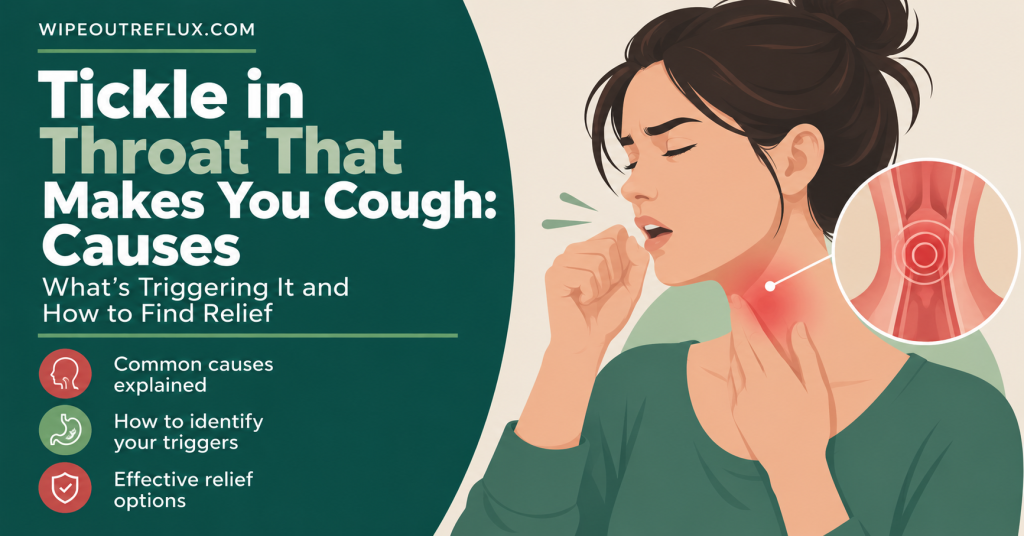
A tickle in your throat is a nerve signal, not a thing stuck in your throat. Sensory nerve endings in your throat and voice box are telling your brain something is irritating them, and the feeling they produce is the “urge to cough.” When those nerves are irritated or oversensitive, the tickle fires easily and the cough follows almost automatically.
Most short-lived tickles come from a cold, dry air or post-nasal drip and fade within a couple of weeks. When a tickle and dry cough keep coming back, the usual suspects are post-nasal drip, silent reflux (LPR), asthma, a blood pressure drug, or a throat nerve that has become hypersensitive after an infection or long-term irritation.
The quickest relief is to sip water, swallow hard and breathe through your nose instead of coughing. Getting rid of it for good means finding out what’s irritating the nerve in the first place.
Key Takeaways
- A tickle in the throat is the sensation of throat and voice box nerves firing the “urge to cough.” It’s a sensory signal, which is why there’s often nothing there to cough up.
- Short-term tickles usually come from colds, dry air, irritants or post-nasal drip, and a post-viral tickle can last 3 to 8 weeks.
- Recurring tickles with a dry cough most often trace back to post-nasal drip, silent reflux (LPR), asthma, ACE inhibitor blood pressure drugs or a sensitized throat nerve.
- Coughing and throat clearing irritate the throat further, which keeps the tickle going. Breaking that loop is half the treatment.
- Reflux can cause a throat tickle with no heartburn at all, because pepsin from the stomach can sit in throat tissue and irritate it.
- When the tickle comes from talking, laughing, cold air or perfume, a hypersensitive nerve is the likely driver.
- For fast relief: sip water, swallow, breathe through your nose and use a “cough suppression” technique instead of giving in to the urge.
- A tickle with coughing up blood, weight loss, a hoarse voice lasting over three weeks or breathlessness needs a doctor promptly.
What a Tickle in Your Throat Actually Is
Your throat and voice box are lined with sensory nerve endings, mostly branches of the vagus nerve. Their job is to guard your airway. When they detect something that shouldn’t be there, such as a crumb, mucus, smoke, cold air or stomach contents, they send a signal to your brainstem, and you feel an urge to clear it.
That urge is the tickle. In studies of people with chronic cough, most say they feel an urge-to-cough sensation before they cough, and the throat is where they usually feel it, often described as a tickle, itch or irritation [Hilton et al., Respiratory Medicine, 2015].
Here’s the key point most articles miss. The tickle tells you the nerve is firing. It doesn’t tell you whether there’s a real threat. A healthy nerve fires when something is genuinely irritating it. An oversensitive nerve fires at things that shouldn’t bother it at all. Respiratory specialists now call this cough hypersensitivity syndrome: a cough set off by low levels of normally harmless triggers, with the tickle or throat irritation as one of its hallmark features [Morice et al., European Respiratory Journal, 2014].
That’s why throat lozenges and cough drops only take the edge off. They soothe the surface for a while, but they don’t change what’s irritating the nerve or how sensitive it has become.
Why a Tickle Makes You Cough (and Why Coughing Makes It Worse)
Coughing is the reflex the tickle is asking for. The trouble is that a dry cough clears nothing when there’s nothing there. What it does do is slam your vocal cords together with real force. Repeated hard coughing and throat clearing irritate and swell the lining of the voice box, and that irritation makes the nerves fire more readily.
So you end up in a loop:
- The nerve fires and you feel a tickle.
- You cough or clear your throat.
- The coughing irritates the throat lining.
- The irritated lining makes the nerve fire again, sooner.
This is how a tickle that started with a cold can still be going weeks later, and why constant throat clearing keeps a sore, tickly throat from settling. Whatever the original cause, you usually have to break the loop as well as treat the trigger.
What Causes a Tickle in Your Throat?
1. A cold or other viral infection
This is the most common cause by far. Viruses inflame the lining of the nose and throat and temporarily make the cough nerves more sensitive. The tickle often outlasts the cold itself. A cough that hangs on for 3 to 8 weeks after a respiratory infection is common enough to have its own name, post-infectious cough, and it usually clears up on its own [Braman, Chest, 2006].
In some people, though, the nerve doesn’t fully reset after the virus. I’ll come back to that below, because it’s one of the main reasons a tickle won’t go away.
2. Post-nasal drip
Mucus from the nose and sinuses dripping down the back of the throat irritates the nerves there. Post-nasal drip, now called upper airway cough syndrome, is one of the most common causes of chronic cough. It often comes with a feeling of something dripping, frequent throat clearing, and a tickle that’s worse in the morning or when lying down [Pratter, Chest, 2006].
One catch: silent reflux can produce exactly the same “drip” feeling, because it thickens throat mucus. I explain how to tell them apart in silent reflux and post-nasal drip.
3. Silent reflux (LPR)
This is the cause I see missed most often, mostly because people assume reflux means heartburn. Laryngopharyngeal reflux (LPR) is reflux that reaches the throat and voice box. Most people with it have little or no heartburn. Instead they get throat symptoms: a tickle, throat clearing, a lump feeling, hoarseness and a dry cough.
The irritant isn’t only acid. It’s pepsin, the stomach’s protein-digesting enzyme. Pepsin can be carried up into the throat in tiny amounts, get taken up into the tissue, and stay there. Lab work shows it stays stable at normal throat pH and becomes active again whenever more acid arrives, even from acidic food and drink [Johnston et al., The Laryngoscope, 2007]. That gives the throat nerves a steady, low-level source of irritation, which is exactly what produces a tickle that keeps coming back. I go through this in detail in how pepsin reactivates in the throat.
Clues that point to reflux:
- The tickle is worse after meals, especially large, late, fatty or acidic ones
- It flares when you lie down or bend over
- You also clear your throat a lot, feel a lump in your throat, or your voice is husky
- Coffee, alcohol, wine, chocolate, citrus or fizzy drinks make it worse
- Cold remedies and antihistamines haven’t made much difference
For the full picture, see my guide to reflux cough and the wider list of LPR symptoms.
4. A hypersensitive throat nerve
Sometimes the original trigger has gone, but the nerve stays on high alert. ENT specialists call this laryngeal sensory neuropathy, and a persistent tickle or abnormal throat sensation that sets off coughing is one of its defining features [Lee and Woo, Annals of Otology, Rhinology & Laryngology, 2005]. Researchers have found measurable sensory dysfunction in the voice box of people with this kind of throat hypersensitivity [Vertigan et al., Respirology, 2013].
The giveaway is the triggers. If your tickle is set off by talking, laughing, singing, cold air, perfume or cleaning products, that’s a sensitized nerve rather than mucus or acid. I’ve covered this in more depth in vagal cough. Viral infections and long-standing reflux are two of the most common things that sensitize the nerve in the first place.
5. Asthma
Asthma doesn’t always wheeze. In cough-variant asthma, a dry tickly cough can be the main or only symptom, often worse at night, with exercise or in cold air. It’s easily mistaken for reflux and the reverse happens too. See acid reflux misdiagnosed as asthma.
6. Blood pressure tablets (ACE inhibitors)
ACE inhibitors, the blood pressure drugs ending in “-pril” such as lisinopril and ramipril, cause a dry cough in a meaningful minority of people who take them. It’s typically described as a tickling, itching or scratchy feeling in the throat. It can start weeks or even months after you begin the drug, and it usually settles within one to four weeks of stopping [Dicpinigaitis, Chest, 2006]. Never stop a blood pressure drug yourself. Ask your doctor about switching. More in ACE inhibitor cough.
7. Allergies, dry air and irritants
Pollen, dust and pet allergies can cause an itchy, tickly throat, usually with sneezing, itchy eyes or a runny nose. Dry indoor heating, air conditioning, smoke, vaping and strong fumes can do it too. These tend to be seasonal or tied to a particular place. If your “allergy” tickle doesn’t follow the seasons, have a look at LPR vs allergies.
Cough and Tickle in Throat: What Your Pattern Tells You
When people ask me what’s behind their tickle, the first thing I want to know is when it happens. The pattern narrows things down far more than the sensation itself.
- Started with a cold and is slowly fading: post-infectious cough.
- Worse in the morning, with mucus and a dripping feeling: post-nasal drip, though reflux can mimic it.
- Worse after meals, when lying down, or with coffee and wine: silent reflux.
- Set off by talking, laughing, cold air or smells: a sensitized nerve (laryngeal hypersensitivity).
- With exercise, wheeze, tight chest or at night: asthma.
- Started weeks after a new blood pressure tablet: ACE inhibitor cough.
- Seasonal, with itchy eyes and sneezing: allergies.
Plenty of people have more than one. Reflux plus a sensitized nerve is a particularly common pairing, and it’s the reason a tickle can survive treatment that only targets one of them.
Dry Cough and Tickle in Throat With No Phlegm
A dry, tickly cough where nothing comes up is a strong hint that the problem is sensory, not mucus. With an infection or post-nasal drip, you usually have something to clear. With reflux, a sensitized nerve or an ACE inhibitor, the throat feels like it needs clearing, but coughing produces nothing and brings no relief. That mismatch, a strong urge with no reward, is classic laryngeal hypersensitivity.
Random Coughing Fits From a Tickle
Sudden coughing fits that come out of nowhere, often mid-sentence, are one of the most distressing versions of this. A sensitized nerve can fire with very little warning, and once you start coughing the throat irritation keeps the fit going. Some people’s eyes water, they gag, or they briefly feel they can’t get a breath in.
If a fit ever makes your throat clamp shut so you can’t breathe in for a few seconds, that’s laryngospasm rather than a cough. It’s frightening but usually passes quickly. See laryngospasm and silent reflux for what’s happening and how to ride it out.
How to Get Rid of a Tickle in Your Throat Right Now
These won’t fix the cause, but they’ll stop a tickle from turning into a coughing fit and help break the tickle-cough loop.
- Sip water at the first sign. Small sips and a firm swallow reset the throat and often stop the urge before it builds. Keep water with you.
- Swallow hard instead of clearing. A deliberate dry swallow does much of what throat clearing does without the impact on your vocal cords.
- Breathe in through your nose. Nose breathing warms and humidifies the air before it hits the throat. Mouth breathing, especially in cold or dry air, is a common trigger.
- Use a cough-suppression technique. When the tickle hits, close your lips, swallow, then breathe slowly in through your nose and out through pursed lips until the urge passes. This is the core of the speech-therapy programs that have reduced chronic cough in trials [Vertigan et al., Thorax, 2006].
- Try a spoonful of honey. Honey coats the throat, and in children with cold-related coughs it eased nighttime coughing better than no treatment [Paul et al., Archives of Pediatrics & Adolescent Medicine, 2007]. Never give honey to babies under one.
- Add humidity. A humidifier, a steamy shower or a warm (not hot) drink helps if dry air is part of the problem.
- Choose lozenges carefully. If reflux could be involved, avoid mint and menthol, which can relax the valve at the top of the stomach, and acidic citrus lozenges. My guide to throat lozenges and hard candy for acid reflux covers which ones are safer.
How to Stop a Tickle in Your Throat Coming Back
Lasting relief comes from removing whatever keeps irritating the nerve and giving it time to calm down.
- If it’s post-nasal drip or allergies: saline nasal rinses, a steroid nasal spray or antihistamines are the usual first steps. Ask a pharmacist or doctor which suits you.
- If it’s reflux: treatment is mostly diet and habits. Cut back the biggest triggers (coffee, alcohol, fizzy drinks, chocolate, citrus, tomato, spicy and fatty foods), stop eating about three hours before bed, raise the head of your bed and eat smaller meals. Because pepsin is reactivated by acid, lowering the acidity of what you eat and drink matters more for the throat than for the esophagus. That’s the principle the Wipeout Diet Plan is built on.
- If it’s asthma or an ACE inhibitor: this needs your doctor, for an inhaler trial or a change of blood pressure drug.
- If the nerve is sensitized: behavioral cough-suppression therapy with a speech and language therapist and, for some people, nerve-calming medication prescribed by a doctor. See amitriptyline and gabapentin for reflux cough.
- In every case: cut down on throat clearing and hard coughing. It’s the one thing that keeps almost every type of tickle going.
If your tickle has been around for weeks or months and you’re starting to wonder why nothing works, I’ve written a separate guide on a constant tickle in the throat that won’t go away, including why it’s often worse at night and when lying down.
When to See a Doctor
Most tickles are harmless and pass with time. See a doctor if:
- The tickle and cough have lasted more than three weeks without improving
- You cough up blood
- You’ve lost weight without trying
- Your voice has been hoarse for more than three weeks
- You’re breathless, wheezy or have chest pain
- You have difficulty or pain swallowing, or a lump in your neck
- You smoke or used to smoke and have a new or changed cough
If you have trouble breathing, can’t swallow your saliva, or have a high fever with a severe sore throat, get urgent care.
Conclusion
A tickle in your throat isn’t something stuck there. It’s a nerve telling you it’s irritated, and the cough is your reflex trying to answer it. Short-term tickles usually come from a cold, dry air or post-nasal drip and fade on their own. A tickle that keeps coming back is a sign the throat is being irritated by something ongoing, most often post-nasal drip, silent reflux, asthma, a blood pressure drug or a nerve that has become oversensitive. Relief comes from two directions at once: calm the tickle-cough loop with water, swallowing and suppression techniques, and remove the trigger.
If your tickle is worse after meals, when you lie down or alongside throat clearing and a husky voice, reflux is worth taking seriously, even with no heartburn. The Wipeout Diet Plan is where I’d start. It’s my complete, step-by-step plan for taking the acid and pepsin irritation out of your throat through food, drinks and meal timing. I built it primarily for LPR, the throat-based kind of reflux behind most of these tickles, but it targets the same root causes as GERD, so it works just as well if you get classic heartburn too.
As a lighter companion, the Wipeout Food Reference Guide is the essential list of foods and drinks that are safe for acid reflux and LPR, with their pH values, so you can stop feeding the irritation while your throat settles.
Frequently Asked Questions
Why do I have a tickle in my throat but I’m not sick?
A tickle without a cold usually means something else is irritating your throat nerves, most often post-nasal drip, silent reflux, dry air, allergies or an ACE inhibitor blood pressure drug. If it’s set off by talking, laughing or cold air, the nerve itself may have become oversensitive.
Can acid reflux cause a tickle in the throat?
Yes. Reflux that reaches the throat (LPR) is a common cause of a tickly throat and dry cough, often with no heartburn. Pepsin from the stomach can settle in throat tissue and keep irritating the nerves, especially after meals and when lying down.
How do I stop a tickle in my throat at night?
Keep water by the bed, sip and swallow when the tickle starts, and breathe through your nose. Avoid eating for about three hours before bed and raise the head of your bed if reflux could be involved. A spoonful of honey before bed can also help.
Why does a tickle in my throat make me cough so much?
The tickle is the urge-to-cough signal from your throat nerves, so coughing is the automatic response. Each dry cough irritates the throat lining further, which makes the nerves fire again sooner. That’s why it can turn into coughing fits.
Is a tickle in the throat a sign of COVID?
It can be, along with colds and flu. A new tickle with fever, sore throat, tiredness or loss of smell suggests a viral infection, and a test can tell you if it’s COVID. A tickle that’s been around for months without other symptoms is much more likely to be reflux, post-nasal drip or nerve sensitivity.
Do cough drops help a tickly throat?
They can soothe it briefly, but they don’t treat the cause. If reflux is involved, mint and menthol drops may make things worse. Plain honey or non-mint, non-citrus lozenges are gentler choices.
How long does a tickle in the throat last?
After a cold, a tickle and cough commonly last 3 to 8 weeks and then fade. If it lasts longer than that, or keeps coming back, it’s worth looking for an ongoing cause such as reflux, post-nasal drip, asthma or a sensitized nerve.
Research & References
- [Hilton et al., Respiratory Medicine, 2015] — Study of the urge-to-cough in people with chronic cough, describing the throat sensations, such as tickle and irritation, that precede coughing.
- [Morice et al., European Respiratory Journal, 2014] — European Respiratory Society expert consensus defining cough hypersensitivity syndrome, a cough triggered by low levels of normally harmless stimuli.
- [Braman, Chest, 2006] — ACCP guideline on post-infectious cough, which persists for 3 to 8 weeks after a respiratory infection and usually resolves on its own.
- [Pratter, Chest, 2006] — ACCP guideline identifying upper airway cough syndrome (post-nasal drip) as one of the most common causes of chronic cough.
- [Johnston et al., The Laryngoscope, 2007] — Lab study showing pepsin stays stable at throat pH and can be reactivated by acid, explaining ongoing throat irritation in reflux.
- [Lee and Woo, Annals of Otology, Rhinology & Laryngology, 2005] — Describes chronic cough with abnormal throat sensations as a sign of laryngeal sensory neuropathy, responding to nerve-directed treatment.
- [Vertigan et al., Respirology, 2013] — Found measurable laryngeal sensory dysfunction in people with laryngeal hypersensitivity syndrome, including chronic cough.
- [Dicpinigaitis, Chest, 2006] — ACCP guideline on ACE inhibitor cough, describing its tickling or scratchy throat quality, delayed onset and resolution after stopping the drug.
- [Vertigan et al., Thorax, 2006] — Randomized placebo-controlled trial showing a speech pathology program, including cough-suppression techniques, significantly reduced chronic cough.
- [Paul et al., Archives of Pediatrics & Adolescent Medicine, 2007] — Trial in children with cold-related cough finding honey at bedtime eased nighttime cough and improved sleep compared with no treatment.

David Gray
12 years living with LPR · Consultant & researcher
I've lived with LPR for twelve years — the misdiagnoses, the PPI courses that did nothing, the slow work of figuring out what actually helps. Wipeout Reflux is where I translate the research into plain terms for people stuck in the same place. Every claim here is sourced to peer-reviewed work, and I consult one-to-one with LPR sufferers.