
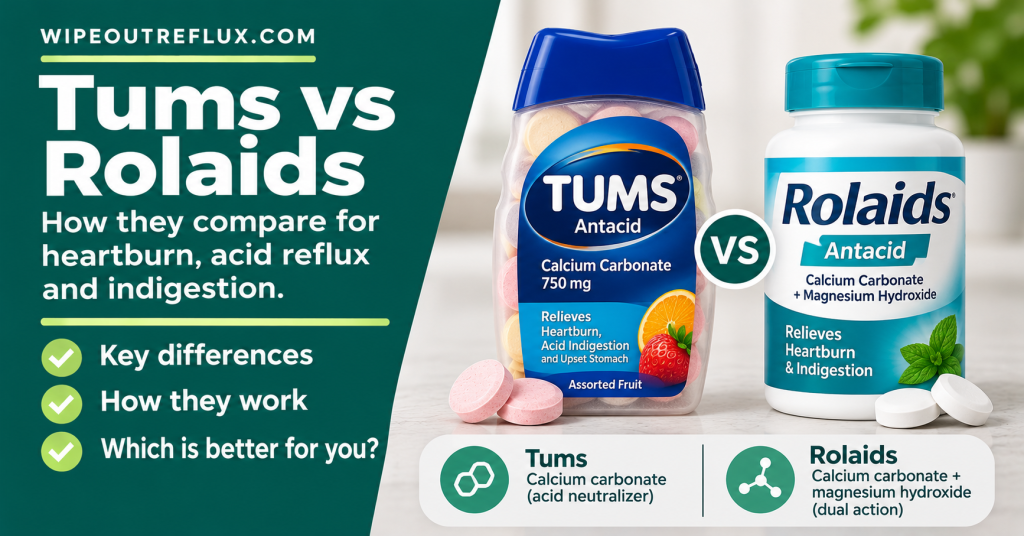
The main difference between Tums and Rolaids is that Rolaids contains two antacids and Tums contains one. Tums is calcium carbonate alone. Rolaids Ultra Strength combines calcium carbonate (1,000 mg) with magnesium hydroxide (200 mg). Both neutralize stomach acid within minutes and work about equally well for occasional heartburn. The magnesium in Rolaids adds a little extra acid-neutralizing power and tends to offset calcium’s constipating effect, but it’s a concern if you have kidney disease. For most people, the choice comes down to taste, price and how their bowels respond.
They sit side by side on every pharmacy shelf, and plenty of people assume they’re the same thing under different brands. They’re close, but not identical. Below I compare the ingredients, how they work, dosing, side effects and pregnancy, plus when neither is the right tool.
Key Takeaways
- Tums: calcium carbonate only. Ultra Strength contains 1,000 mg per tablet (400 mg of elemental calcium).
- Rolaids Ultra Strength: calcium carbonate 1,000 mg plus magnesium hydroxide 200 mg per tablet.
- Both start neutralizing acid within minutes, but the effect lasts only about an hour.
- Calcium tends to constipate and magnesium tends to loosen stools, so Rolaids may cause less constipation for some people.
- Rolaids Ultra Strength directions: chew 2 to 3 tablets as needed, no more than 7 in 24 hours, and not at the maximum dose for more than 2 weeks.
- People with kidney disease should check with a doctor before using magnesium-containing antacids like Rolaids.
- Both are commonly used in pregnancy within label limits, but check with your provider first.
- Neither stops reflux happening. For frequent heartburn, night-time reflux or silent reflux, antacids alone aren’t enough.
Tums vs Rolaids at a Glance
| Tums Ultra Strength | Rolaids Ultra Strength | |
|---|---|---|
| Active ingredients | Calcium carbonate 1,000 mg | Calcium carbonate 1,000 mg + magnesium hydroxide 200 mg |
| Elemental minerals | 400 mg calcium | 400 mg calcium + 85 mg magnesium |
| Number of antacids | One | Two |
| Onset | Minutes | Minutes |
| Duration | About an hour | About an hour |
| Bowel effect | Can constipate | More balanced (magnesium offsets constipation) |
| Kidney disease | Ask a doctor | Ask a doctor (magnesium can build up) |
| Formats | Chewables, smoothies, chews, sugar-free options | Chewables, soft chews, gummies |
Rolaids ingredients and directions are from the Rolaids Ultra Strength Drug Facts label [Rolaids Ultra Strength label]. Strengths vary across both brands’ product lines (Regular, Extra and Ultra Strength), so always check the box you’re buying.
How They Work
Both are bases that chemically neutralize hydrochloric acid already in your stomach, raising its pH. That’s why they work within minutes, and also why the effect is short-lived: once the antacid is used up, the stomach keeps producing acid.
In a controlled study measuring stomach acid after a meal, calcium carbonate started neutralizing acid within 30 minutes but lasted only about 60 minutes, while the acid reducer famotidine took about 90 minutes to start but lasted over 9 hours [Feldman, JAMA, 1996]. In a trial of 565 people treating their own heartburn episodes, an antacid relieved 62% of episodes, compared with 41% for placebo [Simon et al., American Journal of Therapeutics, 1995]. So antacids genuinely help, but they’re built for occasional, short bursts of heartburn.
Adding magnesium hydroxide gives Rolaids slightly more neutralizing capacity per tablet at the same calcium dose. In practice, most people won’t notice a difference in relief.
Which Is Better: Tums or Rolaids?
Choose Tums if:
- You have kidney disease, or have been told to avoid magnesium (check with your doctor first anyway)
- You want a sugar-free option
- You don’t tend to get constipated, or you also want the calcium
Choose Rolaids if:
- Calcium-only antacids constipate you
- You prefer the taste or the soft-chew format
Choose neither if you need relief for more than an hour or two, get heartburn several times a week, or mostly have night-time or throat symptoms. Better options for those are covered below.
Side Effects
- Constipation: more common with calcium-only Tums
- Loose stools: possible with magnesium, especially at higher doses
- Gas and burping: calcium carbonate releases carbon dioxide as it neutralizes acid. See do antacids cause burping and gas?
- Drug interactions: both can reduce the absorption of some medicines, including certain antibiotics, thyroid medication and iron. Space them at least 2 hours apart, and ask a pharmacist if you take prescription drugs.
Too much calcium
Regular heavy use of calcium carbonate from either brand can lead to milk-alkali syndrome: high blood calcium, alkalosis and kidney injury. It became a leading cause of hospital admissions for high calcium as calcium carbonate was promoted for heartburn and bone health [Beall & Scofield, Medicine, 1995]. Stay within the label limits, and count antacids toward your total calcium if you also take supplements.
Magnesium and kidney disease
The kidneys clear magnesium. With reduced kidney function, magnesium can build up to unsafe levels, so anyone with kidney disease should check with their doctor before using magnesium-containing antacids like Rolaids.
Tums vs Rolaids in Pregnancy
Heartburn is very common in pregnancy, and calcium carbonate antacids are among the most widely used treatments. Magnesium-containing antacids are generally fine occasionally, but heavy or long-term use is best avoided. Check with your provider, stay within label limits, and see can you take Tums while pregnant? and which antacids are safe in pregnancy?
When Antacids Aren’t Enough
- For longer relief: an H2 blocker like famotidine lasts many hours. Pepcid Complete combines famotidine with calcium carbonate and magnesium hydroxide, essentially Rolaids plus an acid reducer. See Pepcid AC vs Pepcid Complete.
- For night-time reflux and regurgitation: an alginate such as Gaviscon Advance forms a raft that physically blocks reflux. See Tums vs Gaviscon.
- For silent reflux (LPR): antacids don’t stop stomach contents, including pepsin, reaching the throat. Diet and alginates matter more. See the LPR diet.
- Prefer cleaner ingredients? See my Wonderbelly antacid review, which is the same calcium carbonate without dyes or talc.
For a broader overview, see what is an antacid? and my guides to Maalox and Mylanta.
When to See a Doctor
- You need antacids on more than 2 days a week, or at the maximum dose for 2 weeks
- You have difficulty swallowing, vomit blood, or pass black stools
- You have unexplained weight loss
- You have chest pain with exertion, breathlessness, sweating, or pain spreading to the arm or jaw. See heartburn or heart attack?
Conclusion
Tums and Rolaids work the same way and about equally well. Tums uses calcium carbonate alone, while Rolaids adds magnesium hydroxide, which gives slightly more neutralizing power and tends to be gentler on the bowels, but needs caution with kidney disease. Pick whichever suits your taste, budget and digestion, and remember that both are short-acting, occasional-use remedies.
If you’re reaching for either most weeks, it’s a sign your reflux needs a better plan than tablets. The biggest lever is what and when you eat. The Wipeout Diet Plan gives you a step-by-step, low-acid way to eat that reduces reflux at the source. I built it around LPR, the hardest form of reflux to control, and it works just as well for GERD and everyday heartburn.
Frequently Asked Questions
Are Tums and Rolaids the same thing?
No, but they’re similar. Both contain calcium carbonate. Rolaids also contains magnesium hydroxide, a second antacid.
Which works faster, Tums or Rolaids?
Both work within minutes because they neutralize acid directly. There’s no meaningful difference in speed.
Is Rolaids or Tums better for constipation?
Rolaids is usually less constipating, because its magnesium tends to loosen stools, offsetting the calcium.
How many Rolaids can I take in a day?
For Rolaids Ultra Strength, no more than 7 tablets in 24 hours, and not at the maximum dose for more than 2 weeks unless a doctor advises. Check the label of your specific product.
Can I take Rolaids while pregnant?
Calcium and magnesium antacids are commonly used occasionally in pregnancy, but check with your provider first and avoid heavy or long-term use.
Can I take Tums and Rolaids together?
There’s no benefit, and combining them makes it easy to exceed safe calcium limits. Choose one and follow its label.
Do Tums or Rolaids help with gas?
Standard versions don’t treat gas, and calcium carbonate can cause burping. Some versions add simethicone for gas, so check the label.
Research & References
- The US Drug Facts label for Rolaids Ultra Strength (calcium carbonate 1,000 mg and magnesium hydroxide 200 mg per tablet), including the 7-tablet daily maximum and 2-week limit [Rolaids Ultra Strength label].
- A randomized, double-blind crossover trial finding that calcium carbonate neutralized acid within 30 minutes but lasted about 60 minutes, compared with over 9 hours for famotidine [Feldman, JAMA, 1996].
- A randomized, placebo-controlled trial of 565 people with episodic heartburn finding that an antacid relieved 62% of episodes, compared with 41% for placebo [Simon et al., American Journal of Therapeutics, 1995].
- A report showing that milk-alkali syndrome from calcium carbonate became a leading cause of hospitalization for hypercalcemia [Beall & Scofield, Medicine, 1995].

David Gray
12 years living with LPR · Consultant & researcher
I've lived with LPR for twelve years — the misdiagnoses, the PPI courses that did nothing, the slow work of figuring out what actually helps. Wipeout Reflux is where I translate the research into plain terms for people stuck in the same place. Every claim here is sourced to peer-reviewed work, and I consult one-to-one with LPR sufferers.