
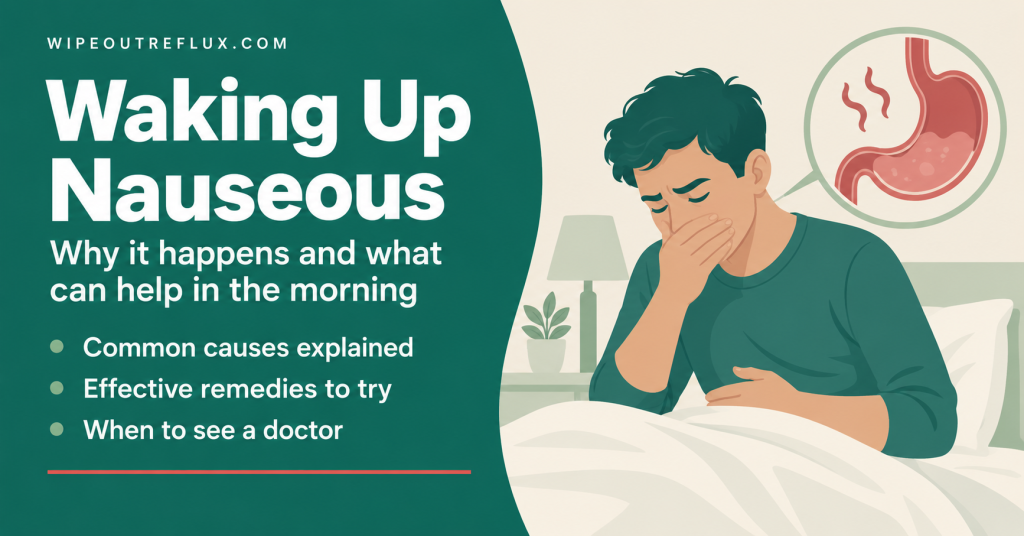
Waking up nauseous usually comes down to something that happened in your stomach overnight. The most common causes are reflux while you were lying flat, an empty stomach and low blood sugar after a long fast, swallowed mucus from post nasal drip, anxiety, alcohol, poor sleep, and medications taken late in the day. In women, pregnancy is the first thing to rule out.
The cause that gets mentioned least is nighttime reflux. When you lie flat, stomach contents can creep up into the esophagus and throat for hours without the heartburn most people expect. You wake up queasy, often with a sour taste, a thick throat or a dry cough, and assume it’s something you ate. If your nausea is worst in the first hour after waking and settles as the morning goes on, reflux deserves a serious look.
The good news is that most morning nausea responds to a few changes in the evening, not the morning. Here’s how to work out which cause fits you and what to do about it.
Key Takeaways
- Morning nausea is common and usually harmless, but it nearly always has a cause you can find and fix.
- Nighttime reflux is a leading and often overlooked cause. Around 45% of people with GERD get nighttime symptoms, and many have no heartburn at all.
- An empty stomach after an overnight fast, low blood sugar and swallowed post nasal drip all make nausea worse first thing.
- Pregnancy causes nausea in about 70% of women, and despite the name “morning sickness,” it was morning-only in under 2% in one study.
- Waking up nauseous with a headache most often points to alcohol, dehydration, migraine, sleep apnea or caffeine withdrawal.
- If you’re not pregnant, reflux, anxiety, medications, slow stomach emptying and regular cannabis use are the main suspects.
- The fix usually happens the night before: eat earlier and lighter, raise the head of your bed, sleep on your left side and cut back on alcohol.
- Vomiting blood, black stools, weight loss, trouble swallowing or severe abdominal pain need prompt medical attention.
Why Nausea Is Often Worst First Thing in the Morning
Several things line up overnight to make mornings the most likely time to feel sick:
- You’ve been lying flat for hours. Gravity normally helps keep stomach contents where they belong. Lying down removes that help, so reflux reaches higher and lingers longer.
- You swallow far less while asleep. Swallowing and saliva are your main defenses for clearing reflux from the esophagus. Both drop dramatically during sleep.
- Your stomach is empty. After 8 to 12 hours without food, there’s nothing to buffer stomach acid, and an empty stomach can feel queasy in its own right.
- Your blood sugar is at its lowest. A long overnight fast can leave some people shaky and nauseous on waking.
- Your body is switching gears. Stress hormones naturally rise in the morning to wake you up, and standing up after a night lying down shifts everything in your stomach at once.
I’ve written a full explanation of the reflux side of this in why acid reflux is worse in the morning.
Common Causes of Waking Up Nauseous
1. Nighttime reflux (including silent reflux)
This is the cause I’d put at the top of the list, and it rarely gets a proper mention. Nighttime reflux is common. In one US survey, 27% of adults had GERD, nearly half of them had nighttime symptoms, and those with nighttime symptoms reported more severe disease overall [Dean et al., Digestive Diseases and Sciences, 2010].
Nausea is easy to miss as a reflux symptom because people expect heartburn. But reflux doesn’t always burn. Silent reflux (LPR) reaches the throat with little or no heartburn and shows up instead as throat clearing, a lump feeling, hoarseness, a cough and, for many people, nausea. Reflux is also closely tied to slow stomach emptying. A meta-analysis found delayed gastric emptying is significantly linked with nausea, vomiting and early fullness [Vijayvargiya et al., Gut, 2019]. Food that sits in the stomach overnight is more likely to reflux and more likely to leave you queasy.
Clues that point to reflux:
- A sour, bitter or metallic taste on waking (see bitter or metallic taste from silent reflux)
- A thick, mucus-y throat, hoarse voice or cough first thing
- Burping, bloating or a full feeling in the upper stomach
- It’s worse after a late, large, fatty or spicy dinner, or after wine
- It eases within an hour or two of getting up
- You sometimes wake up coughing or choking at night (see waking up choking from acid reflux)
I go deeper into how reflux causes nausea in silent reflux and nausea, and the wider picture of nighttime symptoms in acid reflux at night.
2. An empty stomach and low blood sugar
Some people feel sick when they haven’t eaten, and overnight is the longest fast of the day. Stomach acid with nothing to work on can cause a gnawing, queasy feeling, and low blood sugar can add shakiness, sweating and lightheadedness. This is especially likely if you skip dinner, eat very early, exercise in the evening, drink alcohol, or have diabetes and take insulin or certain tablets.
A small, bland snack a little earlier in the evening, or a few plain crackers as soon as you wake, often helps. I explain the empty-stomach side of reflux in why you get heartburn when you haven’t eaten.
3. Post nasal drip
Mucus from your nose and sinuses drains down the back of your throat all night, and you swallow it. A stomach full of mucus can feel nauseous, and thick mucus in the throat can trigger gagging when you brush your teeth or clear your throat in the morning. Allergies, colds and sinus problems are common causes, but silent reflux can produce the same thick throat mucus. See silent reflux and post nasal drip.
4. Pregnancy
If there’s any chance you could be pregnant, take a test. Nausea is one of the earliest signs, often starting around week 6. A large meta-analysis found almost 70% of pregnant women experience nausea and vomiting [Einarson et al., Journal of Population Therapeutics and Clinical Pharmacology, 2013]. The name “morning sickness” is misleading: in a prospective study, nausea was confined to the morning in only 1.8% of women and lasted all day in 80% [Lacroix et al., American Journal of Obstetrics and Gynecology, 2000]. Reflux also becomes much more common in pregnancy, which I cover in acid reflux and pregnancy.
5. Anxiety and stress
The gut and the brain are tightly connected. If you wake up already thinking about the day ahead, the stress response can slow your stomach and trigger nausea before you’ve even got out of bed. Morning anxiety often comes with a racing heart, a churning stomach, loss of appetite and a feeling of dread that eases once you’re up and busy. Stress can also make reflux worse, which I explain in can stress cause acid reflux.
6. Alcohol
Alcohol irritates the stomach lining, relaxes the valve at the top of the stomach so reflux is more likely, dehydrates you and disturbs blood sugar. Even two or three drinks in the evening can leave you queasy the next morning, without anything you’d call a hangover. See does quitting alcohol help acid reflux.
7. Poor sleep and sleep apnea
Short or broken sleep can leave you nauseous on its own. Obstructive sleep apnea, where your airway repeatedly closes during the night, is particularly worth knowing about because it’s linked to both reflux and morning symptoms. In a large study, frequent nighttime reflux was nearly twice as common in people with sleep apnea as in the general population, and CPAP treatment reduced it [Shepherd et al., Journal of Sleep Research, 2011]. Loud snoring, gasping at night, daytime sleepiness and morning headaches are the tell-tale signs. More in sleep apnea and acid reflux.
8. Medications and supplements
Anything you take in the evening can make you nauseous the next morning, especially if you took it on an empty stomach. Common culprits include:
- Iron, zinc and multivitamins (see do iron supplements cause heartburn)
- Antibiotics
- Painkillers such as ibuprofen, aspirin and opioids
- Some antidepressants
- GLP-1 weight-loss drugs like Ozempic, Wegovy and Mounjaro, which slow stomach emptying (see does Ozempic cause heartburn and reflux)
- Diabetes medications that can cause low blood sugar overnight
Don’t stop a prescribed medication on your own. Ask your doctor or pharmacist whether changing the timing, taking it with food or switching to something else would help.
9. Slow stomach emptying (gastroparesis)
If your stomach empties too slowly, dinner can still be sitting there in the morning. Nausea, early fullness, bloating and sometimes vomiting undigested food hours after eating are the classic signs. It’s more common with diabetes, after viral infections and with some medications. See gastroparesis and acid reflux.
10. Regular cannabis use
This one surprises people because cannabis is often used to relieve nausea. But heavy, long-term use can cause cannabinoid hyperemesis syndrome: repeated bouts of nausea and vomiting, often worst in the morning. In a systematic review of 211 cases, nearly all patients used cannabis at least weekly, over 90% found relief from hot showers or baths, and almost 97% of those who stopped using cannabis saw their symptoms resolve completely [Sorensen et al., Journal of Medical Toxicology, 2017].
11. Other causes
- Gastritis and stomach ulcers, which can cause nausea and burning pain on an empty stomach. See stomach ulcer or acid reflux.
- Functional dyspepsia, ongoing indigestion and nausea with no visible cause on tests. See functional dyspepsia.
- Inner ear problems such as vertigo, which can be set off by rolling over or sitting up in bed.
- Dehydration, especially after a hot night, exercise or alcohol.
- Bile reflux, which can cause nausea and bitter, yellow-green vomit. See bile reflux vs acid reflux.
Waking Up Nauseous Every Morning
When it happens every single morning, think about what happens every single night. A daily pattern points toward something consistent:
- Your dinner routine. Eating within three hours of bed is strongly linked with reflux. One study found people who went to bed less than three hours after dinner had over seven times the odds of GERD [Fujiwara et al., American Journal of Gastroenterology, 2005].
- A nightly drink, medication or supplement.
- Pregnancy, if it’s possible.
- Ongoing reflux, post nasal drip or sleep apnea.
- Daily cannabis use.
- Persistent stress or anxiety, especially if it’s worse on workdays than weekends.
Try keeping a simple diary for two weeks: what time you ate, what you ate and drank, what you took, how you slept, and how you felt on waking. The pattern usually jumps out.
Waking Up Nauseous With a Headache
Nausea and headache together on waking narrow the list:
- Alcohol and dehydration are the most common by far.
- Migraine often starts in the early morning and commonly brings nausea and sensitivity to light.
- Sleep apnea. In a study of over 1,100 sleep-clinic patients, about three in ten reported morning headaches [Spałka et al., Brain Sciences, 2020].
- Caffeine withdrawal, if you normally drink coffee and slept late or cut back.
- Poor or too little sleep, or sleeping much longer than usual.
- Low blood sugar.
- High blood pressure, occasionally.
Important: if other people in your home also wake up with headaches and nausea, or the symptoms ease when you leave the house, get out and get checked for carbon monoxide. It’s rare, but it can be fatal. A carbon monoxide alarm is the best protection.
Waking Up Nauseous in the Middle of the Night
Being woken by nausea, rather than noticing it when you get up, has a slightly different list of causes:
- Reflux, especially after a late meal. Often comes with coughing, a sour taste or a burning throat.
- Stomach or duodenal ulcers, which classically cause burning upper-abdominal pain a few hours after eating or in the early hours.
- Gallbladder pain, a steady, severe pain under the right ribs or in the upper middle abdomen, often after a fatty meal and sometimes at night.
- Low blood sugar, particularly in people with diabetes.
- Nighttime panic attacks, which wake you suddenly with a pounding heart, sweating, nausea and fear.
- A stomach bug or food poisoning, if it comes on suddenly with vomiting or diarrhea.
To reduce nighttime reflux, sleep on your left side with your head raised. Lying on your right side tends to make reflux worse. See best sleeping position for silent reflux.
Waking Up Nauseous and Sweaty
Nausea with sweating on waking suggests your body has gone into a stress response. The common causes are:
- Low blood sugar, especially with shakiness, hunger or confusion. If you have diabetes, check your glucose.
- A panic attack or nightmare.
- Fever or infection.
- Alcohol withdrawal or a hangover.
- Hormonal changes, such as menopause.
- Severe reflux or pain, which can trigger sweating.
If nausea and sweating come with chest pain or pressure, pain spreading to the arm, jaw or back, or breathlessness, call emergency services. Heart attacks can present this way, particularly in women and older adults. See heartburn or heart attack.
Waking Up Nauseous but Not Pregnant
If you’ve had a negative test, or pregnancy isn’t possible, here’s where I’d look, roughly in order:
- Reflux. Especially if you also have a sour taste, throat symptoms, burping or a late-dinner habit. Very often there’s no heartburn.
- Anxiety or stress. Particularly if it’s worse on workdays.
- Alcohol, medications or supplements taken the evening before.
- Hormones. Many women notice nausea around their period, and hormonal contraception can cause nausea too. See acid reflux and your period.
- Empty stomach and low blood sugar.
- Post nasal drip.
- Slow stomach emptying, including from GLP-1 drugs.
- Regular cannabis use.
A negative home test taken too early can miss a pregnancy, so if your period is late, retest a few days later.
How to Stop Waking Up Nauseous
The night before
- Finish eating about three hours before bed. This one change makes the biggest difference for reflux-related nausea. See how long before bed you should stop eating.
- Keep dinner moderate in size and low in fat. Large, fatty meals empty slowly and are the most likely to reflux.
- Cut back on evening alcohol, coffee, chocolate, mint and spicy food.
- Raise the head of your bed by 6 to 8 inches on risers or with a wedge, rather than stacking pillows. See how to raise the head of your bed.
- Sleep on your left side.
- Drink enough water through the day so you don’t wake dehydrated.
- Check the timing of medications and supplements with your pharmacist.
- Wind down properly if anxiety is part of it: no work email in bed, and a consistent bedtime.
If reflux is behind your nausea, the evening routine is only half of it. What you eat across the whole day matters, and that’s what the Wipeout Diet Plan is built to sort out.
When you wake up
- Get up slowly. Sit on the edge of the bed for a minute before standing.
- Sip water, room temperature or warm rather than ice cold.
- Eat something small and bland soon after waking: plain crackers, toast, oatmeal or a banana. An empty stomach often makes nausea worse. See my breakfast recipes for acid reflux for gentle options.
- Try ginger, such as a weak ginger tea. Keep the amount small if you have reflux. See is ginger good for acid reflux.
- Get some fresh air and avoid strong smells.
- Brush your teeth gently, or after breakfast if brushing makes you gag.
- Avoid coffee on an empty stomach until the nausea settles.
When to See a Doctor
See a doctor if morning nausea lasts more than a couple of weeks without an obvious cause, or if you have any of these:
- Vomiting blood or material that looks like coffee grounds
- Black, tarry stools
- Unexplained weight loss
- Difficulty swallowing, or food sticking
- Severe or persistent abdominal pain
- Vomiting that won’t stop, or you can’t keep fluids down
- Signs of dehydration, such as very dark urine or dizziness
- Severe vomiting in pregnancy
- A severe or sudden headache, confusion, stiff neck or vision changes
- Chest pain, breathlessness or pain spreading to your arm or jaw (call emergency services)
Conclusion
Waking up nauseous is your body telling you something happened overnight. For many people, that something is reflux: hours lying flat, a stomach still working on a late dinner, little swallowing to clear it, and no heartburn to give it away. Pregnancy, an empty stomach, post nasal drip, anxiety, alcohol, poor sleep, medications and regular cannabis use are the other common causes. In most cases, the fix happens the night before rather than the morning after.
If you think reflux is behind your mornings, the Wipeout Diet Plan is the place I’d start. It’s my complete, step-by-step plan for calming reflux through what you eat, what you drink and when, including the evening habits that matter most for nighttime symptoms. It was designed first for silent reflux, where nausea and throat symptoms often turn up without heartburn, but because it works on the same underlying causes, it works equally well for GERD and classic heartburn.
For a simpler companion, the Wipeout Food Reference Guide is the essential list of foods and drinks that are safe for acid reflux and LPR, with their pH values, so you can plan a reflux-friendly dinner and wake up feeling better.
Frequently Asked Questions
Why do I wake up nauseous every morning?
The most common reasons are nighttime reflux, an empty stomach, swallowed post nasal drip, anxiety, alcohol, poor sleep and medications taken the evening before. In women, pregnancy should be ruled out first. A two-week diary of dinner times, drinks, medications and sleep usually reveals the pattern.
Can acid reflux make you nauseous in the morning?
Yes. Lying flat overnight lets reflux reach higher and stay longer, and many people get nausea, a sour taste or throat symptoms rather than heartburn. Nausea from reflux is typically worst on waking and eases within an hour or two of getting up.
Why do I wake up nauseous and with a headache?
The usual causes are alcohol, dehydration, migraine, sleep apnea, caffeine withdrawal and poor sleep. If others in your home have the same symptoms, leave and get checked for carbon monoxide straight away.
Why do I wake up nauseous if I’m not pregnant?
Reflux, anxiety, alcohol, medications, hormonal changes around your period, an empty stomach, post nasal drip, slow stomach emptying and regular cannabis use are the main causes outside pregnancy.
Should I eat if I wake up nauseous?
Usually, yes. A small amount of something bland, such as plain crackers, toast or oatmeal, often settles nausea that’s made worse by an empty stomach. Avoid coffee, fatty food and acidic juices until it passes.
Can anxiety cause nausea when you wake up?
Yes. The stress response naturally peaks in the morning and can slow the stomach and trigger nausea, especially if you wake up already worrying. It often eases once you’re up and busy, and tends to be worse on stressful days.
What is the best sleeping position to avoid morning nausea?
If reflux is involved, sleep on your left side with the head of your bed raised by 6 to 8 inches. Lying on your right side or flat on your back tends to make nighttime reflux worse.
Research & References
- [Dean et al., Digestive Diseases and Sciences, 2010] — US survey of 2,603 adults finding 27% had GERD, 45% of them had nighttime symptoms, and nighttime GERD was linked with greater disease severity.
- [Vijayvargiya et al., Gut, 2019] — Systematic review and meta-analysis showing delayed gastric emptying is significantly associated with nausea, vomiting, abdominal pain and early fullness.
- [Einarson et al., Journal of Population Therapeutics and Clinical Pharmacology, 2013] — Meta-analysis of 79 studies finding nausea and vomiting affect about 69% of pregnancies worldwide.
- [Lacroix et al., American Journal of Obstetrics and Gynecology, 2000] — Prospective study finding 74% of pregnant women had nausea, which was limited to mornings in only 1.8% and lasted all day in 80%.
- [Shepherd et al., Journal of Sleep Research, 2011] — Frequent nighttime reflux was more common in people with obstructive sleep apnea than the general population, rose with apnea severity, and improved with CPAP.
- [Sorensen et al., Journal of Medical Toxicology, 2017] — Systematic review of cannabinoid hyperemesis syndrome; most patients used cannabis at least weekly, and 96.8% of those who stopped had complete symptom resolution.
- [Fujiwara et al., American Journal of Gastroenterology, 2005] — Case-control study finding a dinner-to-bed time of under three hours was strongly associated with GERD.
- [Spałka et al., Brain Sciences, 2020] — Analysis of 1,131 sleep-clinic patients finding roughly three in ten reported morning headaches.

David Gray
12 years living with LPR · Consultant & researcher
I've lived with LPR for twelve years — the misdiagnoses, the PPI courses that did nothing, the slow work of figuring out what actually helps. Wipeout Reflux is where I translate the research into plain terms for people stuck in the same place. Every claim here is sourced to peer-reviewed work, and I consult one-to-one with LPR sufferers.