
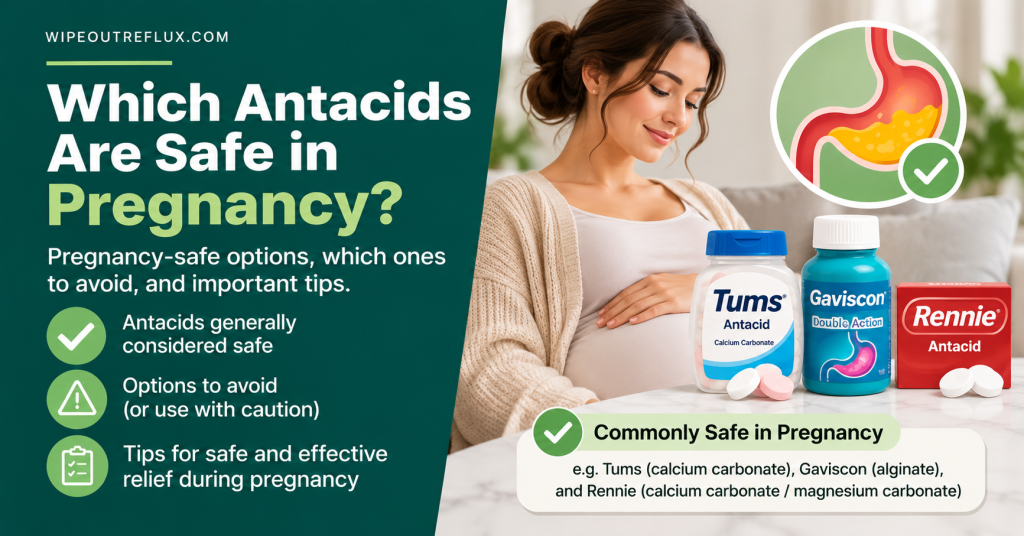
The antacids generally considered safe in pregnancy are calcium carbonate (Tums, Rolaids), alginate products like Gaviscon, and magnesium and aluminum hydroxide combinations (Maalox, Mylanta) used at label doses for short periods. These are the first medicines doctors and midwives suggest for pregnancy heartburn, because very little of them is absorbed into your bloodstream.
The ones to avoid are sodium bicarbonate (baking soda, Alka-Seltzer), magnesium trisilicate for regular or long-term use, and Pepto-Bismol, because its active ingredient is related to aspirin.
Below I’ll go through each type, how they compare, and when it’s time to move beyond antacids.
Key Takeaways
- Heartburn affects roughly 30 to 50% of pregnancies and is usually worst in the third trimester.
- Calcium carbonate antacids are often the preferred antacid in pregnancy, as long as you stay within the label’s pregnancy limit.
- Alginate raft products like Gaviscon are licensed for pregnancy in the UK and have been studied in pregnant women.
- Magnesium and aluminum antacids are acceptable for short-term use at normal doses.
- Avoid sodium bicarbonate, Alka-Seltzer, Pepto-Bismol and long-term magnesium trisilicate.
- Take antacids at least 2 hours away from iron supplements and prenatal vitamins.
- If antacids aren’t enough, sucralfate, famotidine and then a PPI are the usual next steps, with your doctor’s input.
Why Antacids Are the First Choice in Pregnancy
Pregnancy heartburn is driven by two things: progesterone relaxing the valve between your stomach and esophagus, and your growing baby pushing up on your stomach. Reviews estimate it affects 30 to 50% of pregnancies, with up to 80% affected in some groups [Richter, Alimentary Pharmacology & Therapeutics, 2005].
The standard approach is to start gently and step up only if needed. That means diet and lifestyle changes first, then antacids or alginates, then acid reducers. Antacids sit near the bottom of that ladder because they act locally in the stomach, they’re well studied, and they’ve been used by pregnant women for decades.
The evidence base is smaller than you might expect, though. A Cochrane review found that women given medication for pregnancy heartburn were more likely to get complete relief than those given nothing or a placebo, but there were too few large trials to say which medicine works best [Phupong & Hanprasertpong, Cochrane Database of Systematic Reviews, 2015]. So the recommendations below are based on safety and experience as much as on head-to-head trials.
Antacids That Are Considered Safe in Pregnancy
1. Calcium carbonate (Tums, Rolaids)
Calcium carbonate is often the go-to. A recent evidence review recommends calcium-containing antacids as the preferred antacid in pregnancy [Altuwaijri, Medicine, 2022]. It works within minutes, and the calcium also helps you reach the 1,000 mg a day you need during pregnancy.
The key is the dose. Tums labels carry a separate, lower maximum for pregnancy. Very high intakes, especially combined with lots of dairy and a calcium-rich prenatal vitamin, have caused milk-alkali syndrome in pregnant women [Kolnick et al., Journal of General Internal Medicine, 2011]. I’ve broken down exactly how many tablets you can take of each strength in my guide to taking Tums while pregnant.
Rolaids combines calcium carbonate with magnesium hydroxide. The same principle applies: follow the label and check with your pharmacist if you’re using it daily.
2. Alginates (Gaviscon)
Alginates are often the best fit for pregnancy reflux. Instead of just neutralizing acid, they form a gel raft that floats on top of your stomach contents and physically blocks reflux. That’s particularly useful after meals and at bedtime, which is when pregnancy reflux tends to be worst.
Alginate products are licensed for pregnancy in the UK and have been tested in pregnant women. In a study of 144 pregnant women with heartburn, Liquid Gaviscon was rated as effective and was well tolerated, with no safety concerns linked to the treatment [Strugala et al., ISRN Obstetrics and Gynecology, 2012]. A randomized trial in 100 pregnant women found an alginate worked just as well as a magnesium and aluminum antacid gel, with no difference in side effects or pregnancy and newborn outcomes [Meteerattanapipat & Phupong, Scientific Reports, 2017].
One thing to know if you’re in the US: most American Gaviscon products are mainly aluminum and magnesium antacids, which aren’t the same as UK formulas like Gaviscon Advance. I explain the difference in how to get Gaviscon Advance in the USA, and how rafts work in alginates for acid reflux.
3. Magnesium and aluminum hydroxide (Maalox, Mylanta)
Liquid combinations of magnesium hydroxide and aluminum hydroxide are another accepted option at normal doses for short periods. The magnesium tends to loosen stools and the aluminum tends to constipate, so they balance each other out. That’s handy in pregnancy, where constipation is already common.
The main caution is long-term, heavy use, especially if you have kidney problems, as minerals can build up. Products also change their formulas, so check the active ingredients. More in my guides to Maalox and Mylanta.
Antacids to Avoid in Pregnancy
Sodium bicarbonate (baking soda) and Alka-Seltzer
Sodium bicarbonate is absorbed into your bloodstream and can cause metabolic alkalosis and fluid overload, both of which are a concern for mother and baby [Richter, Alimentary Pharmacology & Therapeutics, 2005]. It’s also very high in sodium, which isn’t helpful if you’re prone to swelling or high blood pressure. Original Alka-Seltzer contains aspirin as well, which is generally avoided in pregnancy unless your doctor prescribes it. See baking soda for heartburn.
Magnesium trisilicate
Long-term, high-dose use of magnesium trisilicate in pregnancy has been linked to kidney stones, low muscle tone and breathing problems in babies [Richter, Alimentary Pharmacology & Therapeutics, 2005]. It’s more common in UK products than US ones. Occasional use is unlikely to be a problem, but it’s best avoided as a regular remedy.
Pepto-Bismol (bismuth subsalicylate)
Pepto-Bismol isn’t really an antacid. Its active ingredient, bismuth subsalicylate, is a salicylate, the same family as aspirin, which is usually avoided in pregnancy, particularly later on. It’s also not very effective for heartburn. I explain the difference in what is an antacid (and what isn’t).
Antacid Safety Tips for Pregnancy
- Stick to the pregnancy dose on the label, and don’t use the maximum dose for more than two weeks without advice.
- Separate antacids from iron and prenatal vitamins by at least 2 hours, as they can block iron absorption.
- Separate them from thyroid medication by about 4 hours if you take levothyroxine.
- Count your calcium from antacids, supplements and food if you use calcium carbonate regularly.
- Use an alginate after meals and before bed, and a calcium antacid for quick relief during the day, if you need both.
- Tell your midwife or doctor if you have kidney disease, high blood pressure or a history of kidney stones.
What to Try When Antacids Aren’t Enough
Change what and when you eat
Antacids are a band-aid. They mop up acid for an hour or so, but they don’t stop the next episode. The safest way to cut down on reflux in pregnancy is to reduce how often it happens in the first place:
- Eat smaller, more frequent meals.
- Stop eating 2 to 3 hours before bed. See how long before bed you should stop eating.
- Raise the head of your bed. Here’s how to raise the head of your bed.
- Sleep on your left side.
- Cut back on fatty and fried food, chocolate, citrus, tomatoes, spicy food, caffeine and fizzy drinks.
If you want a clear plan rather than a list of things to avoid, the Wipeout Diet Plan shows you exactly which gentle, low-acid foods to build your meals around.
Sucralfate
Sucralfate coats and protects the lining of the esophagus and stomach and is barely absorbed. In the Cochrane review, women given sucralfate were more likely to get complete heartburn relief than those given only diet and lifestyle advice [Phupong & Hanprasertpong, Cochrane Database of Systematic Reviews, 2015]. It needs a prescription. More in sucralfate for reflux.
Famotidine (Pepcid)
If symptoms are still frequent, an H2 blocker like famotidine is usually the next step. It reduces acid production for up to 12 hours and has a good safety record in pregnancy. It’s often taken at night, as I explain in why take famotidine at night.
PPIs like omeprazole
For severe or stubborn symptoms, a doctor may prescribe a proton pump inhibitor. Omeprazole has the most pregnancy safety data of the PPIs. I’ve covered the evidence in is omeprazole safe in pregnancy.
When Heartburn in Pregnancy Needs Checking
Get medical advice promptly if upper abdominal pain comes with a severe headache, vision changes, sudden swelling of your face, hands or feet, pain under your right ribs, vomiting, or you just feel very unwell. These can be signs of pre-eclampsia, which can feel a lot like heartburn and won’t respond to antacids. Also speak to your midwife or doctor if you have difficulty swallowing, can’t keep food down, or are losing weight.
For a broader look at managing symptoms, see my guide to acid reflux and pregnancy.
Conclusion
The antacids generally considered safe in pregnancy are calcium carbonate (Tums, Rolaids), alginates (Gaviscon) and magnesium and aluminum combinations (Maalox, Mylanta), used at label doses for short periods. Calcium carbonate is often the preferred antacid, and alginates are a great choice after meals and at night because they physically block reflux. Avoid sodium bicarbonate, Alka-Seltzer, Pepto-Bismol and regular magnesium trisilicate, keep antacids away from your iron and prenatal vitamins, and stay within the pregnancy limits on the label.
If you’re reaching for antacids every day, though, the real goal is fewer reflux episodes, not more tablets. In pregnancy, the safest place to start is what you eat and when you eat it, because diet changes carry no risk for your baby and tend to help more as your pregnancy goes on.
That’s exactly what the Wipeout Diet Plan helps with. I built it first and foremost for LPR, the harder-to-treat throat-based form of reflux, but because it targets the same underlying mechanisms, it works just as well for the classic heartburn of pregnancy. It gives you a clear, step-by-step way to eat that calms reflux without adding medication, which is exactly what most people want while they’re pregnant. Once your meals are working for you, you’ll likely find you need antacids far less often.
Frequently Asked Questions
Which antacid is safest during pregnancy?
Calcium carbonate antacids like Tums and alginates like Gaviscon are generally considered the safest options. Calcium carbonate is often the preferred antacid, as long as you stay within the label’s pregnancy limit. Alginates are a good choice after meals and at night.
Is Gaviscon safe during pregnancy?
Yes, alginate products like Gaviscon are licensed for use in pregnancy in the UK and have been studied in pregnant women with good results. US Gaviscon formulas differ from UK ones, so check the active ingredients and ask your pharmacist if unsure.
Can I take Maalox or Mylanta while pregnant?
Magnesium and aluminum hydroxide combinations are generally considered acceptable for short-term use at normal doses. Avoid heavy, long-term use, and check with your doctor if you have kidney problems.
Which antacids should I avoid when pregnant?
Avoid sodium bicarbonate (baking soda), Alka-Seltzer, Pepto-Bismol and regular use of magnesium trisilicate. Sodium bicarbonate can cause fluid and electrolyte problems, and Pepto-Bismol and Alka-Seltzer contain salicylates related to aspirin.
Can antacids affect my prenatal vitamins?
Yes. Antacids can reduce how much iron you absorb from your prenatal vitamin or iron supplement. Take them at least 2 hours apart.
Are antacids safe while breastfeeding?
Calcium, magnesium, aluminum and alginate antacids are generally considered compatible with breastfeeding, as very little is absorbed. Pregnancy heartburn usually settles soon after birth, so many people stop needing them altogether.
How often can I take antacids while pregnant?
Follow the label and its pregnancy limit. If you need antacids most days for more than two weeks, speak to your midwife or doctor about stepping up to another treatment rather than taking more antacids.
Research & References
- [Richter, Alimentary Pharmacology & Therapeutics, 2005] — Review of heartburn management in pregnancy covering its prevalence, the step-up treatment approach, and cautions around sodium bicarbonate and long-term magnesium trisilicate.
- [Phupong & Hanprasertpong, Cochrane Database of Systematic Reviews, 2015] — Systematic review finding medication improved complete heartburn relief in pregnancy compared with placebo or no treatment, including sucralfate versus diet and lifestyle advice, but with too few large trials to rank treatments.
- [Altuwaijri, Medicine, 2022] — Evidence-based review of GERD treatment in pregnancy recommending calcium-containing antacids as the preferred antacid.
- [Kolnick et al., Journal of General Internal Medicine, 2011] — Case report and literature review of milk-alkali syndrome in pregnancy caused by excessive calcium carbonate antacid and calcium intake.
- [Strugala et al., ISRN Obstetrics and Gynecology, 2012] — Multicentre study of 144 pregnant women assessing the safety and efficacy of Liquid Gaviscon for pregnancy heartburn.
- [Meteerattanapipat & Phupong, Scientific Reports, 2017] — Randomized double-blind trial in pregnant women finding an alginate reflux suppressant was as effective as a magnesium-aluminum antacid gel, with no differences in side effects or pregnancy outcomes.

David Gray
12 years living with LPR · Consultant & researcher
I've lived with LPR for twelve years — the misdiagnoses, the PPI courses that did nothing, the slow work of figuring out what actually helps. Wipeout Reflux is where I translate the research into plain terms for people stuck in the same place. Every claim here is sourced to peer-reviewed work, and I consult one-to-one with LPR sufferers.