
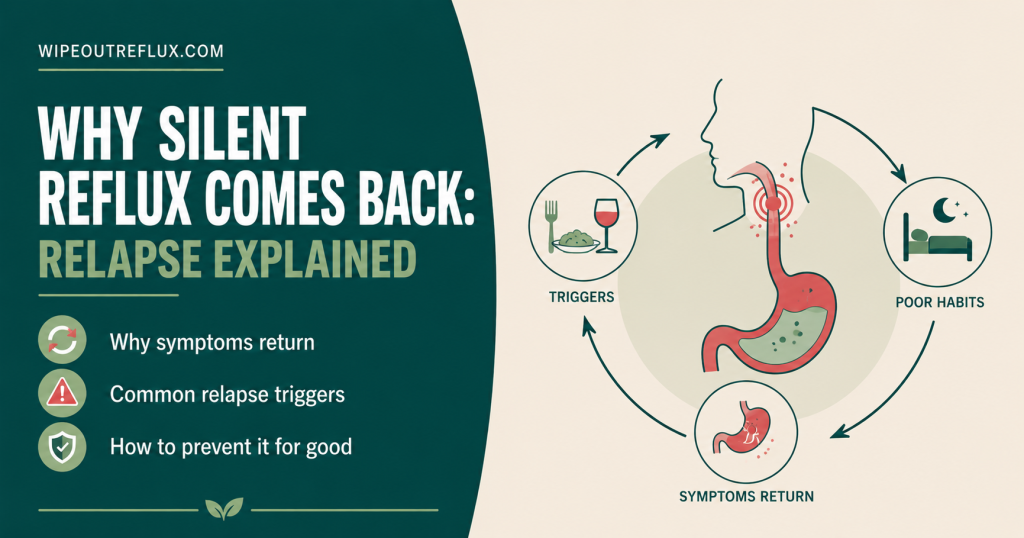
If your silent reflux keeps coming back just when you thought you’d beaten it, you’re not doing anything wrong — you’re running into the nature of the condition. Silent reflux (LPR) is often a recurring or chronic problem rather than a one-off, and most relapses come down to a single theme: the symptoms were suppressed, but the underlying cause was never fixed.
The classic pattern looks like this. You start medication or clean up your diet, the throat clearing and hoarseness fade, you feel better, so you ease off — and within weeks the symptoms creep back, sometimes worse than before. That isn’t bad luck. It’s what happens when you remove the treatment before you’ve removed the reason your body was refluxing in the first place.
Here’s why silent reflux relapses, the specific traps that trigger it, and how to break the cycle so it stays gone.
Key Takeaways
- Silent reflux is frequently a recurrent or chronic condition — relapse is common and doesn’t mean you failed.
- The biggest reason it comes back is that acid-suppressing medication treats the symptom, not the cause: stop the drug and the underlying reflux is still there.
- Stopping PPIs, especially abruptly, can trigger acid rebound — a surge of extra acid that brings symptoms roaring back and makes relapse feel worse.
- Pepsin lingering in the throat can reactivate with each new acid exposure, so symptoms return even after a quiet spell.
- LPR tissue heals slowly, over months, so stopping treatment as soon as you feel better often means stopping before you’ve actually healed.
- Slipping back into old trigger foods, late meals and habits reliably reignites reflux that diet and lifestyle had been controlling.
- The durable fix is addressing the root cause — diet and lifestyle that reduce reflux itself — and keeping those changes long after symptoms settle.
Silent reflux is often recurrent by nature
The first thing to understand is that relapse isn’t unusual — it’s built into how LPR behaves. It’s not like an infection you clear once and forget. For many people it’s a condition that flares, settles, and flares again, and researchers now formally divide it into acute, recurrent and chronic forms.
In a prospective study following LPR patients over the mid-to-long term, only around a third never relapsed after successful treatment, while nearly 40% had one or more recurrences a year and roughly another third followed a chronic course Lechien et al., European Archives of Oto-Rhino-Laryngology, 2022. So if your silent reflux symptoms keep returning, you’re firmly in the majority. The encouraging flip side of that same research: recurrences were generally well controlled again with diet and treatment. Relapse is common, but it’s manageable — and it doesn’t mean the condition is permanent or untreatable.
The main reason: treating the symptom, not the cause
Here’s the heart of it. Most reflux treatment — especially PPIs and other acid suppressants — works by reducing the acid in your stomach. That can ease symptoms, but it does nothing about why you’re refluxing: a weak valve letting stomach contents escape upward. The reflux is still happening; it’s just less acidic while the drug is on board.
So when you stop, the reflux is exactly as it was before, and the symptoms return. Nothing was cured — it was paused. This is a particularly big deal in silent reflux, where acid suppression often underperforms even while you’re taking it, which is a whole story in itself: why PPIs so often don’t work for LPR. If your reflux medication doesn’t seem to be working or the moment you stop it everything comes back, this mechanism is usually why.
Acid rebound: why stopping medication backfires
There’s a second, sharper reason relapse can feel dramatic when you come off acid-suppressing drugs: acid rebound. When you suppress stomach acid for weeks, your body compensates by ramping up its acid-producing machinery. Take the drug away and, for a while, you produce more acid than you did to begin with.
This is well demonstrated: in a randomized, placebo-controlled trial, healthy volunteers who had never had reflux developed heartburn, regurgitation and acid symptoms after simply stopping a PPI they’d taken for eight weeks — the drug induced the very symptoms it treats Reimer et al., Gastroenterology, 2009. For someone with real reflux, that rebound surge can make a relapse feel worse than the original problem, and it’s often mistaken for the condition “getting worse” when it’s actually a withdrawal effect. It’s also why coming off PPIs should be done by tapering, never abruptly — the full picture is in getting off PPIs and acid rebound.
Pepsin: the reason it flares from a quiet baseline
Even during a good spell, silent reflux can be primed to return, and the reason is pepsin. Pepsin is a stomach enzyme carried up with reflux that lodges in the tissues of your throat, where it can sit dormant. It doesn’t just wash away — it stays, and it can be reactivated by later exposure to acid, whether from a new reflux event or even from acidic food and drink.
That’s why a single dietary slip or a stressful, reflux-heavy few days can reignite symptoms that had been quiet: the pepsin was already there, waiting. Understanding what pepsin is and how pepsin reactivates in the throat explains a lot of otherwise baffling relapses — and points to why neutralising throat pepsin matters for keeping symptoms away.
Stopping too early: healing takes longer than you feel
One of the most common relapse traps is simple timing. When symptoms fade, it’s natural to assume you’re better and ease off. But feeling better and being healed aren’t the same thing — in LPR, the irritated throat tissue heals slowly, over many months, long after the day-to-day symptoms have settled.
Ease off treatment at the point of feeling good and you’re very likely stopping while the tissue is still vulnerable and the underlying reflux is still active — a recipe for relapse. This is why the LPR recovery timeline is measured in months, not weeks, and why patience is part of the treatment. Research also shows that people who started with a heavier symptom burden are more likely to relapse after stopping treatment, so a bigger problem needs a longer, more thorough runway Lei et al., Therapeutic Advances in Gastroenterology, 2019.
Slipping back into old habits
Finally, the most human reason of all. When diet and lifestyle changes bring silent reflux under control, it’s tempting to conclude the problem is solved and drift back to the old ways — the late dinners, the coffee, the trigger foods, the eating right before bed. But those changes weren’t a temporary course of treatment; they were the thing holding the reflux down. Remove them and the reflux comes back, because the conditions that caused it are back.
This is where relapses are most preventable. Keeping up the core habits — sensible avoidance of trigger foods, not eating late, and protecting against night-time reflux — is what turns a temporary improvement into a lasting one. They don’t have to be as strict forever, but they can’t be abandoned entirely.
How to stop silent reflux coming back
Preventing relapse follows directly from understanding its causes: fix the reason you reflux, heal fully before easing off, and keep the protective habits that were working. In practice:
- Treat the cause, not just the acid. Reducing how much you reflux — through diet and lifestyle — addresses the root rather than masking it. A structured silent reflux treatment approach is built around exactly this.
- Give it long enough. Follow through past the point of feeling better, in line with the real recovery timeline, so the tissue actually heals.
- Come off medication gradually. If you’re on a PPI, taper rather than stop dead to avoid acid rebound — see getting off PPIs safely.
- Keep the habits that worked. Maintain the core diet and lifestyle changes long-term, easing only carefully once you’re stable.
- Have a plan for flares. A recurrent condition benefits from a repeatable routine you can tighten back up when symptoms return — that’s the value of an LPR protocol you can lean on.
- Get reviewed if relapses are frequent or severe. Persistent or worsening symptoms are worth discussing with a professional — here’s when to see a doctor for LPR.
Conclusion
Silent reflux comes back for one overarching reason: the symptoms get treated while the cause gets left alone. Acid suppression pauses the problem rather than solving it, stopping it can trigger a rebound that makes relapse feel worse, lingering pepsin keeps the throat primed to flare, tissue heals more slowly than symptoms fade, and old habits quietly reintroduce the very triggers you’d removed. Add to that the fact that LPR is simply a recurrent condition for many people, and repeated flares start to make complete sense — they’re not a sign you’ve failed.
The way out is to stop chasing symptoms and start dismantling the cause: reduce how much you actually reflux, heal fully before easing off, taper any medication carefully, and hold onto the changes that were working. Do that and relapse becomes far less likely — and when a flare does come, you’ll have a routine ready to settle it quickly rather than starting from scratch.
Since the durable fix is lowering reflux at its source, it comes down to what you eat and drink. The Wipeout Food Reference Guide is the essential reference for which foods and drinks are safe with acid reflux and LPR, along with their pH values, so you can build a way of eating that keeps reflux down for good rather than just until you stop a pill. And for the complete, step-by-step method — the kind of structured plan that prevents relapse rather than reacting to it — the Wipeout Diet Plan goes much deeper. It was built first and foremost around LPR, the stubborn throat-based reflux most prone to coming back, but because it works on the same underlying mechanisms it’s just as effective for classic GERD and heartburn. Treat the cause, heal fully, and hold the line — that’s how you make it stay gone.
Frequently Asked Questions
Why does my silent reflux keep coming back?
Usually because the treatment addressed your symptoms rather than the cause. Acid-suppressing medication reduces acid but doesn’t stop the reflux itself, so when you stop the drug the reflux is still there. Add lingering pepsin, slow tissue healing, and a return to old trigger foods and habits, and relapse is common — LPR is often a recurrent condition by nature.
Does stopping PPIs make silent reflux worse?
It can temporarily, because of acid rebound. After weeks of acid suppression, your body overproduces acid once the drug stops, so symptoms can surge — studies show even people who never had reflux can develop symptoms after stopping a PPI. This is why PPIs should be tapered gradually rather than stopped abruptly, and why relapse after stopping can feel worse than the original problem.
How long does it take to fully heal silent reflux?
Longer than it takes to feel better. LPR tissue heals slowly, typically over several months, so symptoms often settle well before the throat has actually recovered. Stopping treatment the moment you feel improved is a common cause of relapse, because you’re easing off while the tissue is still vulnerable and the underlying reflux is still active.
Can silent reflux be cured for good, or does it always come back?
It varies. Some people never relapse after successful treatment, while many have occasional recurrences and some follow a chronic course. The key is that recurrences are generally manageable with diet and lifestyle, and the more thoroughly you address the root cause — rather than just suppressing acid — the less likely and less severe relapses become.
What’s the best way to prevent silent reflux relapse?
Treat the cause and keep it treated. Reduce how much you reflux through diet and lifestyle rather than relying on acid suppression alone, follow through past the point of feeling better so tissue heals, taper any medication gradually, and maintain the core habits that brought it under control. Having a repeatable routine you can tighten back up also helps you settle flares quickly.
Research & References
- Prospective study following laryngopharyngeal reflux patients over the mid-to-long term, proposing a classification into acute, recurrent and chronic disease and reporting that only about a third never relapsed, while nearly 40% had one or more recurrences per year and around a third followed a chronic course — with recurrences generally controllable by diet and treatment Lechien et al., European Archives of Oto-Rhino-Laryngology, 2022.
- Prospective follow-up analysis finding that gastroesophageal reflux symptoms recurred in roughly 30% of patients within a year of stopping proton pump inhibitors, and that a greater initial symptom burden was an independent predictor of recurrence Lei et al., Therapeutic Advances in Gastroenterology, 2019.
- Randomized, double-blind, placebo-controlled trial showing that eight weeks of proton pump inhibitor therapy induced acid-related symptoms — heartburn, regurgitation and dyspepsia — in previously asymptomatic healthy volunteers after the drug was withdrawn, demonstrating rebound acid hypersecretion Reimer et al., Gastroenterology, 2009.

David Gray
12 years living with LPR · Consultant & researcher
I've lived with LPR for twelve years — the misdiagnoses, the PPI courses that did nothing, the slow work of figuring out what actually helps. Wipeout Reflux is where I translate the research into plain terms for people stuck in the same place. Every claim here is sourced to peer-reviewed work, and I consult one-to-one with LPR sufferers.