
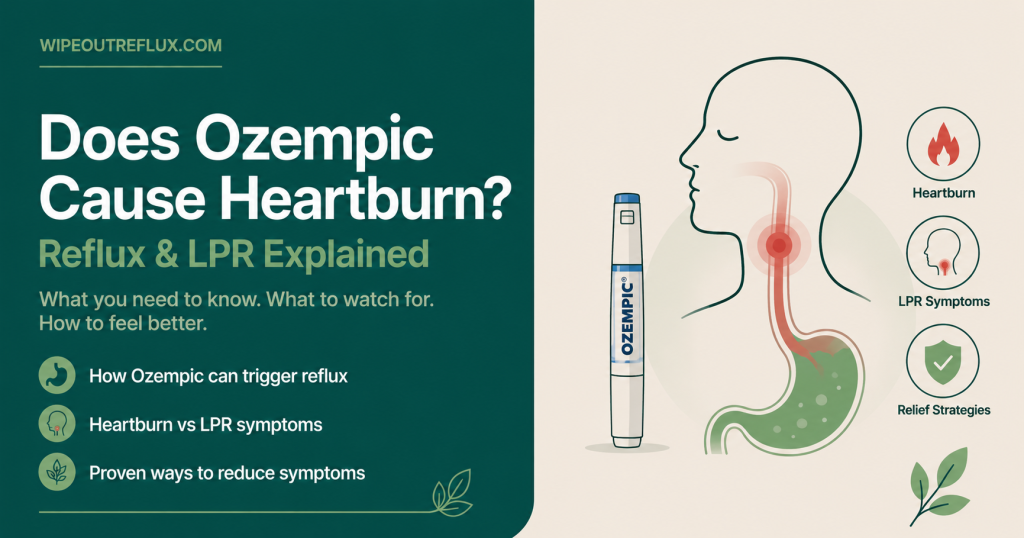
Yes — Ozempic can cause heartburn. The primary reason is that Ozempic (semaglutide) slows down how quickly food leaves the stomach, a process called delayed gastric emptying. When food sits in the stomach for longer than normal, pressure builds against the lower oesophageal sphincter and can push acid upward into the oesophagus. Heartburn, regurgitation, and worsening reflux symptoms can follow. Around 2% of Ozempic users reported heartburn or GERD in clinical trials, but real-world and population-level studies suggest the true rate of reflux worsening is meaningfully higher.
The same mechanism applies to Wegovy (higher-dose semaglutide), Mounjaro (tirzepatide), and the broader GLP-1 drug class — they all slow gastric emptying to varying degrees. But there’s a genuine counterpoint worth understanding: the significant weight loss these medications produce can, over time, substantially reduce acid reflux by lowering intra-abdominal pressure. Ozempic can both worsen reflux in the short term and improve it long term, depending on where you are in the treatment journey.
In this guide I’ll break down exactly how Ozempic causes heartburn, what the latest clinical research shows, when the picture improves, and what people with existing reflux or LPR (silent reflux) need to know. This group faces specific challenges with GLP-1 medications that most articles don’t cover at all.
Key Takeaways
- GLP-1 drugs (Ozempic, Wegovy, Mounjaro) slow gastric emptying — which increases stomach pressure and can trigger or worsen reflux and LPR
- Multiple large studies from 2024–2025 have confirmed GLP-1 use is associated with significantly increased GERD risk compared with other diabetes/weight-loss medications
- Shorter-acting GLP-1s appear to increase GERD risk more than longer-acting formulations like semaglutide (Ozempic/Wegovy)
- The weight loss from these medications can, over time, reduce intra-abdominal pressure and improve reflux symptoms — but this takes months
- LPR (silent reflux) patients face particular risk because delayed gastric emptying increases nocturnal reflux, depositing more pepsin on throat tissue overnight
- Dietary habits become more critical on GLP-1s — smaller meals are essential because a full, slow-emptying stomach dramatically increases reflux episodes
- If reflux worsens on a GLP-1, it’s worth discussing dose timing, formulation, and concurrent reflux management with your prescribing doctor
- GLP-1 drugs don’t replace dietary management for reflux — the two need to work together
What Are GLP-1 Drugs?
GLP-1 (glucagon-like peptide-1) receptor agonists are a class of medications that mimic a gut hormone released after eating. They’re prescribed for type 2 diabetes and, at higher doses, for obesity and weight management. The main ones you’ll encounter are:
- Semaglutide: Ozempic (weekly injection, licensed for type 2 diabetes), Wegovy (weekly injection, higher dose, licensed for weight management), Rybelsus (daily oral tablet)
- Tirzepatide: Mounjaro (weekly injection, licensed for type 2 diabetes and, as Zepbound, for weight management) — technically a dual GIP/GLP-1 agonist, meaning it activates two receptor types, but its effects on the gut are similar
- Liraglutide: Victoza (daily injection, diabetes), Saxenda (daily injection, weight management) — older agent, shorter-acting
These drugs work partly by slowing gastric emptying — meaning food stays in your stomach longer, which reduces hunger and calorie intake. This mechanism is central to the weight loss they produce. It’s also the primary reason they affect reflux.
How GLP-1 Drugs Can Worsen Reflux
Delayed Gastric Emptying: The Main Mechanism
Under normal circumstances, food moves from your stomach into the small intestine within a few hours of eating. GLP-1 medications significantly slow this process. When food sits in your stomach for longer than it should, it creates three problems for reflux:
- Increased intragastric pressure — the stomach is holding more contents for longer, which presses upward against the lower oesophageal sphincter (LOS)
- Prolonged acid exposure — with food in the stomach for longer, acid production continues for longer
- Greater opportunity for reflux events — particularly when lying down, when gravity can no longer help keep stomach contents in place
The clinical evidence bears this out clearly. A 2025 systematic review and meta-analysis of 55 randomised controlled trials involving over 106,000 participants found that GLP-1 receptor agonists more than doubled the risk of GERD compared with placebo (risk ratio 2.19) [Chiang et al., Gastroenterology, 2025]. This isn’t a small signal from a single study — it’s the combined picture from the highest-quality clinical trial data available.
A separate 2025 population-based cohort study using UK primary care data compared GLP-1 users with people taking SGLT-2 inhibitors (another diabetes drug class). Over a median follow-up of three years, GLP-1 users had a 27% higher rate of new GERD diagnoses, with particularly elevated risks for GERD complications among smokers, people with obesity, and those with existing stomach problems [Noh et al., Annals of Internal Medicine, 2025].
LPR Patients Face Particular Risk
For those of us with LPR (laryngopharyngeal reflux), the problem of delayed gastric emptying is especially concerning. LPR is driven largely by nocturnal reflux — small amounts of stomach contents reaching the throat during sleep, depositing pepsin on laryngeal tissue and driving symptoms like persistent throat clearing, hoarseness, and globus sensation.
When a GLP-1 medication slows gastric emptying, a larger volume of food and acid remains in the stomach at bedtime. Even if you’ve followed all the standard advice about not eating within 3–4 hours of sleep, a slow-emptying stomach means the contents are still there. The result is potentially more overnight reflux events, more pepsin reaching the throat, and a worsening of exactly the symptoms that LPR patients are trying to manage.
This is one of the more overlooked aspects of GLP-1 medications and reflux. Most articles focus on heartburn and classic GERD — but for silent reflux sufferers, the impact on overnight LPR may be more significant and harder to attribute to the medication.
Short-Acting vs Long-Acting GLP-1s: Does It Matter for Reflux?
There’s a meaningful difference between different GLP-1 formulations in terms of their reflux risk. A large retrospective cohort study published in Gut found that shorter-acting GLP-1 receptor agonists — which produce more concentrated, peak-and-trough effects on gastric motility — were associated with higher rates of GERD and its complications compared with not using these drugs [Liu et al., Gut, 2024].
In practice, this means:
- Shorter-acting / daily agents (liraglutide/Saxenda, exenatide) — higher peak gastric emptying suppression, potentially more reflux risk
- Longer-acting / weekly agents (semaglutide/Ozempic/Wegovy, dulaglutide) — more consistent effect, somewhat attenuated gastric motility suppression over time
- Tirzepatide (Mounjaro) — weekly dosing, but the GIP receptor component may have a slightly different gastric motility profile; data specifically on reflux is still limited
If you’re experiencing worsening reflux and you have options about which formulation to use, this is worth discussing with your prescribing doctor — the difference in reflux risk between formulations is clinically meaningful.
How GLP-1 Drugs Can Also Help Reflux Over Time
Here’s where the picture becomes genuinely two-sided. The same medications that slow gastric emptying and increase reflux risk also produce substantial, sustained weight loss — and weight loss has a direct, well-established benefit for GERD and LPR.
Excess abdominal weight increases intra-abdominal pressure, which pushes upward on the stomach and weakens the lower oesophageal sphincter. This is one of the primary mechanisms linking obesity with GERD severity. A prospective intervention trial demonstrated that structured weight loss can lead directly to resolution of GERD symptoms in overweight and obese individuals — not just improvement, but full resolution in many cases [Singh et al., Obesity, 2013].
GLP-1 medications produce an average weight loss of 10–15% of body weight with semaglutide and up to 20% or more with tirzepatide in clinical trials. Over time, this degree of weight reduction can significantly reduce reflux burden — potentially more than any medication specifically aimed at reflux.
The tension, then, is one of timing:
- In the short term (first weeks to months): delayed gastric emptying dominates, and reflux may worsen
- In the longer term (3–6+ months): progressive weight loss reduces intra-abdominal pressure, which may significantly improve reflux — potentially outweighing the gastric emptying effect
Whether you reach the long-term benefit depends on how well the short-term reflux is managed. People who experience severe worsening of reflux early on may need to discontinue the medication or reduce the dose before the weight loss benefit materialises.
Managing Reflux While on GLP-1 Medication
For reflux and LPR patients taking these medications, the dietary and lifestyle approach to reflux management becomes more important, not less. The gastric emptying effect means you’re essentially working with a slower digestive system — and every reflux risk factor becomes amplified as a result.
Eat Smaller Meals — This Is Non-Negotiable
GLP-1 drugs naturally reduce appetite, which is helpful — but the instinct to eat one or two larger meals per day because you’re not hungry can be counterproductive for reflux. A slow-emptying stomach filled with a large meal is a powerful reflux driver. Small, frequent meals are far better for reflux management on these medications. Think 4–5 smaller portions rather than 2–3 larger ones.
Extend the Gap Before Bed — Even More Than Usual
The standard recommendation for reflux is to stop eating 3 hours before bed. On a GLP-1 medication that slows gastric emptying, 3 hours may not be enough for the stomach to be adequately clear. Extending this to 4–5 hours significantly reduces overnight reflux. This is especially important for LPR patients.
Keep the Dietary Triggers in Check
High-fat foods, alcohol, caffeine, and highly acidic foods all worsen reflux independently of the GLP-1 effect. On a GLP-1 medication, the gastric emptying slowdown means these triggers have more time to act. Reducing them isn’t optional — it’s a core part of protecting your oesophagus and throat while the medication does its work. The Essential Reflux Food List gives a pH-referenced breakdown of which foods and drinks are safe — a practical reference for anyone managing reflux alongside a GLP-1.
Prioritise Bed Elevation and Sleep Position
Because nocturnal reflux risk is amplified by delayed gastric emptying, elevating the head of your bed by 15–20cm (using bed risers, not extra pillows) becomes more important on these medications. Left-side sleeping also reduces nocturnal reflux events. These are low-effort, zero-cost changes that directly address the overnight component.
Avoid Carbonated Drinks
Carbonated drinks increase gastric pressure and belching, which drives reflux upward. On a GLP-1 medication where gastric pressure is already elevated, carbonated drinks — including sparkling water — should be avoided or minimised during treatment.
Be Cautious Around Dose Increases
GLP-1 medications are typically started at a low dose and increased gradually. The gastric emptying effect tends to be most pronounced during dose escalation. If reflux worsens significantly at a new dose, this is worth flagging with your prescriber rather than pushing through — dose timing adjustments or a slower titration schedule may help.
Discuss Concurrent Reflux Treatment With Your Doctor
If you have pre-existing LPR or GERD that’s well managed, starting a GLP-1 medication is a reasonable time to review your reflux management plan with your doctor. In some cases, a short-term course of an alginate (like Gaviscon Advance) may help coat the oesophagus against increased reflux during the early weeks. For LPR specifically, dietary management targeting pepsin remains the most relevant approach — this is covered in detail in the Wipeout Diet Plan.
Should You Take a GLP-1 Drug If You Already Have Reflux or LPR?
GLP-1 medications are not contraindicated in people with reflux or LPR, but the decision should be made with awareness of the short-term reflux risk and with a plan in place. A few considerations:
- If your reflux is currently well controlled and your weight is a significant driver of it, the long-term benefit from weight loss may substantially outweigh the short-term risk
- If your LPR is currently severe and poorly controlled, starting a GLP-1 medication without dietary adjustments may significantly worsen your symptoms during the early months
- If you have a hiatal hernia, you’re at higher baseline risk for worsened reflux on GLP-1s — worth discussing specifically with your doctor
- The type of GLP-1 matters — longer-acting weekly formulations like semaglutide may be preferable to daily shorter-acting agents from a reflux standpoint
For diet, the evidence-based approach for managing LPR while on these medications is the same as managing LPR without them — low-acid, plant-forward, no eating close to bed — but applied more rigorously, given the added gastric emptying factor. A plant-based Mediterranean dietary approach has strong clinical support for LPR symptom management [Zalvan et al., JAMA Otolaryngology-Head and Neck Surgery, 2017].
Frequently Asked Questions
Does Ozempic cause acid reflux?
Ozempic (semaglutide) can cause or worsen acid reflux in some users. The mechanism is delayed gastric emptying — food stays in the stomach longer, increasing pressure on the lower oesophageal sphincter. Clinical evidence from large studies confirms GLP-1 medications increase GERD risk. Reflux side effects are most pronounced during dose escalation and typically improve once the dose stabilises — though the underlying mechanism doesn’t disappear.
Does Wegovy cause acid reflux?
Wegovy is a higher-dose version of the same drug as Ozempic (semaglutide 2.4mg vs lower doses for Ozempic). The higher dose generally produces more gastric emptying suppression and a correspondingly greater reflux risk. The same management strategies apply.
Does Mounjaro (tirzepatide) cause more reflux than Ozempic?
Data specifically comparing Mounjaro and Ozempic head-to-head for reflux risk is limited. Tirzepatide produces a somewhat larger degree of weight loss than semaglutide on average, which may favour greater long-term reflux improvement. Its gastric emptying effect is real but may attenuate over time. Clinically, the practical advice for managing reflux is the same across both agents.
Will losing weight on Ozempic fix my reflux?
Significant weight loss consistently improves GERD and reflux symptoms in overweight people, and GLP-1 medications produce meaningful weight reduction. However, this takes time — months, not weeks. In the early phase, reflux may worsen before it improves. The key is managing the short-term risk well enough to reach the point where the weight loss benefit kicks in.
Can I take a PPI and a GLP-1 medication at the same time?
Yes — there’s no significant interaction between GLP-1 drugs and PPIs or H2 blockers. If your reflux worsens on a GLP-1, your doctor may suggest a temporary course of acid suppression alongside it. The important caveat for LPR is that PPIs address acid but not pepsin — dietary changes are more effective than medication for managing LPR symptoms specifically.
Why is my LPR worse on Ozempic?
Delayed gastric emptying from GLP-1 medications increases the volume of stomach contents at bedtime, which directly worsens nocturnal LPR — the reflux events that reach the throat during sleep. This is the most likely explanation for worsening throat symptoms (clearing, hoarseness, globus) on these medications. Extending the eating cutoff before bed to 4–5 hours and elevating the head of the bed are the most targeted interventions.
Are there GLP-1 drugs that don’t cause reflux?
All GLP-1 receptor agonists slow gastric emptying to some degree, so all carry some reflux risk. Shorter-acting daily agents appear to pose a higher reflux risk than longer-acting weekly formulations. If reflux is a significant concern, longer-acting weekly options like semaglutide may be preferable to daily agents. This is a conversation worth having with your prescribing doctor.
Conclusion
GLP-1 medications and reflux have a genuinely complex relationship — one that most articles oversimplify in one direction or another. The short-term picture is that delayed gastric emptying increases reflux risk, with multiple large studies now confirming this clearly. The longer-term picture is that the weight loss these drugs produce can significantly improve reflux through reduced intra-abdominal pressure.
For LPR patients specifically, the short-term risk is particularly relevant because the throat tissue is so much more sensitive to reflux than the oesophagus — and the increased nocturnal reflux from a slow-emptying stomach hits LPR patients harder than it hits people with classic heartburn.
The practical response is to intensify — not relax — your reflux management while on these medications, particularly in the early months. Smaller meals, a longer eating gap before bed, elevated sleeping position, and cutting dietary triggers are all more important, not less, when gastric emptying is slowed. The Essential Reflux Food List is a useful reference for day-to-day food choices, and the Wipeout Diet Plan provides the full structured framework for managing LPR and acid reflux through diet — which applies directly to anyone trying to navigate these medications alongside an existing reflux condition.
If you’re weighing whether to start one of these medications with existing reflux, the conversation with your doctor is worth having. In many cases the long-term benefit is real and significant. But it requires managing the transition carefully.
Research & References
Chiang et al., Gastroenterology, 2025 — Systematic review and meta-analysis of 55 randomised controlled trials involving 106,395 participants, finding that GLP-1 receptor agonists are associated with a more than twofold increased risk of GERD compared with placebo (risk ratio 2.19), with the strongest signal in patients with obesity and at higher doses.
Noh et al., Annals of Internal Medicine, 2025 — Population-based cohort study of over 113,000 adults with type 2 diabetes using UK primary care data, comparing GLP-1 receptor agonists against SGLT-2 inhibitors. Found a 27% higher rate of new GERD diagnoses with GLP-1 use, with elevated complication risk among smokers, obese individuals, and those with pre-existing gastric conditions.
Liu et al., Gut, 2024 — Retrospective matched cohort study demonstrating that shorter-acting GLP-1 receptor agonists are associated with significantly increased development of GERD and its complications (including non-erosive reflux disease, erosive disease, Barrett’s oesophagus, and oesophageal stricture) compared with long-acting agents.
Singh et al., Obesity, 2013 — Prospective intervention trial demonstrating that structured weight loss in overweight and obese individuals can lead to resolution of GERD symptoms, establishing the mechanistic basis for why GLP-1-induced weight loss may improve reflux over time despite the short-term gastric emptying risk.
Zalvan et al., JAMA Otolaryngology-Head and Neck Surgery, 2017 — Compared a Mediterranean/alkaline dietary approach against PPI therapy for LPR, finding dietary intervention achieved equivalent or superior symptom reduction, supporting low-acid dietary management as the primary approach for LPR patients including those on GLP-1 medications.

David Gray
Content Researcher & Author
David Gray founded Wipeout Reflux to address a critical gap in reflux management. His research synthesizes over 100 peer-reviewed studies on laryngopharyngeal reflux (LPR), pepsin biology, and GERD pathophysiology. For LPR specifically—a condition most physicians misdiagnose—his work focuses on pepsin reactivation and why standard PPI therapy fails most patients. He develops evidence-based protocols targeting root causes of both LPR and GERD, integrating emerging research on sphincter dysfunction, dietary interventions, and newer clinical approaches. Wipeout Reflux represents practical application of clinical science for patients seeking real solutions.