
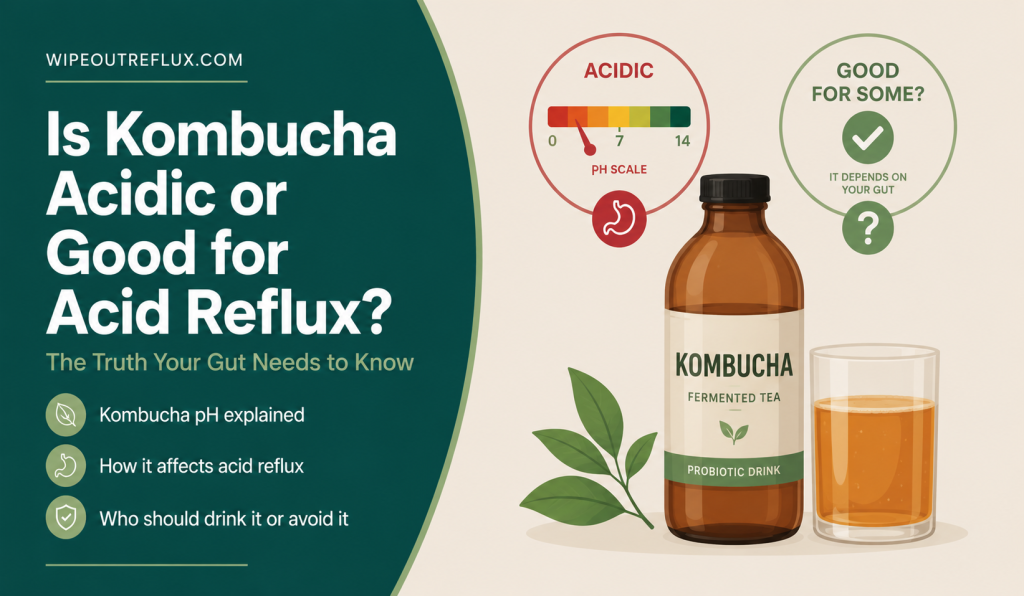
Kombucha is one of those drinks that gets marketed aggressively as a digestive health tonic, and the irony for reflux sufferers is real: the very fermentation process that gives kombucha its probiotic properties also makes it highly acidic and carbonated — two of the most consistent reflux triggers in the research. If you’re hoping kombucha will help your acid reflux or GERD, it’s worth understanding exactly why the evidence doesn’t support that hope, and what’s actually happening in your esophagus when you drink it.
The direct answer is this: kombucha is acidic at pH 2.5–3.5 and carbonated, both of which are documented mechanisms for worsening reflux. The probiotic case for kombucha is real at the gut microbiome level — but the evidence base doesn’t include any well-designed human trials showing it benefits GERD or LPR specifically, and the acidity and carbonation problems don’t disappear because the drink contains beneficial bacteria.
I’ll cover the full picture here — the mechanisms, the honest probiotic evidence, why LPR patients should be especially careful, and which fermented foods deliver probiotic benefits without the reflux risk.
Key Takeaways
- Kombucha typically has a pH of 2.5–3.5, placing it in the same high-acidity tier as grapefruit and lemon juice — highly problematic for esophageal and throat tissue.
- The fermentation process produces organic acids including acetic acid (the same acid found in vinegar), lactic acid, gluconic acid, and glucuronic acid — all of which can irritate the esophageal lining.
- Kombucha is carbonated as a result of fermentation. Carbonated beverages have been shown in manometric studies to produce a sustained 30–50% reduction in lower esophageal sphincter pressure.
- Most commercial kombucha also contains residual caffeine from the tea base, adding a third reflux-triggering mechanism.
- For LPR (silent reflux), kombucha’s pH range of 2.5–3.5 is far below the pH 5.0 threshold at which throat-bound pepsin can be reactivated, making it particularly damaging.
- Kombucha does support gut microbiome health through its probiotic organisms — but no human clinical trials specifically demonstrate benefit for GERD or LPR symptoms.
- Probiotic benefits of kombucha can be obtained from less acidic, non-carbonated sources including plain low-fat yogurt, kefir, miso, and water kefir.
- Commercial “low-acid” kombucha brands may sit slightly higher in pH but retain the carbonation problem — they do not eliminate the reflux risk.
How Acidic Is Kombucha?
Kombucha’s acidity comes directly from its fermentation process. When the SCOBY (symbiotic culture of bacteria and yeast) ferments sweetened tea, it converts the sugars into a range of organic acids. The primary acids produced are acetic acid, lactic acid, gluconic acid, and glucuronic acid. These acids give kombucha its characteristic tartness and are also responsible for its very low pH.
Well-fermented home-brewed kombucha typically sits between pH 2.5 and 3.0 — in the same acidity range as lemon juice and vinegar. Most commercial kombucha products, which are often stopped before full fermentation to retain sweetness, sit somewhat higher at pH 3.0–3.5. A longer fermentation period produces more acetic acid and a lower pH; a shorter fermentation produces a milder, sweeter product with a higher pH but still significant acidity.
The acetic acid content is particularly worth noting for reflux sufferers. Acetic acid is the primary organic acid in vinegar, which is itself one of the most reliable esophageal irritants — a few drops of vinegar are enough to provoke esophageal pH changes in people with sensitive esophageal tissue. Kombucha isn’t straight vinegar, but its acetic acid content makes it chemically more similar to vinegar than many people appreciate.
Commercial brands with added fruit flavours often have slightly altered pH values, but the organic acid profile that makes kombucha problematic for reflux is present regardless of flavouring. There is no flavour combination that eliminates the underlying acidity issue.
The Four Ways Kombucha Triggers Acid Reflux
1. Direct Esophageal Irritation from High Acidity
When kombucha at pH 2.5–3.5 reaches the esophageal lining, the effect is direct chemical irritation. Unlike the stomach, which has a thick mucus layer and specialised acid-resistant cells, the esophagus is vulnerable to highly acidic contact. In people who already have esophagitis or NERD (non-erosive reflux disease), this contact lowers the local pH enough to trigger immediate burning sensations. Even in people with milder reflux, repeated acidic contact contributes to the sensitisation of esophageal nociceptors — the nerve endings that generate the heartburn sensation.
2. Carbonation and LES Pressure Reduction
Kombucha’s carbonation is the second, and arguably more clinically significant, mechanism. The CO2 produced during fermentation dissolves into the liquid and is released as gas in the stomach after drinking, causing gastric distension. This distension directly stretches the lower esophageal sphincter (LES) — the muscular valve between the esophagus and stomach — triggering transient relaxations.
A manometric study measuring LES response to carbonated beverages in healthy volunteers found that all carbonated beverages tested produced a sustained 30–50% reduction in LES pressure lasting 20 minutes, with 62% of subjects reaching LES pressure levels “normally diagnostic of incompetence” after a single carbonated drink [Hamoui et al., Journal of Gastrointestinal Surgery, 2006]. Tap water caused no such reduction. This LES-weakening effect applies to all carbonated beverages — including kombucha — regardless of what else they contain.
For someone with already-compromised LES function from GERD, this additional pressure drop is directly counterproductive. And unlike coffee, where you can at least choose decaf or switch brewing methods to reduce the reflux impact, kombucha’s carbonation is intrinsic to the product. Flat, de-carbonated kombucha would still be very acidic — it simply wouldn’t have the LES component on top.
3. Caffeine from the Tea Base
Most kombucha is brewed from black or green tea, both of which contain caffeine. While the fermentation process does reduce caffeine content somewhat, a standard serving of commercial kombucha typically contains 10–25mg of caffeine — comparable to a weak green tea. Caffeine contributes to LES relaxation and stimulates gastric acid secretion, compounding the carbonation and acidity effects. Kombucha brewed from herbal tea or specifically decaffeinated tea avoids this problem, though the acidity and carbonation issues remain.
4. Residual Sugar and Gastric Acid Stimulation
Commercial kombucha products often retain significant residual sugar — sometimes 6–12g per serving — to balance the tartness for consumer palatability. Concentrated sugar intake stimulates gastric acid secretion and can contribute to gastric distension, both of which are secondary risk factors for reflux. This is less significant than the acidity and carbonation issues but adds to the cumulative problem, especially in people who are sensitive to sugar-driven reflux.
Kombucha and LPR (Silent Reflux) — A Specific Warning
For people managing LPR (silent reflux) rather than classic GERD, kombucha warrants an even more definitive avoidance recommendation.
With LPR, the principal damage mechanism involves pepsin — a digestive enzyme that travels from the stomach to the throat and laryngeal tissue, where it adheres and remains stable up to pH 8.0. Once there, it can be reactivated by any acidic stimulus that contacts the throat. The reactivation threshold is approximately pH 5.0 — below this, dormant pepsin resumes actively damaging throat tissue that isn’t designed to tolerate it.
Kombucha at pH 2.5–3.5 is anywhere from 10 to 100 times more acidic than this threshold. A small amount of kombucha reaching the throat of someone with LPR doesn’t just add acidity — it reactivates pepsin that may already be there from prior reflux events, continuing tissue damage without any new reflux episode being required. Combined with the carbonation mechanism that promotes additional reflux events, kombucha is essentially a compound trigger for LPR: it both worsens the episodes that deposit pepsin in the throat and then reactivates the pepsin that’s already there.
LPR dietary protocols consistently list carbonated beverages and high-acid drinks as priority exclusions. Kombucha sits at the intersection of both categories. There is no serving size or timing that makes it appropriate during active LPR symptoms.
The Probiotic Case for Kombucha — An Honest Assessment
Kombucha is a genuine probiotic beverage when produced and stored properly. The SCOBY produces live cultures including species of Lactobacillus, Bifidobacterium, and Acetobacter, alongside antioxidant polyphenols from the tea base, B vitamins, and a range of organic acids with antimicrobial properties. Research confirms these organisms and compounds are present and contribute to microbiome diversity in human studies [Selvaraj & Gurumurthy, Chinese Medicine, 2023].
The evidence for kombucha’s specific digestive effects in humans has grown in recent years — human trials have shown modest improvements in gut microbiome composition and some metabolic markers. These are real findings and worth acknowledging.
What the evidence does not support is the idea that kombucha’s probiotic profile translates into benefit for GERD or LPR. No well-designed human clinical trials have tested kombucha specifically against reflux symptoms. The mechanisms by which probiotics might help GERD — improving gastric motility, reducing gut dysbiosis that contributes to bloating and reflux pressure — are plausible but remain theoretical for kombucha specifically. Meanwhile, the direct acid-and-carbonation harm to esophageal and laryngeal tissue is well-established and immediate.
It’s also worth noting that many commercial kombucha products are pasteurised after fermentation to extend shelf life, which kills the live cultures that provide probiotic value. A pasteurised kombucha delivers the acidity, carbonation, caffeine, and sugar risks without the probiotic benefit — the worst of both worlds. If kombucha’s probiotic properties are the attraction, look for raw, unpasteurised products with live cultures — and then consider whether those benefits are available elsewhere without the reflux cost.
What About Ginger Kombucha?
Ginger is genuinely useful for digestion — it has well-documented anti-nausea properties, supports gastric motility, and has anti-inflammatory effects relevant to gut health. I’d recommend ginger in many forms for reflux support. However, ginger kombucha simply adds ginger flavour and some of ginger’s bioactive compounds to a base drink that is still very acidic and still carbonated.
The ginger doesn’t neutralise the acetic acid. It doesn’t remove the CO2. It doesn’t change the pH from 2.5–3.5 to something that doesn’t irritate the esophageal lining. The net effect is a drink that has marginally more digestive-supportive compounds than plain kombucha, but the same fundamental reflux risk profile. Ginger as a tea, in cooking, or in supplement form delivers its digestive benefits without any of the kombucha problems.
Safer Probiotic Alternatives for Reflux Sufferers
The goal of getting probiotic support for gut health while managing reflux is entirely achievable — it just requires choosing fermented foods that don’t combine high acidity with carbonation. Here are the options I’d prioritise:
Plain low-fat yogurt is the most accessible option. It’s slightly acidic (pH around 4.0–4.5) but well below kombucha’s acidity, non-carbonated, and well-tolerated by most GERD sufferers. It contains live Lactobacillus and Bifidobacterium cultures directly relevant to gut microbiome support. Choose unsweetened and unflavoured varieties — the fruit-flavoured options add sugar and sometimes citric acid that can worsen reflux.
Kefir is a fermented milk drink with a particularly rich probiotic profile — often more diverse than yogurt. Plain kefir has a pH of around 4.0–4.5 and is non-carbonated, making it a meaningfully better-tolerated choice than kombucha for reflux patients. Some people with lactose intolerance find kefir more digestible than milk, as the fermentation process breaks down much of the lactose.
Miso soup — a small cup of miso broth — is an excellent non-acidic, non-carbonated probiotic option. Miso paste has a pH of around 4.5–5.5 depending on variety, and the dilution in water raises this further. It also contains glutamine and other compounds that support the gut lining. Keep the soup moderate temperature — very hot liquids are their own esophageal irritant.
Sauerkraut and kimchi in small condiment amounts provide live cultures and are generally well-tolerated even by reflux patients. Avoid large portions, as both are acidic, but a tablespoon or two alongside a meal is unlikely to cause significant problems for most people with GERD. LPR patients should be more cautious with kimchi due to its spice content.
Water kefir is a non-dairy fermented beverage that sits at a much milder acidity than kombucha — typically pH 4.0–5.0 depending on fermentation length — and while it can be mildly carbonated, the carbonation is usually less intense than commercial kombucha. It’s the closest substitute to kombucha for people who enjoy fermented drinks and want some probiotic benefit without the full reflux risk profile.
Frequently Asked Questions
Is kombucha good or bad for acid reflux?
Bad, for most people with active reflux symptoms. Kombucha is very acidic at pH 2.5–3.5 — in the same range as lemon juice — and carbonated, which directly lowers LES pressure. Both mechanisms worsen reflux independently, and they compound each other. The probiotic content doesn’t offset these direct physical effects on the esophageal barrier.
Can kombucha ever help acid reflux?
There is no human clinical trial evidence demonstrating kombucha-specific benefit for GERD or LPR symptoms. The theoretical case — that improving gut microbiome health reduces factors driving reflux — is plausible but unproven for kombucha specifically. Given that its acidity and carbonation actively worsen reflux through established mechanisms, I don’t recommend it as a reflux remedy. The probiotic goal is better served by other fermented foods that don’t carry these risks.
Why does kombucha make acid reflux worse?
Four concurrent mechanisms: its high acidity (pH 2.5–3.5) directly irritates the esophageal lining; its carbonation drives a 30–50% reduction in LES pressure lasting around 20 minutes; its caffeine content from the tea base contributes additional LES relaxation; and its residual sugar stimulates gastric acid secretion. These are additive effects, not alternative explanations.
Is kombucha bad for LPR (silent reflux)?
Yes, more so than for classic GERD. With LPR, the key damage mechanism is pepsin reactivation by acidic stimuli in the throat. Kombucha’s pH of 2.5–3.5 is far below the pH 5.0 threshold at which pepsin deposited in laryngeal tissue gets reactivated. Drinking kombucha doesn’t just worsen the reflux events that deposit pepsin in the throat — it then reactivates that pepsin each time it contacts the throat, compounding the damage without any new reflux episode being required.
Is there a low-acid kombucha safe for acid reflux?
Lower-acid commercial kombuchas exist — some brands stop fermentation early and sit around pH 3.2–3.5 rather than the more extreme 2.5–3.0 of fully fermented varieties. These reduce (but don’t eliminate) the direct acidity problem. However, they retain the carbonation issue, which independently reduces LES pressure regardless of pH. A lower-acid kombucha is a marginal improvement, not a safe option, for active reflux management.
What is the best drink for acid reflux?
Plain water remains the most reliably safe choice. Alkaline water (pH 8.0+) may have additional benefit for LPR patients by deactivating pepsin. Herbal teas — particularly chamomile, ginger, or marshmallow root — are well-tolerated and offer some digestive benefit without acidity or carbonation concerns. Plain low-fat kefir or diluted miso broth are good options if probiotic support is the goal. Avoid carbonated drinks, citrus juices, and highly acidic beverages like kombucha during active symptom periods.
Is ginger kombucha better for acid reflux than plain kombucha?
Marginally different in nutritional profile, not in reflux risk. Ginger has genuine digestive benefits, but adding ginger flavouring or ginger extract to kombucha doesn’t change its pH, remove the CO2, or alter its caffeine content. The same mechanisms that make plain kombucha problematic for reflux apply equally to ginger kombucha. For ginger’s digestive benefits without the reflux risk, fresh ginger tea or ginger supplements are a better route.
Conclusion
I understand the appeal of kombucha for people with reflux who want to support their gut health naturally. The probiotic case is genuine, and fermented foods are a meaningful part of long-term gut health strategy. The problem is that kombucha’s delivery mechanism for those probiotics — high acidity and carbonation — directly works against the goals of reflux management.
The practical path forward is to separate the goal (probiotic gut support) from the vehicle (kombucha) and choose fermented foods that don’t carry the same esophageal risk. Plain yogurt, kefir, miso, and water kefir can all deliver meaningful gut microbiome benefits without the pH and carbonation problems kombucha brings to the table. That’s a much better approach than hoping the probiotics in kombucha somehow compensate for what its acidity and CO2 are doing to your LES and esophageal lining on every sip.
If you want a comprehensive, structured approach to reflux management that integrates gut health support properly — including which fermented and probiotic foods fit safely into an LPR or GERD diet — the Wipeout Diet Plan covers this in full detail.
For personalised guidance, including help navigating which probiotic approaches are appropriate for your specific reflux profile, private consultations are available where we can go through your situation together.
Related Articles
- The Complete Guide to LPR (Silent Reflux): Causes, Symptoms, and Treatment
- The Complete Guide to Acid Reflux and GERD
- Is Coffee Acidic? What It Means for Acid Reflux and LPR
- Is Grapefruit Acid or Alkaline? (Reflux and Drug Interactions)
- Are Bananas Acidic or Alkaline? (Good for Acid Reflux?)
- The Wipeout Diet Plan: A Structured Approach to Reflux Management
Research Sources
[Hamoui et al., Journal of Gastrointestinal Surgery, 2006] — A manometric study of nine healthy volunteers found that all carbonated beverages tested produced a sustained reduction of 30–50% in LES resting pressure, overall length, and abdominal length lasting at least 20 minutes after ingestion. In 62% of subjects, the reduction was sufficient to reach LES pressure levels “normally diagnostic of incompetence.” Tap water caused no such reduction. This LES-weakening effect of carbonation is directly relevant to the reflux risk of all fizzy beverages, including kombucha.
[Selvaraj & Gurumurthy, Chinese Medicine, 2023] — An overview of kombucha’s probiotic and health-promoting properties, confirming that kombucha contains live cultures of Lactobacillus, Bifidobacterium, and Acetobacter species alongside antioxidant polyphenols, organic acids, and B vitamins produced during fermentation. The review also notes the importance of fermentation conditions in determining final pH, probiotic viability, and acid content — and highlights that most clinical evidence for kombucha remains in the early stages, with most findings from animal or in vitro studies rather than human trials.

David Gray
12 years living with LPR · Consultant & researcher
I've lived with LPR for twelve years — the misdiagnoses, the PPI courses that did nothing, the slow work of figuring out what actually helps. Wipeout Reflux is where I translate the research into plain terms for people stuck in the same place. Every claim here is sourced to peer-reviewed work, and I consult one-to-one with LPR sufferers.