
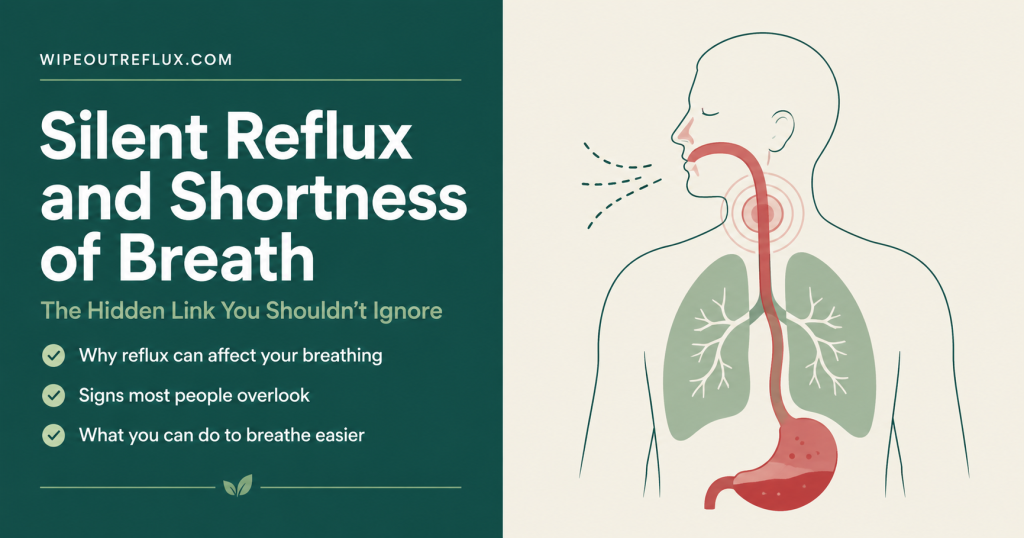
Yes — silent reflux, also known as laryngopharyngeal reflux (LPR), can cause shortness of breath. Unlike classic acid reflux, LPR sends acid and pepsin all the way up past the esophagus and into the throat and larynx — your voice box. When these sensitive structures become irritated, your body responds in ways that directly restrict your ability to breathe comfortably.
The breathing difficulties from silent reflux range from a persistent feeling of not being able to take a full breath, to sudden alarming episodes where your throat seems to tighten without warning. I know how distressing this is — it was one of the most confusing parts of my own LPR experience before I understood what was actually happening.
If you’ve been dealing with unexplained breathlessness alongside other throat symptoms — chronic throat clearing, hoarseness, a persistent cough, or a lump-in-throat sensation — LPR may well be the underlying cause. Understanding the mechanism is the first step to doing something about it.
Key Takeaways
- Silent reflux (LPR) can cause shortness of breath, breathlessness, and a persistent feeling of not being able to take a full, satisfying breath
- Acid and pepsin reaching the larynx trigger protective reflexes that narrow the airway and cause breathing discomfort
- Laryngospasm — a sudden involuntary closure of the vocal cords — is one of the most alarming but usually non-dangerous LPR breathing symptoms
- The vagal nerve reflex connects acid in the esophagus to bronchospasm in the lungs, meaning acid doesn’t even need to reach the throat to affect breathing
- Microaspiration of acid droplets into the airways causes chronic inflammation that makes breathing feel labored over time
- LPR breathing problems are typically worst after meals, at night, and during or after exercise
- Dietary changes targeting LPR specifically — not just general reflux advice — can significantly reduce breathing symptoms over weeks to months
- LPR-related breathlessness can closely mimic asthma or anxiety; correct diagnosis is essential before committing to the wrong treatment
What Is Silent Reflux (LPR)?
Silent reflux is a form of acid reflux where stomach acid and digestive enzymes — primarily pepsin — travel upward past the esophagus and into the throat, larynx, and sometimes the airways themselves. Unlike typical gastroesophageal reflux disease (GERD), many people with LPR never experience heartburn. Instead, the damage appears higher in the body, in the throat, voice, and respiratory tract.
The “silent” label reflects how easily LPR goes undetected. Symptoms like a chronic cough, persistent hoarseness, excessive throat clearing, post-nasal drip, and breathing difficulty are rarely connected to reflux without a proper workup. Many people spend years being treated for asthma, allergies, or anxiety before LPR is identified as the real driver. You can read more about the full picture in my complete guide to silent reflux.
How Silent Reflux Triggers Breathing Problems
There are four distinct mechanisms through which LPR can cause breathing difficulty. Understanding each one helps explain why symptoms vary so much from person to person — and why the same person might experience different types of breathlessness at different times.
1. Laryngospasm — When Your Airway Suddenly Closes
Laryngospasm is perhaps the most frightening manifestation of LPR-related breathing problems. It’s a sudden, involuntary spasm where the vocal cords clamp shut — either partially or fully — cutting off airflow for a few terrifying seconds. The mechanism is protective: when acid or pepsin touches the hypersensitive tissue of the larynx, the body triggers an emergency closure reflex to prevent anything from entering the lungs.
The sensation is a sudden tightening in the throat followed by an inability to inhale properly. Episodes typically resolve on their own within a few seconds to two minutes as the vocal cords relax. Nighttime laryngospasm is particularly common with LPR because lying flat allows acid to pool at throat level for extended periods. If you’ve ever woken suddenly gasping, or with the sensation that your throat has closed, laryngospasm from reflux is a likely explanation [Koufman JA, Laryngoscope, 1991].
2. Laryngeal Inflammation and Airway Narrowing
Beyond acute laryngospasm, repeated exposure to acid and pepsin causes the laryngeal tissues to become chronically inflamed. The posterior larynx — the area at the back of the voice box — is particularly vulnerable because it’s closest to where acid arrives when it refluxes upward.
Over time, this chronic inflammation leads to tissue swelling and mucosal thickening that physically narrows the airway. The effect is subtle but persistent: a constant sensation that breathing requires slightly more effort than it should, or that you can never quite get a fully satisfying breath. Many people describe it as breathing through a slightly collapsed straw. This ongoing inflammation also sensitizes the larynx, making it reactive to everyday stimuli — cold air, dry air, smoke, or perfume — that would never bother a healthy airway [Koufman et al., Otolaryngology–Head and Neck Surgery, 2002].
3. The Vagal Nerve Reflex and Bronchospasm
Not all LPR-related breathing problems originate in the larynx. The vagus nerve runs alongside the esophagus, and when acid irritates the lower esophageal lining, this nerve can trigger bronchoconstriction — a tightening of the airways in the lungs — even when no acid has physically reached the throat. This is known as the esophago-bronchial reflex, and it explains why some people with LPR develop breathing symptoms that closely mimic asthma.
Research has found significant overlap between GERD, LPR, and airway hyperreactivity, with reflux identified as a contributing trigger in a meaningful proportion of people with difficult-to-control asthma. If your breathing symptoms include chest tightness and airway narrowing — and your asthma has never fully responded to inhalers — reflux involvement is worth investigating [Harding SM and Richter JE, Chest, 1997].
4. Microaspiration Into the Airways
In some cases, small droplets of acid or pepsin-containing material are actually inhaled into the lungs during swallowing or while asleep when protective reflexes are reduced. This microaspiration doesn’t cause acute choking, but repeated exposure irritates the bronchial tissue, impairs the airway’s self-cleaning mechanism, and contributes to chronic breathlessness and cough. It is particularly likely in people who sleep flat, eat late, or have significant upper esophageal sphincter dysfunction. Research into pepsin activity in laryngeal and airway tissue confirms that these enzymes remain damaging long after the initial reflux event [Johnston N et al., Laryngoscope, 2007].
What LPR-Related Breathing Difficulty Actually Feels Like
LPR breathing symptoms have a distinct character that differs from the audible wheeze you’d expect with asthma, or the rapid shallow over-breathing of an anxiety attack. The most common descriptions include:
- A persistent inability to take a deep, fully satisfying breath
- Tightness or constriction felt high in the chest or at the base of the throat
- Sudden episodic breathlessness, particularly following meals
- A sensation of the throat tightening or partially closing
- Waking at night unable to breathe properly, sometimes with a gasping sensation
- Shortness of breath when speaking for extended periods
- Breathing that feels labored or restricted without any obvious cause
Crucially, the restriction tends to feel like it is coming from the throat and upper airway — not deep in the lungs. This upper airway origin is an important distinguishing feature that points toward LPR rather than a primary pulmonary condition.
When Breathing Symptoms Tend to Be Worst
LPR-related breathing problems follow predictable patterns, which in itself can help confirm whether reflux is the underlying cause.
After eating. Stomach contents are at their most voluminous and acidic shortly after meals. Fatty foods, coffee, alcohol, citrus, and large portions are common triggers. Symptoms that reliably appear 30–90 minutes after eating are a strong indicator of reflux involvement.
At night and on waking. Lying flat removes gravity’s role as a barrier to acid moving upward. Acid that pools at throat level during sleep causes inflammation and laryngospasm, which is why many people with LPR report their worst breathing episodes occurring overnight or in the first hour after waking.
During and after exercise. Physical activity increases intra-abdominal pressure, pushing stomach contents toward the upper esophageal sphincter. Vigorous exercise on a full stomach — particularly running, weight training, or forward-bent cycling — is especially likely to trigger reflux-related breathing difficulty.
In response to environmental triggers. A larynx sensitized by chronic acid exposure becomes reactive to stimuli that would not affect a healthy person. Cold air, dry air, cigarette smoke, perfume, and dust can all provoke throat spasms and breathing discomfort in someone with active LPR [Morrison M et al., Journal of Voice, 1999].
Is It LPR, Asthma, or Anxiety?
One of the most clinically challenging aspects of LPR-related breathing symptoms is how convincingly they can mimic both asthma and anxiety. Getting this distinction right matters — the treatments are very different.
LPR versus asthma. Asthma typically produces audible wheeze and responds to bronchodilator inhalers. LPR breathing symptoms are generally higher in the airway, rarely produce wheeze, and often don’t respond to standard asthma medication. If your breathlessness feels throat-centered rather than chest-centered, and is accompanied by hoarseness, chronic throat clearing, or a lump-in-throat sensation, LPR is a strong candidate. That said, LPR and asthma commonly coexist, and LPR can actively worsen pre-existing asthma through the vagal reflex mechanism described above.
LPR versus anxiety. Anxiety-driven breathlessness tends to involve rapid, shallow over-breathing, a sense of unreality, and systemic tension. LPR breathing symptoms are more episodic, follow a clear post-meal or nocturnal pattern, and are accompanied by identifiable throat symptoms. A laryngoscopy by an ENT specialist — which can visualize laryngeal redness, edema, and posterior inflammation — is the most direct way to confirm LPR involvement. The Reflux Symptom Index (RSI) is also a validated screening tool used by ENT specialists to identify LPR, and it specifically includes items related to breathing and airway symptoms [Belafsky PC et al., Journal of Voice, 2002].
How to Reduce Breathing Problems from Silent Reflux
Treating the breathing symptoms starts with treating the underlying LPR. These are the interventions that make the most consistent difference.
Prioritize dietary changes. Reducing acid load through diet is the foundation of LPR management. The biggest triggers — coffee, alcohol, citrus, fatty and fried foods, chocolate, and carbonated drinks — increase both the volume and acidity of reflux events. Cutting these consistently has a measurable impact on laryngeal inflammation and breathing symptoms over weeks to months. The Wipeout Diet Plan takes an LPR-specific approach to food — not generic reflux advice, but a framework built around what actually damages the larynx and what supports healing.
Adjust meal timing and portion size. Eating your last meal at least three hours before lying down is one of the most impactful changes for nighttime and morning breathing symptoms. Smaller, more frequent meals reduce gastric pressure and the likelihood of reflux events.
Elevate the head of your bed. Raising the head of your bed by 15–20cm (6–8 inches) — using a wedge or bed risers, not just extra pillows — provides a consistent gravitational barrier against overnight acid reflux. This directly targets nocturnal laryngospasm and morning breathlessness. I’ve covered managing LPR symptoms at night in detail in a dedicated guide if you want to go deeper on this.
Use alginate therapy. Gaviscon Advance (the UK formulation) creates a physical raft on top of stomach contents that blocks acid from reaching the larynx. It is particularly effective taken after meals and at bedtime, and I find it one of the most reliable tools for immediate symptom management. Learn how Gaviscon Advance works for LPR and how to use it correctly.
Reduce abdominal pressure. Tight waistbands, belts, and shapewear all increase intra-abdominal pressure and worsen reflux. Loose, comfortable clothing around the midsection is a straightforward but genuinely helpful adjustment.
Work with your doctor on medication. If lifestyle and dietary changes aren’t producing enough improvement, a supervised course of proton pump inhibitors (PPIs) may be warranted to reduce acid production while laryngeal tissues heal. PPIs take weeks to reach their full effect on LPR, and long-term use carries its own considerations — so this step is best taken in partnership with a doctor.
When to See a Doctor About LPR and Breathing
Shortness of breath always warrants proper medical evaluation to rule out cardiac and pulmonary causes before attributing it to LPR. LPR-related breathing symptoms are generally gradual in onset and tied to clear reflux patterns, but seek prompt medical attention if:
- Breathlessness is sudden, severe, or accompanied by chest pain
- You have ankle or leg swelling alongside breathlessness
- Symptoms are not improving after several weeks of consistent LPR management
- You have not yet had a laryngoscopy to confirm laryngeal involvement
- You are unsure whether your breathing symptoms are LPR-related or have another cause
An ENT specialist can perform a nasal endoscopy to identify laryngeal redness, swelling, and posterior commissure inflammation — the findings that confirm LPR is contributing to your symptoms. This is the most reliable diagnostic pathway for LPR-related breathing difficulty.
Frequently Asked Questions
Can silent reflux cause shortness of breath without heartburn?
Yes, and this is one of the defining features of LPR. Because acid moves quickly through the esophagus and damages the larynx rather than the esophageal lining, many people with LPR never experience the burning sensation associated with classic reflux. Breathlessness, a chronic cough, or hoarseness may be the only outward signs that something is wrong, which is exactly why LPR goes undiagnosed for so long.
Why is my breathing worse when I first wake up?
Lying flat overnight removes gravity’s help in keeping acid in the stomach. Acid can pool at the level of the throat for prolonged periods during sleep, causing inflammation and triggering laryngospasm before you even get up. Elevating the head of your bed by 15–20cm and avoiding food within three hours of sleep are the two most effective interventions for morning breathing symptoms.
Can LPR cause breathing problems during exercise?
Yes. Physical exertion increases intra-abdominal pressure, which pushes stomach contents upward. Running, cycling, and weight training are common triggers — particularly when done within a couple of hours of eating. Exercising on an empty or near-empty stomach and avoiding high-trigger foods on exercise days can significantly reduce this problem.
Can silent reflux trigger or worsen asthma attacks?
Research suggests that reflux — both GERD and LPR — can worsen pre-existing asthma through the vagal nerve’s esophago-bronchial reflex, which triggers bronchospasm in response to esophageal acid irritation. If your asthma has never fully responded to standard treatment, LPR as a contributing factor is worth discussing with your respiratory specialist.
How long does it take for LPR breathing symptoms to improve?
The larynx has a limited blood supply and is constantly exposed to airflow, both of which slow healing. Most people notice meaningful improvement over three to six months of consistent LPR management. The critical word is consistent — every additional reflux episode delays recovery, which is why dietary changes are as important as any medication.
Is laryngospasm from LPR dangerous?
Laryngospasm from LPR is frightening but almost always self-resolving within seconds to a couple of minutes. During an episode, breathing slowly in through the nose can help — the slight nasal resistance encourages the vocal cords to relax. Frequent or prolonged episodes should be discussed with your doctor, but isolated episodes are rarely medically dangerous.
How do I know if my breathing symptoms are from LPR or something else?
Pattern recognition is your clearest guide. LPR breathing symptoms tend to follow meals, peak overnight or in the morning, and coincide with throat symptoms like chronic throat clearing, cough, or hoarseness. A laryngoscopy by an ENT specialist can visually confirm laryngeal inflammation. Cardiac and serious pulmonary causes should always be ruled out first — particularly if symptoms appear suddenly or are severe.
Conclusion
Silent reflux and shortness of breath are more closely linked than most people — and many healthcare providers — initially realize. When acid and pepsin reach the larynx, the consequences go well beyond a sore throat. Laryngospasm, airway narrowing from chronic inflammation, vagal-triggered bronchospasm, and microaspiration into the lungs are all real, documented mechanisms that explain why breathing can become a daily struggle for people living with LPR.
In my own experience, the breathing symptoms were among the most disorienting aspects of LPR — partly because of how alarming they feel in the moment, and partly because they are so rarely discussed in the context of reflux. Once I understood exactly what was happening and why, it became possible to address the problem methodically rather than chasing separate diagnoses for each symptom. For most people, that process starts with diet. Reducing the acid load reaching the larynx is the single most impactful first step, and it’s where I’d encourage you to focus.
If you want a practical starting point, the Wipeout Food Reference Guide is an essential resource that covers exactly which foods and drinks are safe for acid reflux and LPR, along with their pH values — so you can make confident, informed choices from day one without the guesswork.
For a deeper, more comprehensive approach, the Wipeout Diet Plan builds on that foundation with the full dietary framework, meal timing principles, lifestyle adjustments, and the underlying mechanisms that explain why each recommendation matters. It is built specifically for LPR — not generic GERD management — and is where I’d point anyone who wants to go further than a food list.
Research Sources
[Koufman JA, Laryngoscope, 1991] — A landmark study detailing the otolaryngologic manifestations of gastroesophageal reflux disease, establishing laryngospasm, laryngeal inflammation, and airway involvement as recognized consequences of reflux reaching the larynx.
[Koufman et al., Otolaryngology–Head and Neck Surgery, 2002] — The American Academy of Otolaryngology-HNS position statement formally establishing LPR as a distinct clinical entity from GERD, with different diagnostic criteria, symptom profiles, and treatment requirements.
[Harding SM and Richter JE, Chest, 1997] — A detailed review of the mechanisms linking gastroesophageal reflux to chronic cough and asthma, with particular focus on the vagal esophago-bronchial reflex as a driver of bronchospasm independent of acid reaching the airway directly.
[Belafsky PC et al., Journal of Voice, 2002] — The validation study for the Reflux Symptom Index (RSI), a nine-item questionnaire used clinically to identify and monitor LPR, including breathing-related items that reflect airway involvement.
[Johnston N et al., Laryngoscope, 2007] — Research examining the activity and stability of pepsin in laryngeal tissue, demonstrating that this digestive enzyme remains damaging in airway structures well beyond the acute reflux event, contributing to ongoing inflammation and symptoms.
[Morrison M et al., Journal of Voice, 1999] — Describes irritable larynx syndrome, a condition of laryngeal hypersensitivity closely associated with LPR, which explains episodic breathing symptoms, vocal cord spasm, and reactivity to environmental triggers in patients with chronic laryngeal acid exposure.

David Gray
12 years living with LPR · Consultant & researcher
I've lived with LPR for twelve years — the misdiagnoses, the PPI courses that did nothing, the slow work of figuring out what actually helps. Wipeout Reflux is where I translate the research into plain terms for people stuck in the same place. Every claim here is sourced to peer-reviewed work, and I consult one-to-one with LPR sufferers.