
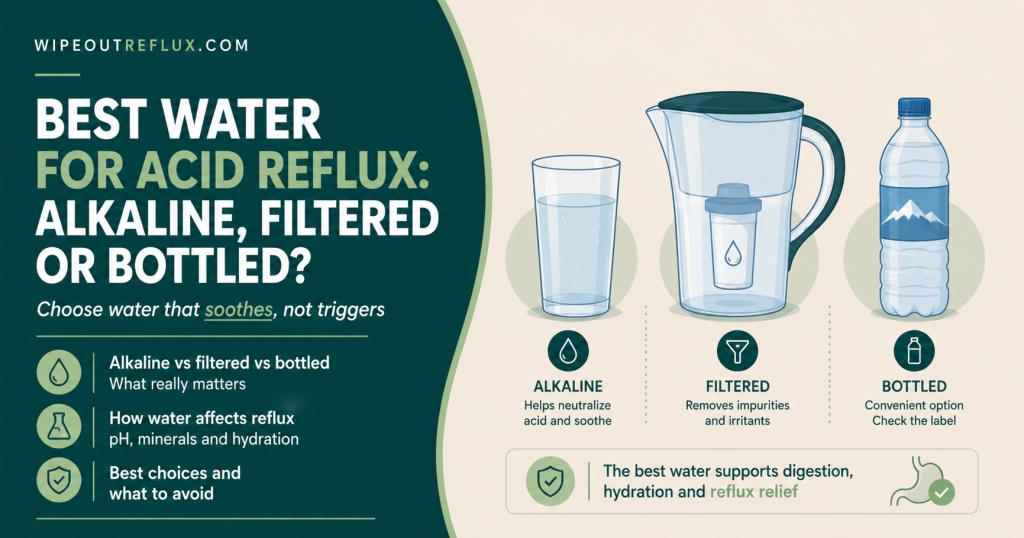
Water seems like it should be the one drink you never have to think about with reflux. And for the most part, it is your best friend — but not all water is equal, and for silent reflux (LPR) in particular, the type you choose can genuinely matter.
Here is the quick verdict. For LPR specifically, alkaline water at pH 8.8 or above has the strongest evidence behind it, because at that pH it permanently inactivates pepsin — the enzyme that drives throat damage. Filtered still water is a clean, neutral, sensible everyday baseline. And bottled water is a mixed bag: some is fine, some is surprisingly acidic, and the sparkling kind can actually make reflux worse. The one thing to avoid across the board is acidic and carbonated water.
I have managed my own LPR for over eight years, so let me walk you through why water pH matters, compare the three options fairly, and give you a practical answer you can actually use.
Key Takeaways
- Water pH matters most for LPR, because of pepsin — the enzyme behind silent reflux throat damage.
- Alkaline water (pH ≥8.8) is best for LPR. At this pH it permanently denatures pepsin and buffers acid, which ordinary water cannot do.
- Filtered still water is a great baseline. Clean and neutral, it is a safe, cheap everyday choice — though it does not reach the pepsin threshold.
- Bottled water varies hugely. Check the pH: many are neutral, some are acidic, and only some are truly alkaline.
- Avoid sparkling water. Carbonation can trigger reflux through bloating and mild acidity.
- Still beats fizzy, and neutral-to-alkaline beats acidic — that is the simple rule.
- Water is not a cure. It supports the fundamentals; it does not replace fixing your diet and triggers.
Why Water pH Matters in Reflux — Especially LPR
To understand why the type of water matters, you need to understand pepsin, and this is where LPR differs from ordinary heartburn.
Pepsin is a digestive enzyme made in your stomach. In silent reflux, tiny amounts of it travel up and stick to the delicate tissue of your throat and voice box. Here is the crucial part: pepsin needs acid to switch on, but it does not simply wash away at neutral pH. It remains stable — dormant but intact — and can be reactivated whenever fresh acid arrives, from a meal, a fizzy drink, or another reflux episode. Even inactive pepsin sitting on the tissue can cause damage [Johnston et al., The Laryngoscope, 2007].
That is why LPR is so stubborn, and why the pH of what you drink matters. If you can raise the pH high enough, you do not just dilute pepsin — you can permanently destroy it. This is the whole basis of the alkaline-water argument, and it is why I always steer people toward understanding how to neutralise pepsin in the throat.
Alkaline Water: The Best Evidence for LPR
Alkaline water is water with a pH above 7 — typically 8 to 9.5. For reflux, one specific number matters: pH 8.8.
In the landmark laboratory study, naturally alkaline artesian water at pH 8.8 instantly and irreversibly denatured human pepsin — rendering it permanently inactive rather than just temporarily suppressed. The same water also had far better acid-buffering capacity than ordinary bottled waters at neutral pH [Koufman and Johnston, Annals of Otology, Rhinology and Laryngology, 2012]. The key word is irreversibly: once denatured at pH 8.8, pepsin cannot be reactivated even if acid arrives later. Ordinary water at pH 6.7 to 7.4 does not do this — it merely dilutes pepsin.
There is human data too. A study comparing a wholly dietary approach — alkaline water plus a plant-based, Mediterranean-style diet and standard reflux precautions — against a proton pump inhibitor found the diet-based approach was not significantly worse than the drug at improving LPR symptoms [Zalvan et al., JAMA Otolaryngology–Head and Neck Surgery, 2017].
The honest caveats. The pepsin study was done in a lab, not in patients, and in the human study the alkaline water was part of a whole package (diet plus precautions), so we cannot credit the water alone. You also need water that genuinely reaches pH 8.8 or higher to hit the pepsin threshold — many “alkaline” waters fall short or drift back toward neutral as they sit. And there is little reason to chase extreme pH values; higher is not automatically better. But as a drink of choice for LPR, alkaline water has the most mechanistic and clinical support, and I dig into it further in my dedicated guides on alkaline water for LPR and whether alkaline water is good for acid reflux.
Filtered Water: The Sensible Everyday Baseline
Filtered water — tap water run through a jug, tap, or under-sink filter — is a genuinely good everyday choice, just for different reasons than alkaline water.
Filtering removes chlorine, sediment, and various contaminants, giving you clean water at a roughly neutral pH (around 7). It will not denature pepsin the way pH 8.8 water can, but it is a safe, inexpensive, environmentally friendly baseline that beats acidic bottled options hands down. For general hydration through the day, it is hard to fault.
One point of confusion worth clearing up: a standard filter does not make water alkaline. Ordinary carbon filters produce neutral water. Only a specific alkalising or ionising system (or added alkaline drops or minerals) raises the pH into the pepsin-denaturing range. So if you are filtering specifically for LPR benefit, know that you are getting clean, neutral water — good, but not the same as true alkaline water.
Bottled Water: A Mixed Bag — Check the pH
Bottled water is where people most often go wrong, because the label rarely tells you what matters: the pH.
Most bottled waters sit in the neutral 6.7 to 7.4 range, which is fine. But some purified brands have minerals or carbon dioxide added back for taste, which can nudge them mildly acidic — and acidic is exactly what you want to avoid, because it can reactivate pepsin. Flavoured waters are often worse, since the flavourings are frequently acidic. At the other end, some natural mineral waters are genuinely alkaline and rich in bicarbonate, which can help buffer acid.
So bottled water is neither good nor bad as a category — it entirely depends on the specific water. The practical move is to look up the pH of your usual brand and favour still, neutral-to-alkaline options. I go deeper into this in my guide on whether bottled water can cause acid reflux.
The Carbonation Trap
This deserves its own warning, because sparkling water catches a lot of reflux sufferers out. It feels refreshing and “just water,” but carbonated water can worsen reflux in two ways.
First, the bubbles introduce gas that distends your stomach. A fuller, more stretched stomach triggers more of the transient valve relaxations that let reflux escape, and it promotes belching — and each belch is an opportunity for stomach contents to travel upward. Second, carbonated water is mildly acidic, because dissolving carbon dioxide creates carbonic acid, lowering the pH.
Neither effect is dramatic for everyone, but if you have LPR, still water is the safer default. If you love fizzy water, it is one of the first things worth trialling a break from.
So Which Water Is Best?
Here is my honest, practical ranking for reflux — and especially LPR:
- Best: still alkaline water at pH 8.8 or above. This is the only option with the mechanism to actually denature pepsin, and it has the best LPR evidence. Ideal if your throat symptoms are prominent.
- Excellent everyday baseline: clean filtered still water. Neutral, cheap, and endlessly drinkable — perfect for staying hydrated through the day.
- Fine, with care: still bottled water at a neutral-to-alkaline pH. Check the label or brand pH, and favour naturally alkaline or bicarbonate-rich mineral waters.
- Avoid: acidic, flavoured, and sparkling waters. These can reactivate pepsin or trigger reflux through distension.
One more thing that matters more than the type of water: how you drink it. Staying well hydrated supports saliva production and helps clear refluxed material from the throat. But gulping large volumes in one go — especially with meals — distends the stomach and can backfire, something I cover in can drinking a lot of water cause acid reflux. Sip steadily through the day rather than downing big glasses at once. For a broader look at what else belongs in your glass, see my guide on what to drink for acid reflux.
Practical Tips
- Getting alkaline water: options include naturally alkaline bottled mineral water, a home water ioniser, or alkaline drops — but verify the pH actually reaches 8.8 or higher, as claims vary.
- Check your water’s pH with inexpensive test strips if you are unsure, rather than trusting the marketing.
- Go still, not sparkling, as your default.
- Sip, don’t gulp, and go easy on large volumes right at mealtimes.
- Room temperature is gentler on a sensitive throat than very cold water for some people — worth experimenting.
Conclusion
When it comes to the best water for acid reflux, the answer depends on what you are trying to achieve. For hydration and everyday drinking, clean filtered still water is a fine, sensible baseline. But for LPR specifically — where pepsin is the real troublemaker — alkaline water at pH 8.8 or above stands out, because it is the only option that can actually denature pepsin rather than just dilute it, and it has the best research behind it. Bottled water sits in between: fine if it is still and neutral-to-alkaline, best avoided if it is acidic, flavoured, or sparkling.
Keep the caveats in mind, though. The alkaline-water evidence, while genuinely promising, comes largely from lab work and a diet-combined study, so it is a helpful tool rather than a cure. Plain, clean, still water that keeps you hydrated is never a wrong choice, and avoiding the acidic and fizzy stuff matters as much as chasing a high pH.
Most importantly, water is a supporting player. In my experience, what fixes reflux is changing what you eat and how you eat far more than which bottle you reach for — the right water simply helps the process along. That is exactly what my Wipeout Diet Plan is built to deliver, in the depth this condition needs. And because so much of this comes down to pH, the Wipeout Food Reference Guide is the essential companion — it lays out exactly which foods and drinks are reflux-friendly and their pH values, so you can make confident choices about your water and everything else you consume. Get the foundation right, and the right glass of water becomes the easy final touch.
Frequently Asked Questions
What is the best water to drink for acid reflux?
For LPR specifically, still alkaline water at pH 8.8 or above is best, because it can permanently denature pepsin. For general hydration, clean filtered still water is an excellent everyday baseline. Avoid acidic, flavoured, and sparkling waters.
Does alkaline water really help acid reflux?
The evidence is promising, especially for LPR. Laboratory research shows pH 8.8 water permanently inactivates pepsin, and a human study found alkaline water combined with a Mediterranean diet was as effective as a PPI for LPR symptoms. It is a useful adjunct, though not a standalone cure.
What pH should my water be for reflux?
To actually denature pepsin, you need a pH of 8.8 or higher — the threshold established in the research. Neutral water (around pH 7) is fine for hydration but does not reach that threshold. The main thing to avoid is acidic water below pH 7.
Is filtered water good for acid reflux?
Yes, as a clean, neutral everyday choice. Filtering removes chlorine and contaminants, giving you safe water at around pH 7. It will not denature pepsin like alkaline water, and standard filters do not make water alkaline, but it is a sound, inexpensive baseline.
Is sparkling or carbonated water bad for acid reflux?
It can be. Carbonation distends the stomach, which can trigger valve relaxations and belching that promote reflux, and it is mildly acidic due to carbonic acid. If you have reflux, still water is the safer default.
Can bottled water cause acid reflux?
Some can. Many bottled waters are neutral and fine, but purified brands with added minerals or carbon dioxide can be mildly acidic, and flavoured and sparkling waters more so. Check the pH and favour still, neutral-to-alkaline options.
Should I drink water during meals if I have reflux?
Small sips are fine, but large volumes with meals can distend the stomach and worsen reflux. It is generally better to sip steadily through the day and avoid downing big glasses right at mealtimes.
Research Sources
- [Koufman and Johnston, Annals of Otology, Rhinology and Laryngology, 2012] — This in vitro study found that pH 8.8 alkaline water instantly and irreversibly denatured human pepsin and had superior acid-buffering capacity compared with conventional bottled waters at neutral pH.
- [Zalvan et al., JAMA Otolaryngology–Head and Neck Surgery, 2017] — A study comparing alkaline water plus a plant-based Mediterranean-style diet and reflux precautions against proton pump inhibition found the dietary approach was not significantly worse than the medication for LPR symptoms.
- [Johnston et al., The Laryngoscope, 2007] — Showed that human pepsin remains stable at neutral pH and can be reactivated by acid, and that even inactive pepsin can deplete protective proteins in laryngeal tissue, underpinning why water pH matters in LPR.

David Gray
12 years living with LPR · Consultant & researcher
I've lived with LPR for twelve years — the misdiagnoses, the PPI courses that did nothing, the slow work of figuring out what actually helps. Wipeout Reflux is where I translate the research into plain terms for people stuck in the same place. Every claim here is sourced to peer-reviewed work, and I consult one-to-one with LPR sufferers.