
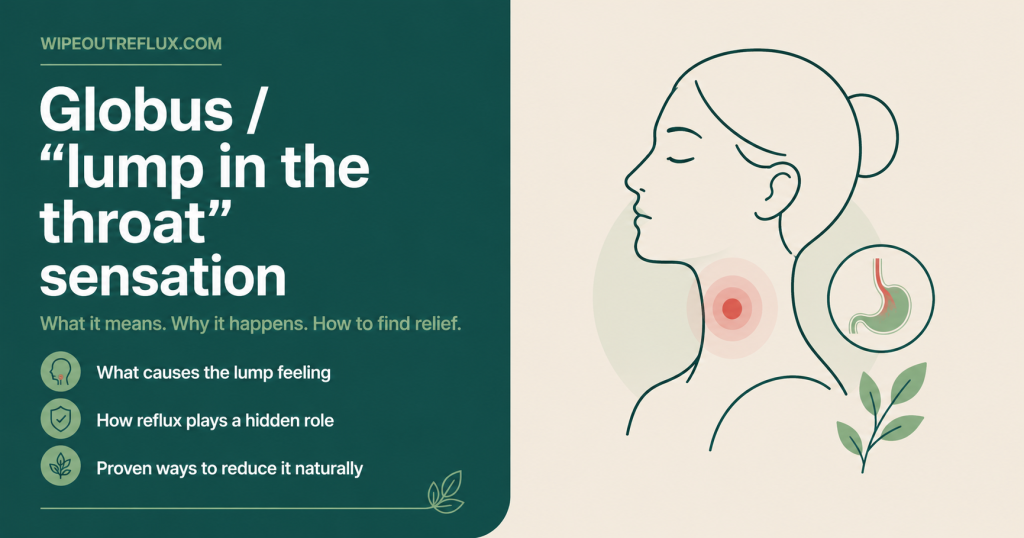
That persistent feeling of a lump, tightness, or something stuck in your throat — without anything actually being there — is called globus sensation, or globus pharyngeus. It’s one of the most unsettling symptoms you can experience, largely because it’s invisible. No one can see it. Scans often come back clear. And yet the feeling is constant, sometimes barely noticeable and sometimes utterly distracting.
LPR (laryngopharyngeal reflux, also called silent reflux) is one of the most common causes of globus sensation, yet it’s frequently missed because people with LPR often don’t experience classic heartburn. The reflux reaches the throat and larynx quietly, causing inflammation and swelling that creates a real, physical sensation — even if there’s no obstruction you can point to.
In this guide I’ll explain exactly how reflux creates that lump in the throat feeling, how to tell whether LPR is behind it, and the practical steps that make a genuine difference.
Key Takeaways
- Globus sensation is a persistent feeling of a lump, tightness, or foreign body in the throat — with no actual blockage present
- LPR (silent reflux) is one of the most common identifiable causes of globus, and frequently occurs without heartburn
- Pepsin deposited on laryngeal tissue causes swelling and inflammation that creates a real physical sensation
- Acid irritation can also trigger tension in the cricopharyngeal muscle at the top of the oesophagus, amplifying the sensation
- Globus from reflux is not the same as difficulty swallowing — food and liquids should pass normally
- Dietary changes targeting both acid and pepsin are the most effective starting point
- Stress and anxiety significantly amplify globus, even when LPR is the root cause — managing both is important
- Most people need 6–12 weeks of consistent changes to see meaningful improvement in globus from reflux
What Is Globus Sensation?
Globus sensation (formally known as globus pharyngeus) is the medical term for a persistent feeling of a lump, ball, or tightness in the throat that isn’t associated with any actual swallowing difficulty. You can eat and drink normally — the food goes down without issue — but between swallows, that feeling of something sitting in the throat doesn’t go away.
It’s more common than most people realise. Studies suggest globus accounts for a significant proportion of new referrals to ENT clinics, and it affects people across all age groups. The challenge is that the causes are varied — LPR, post-nasal drip, oesophageal dysmotility, anxiety, and thyroid issues can all produce similar sensations — which makes getting a clear diagnosis frustrating.
For the purposes of this article, I’m focusing specifically on globus caused by reflux, since that’s one of the most treatable underlying causes and is very often missed.
Is Reflux Causing Your Lump in the Throat?
LPR is strongly associated with globus sensation. Research using 24-hour double-probe pH monitoring — which measures acid reaching both the oesophagus and the pharynx — has found a high prevalence of pathological reflux in patients presenting primarily with globus [Smit et al., Archives of Otolaryngology-Head and Neck Surgery, 2000].
A few patterns suggest reflux is behind your globus:
- The sensation is worse after eating, particularly larger meals or trigger foods
- It’s worse when lying down or in the morning after waking
- It’s accompanied by other LPR symptoms — chronic throat clearing, hoarseness, excess throat mucus, or a mild sore throat
- You don’t have classic heartburn (this is the hallmark of LPR — the reflux bypasses the oesophagus and goes straight to the throat)
- The sensation improves somewhat when you’re busy or distracted, and worsens when you focus on it
The Reflux Symptom Index (RSI) is a validated clinical tool used to screen for LPR, and globus sensation is one of the nine key symptoms it assesses [Belafsky et al., Journal of Voice, 2002]. If you score highly on the RSI and have several of the above patterns, LPR is a very plausible explanation worth investigating.
For a broader overview of LPR and its full range of symptoms, my complete guide to LPR and silent reflux covers the condition in depth.
How LPR Creates a Lump in the Throat Feeling
Understanding the mechanism behind globus from reflux is genuinely useful — not just intellectually, but because it clarifies why certain treatments work and others don’t. The larynx is far more sensitive to reflux than the oesophagus — even micro-amounts of acid reaching the throat are sufficient to trigger significant symptoms [Koufman JA, Laryngoscope, 1991].
Pepsin and Laryngeal Tissue Swelling
When reflux reaches the throat, it deposits both acid and pepsin — a digestive enzyme produced in the stomach — onto the laryngeal tissue. Pepsin is particularly problematic because it can bind directly to throat tissue and remain there even after the acid has cleared. Once bound, it causes inflammation and swelling of the laryngeal mucosa, which creates a very real physical sensation of fullness or a foreign body [Johnston et al., Annals of Otology, Rhinology & Laryngology, 2009].
The sensation isn’t imaginary — the tissue is genuinely inflamed and swollen. But because the swelling is diffuse rather than a discrete lump, imaging usually comes back normal, which can be deeply frustrating when you’re told there’s nothing there but can clearly feel something.
Cricopharyngeal Muscle Tension
The cricopharyngeus is a small muscle at the top of the oesophagus that acts as the upper oesophageal sphincter (UOS). Its job is to prevent food and air from entering the oesophagus when you’re not swallowing. When acid and pepsin irritate the oesophagus and larynx, the cricopharyngeus can respond with increased tension — a protective reflex that itself creates a feeling of tightness or constriction in the throat. This is one of the reasons globus can feel worse when swallowing is anticipated, even before you’ve eaten anything.
Mucus Pooling
LPR triggers excess mucus production as the throat tries to coat and protect itself from pepsin and acid. This mucus can pool at the back of the throat and in the larynx, adding to the sensation of something being there. It also drives the urge to clear the throat, which inflames the tissue further and perpetuates the cycle. If you find yourself with a constant need to clear your throat alongside the globus feeling, this is a strong indicator that LPR is involved.
Globus vs Difficulty Swallowing — An Important Distinction
This distinction is worth making clearly, because it matters both diagnostically and in terms of how worried you should be. Globus sensation is characterised by the feeling of a lump or tightness between swallows — when you’re not actively eating or drinking. Critically, swallowing often temporarily relieves the sensation, and food and liquids pass without difficulty or pain.
Dysphagia (difficulty swallowing) is a different symptom — food gets stuck, there’s pain on swallowing, or you’re coughing or choking on food or liquids. This requires urgent medical assessment to rule out structural causes.
If what you’re experiencing is a persistent feeling between meals with normal swallowing function, that’s globus — and reflux is a very plausible cause. If swallowing itself is the problem, see a doctor promptly.
How to Get Rid of the Lump in Throat Feeling from Reflux
1. Change Your Diet to Target Acid and Pepsin
Since pepsin deposited on laryngeal tissue is a key driver of globus from LPR, your dietary strategy needs to address both acid production and the reactivation of pepsin already on your throat tissue. In practice this means:
- Cutting out high-acid foods and drinks — citrus fruits, tomatoes, vinegar, carbonated drinks, and anything with a pH below 4
- Reducing or eliminating alcohol and caffeine — both relax the lower oesophageal sphincter (LOS) and promote reflux
- Cutting back on high-fat meals, which slow gastric emptying and increase reflux pressure
- Eating smaller portions — large meals significantly increase intra-gastric pressure
- Stopping eating 3–4 hours before bed — nocturnal reflux deposits pepsin on throat tissue overnight, directly worsening morning globus
A plant-based, Mediterranean-style dietary approach has been shown in clinical research to achieve LPR symptom reduction comparable to — and in some cases better than — proton pump inhibitor therapy [Zalvan et al., JAMA Otolaryngology-Head and Neck Surgery, 2017].
For a practical day-to-day reference covering which specific foods and drinks are reflux-safe and their pH values, the Essential Reflux Food List is a useful guide to keep to hand.
2. Drink Alkaline Water Regularly
Alkaline water at pH 8.8 or above can irreversibly denature pepsin, deactivating it on laryngeal tissue. Sipping alkaline water throughout the day — particularly after meals and before bed — helps neutralise deposited pepsin and reduces the ongoing inflammatory stimulus behind globus. This is particularly relevant for globus because the swelling driving the sensation is directly tied to pepsin activity on the tissue.
I’ve written a detailed guide on alkaline water and acid reflux covering the evidence and practical guidance on which options work best.
3. Fix Eating Timing and Habits
Beyond food choices, when and how you eat drives a significant amount of LPR-related globus:
- Stop eating at least 3 hours before lying down — ideally 4 hours
- Eat slowly and chew thoroughly — rushed eating increases swallowed air and gastric pressure
- Avoid bending over or vigorous activity immediately after eating
- Stay upright for at least 30 minutes after meals
4. Adjust Your Sleep Position
Morning globus that’s worse when you wake up is a reliable sign of nocturnal reflux. When you lie flat, the lower oesophageal sphincter doesn’t get the same gravitational assistance keeping stomach contents down. Two changes make a significant difference:
- Elevate the head of your bed by 15–20cm using bed risers under the legs — not extra pillows, which create a neck bend that can worsen reflux by increasing abdominal pressure
- Sleep on your left side — due to the anatomy of the stomach, left-side sleeping reduces nocturnal reflux compared to sleeping on the right
5. Manage Stress and Anxiety
This is one of the more nuanced aspects of globus from reflux, and it’s worth being honest about: stress genuinely makes globus worse, even when reflux is the primary cause. There are two reasons for this. First, stress and anxiety increase hypervigilance to bodily sensations — the brain becomes more attuned to signals from the throat and amplifies them. Second, stress impairs gut motility and can worsen reflux itself through multiple pathways.
This doesn’t mean globus is “in your head” — the underlying tissue inflammation from LPR is real. But it does mean that stress management is a practical part of recovery, not just a vague wellbeing recommendation. Even simple strategies like reducing caffeine (which also worsens reflux), getting better sleep, and practising nasal breathing can lower the background anxiety that amplifies the sensation.
6. Be Patient With Recovery
Globus from reflux takes longer to resolve than many people expect, which itself causes anxiety that can worsen the sensation. The laryngeal tissue needs time to reduce its swelling and heal after pepsin damage. Most people notice meaningful improvement within 6–8 weeks of consistent dietary and lifestyle changes, with fuller resolution taking 3–4 months in some cases. The improvement tends to be gradual rather than sudden.
How Long Does Globus Sensation from Reflux Last?
This depends heavily on how consistently you manage the underlying reflux. With strong dietary compliance and lifestyle changes, most people see noticeable improvement within 6–8 weeks, with full resolution over 3–4 months. If you’re making changes but not seeing any improvement after 8–10 weeks, it’s worth reassessing whether there are other contributing factors — or whether LPR is actually the cause in your case.
The two factors that most consistently delay recovery are eating too close to bedtime and continuing to consume acidic drinks (including coffee, alcohol, and carbonated water) that reactivate pepsin on throat tissue.
When Globus Is Not from Reflux — Red Flags to Watch For
While reflux is a common cause of globus, it’s not the only one — and there are warning signs that warrant prompt medical attention rather than a trial of dietary changes:
- Difficulty swallowing food or liquids (dysphagia) — this is the key distinction from globus
- Pain when swallowing (odynophagia)
- A lump or swelling that you or a doctor can see or feel in the neck
- Progressive worsening over a short period
- Unexplained weight loss
- Hoarseness lasting more than 3–4 weeks without improvement
- Any blood in saliva or mucus
- Globus that wakes you from sleep
An ENT specialist can perform a laryngoscopy to directly examine the larynx and throat. This rules out structural causes and can confirm signs of LPR-related inflammation. If you’ve had globus for more than 8–12 weeks without improvement from dietary changes, it’s worth getting a specialist assessment.
Frequently Asked Questions
Can acid reflux cause a feeling of something stuck in my throat?
Yes — this is one of the most common presentations of LPR. The feeling of something stuck or lodged in the throat, without actual difficulty swallowing, is a classic globus sensation. Reflux deposits pepsin on laryngeal tissue, causing swelling and inflammation that creates a real physical sensation even without a visible obstruction.
Why does my globus feel worse in the morning?
Morning globus that improves through the day is a strong indicator of nocturnal LPR. When you sleep, reflux can reach the throat without the gravitational protection you have when upright — and you spend several hours in that position. Pepsin accumulates on the larynx overnight, driving maximum inflammation when you wake. Elevating the head of your bed and stopping eating 3–4 hours before sleep are the two changes that most consistently improve morning symptoms.
Will PPIs get rid of globus from reflux?
PPIs are often prescribed for globus from reflux, with mixed results. They reduce acid production but don’t address pepsin, which is a key driver of laryngeal tissue inflammation behind globus. Many people find dietary changes targeting both acid and pepsin — combined with lifestyle adjustments — more effective than medication alone for this specific symptom.
Is globus from reflux dangerous?
Globus from LPR is not dangerous in itself, though chronic LPR can cause laryngeal tissue changes over time. The main reason to get globus properly assessed is to rule out other causes — particularly structural ones that require different treatment. Once reflux is identified as the cause, management focuses on reducing it through the approaches described in this article.
Does globus sensation go away on its own?
Without addressing the underlying reflux, globus driven by LPR tends to persist or fluctuate rather than resolve. It often worsens after dietary triggers or periods of stress and improves when those factors are reduced. Sustained improvement requires consistently managing the reflux driving the tissue inflammation.
Can stress alone cause globus?
Stress and anxiety can both produce and amplify globus sensation through muscle tension and heightened sensory awareness. However, in many cases where globus is attributed to anxiety, an underlying physical cause like LPR is contributing. The two often co-exist, which is why addressing both the reflux and the stress component produces the best outcomes.
How is globus from reflux diagnosed?
Diagnosis is usually clinical — based on symptom pattern, an elevated Reflux Symptom Index score, and response to anti-reflux measures. An ENT can perform a laryngoscopy to assess laryngeal inflammation. A 24-hour pharyngeal pH study can confirm acid reaching the throat. A barium swallow or endoscopy may be used to rule out other causes.
Conclusion
Globus sensation from reflux is persistent, uncomfortable, and often poorly understood — both by the person experiencing it and sometimes by clinicians who haven’t connected it to LPR. Understanding that the sensation is driven by real inflammation from pepsin on laryngeal tissue, not by imagination, is genuinely useful. It explains why standard acid-blocking medication often falls short, and why dietary changes targeting both acid and pepsin tend to work better.
The practical path forward is clear: remove acidic and triggering foods, stop eating close to bedtime, elevate the head of your bed, drink alkaline water regularly, and give your throat tissue the time it needs to reduce its inflammation. Managing the stress component alongside this is important too — the two interact more than most people realise.
If you want a structured, step-by-step dietary framework for managing LPR and its symptoms, the Wipeout Diet Plan goes into far more depth than any single article can — covering exactly what to eat, what to avoid, and how to progress through recovery. And for a quick daily reference on which specific foods are reflux-safe and their pH values, the Essential Reflux Food List is a practical companion to keep close during the process.
Most people do see improvement — it just takes consistency and patience.
Research & References
Smit et al., Archives of Otolaryngology-Head and Neck Surgery, 2000 — A prospective cohort study using 24-hour double-probe pH monitoring in patients presenting with globus, hoarseness, or both, finding a high prevalence of gastropharyngeal reflux and supporting LPR as a primary aetiologic factor in globus pharyngeus.
Belafsky et al., Journal of Voice, 2002 — Validation study for the Reflux Symptom Index (RSI), a nine-item clinical screening tool for LPR, in which globus sensation is one of the key symptoms assessed and scored.
Koufman JA, Laryngoscope, 1991 — Foundational clinical investigation in 225 patients establishing that laryngeal tissue is highly sensitive to even micro-reflux events, and that silent gastroesophageal reflux produces significant upper aerodigestive tract symptoms without classic heartburn.
Johnston et al., Annals of Otology, Rhinology & Laryngology, 2009 — Demonstrated that pepsin in non-acidic refluxate is taken up by hypopharyngeal epithelial cells and causes direct cellular damage, establishing the pepsin-driven mechanism behind LPR tissue injury and symptoms including globus.
Zalvan et al., JAMA Otolaryngology-Head and Neck Surgery, 2017 — Compared a Mediterranean and alkaline dietary approach against PPI therapy for LPR, finding dietary intervention achieved outcomes comparable to medication for symptom reduction, including on globus-related RSI scores.

David Gray
12 years living with LPR · Consultant & researcher
I've lived with LPR for twelve years — the misdiagnoses, the PPI courses that did nothing, the slow work of figuring out what actually helps. Wipeout Reflux is where I translate the research into plain terms for people stuck in the same place. Every claim here is sourced to peer-reviewed work, and I consult one-to-one with LPR sufferers.