
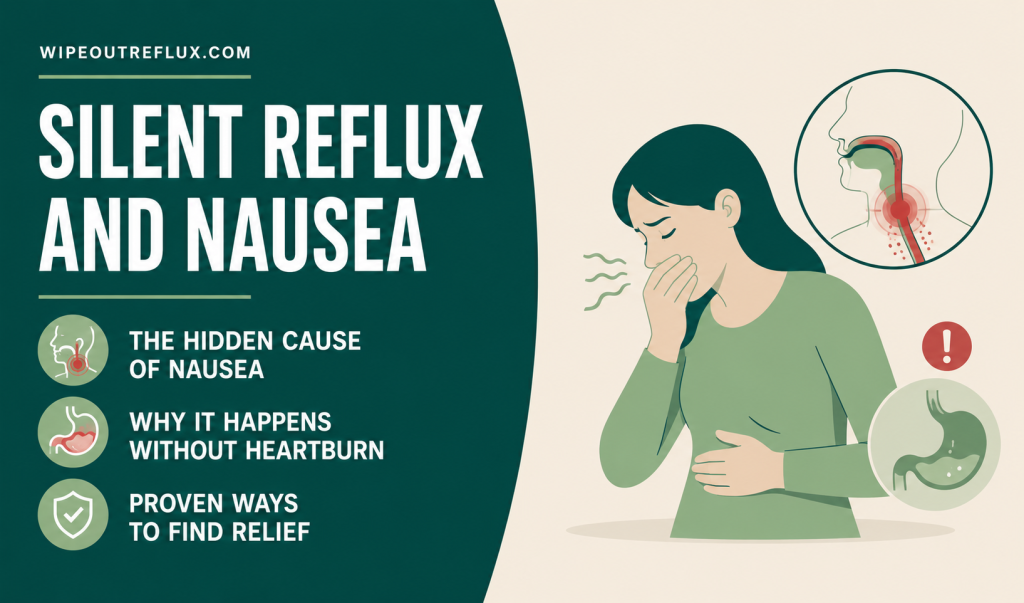
Nausea and silent reflux don’t seem like they should go together. Most people associate nausea with food poisoning, motion sickness, or a stomach bug—not with a throat condition. But if you have laryngopharyngeal reflux (LPR), nausea is more common than most people realise, and it has several distinct mechanisms behind it that explain exactly why it happens.
The short answer: yes, silent reflux causes nausea. It can do so through pepsin-driven inflammation, vagal nerve irritation, delayed stomach emptying, and the effect of post-nasal drip. Each of these can operate on its own or in combination, which is why nausea in LPR patients can feel unpredictable—sometimes appearing with food, sometimes on an empty stomach, sometimes worst first thing in the morning.
In this article I’ll walk through the mechanisms in plain terms, explain when and why LPR nausea tends to be worst, and lay out what actually makes a practical difference to managing it.
Key Takeaways
- Silent reflux (LPR) can and does cause nausea through multiple distinct mechanisms, not just stomach irritation.
- Pepsin—the digestive enzyme that travels with acid—triggers inflammatory changes in the upper digestive tract that contribute to nausea signals.
- The vagus nerve connects the esophagus and throat directly to the brain’s nausea control centres, meaning acid irritation can trigger a nausea reflex without involving the stomach directly.
- Around 25% of people with GERD or LPR have delayed gastric emptying, where food sits in the stomach too long—one of the most common causes of persistent nausea in reflux patients.
- Post-nasal drip from LPR-related mucus can drain into the stomach and contribute to morning nausea, particularly when it has accumulated overnight.
- LPR nausea often peaks in the morning and after larger meals, which helps distinguish it from other causes.
- Diet changes, meal timing, and sleeping position are the most impactful non-drug interventions for LPR-related nausea.
- Persistent or worsening nausea should always be assessed by a doctor, as it can have other causes that need ruling out.
Does Silent Reflux Actually Cause Nausea?
Yes—though it’s not the first symptom people or doctors tend to think of. The classic symptoms of silent reflux are throat-based: hoarseness, chronic cough, throat clearing, globus (the feeling of something stuck in the throat), and post-nasal drip. But nausea features in a meaningful subset of LPR cases, and it tends to be overlooked precisely because it doesn’t look like the heartburn-and-indigestion picture most people associate with reflux.
Part of the reason nausea gets missed is that LPR patients often don’t have typical heartburn. Without that central symptom, both patients and clinicians can struggle to connect the nausea to what’s actually happening—acid and pepsin are reaching the upper throat and triggering a systemic response that includes nausea signals. Understanding the mechanisms makes this connection much clearer.
How Silent Reflux Causes Nausea: The Mechanisms
Pepsin Irritation and Upper Digestive Inflammation
Pepsin is a digestive enzyme that travels with stomach acid during a reflux event. In silent reflux, pepsin doesn’t just stay in the esophagus—it reaches the throat, the larynx, and the upper digestive lining. Once there, it initiates a localised inflammatory response that persists even after the reflux event has passed, because pepsin can remain active on tissue surfaces and become reactivated when conditions are mildly acidic, such as when you eat or drink.
This inflammatory activity in the upper aerodigestive tract creates a state of generalised irritation. The body’s response to significant mucosal inflammation—particularly in areas with high vagal nerve density—can include a nausea signal, even without any new reflux events occurring. Research has confirmed that pepsin directly initiates inflammatory changes in the larynx, nasopharynx, and nasal cavity, impairing normal cellular functions in those tissues [Kowalik et al., Otolaryngologia Polska, 2017]. This chronic low-grade inflammation can be enough to sustain nausea symptoms even between meals and reflux events.
Vagal Nerve Stimulation
The vagus nerve is one of the most important nerves in the body for digestive function. It runs from the brainstem all the way down through the throat, heart, lungs, and gastrointestinal tract—and it carries sensory information in both directions. When acid or pepsin irritates the esophageal or laryngeal lining, the vagus nerve picks up those signals and transmits them upward toward the brain’s nausea control centres, including the area postrema and nucleus tractus solitarius.
This is a direct, reflex-level pathway—nausea can be generated without any food present in the stomach, without any stomach-based cause at all. The same vagal reflex arc also explains other LPR symptoms like cough, throat tightening, and globus sensation. In some patients, this vagal irritation is the primary driver of their nausea, which is why the nausea can appear without any obvious food or eating trigger and why it often occurs first thing in the morning, when the irritation from overnight reflux is at its freshest.
Delayed Gastric Emptying
A third mechanism that many LPR patients don’t know about is delayed gastric emptying—a condition where food moves out of the stomach into the small intestine more slowly than normal. This matters because a stomach that empties slowly stays fuller for longer, creating both a mechanical pressure that encourages reflux events and a sustained nausea stimulus from the prolonged distension and fermentation of food in the stomach.
Delayed gastric emptying is far more common in reflux patients than in the general population. A clinical study using standardised scintigraphic assessment found that approximately 25–33% of patients diagnosed with GERD had measurably delayed gastric emptying, with dyspepsia present in all patients included in the study [Buckles et al., American Journal of the Medical Sciences, 2004]. A subsequent systematic review and meta-analysis of 92 gastric emptying studies confirmed significant associations between delayed gastric emptying and nausea (OR 1.6), vomiting (OR 2.0), and early satiety (OR 1.8) [Vijayvargiya et al., Gut, 2019].
If your nausea is worse after meals, lingers for hours after eating, comes with a feeling of prolonged fullness, or is accompanied by bloating that doesn’t resolve quickly, delayed gastric emptying deserves consideration. It can be assessed with a gastric emptying scan if your GP or gastroenterologist thinks it’s warranted.
Post-Nasal Drip and Mucus Accumulation
LPR triggers excess mucus production in the throat and sinuses as the body tries to protect delicate mucosal surfaces from acid and pepsin exposure. This mucus can accumulate overnight—particularly when lying flat—and drain down the back of the throat and into the stomach in the early hours of the morning. Swallowing significant amounts of thick, irritating mucus is a real nausea trigger for many people, and it’s one of the main reasons morning nausea is a distinctive pattern in LPR patients.
The mucus itself can also coat the throat and create an uncomfortable, heavy sensation that many people describe as feeling vaguely sick—even if there’s no food-related trigger and no reflux actively occurring at that moment.
Why LPR Nausea Is Often Worst in the Morning
Morning nausea is one of the most reported patterns in silent reflux, and several factors converge to make it worse at that time of day. During sleep, reflux events are more frequent and more damaging because the swallowing reflex, salivation, and esophageal clearance mechanisms that normally dilute and remove acid are all greatly reduced. Acid and pepsin that reflux during the night have hours to sit on throat and esophageal tissue without being washed away.
This overnight accumulation—of both acid exposure and mucus—means that by the time you wake up, the irritation in your throat and upper digestive tract is at its peak. The mucus that has built up overnight also begins to drain when you sit up or move, adding the post-nasal drip trigger to an already-irritated system. For people with LPR, this combination commonly produces genuine nausea that improves as the day goes on and as swallowing and movement help clear the accumulated irritants.
Adjusting your sleeping position is one of the most reliable things you can do to reduce this morning pattern. Sleeping on your left side with your head elevated using a wedge pillow reduces overnight acid events significantly—there’s a full breakdown of the evidence and the best options in my article on the best sleeping position for silent reflux.
Signs Your Nausea Is From Silent Reflux
Because nausea has many possible causes, it’s worth knowing what patterns suggest LPR rather than another source. The following features are particularly associated with reflux-driven nausea:
- Nausea that’s worse in the morning on an empty stomach, which improves as the day progresses and food and movement clear throat irritants.
- Nausea that follows meals, particularly large or fatty meals, often appearing 30–90 minutes after eating.
- Nausea alongside throat symptoms—hoarseness, throat clearing, or the feeling of something stuck in the throat—without obvious heartburn.
- Nausea that’s worse when lying down or after bending over, which is when reflux events are most likely.
- Morning nausea accompanied by excessive mucus or throat clearing, which points to overnight reflux-driven mucus accumulation.
- Nausea without vomiting—LPR nausea rarely leads to actual vomiting; it tends to be a persistent low-level queasiness rather than an acute episode.
What Makes LPR Nausea Worse
Several factors reliably amplify nausea in silent reflux patients. Most of them are the same triggers that worsen LPR symptoms generally, but a few have particularly strong effects on the nausea component:
- Fatty, fried, or heavy meals. High-fat foods slow gastric emptying significantly, worsening the delayed-emptying mechanism of nausea and increasing the time stomach contents sit under pressure.
- Eating too close to bed. Late meals mean the stomach is still processing food when you lie down, combining mechanical pressure with the reflux-prone supine position.
- Alcohol. Relaxes the lower esophageal sphincter, increases reflux events, and directly irritates the gastric lining—all of which worsen both reflux and nausea.
- Carbonated drinks. The gas creates gastric distension and increases pressure on the LES, pushing acid upward more readily.
- Large meal portions. A full stomach produces more acid and creates more pressure on the LES; smaller, more frequent meals reduce both reflux events and the delayed-emptying load.
- High-acid foods. Citrus, tomatoes, vinegar, and processed foods with acidic preservatives increase the acid load available to reflux and intensify pepsin activation on throat tissue.
- Anxiety and stress. The gut-brain axis is bidirectional; chronic LPR causes anxiety, which in turn slows gastric motility and increases visceral hypersensitivity, making nausea feel more intense.
What Actually Helps With Silent Reflux Nausea
Rethink Meal Size and Timing
Shifting from two or three large meals to four or five smaller ones throughout the day is one of the most consistently effective changes for LPR nausea, particularly when delayed gastric emptying is a factor. Smaller portions mean the stomach processes food faster and reaches a lower-pressure state sooner. Stopping eating at least three hours before lying down gives the stomach time to clear before the lying position removes gravity as a protective factor.
Address Your Diet
Cutting high-fat foods, alcohol, carbonated drinks, and known acid triggers removes several of the mechanisms that drive LPR nausea simultaneously. Soft, easy-to-digest foods—lean proteins, cooked vegetables, oats, rice—pass through the stomach faster than fatty or heavily processed foods, reducing the delayed-emptying problem. Keeping an honest record of what you eat and when nausea is worst is the most reliable way to identify your personal triggers. The Essential Reflux Food List gives a practical breakdown of foods and drinks by acid level and reflux risk, which is a useful reference when building a diet that minimises both reflux events and nausea.
Improve Your Sleeping Position
Reducing overnight acid exposure directly reduces the morning-nausea pattern. Left-side sleeping with a wedge pillow to maintain head elevation is the most practical way to achieve this without medication. It simultaneously reduces the number of overnight reflux events and limits the mucus accumulation that contributes to that classic LPR morning queasiness.
Address Post-Nasal Drip Directly
Rinsing the nasal passages with a saline nasal rinse before bed can reduce the overnight mucus load. Staying well-hydrated during the day helps keep mucus from thickening and pooling. Avoiding dairy in the evening can help in those who find it thickens mucus and worsens morning post-nasal drip.
If Delayed Gastric Emptying Is Suspected
If your nausea is persistently post-meal, slow to resolve, and accompanied by prolonged bloating and fullness, it’s worth raising the possibility of delayed gastric emptying with your doctor. Prokinetic medications (which help the stomach empty faster) can be effective but require clinical assessment. Dietary approaches—smaller meals, low-fat foods, staying upright after eating—are the practical first line for managing it without medication.
When to See a Doctor
See your GP or gastroenterologist if your nausea is severe, has recently worsened significantly, is accompanied by vomiting, leads to weight loss, or doesn’t respond to dietary and lifestyle changes after several weeks. Nausea has many possible causes, and while LPR is a common and underdiagnosed one, it’s important to rule out other conditions—including H. pylori infection, functional dyspepsia, and gastroparesis—that may need their own treatment. If you haven’t had an LPR diagnosis confirmed, it’s also worth seeking one, as treating the underlying reflux properly is more effective than managing nausea symptoms in isolation.
Frequently Asked Questions
Can silent reflux cause nausea without heartburn?
Yes—this is actually one of the defining features of LPR. Unlike typical GERD, silent reflux often presents without heartburn at all. Acid and pepsin reach the throat and trigger inflammatory and vagal responses that produce nausea, but because the acid doesn’t linger in the esophagus long enough to cause the characteristic burning sensation, people may have significant nausea with no heartburn whatsoever.
Why is LPR nausea often worse in the morning?
Several factors converge overnight: protective swallowing and salivation mechanisms reduce during sleep, reflux events go unnoticed and uncorrected, acid and pepsin accumulate on throat tissue for hours, and mucus produced in response to irritation pools in the throat and drains into the stomach. The combined effect typically peaks on waking, and most people with LPR-related morning nausea find it improves within an hour or two as movement and swallowing help clear the accumulated irritants.
What is the link between delayed gastric emptying and LPR?
Delayed gastric emptying means food sits in the stomach longer than normal. A fuller, slower-emptying stomach generates more acid and exerts more upward pressure on the lower esophageal sphincter, increasing the frequency and volume of reflux events. At the same time, the prolonged stomach distension directly causes nausea. Around 25–33% of people with acid reflux have some degree of delayed gastric emptying, making it a significant factor in reflux-related nausea.
Does mucus from LPR cause nausea?
Yes—for many people with LPR, the excess mucus produced in response to acid exposure drains down the back of the throat, particularly overnight. Swallowing significant quantities of thick, irritating mucus triggers nausea in some people, and the coating effect on the throat can produce an uncomfortable queasiness that feels similar to nausea even without a stomach-based cause.
Can treating LPR reduce nausea?
Yes, generally. When the underlying reflux events are reduced through diet changes, improved sleeping position, and appropriate medication where needed, the nausea mechanisms begin to resolve. The pepsin-driven inflammation clears as the tissue heals, the vagal irritation reduces, and mucus production normalises. In people with LPR-driven delayed gastric emptying, treating the reflux often helps gastric emptying normalise too. It’s not always immediate—the throat tissue can take weeks or months to recover—but nausea typically improves alongside other LPR symptoms.
Are there foods that particularly worsen nausea in silent reflux?
High-fat foods are the most consistent culprit because they slow gastric emptying and worsen the delayed-stomach mechanism of nausea. Alcohol, carbonated drinks, citrus, and large meal portions also reliably worsen it for most people. Individual triggers vary, which is why keeping a food-and-symptom diary for a few weeks is worth doing—it usually reveals patterns that aren’t obvious without tracking.
Should I take anti-nausea medication for LPR nausea?
Anti-nausea medications can help in the short term but don’t address the underlying cause. For LPR-related nausea, the more effective long-term approach is to reduce the reflux events themselves through diet, lifestyle, and positional changes. If nausea is severe, a doctor can prescribe appropriate medication while also investigating whether delayed gastric emptying is contributing—prokinetics that speed stomach emptying can be particularly effective in those cases.
The Bottom Line
Nausea is a real and underrecognised symptom of silent reflux. It happens through several distinct pathways—pepsin-driven mucosal inflammation, vagal nerve irritation, delayed gastric emptying, and post-nasal drip—any of which can operate on its own or in combination. The fact that it often presents without heartburn is part of why it’s so frequently missed or attributed to other causes.
The most effective approach to LPR nausea addresses the underlying reflux rather than the nausea symptom in isolation. That means getting the diet right, adjusting meal size and timing, improving overnight positioning, and managing the acid load that drives the inflammation and vagal responses. For those with persistent or severe nausea, seeing a doctor to assess whether delayed gastric emptying or another condition is contributing is the right next step.
For a structured approach to the diet side of LPR management—including what to eat, what to avoid, and when to eat it—the Wipeout Diet Plan covers this in depth. It was the approach I used to get my own LPR symptoms under control, and getting the diet right is consistently the most impactful change for managing both throat symptoms and nausea together. The Essential Reflux Food List is also a practical quick-reference tool for keeping your daily food choices in a range that minimises acid exposure and supports recovery.
Research Sources
[Kowalik et al., Otolaryngologia Polska, 2017] — A review of pepsin’s role in laryngopharyngeal reflux, establishing that pepsin is the primary mucosal irritant in LPR, initiating inflammatory changes within the larynx, nasopharynx, and nasal cavity by impairing carbonate anhydrase (CAIII) and Sep 70 protein function in upper airway cells.
[Buckles et al., American Journal of the Medical Sciences, 2004] — A clinical study of 49 GERD patients using standardised scintigraphic gastric emptying assessment, finding that approximately 25–33% had measurably delayed gastric emptying, with dyspepsia present universally in the study group.
[Vijayvargiya et al., Gut, 2019] — A systematic review and meta-analysis of 92 gastric emptying studies confirming significant associations between delayed gastric emptying and upper gastrointestinal symptoms, including nausea (OR 1.6, 95% CI 1.4–1.8), vomiting (OR 2.0), and early satiety/fullness (OR 1.8) in patients with upper GI symptoms.

David Gray
12 years living with LPR · Consultant & researcher
I've lived with LPR for twelve years — the misdiagnoses, the PPI courses that did nothing, the slow work of figuring out what actually helps. Wipeout Reflux is where I translate the research into plain terms for people stuck in the same place. Every claim here is sourced to peer-reviewed work, and I consult one-to-one with LPR sufferers.