
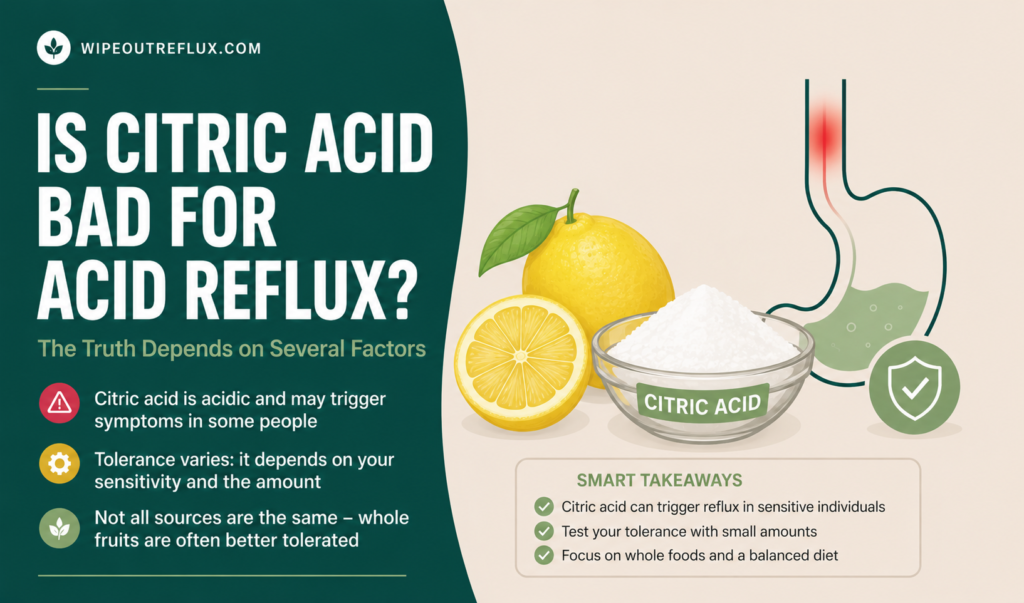
Yes — citric acid is problematic for acid reflux, and particularly so for silent reflux (LPR). But the picture is more nuanced than a blanket “avoid citric acid” instruction, because there’s a meaningful difference between the naturally occurring citric acid in whole foods and the manufactured form that’s added to thousands of processed products. And the mechanism by which it worsens reflux — direct mucosal acidification and pepsin reactivation — is different from how other common triggers like fat, alcohol, or carbonation affect the lower esophageal sphincter (LES).
Understanding these distinctions helps you make smarter choices rather than eliminating every food that contains any trace of citric acid — which would mean cutting out most of the food supply.
Key Takeaways
- Citric acid worsens reflux primarily through direct acidification of the esophageal and laryngeal environment, and by reactivating pepsin on throat tissues in LPR — not primarily through LES relaxation (which is the mechanism for fat, alcohol, and carbonation).
- Natural citric acid in whole foods (a squeeze of lemon on fish, a tomato in a meal) comes packaged with buffering from fiber and food matrix — a very different acid delivery from concentrated citric acid in drinks or supplements.
- Manufactured citric acid (E330) is produced by fermenting sugars with the fungus Aspergillus niger and is added to hundreds of processed foods and drinks as a preservative, acidulant, and flavoring agent. Some individuals report inflammatory reactions to this form specifically.
- The most problematic citric acid sources for reflux are concentrated acid drinks — effervescent supplements (vitamin C tablets, electrolyte powders), flavored sparkling waters, sour candies, and energy drinks — where citric acid is delivered in high concentration without buffering.
- For LPR, even moderate citric acid exposure can reactivate pharyngeal pepsin — making any food or drink acidifying the throat below approximately pH 4–5 a concern regardless of volume.
- The “low stomach acid causes reflux” theory — the basis for recommending lemon water or apple cider vinegar — may apply to a narrow subset of individuals with true hypochlorhydria, but for most GERD and LPR patients, adding citric acid makes things worse, not better.
- Reading ingredient labels matters: citric acid appears as “citric acid,” “E330,” or is present in “ascorbic acid with citric acid” in many supplements.
What Is Citric Acid? Natural vs. Manufactured
Citric acid is a naturally occurring weak organic acid found in citrus fruits (lemons, limes, oranges, grapefruits), berries, tomatoes, and other fruits and vegetables. It’s what makes lemons tart. It’s also a normal intermediate in the body’s Krebs cycle — the cellular energy pathway — meaning humans metabolize it routinely.
However, the citric acid listed on food and supplement labels is almost never extracted from fruit. Approximately 99% of commercially produced citric acid is manufactured by fermenting carbohydrate-rich substrates (often cornstarch or molasses) using the fungus Aspergillus niger — a black mold first used for this purpose in 1919 [__Sweis & Cressey, Toxicology Reports, 2018__]. This manufactured citric acid (MCA) is functionally the same compound as natural citric acid in chemical terms — same molecular structure, same pH when dissolved. The FDA classifies it as Generally Recognized as Safe (GRAS).
The practical distinction matters for one specific reason: a small number of individuals appear to react to manufactured citric acid in ways they don’t react to naturally occurring citric acid in whole foods. A published case series documented patients experiencing inflammatory reactions — gastrointestinal symptoms, joint pain, muscle symptoms, respiratory effects — following ingestion of foods, beverages, and supplements containing manufactured citric acid, which resolved on elimination [__Sweis & Cressey, Toxicology Reports, 2018__]. The suspected mechanism is residual Aspergillus niger proteins in the final product that may trigger reactions in sensitized individuals. This is limited evidence — four case reports, not a controlled trial — but worth being aware of if you notice reactions to processed foods that don’t occur with whole fruit.
How Citric Acid Actually Affects Acid Reflux
The original version of this article described citric acid as affecting the LES and increasing stomach acid production. This description is mechanistically imprecise, and getting the mechanism right matters for understanding which situations are most problematic.
The Real Mechanism: Direct Acidification and Pepsin Reactivation
Citric acid’s primary reflux concern is not LES relaxation — that’s the mechanism for fat (via CCK), alcohol, carbonation, peppermint, and chocolate. And it doesn’t meaningfully increase the stomach’s own acid secretion the way bitter compounds or alcohol do through gastric hormone pathways.
What citric acid does is straightforwardly acidic: it lowers the pH of whatever it’s dissolved in, and when that liquid contacts the esophageal or laryngeal lining, it delivers an acid exposure directly. For GERD sufferers, this can irritate an already-inflamed esophageal lining. For LPR sufferers, it does something more specific and more damaging.
Pepsin — the enzyme from the stomach that drives LPR’s throat and larynx symptoms — can be deposited on laryngeal tissues during reflux events and remains there for hours in a dormant state. The throat’s normal pH of approximately 6.8 keeps it largely inactive. But pepsin reactivates at acidic pH, with significant activity beginning below pH 6 and near-maximum activity below pH 4 [__Johnston et al., Laryngoscope, 2010__]. Every time an acidic drink or food passes through the throat, it transiently lowers the local pH — and if that pH drops below the reactivation threshold, any deposited pepsin awakens and begins damaging the very tissues it’s resting on.
This means that for LPR, even a moderate amount of citric acid in a flavored drink — say a sparkling water with citric acid at pH 3.5 — can trigger pharyngeal pepsin activation and worsen symptoms, even without causing a new reflux episode or directly triggering heartburn.
The Context Dependency: Whole Foods vs. Concentrated Sources
The key variable is how concentrated the citric acid is and what surrounds it when it arrives in the body.
In a whole lemon, citric acid is part of a complex food matrix including fiber, polyphenols, and flavonoids. Eating a small amount of lemon zest on grilled fish delivers a tiny amount of citric acid in a highly buffered, solid context. The amount reaching the esophageal lining is modest, and gastric buffering further reduces the impact.
In a glass of lemon juice, the same citric acid is fully dissolved in water with nothing to buffer it. It passes the larynx and esophagus in direct contact at its full pH.
In an effervescent vitamin C supplement dissolved in water, you may have a relatively concentrated citric acid solution at pH 2.5–3.5 — acidic enough to cause meaningful pepsin reactivation with every sip.
The practical implication: don’t approach citric acid as an all-or-nothing decision. The real risk scales with the concentration, the vehicle, and how much buffering surrounds it.
Hidden Sources of Citric Acid (E330) to Watch For
For reflux sufferers trying to reduce their citric acid load, the most important exercise is reading labels — because manufactured citric acid appears in many products that aren’t obviously acidic:
High-Concern Sources
- Effervescent supplements: Vitamin C tablets, electrolyte powders (Emergen-C, Nuun, many hydration tablets), and some antacid formulations include significant citric acid to create the effervescent effect. These create a concentrated acid solution when dissolved in water. Notably, some over-the-counter reflux remedies themselves contain citric acid — check your supplement labels.
- Flavored sparkling waters: Many “natural flavor” sparkling water brands use citric acid to enhance the fruit impression. Products labeled “natural” or “no artificial flavors” often contain citric acid (E330). Check the ingredients, not just the marketing claim.
- Energy drinks and sport drinks: Most contain citric acid at concentrations that push pH below 3.5.
- Sour candies: Among the highest citric acid concentrations in any common food product — sour coating on candies can have pH levels approaching 2.0 and represent some of the most concentrated citric acid exposure outside of straight lemon juice.
- Vitamin C supplements: Some vitamin C products are formulated as ascorbic acid plus citric acid. Look for “buffered vitamin C” (calcium ascorbate or sodium ascorbate) as a lower-acid alternative.
Moderate-Concern Sources
- Canned tomatoes and tomato products: Many commercial canned tomatoes add citric acid as a preservative. The overall pH is already low from the tomatoes themselves, and the addition pushes it further. Fresh tomatoes are preferable for reflux management.
- Processed sauces and dressings: Ketchup, hot sauce, and many vinaigrette-style dressings contain added citric acid on top of their existing acidity.
- Fruit-flavored drinks and cordials: “Fruit drink” products and concentrated squashes regularly contain citric acid as the primary acidulant.
- Processed cheese and cream cheese spreads: Some contain citric acid as part of the processing. Check the label if you’re particularly sensitive.
Lower-Concern Sources
- Small amounts in baked goods: Citric acid used in small quantities in bread or cakes as a raising agent or to activate baking soda is diluted across the whole product and buffered by fat, protein, and starch. The contribution to overall acid load is negligible.
- Lemon zest used in cooking: Small amounts of citric acid from zest on top of a meal, particularly a protein-rich one, are unlikely to cause significant reflux problems for most people.
The LPR-Specific Picture: A Lower Threshold for Concern
For people with LPR — which is the site’s core audience — the acid tolerance threshold is lower than for GERD. The clinical dietary guidance for LPR commonly recommends avoiding foods and drinks below approximately pH 4–5, versus the GERD-focused threshold of pH 4 (measured esophageally). This matters because LPR symptoms can occur even with small-volume, low-pH exposures that wouldn’t necessarily cause GERD heartburn.
A multicenter randomized controlled trial studying LPR patients found that dietary modifications alone — including reducing acidic foods, caffeine, and processed foods — produced significant improvements in Reflux Symptom Index (RSI) scores and measurably reduced salivary and nasal pepsin concentrations after one month [__Mozzanica et al., Frontiers in Medicine, 2025__]. Salivary pepsin reduction is a direct marker of reduced LPR activity — and dietary acid reduction was a primary component of the intervention.
For LPR sufferers, this means being more vigilant about citric acid than people with GERD alone. A flavored sparkling water at pH 3.5 might not trigger heartburn but could maintain an acidic throat environment that keeps pepsin partially active and prevents mucosal recovery.
Addressing the “Low Acid” Theory of Reflux
There’s a popular idea in alternative health circles that reflux is caused by too little stomach acid — not too much — and that drinking diluted apple cider vinegar (ACV) or lemon water can help by signaling the LES to close properly. I want to address this directly since it’s a question that comes up frequently and is the reason some people are searching whether citric acid might actually help rather than hurt their reflux.
This theory has a kernel of biological logic: the LES does close in response to acid signals from the stomach, and true hypochlorhydria (insufficient stomach acid production) is a real condition. In someone with genuine hypochlorhydria, adding acid theoretically could improve LES function. Betaine HCL is the more calibrated clinical approach to testing and supplementing stomach acid in this context.
However, hypochlorhydria is not the common cause of GERD or LPR. The great majority of reflux disease involves a structurally compromised or transiently dysfunctional LES, increased TLESRs, hiatal hernias, or delayed gastric emptying — not a shortage of stomach acid. Adding citric acid (via lemon water or ACV) to these patients introduces an additional acid load to an already-compromised system. For GERD with normal or excess acid, it worsens the problem. For LPR, even small amounts of acid at the throat level can reactivate pharyngeal pepsin and perpetuate symptoms regardless of what’s happening in the stomach.
If you suspect hypochlorhydria is your issue — if you have symptoms of poor protein digestion, bloating after protein-rich meals, or low stomach acid confirmed by testing — that’s worth discussing with a practitioner. But lemon water or ACV is not a safe first experiment for most reflux sufferers, and the citric acid they contain is almost certainly doing more harm than good for the majority of people with GERD and LPR.
Practical Approach: Managing Citric Acid With Reflux
What to Actively Avoid
- Effervescent vitamin C and electrolyte supplements dissolved in water
- Sour candies and citric-acid-coated confectionery
- Energy drinks and commercial sports drinks
- Flavored sparkling waters with citric acid — check the label even if marketed as “natural”
- Concentrated fruit juices (including cranberry, orange, grapefruit)
What to Use Cautiously in Small Amounts
- Whole citrus fruit (not juice) — the fiber matrix buffers significantly; small amounts of lemon or orange eaten whole or as zest are very different from citrus juice
- Canned tomatoes — if using them, fresh tomatoes or strained passata without added citric acid are preferable
- Commercial sauces with citric acid listed — use sparingly and not on an empty stomach
Practical Substitutions
- For vitamin C: Switch from ascorbic acid + citric acid formulas to buffered vitamin C (calcium ascorbate or sodium ascorbate). These have a much higher pH and won’t deliver a significant acid load.
- For flavored water: Still water with cucumber or fresh mint is genuinely refreshing and entirely reflux-safe. If you want carbonation, unflavored sparkling water or plain club soda is a better choice than citric acid-containing flavored versions.
- For lemon flavor in cooking: Lemon zest (the peel, not the juice) delivers the flavor compounds with a fraction of the citric acid. Use it on cooked food rather than as raw juice.
- Chewing sugar-free gum after meals: Stimulates saliva production — saliva contains bicarbonate, which naturally neutralizes residual acid in the esophagus and throat. Avoid mint flavors (menthol relaxes the LES); opt for fruit or neutral-flavored gum.
FAQ
Is citric acid bad for acid reflux?
Yes, particularly in concentrated forms. Citric acid worsens reflux primarily through direct acidification of the esophageal and laryngeal lining, and by reactivating pepsin in the throat for LPR sufferers. The degree of concern scales with how concentrated the citric acid is and what surrounds it — small amounts in whole foods with fiber are less problematic than concentrated amounts in drinks or supplements.
Does citric acid increase stomach acid?
Not in the way that bitter compounds, alcohol, or coffee do — those trigger gastric hormone pathways that stimulate parietal cell acid secretion. Citric acid primarily delivers acid directly via the food or drink it’s in, rather than causing the stomach to produce significantly more of its own acid. The concern for reflux is the direct acid contact with the esophagus and larynx, not secondary gastric acid stimulation.
Is citric acid bad for your throat?
Yes — especially for LPR. Citric acid in drinks and supplements can lower the pH of the throat environment enough to reactivate pharyngeal pepsin deposited from earlier reflux events. At the throat’s normal pH (~6.8), pepsin is largely dormant. When an acidic drink lowers that pH toward 4 or below, pepsin becomes active and continues damaging laryngeal and pharyngeal tissue. This is why acidic drinks can cause throat symptoms in LPR even without triggering heartburn.
What is the difference between natural and manufactured citric acid?
Both are the same molecule chemically, but natural citric acid in whole fruits comes with fiber and food matrix that buffers its delivery. Manufactured citric acid (E330), used in ~99% of commercial applications, is produced via fermentation with Aspergillus niger fungus. A small published case series suggests some individuals react inflammatory to manufactured citric acid specifically — potentially due to fungal protein residues — though this remains limited evidence. For reflux purposes, the more relevant distinction is concentration and context: whole food vs. dissolved in a drink.
Does lemon water help acid reflux?
No — for the vast majority of reflux sufferers, it worsens symptoms. The theory that lemon water helps by increasing stomach acid to signal LES closure may apply to a narrow subset of people with genuine hypochlorhydria (insufficient stomach acid), but this is not the typical cause of GERD or LPR. For most people, drinking citric acid in water directly acidifies the esophageal and laryngeal environment and can reactivate pharyngeal pepsin. If you suspect hypochlorhydria specifically, that’s worth exploring with a practitioner using appropriate testing — not self-treating with lemon juice.
Are citric acid supplements safe for acid reflux?
It depends on the form. Standard ascorbic acid (vitamin C) combined with citric acid in effervescent or chewable tablets is problematic — it creates a concentrated acidic solution that delivers a meaningful acid load directly to the throat. Buffered vitamin C supplements (calcium ascorbate, sodium ascorbate, or magnesium ascorbate) are formulated at a higher pH and are considerably more reflux-compatible. If you take vitamin C and notice reflux worsening, switching to a buffered form is worth trying.
Can I eat citrus fruit if I have acid reflux?
Whole citrus fruit — eating an orange or having some lemon zest on food — is considerably less problematic than citrus juice. The fiber matrix buffers the citric acid significantly, slowing its delivery and reducing the concentrated acid contact with the esophageal lining. Many people with GERD who can’t tolerate orange juice can eat a whole orange without symptoms. That said, for LPR specifically, even the modest acid from whole citrus is worth approaching cautiously, particularly during active management. Start small and test your personal response.
Which processed foods contain the most citric acid?
The highest concentrations are typically found in: sour candy coatings (pH can approach 2.0), effervescent supplements dissolved in water, concentrated energy and sports drinks, commercial tomato products with added citric acid, and fruit-flavored cordials and squashes. Products that taste sharply sour almost certainly contain significant amounts of added citric acid.
Conclusion
Citric acid is a legitimate reflux concern — but it’s important to understand what it actually does and where it’s most problematic. The mechanism is direct acidification of the mucosal surfaces it contacts and pepsin reactivation at the throat level, not primarily LES relaxation. The most concerning sources are concentrated acid drinks and effervescent supplements, not the small amounts of citric acid present as E330 in a piece of bread or a can of beans.
For LPR specifically, the threshold for concern is lower than for GERD — any food or drink that transiently acidifies the throat below pH 4–5 can maintain the pepsin-active environment that perpetuates symptoms. This means being more vigilant about flavored sparkling waters, vitamin C drinks, and other products that most people wouldn’t think of as “acidic.”
And on the lemon water and ACV question: for the overwhelming majority of GERD and LPR patients, adding citric acid to the diet makes things worse. The low-acid-stomach theory of reflux may be valid for a small number of people with confirmed hypochlorhydria, but acting on it by drinking lemon water or ACV without testing is an approach that carries more risk than benefit for most reflux sufferers.
For a complete structured approach to managing reflux through diet — including which foods and drinks to include and which to avoid, and why — the Wipeout Diet Plan provides a comprehensive framework for both GERD and LPR. And if your triggers are complex or your symptoms aren’t improving, a private consultation lets us work through your individual pattern together.
Related Articles
- Is Cranberry Juice Bad for Acid Reflux?
- Is Apple Juice Bad for Acid Reflux?
- Is Orange Juice Good for Acid Reflux?
- Baking Soda for Heartburn: Does It Work?
- The Lower Esophageal Sphincter and LPR: How It Works
- Silent Reflux (LPR): Symptoms, Causes, and Management
- The Wipeout Diet Plan: A Complete Reflux Diet Guide
Research & References
Johnston N, Wells CW, Blumin JH, Toohill RJ, Merati AL. Receptor-mediated uptake of pepsin by laryngeal epithelial cells. Laryngoscope. 2010. This study established that pepsin remains stable on laryngeal tissues and retains reactivation potential upon acidic exposure — the mechanistic basis for citric acid’s specific danger to LPR patients when it lowers the throat pH below the pepsin-activation threshold [__Johnston et al., Laryngoscope, 2010__].
Mozzanica F et al. Efficacy of dietary modifications and mucosal protectors in the treatment of laryngopharyngeal reflux: a multicenter study. Frontiers in Medicine. 2025. This multicenter RCT in 48 LPR patients demonstrated that dietary modifications alone — including reducing acidic foods — significantly improved Reflux Symptom Index scores and measurably reduced salivary and nasal pepsin concentrations after one month, confirming the direct clinical impact of dietary acid reduction on LPR markers [__Mozzanica et al., Frontiers in Medicine, 2025__].
Sweis I, Cressey BD. Potential role of the common food additive manufactured citric acid in eliciting significant inflammatory reactions contributing to serious disease states: a series of four case reports. Toxicology Reports. 2018. This case series documents patients who experienced significant inflammatory reactions — including gastrointestinal symptoms — following ingestion of foods, beverages, or supplements containing manufactured citric acid (E330), with resolution on elimination. Symptoms did not occur with naturally occurring citric acid in whole foods. Evidence is limited to case reports but raises the possibility of sensitivity to Aspergillus niger-derived MCA in some individuals [__Sweis & Cressey, Toxicology Reports, 2018__].

David Gray
12 years living with LPR · Consultant & researcher
I've lived with LPR for twelve years — the misdiagnoses, the PPI courses that did nothing, the slow work of figuring out what actually helps. Wipeout Reflux is where I translate the research into plain terms for people stuck in the same place. Every claim here is sourced to peer-reviewed work, and I consult one-to-one with LPR sufferers.
Hello David. I have heard many health professionals encourage people with both kinds of reflux to drink water with lemon or water with apple cider vinegar. They argue that reflux is due lack of acid in stomach. That doesn’t make sense for me because then why is acid everywhere out of stomach when we suffer reflux. Hope you can comment about that. Thanks
If your stomach is low in acid it could help in theory though that is usually not the cause for most people. And in fact betaine HCL is usually a much better option if you want to try increasing your stomach acid instead of ACV or lemon.