
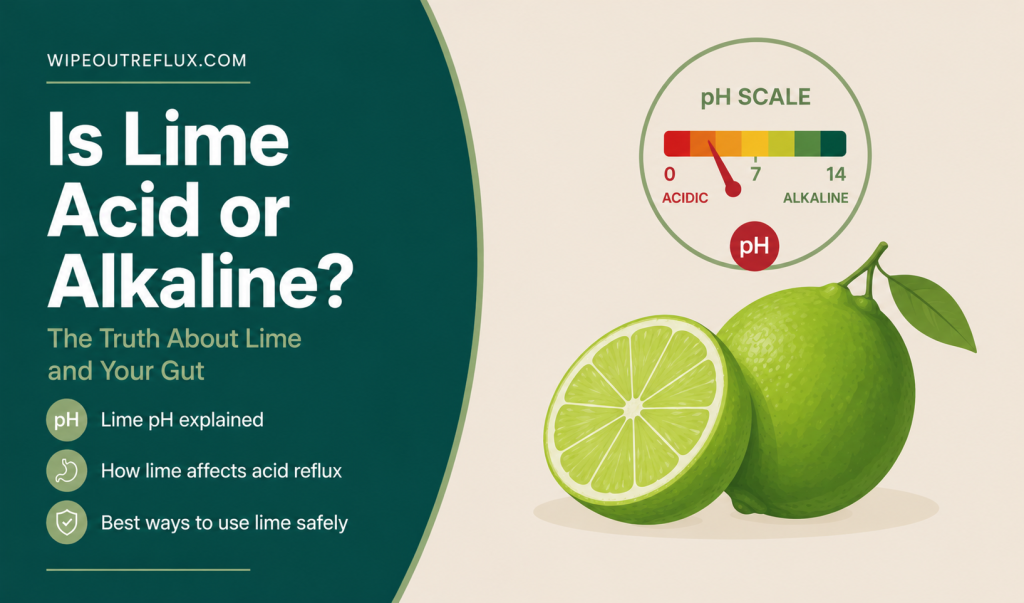
Lime is highly acidic. With a pH typically between 2.0 and 2.6, fresh lime juice sits in the same acidity tier as lemon juice and vinegar — and among the most acidic substances you can consume. For people managing acid reflux or GERD, lime is one of the more reliable triggers available, whether you’re squeezing it into a drink, using it in cooking, or eating a cuisine that relies on it heavily.
You may have heard that lime — like other citrus fruits — is alkaline-forming despite being very acidic. That’s technically accurate and also essentially irrelevant for reflux. I’ll explain the distinction clearly below, because it causes real confusion in people trying to manage their symptoms through diet.
The section of this article I’d particularly draw your attention to is the hidden lime problem — because lime has a way of appearing in foods and drinks where people don’t expect it, and this catches many reflux sufferers out even when they’re actively trying to avoid it.
Key Takeaways
- Lime has a pH of approximately 2.0–2.6 — placing it among the most acidic commonly consumed foods, comparable to vinegar and lemon juice.
- Limes and lemons are very similar in acidity; limes tend to sit at the slightly more acidic end with a narrower range (2.0–2.6 vs. lemons at 2.0–3.0).
- Like other citrus, lime has an alkaline-forming effect after digestion. This post-metabolic alkaline ash effect is irrelevant for reflux — the contact acidity on the esophageal lining is what drives symptoms.
- Three mechanisms drive lime’s reflux effect: direct esophageal contact irritation from citric acid, stimulation of gastric acid production, and potential lower esophageal sphincter relaxation.
- For LPR (silent reflux), lime’s pH of 2.0–2.6 is far below the pH 5.0 threshold at which pepsin bound to throat tissue can be reactivated, making even small amounts of lime a significant trigger for throat symptoms.
- Lime water — adding lime juice to water — is still acidic and still problematic. Dilution reduces the concentration of acid but does not make lime water safe for reflux management.
- Lime appears extensively in foods and drinks where people don’t always expect it: Mexican, Thai, and Indian cuisines, cocktails, salad dressings, and marinades.
- Safe alternatives for adding brightness to dishes include fresh herbs, mild vinegar in very small amounts (for GERD but not LPR), and small amounts of orange zest in some preparations.
What Is the pH of Lime?
Lime juice has a pH of approximately 2.0–2.6. That’s the range measured in fresh-squeezed juice from Persian limes (the standard variety in most Western grocery stores) and Key limes. To put it in context: stomach acid itself sits at pH 1.5–3.5 in the fasted state. Lime juice is genuinely in the same acid range as the gastric contents you’re trying to keep out of your esophagus.
The dominant acid in lime is citric acid, which makes up approximately 5–8% of the juice by weight. This is one of the highest citric acid concentrations of any commonly consumed food. Lime also contains ascorbic acid (vitamin C) and smaller amounts of malic acid, contributing to its total titratable acidity.
One piece of data worth recording properly: lime is not significantly more acidic than lemon, and the original version of this article had the comparison backwards. It stated that “limes have a pH range of 2-3, while lemons have a pH range of 2-2.6” — which, read carefully, actually implies lemons are more consistently acidic. The accurate picture is that limes tend to sit at pH 2.0–2.6 and lemons at pH 2.0–3.0, making limes slightly more acidic on average, but both fruits occupying essentially the same high-acidity tier. For reflux purposes, lemon and lime are equivalent problems — neither is meaningfully safer than the other.
For comparison, grapefruit sits at pH 2.9–3.3 (noticeably less acidic than lime), oranges at pH 3.0–4.0, and bananas at pH 4.5–5.2. Lime and lemon sit at the most acidic end of commonly consumed fruits.
Is Lime Alkaline-Forming? Clearing Up the Confusion
Lime — like all citrus — is classified as alkaline-forming after digestion, and this causes real confusion for reflux sufferers who encounter the term.
Here’s what it means: when lime’s citric and malic acids are fully metabolised by the body, they break down to carbon dioxide and water, and the alkaline mineral salts remaining (potassium, calcium, magnesium) shift the body’s metabolic pH slightly toward alkaline. This is the “alkaline ash” that some dietary frameworks use to classify foods.
Here’s why it doesn’t matter for reflux: the contact your esophagus and throat have with lime happens before any of that metabolic processing occurs. When lime juice at pH 2.0–2.6 reaches your esophageal lining, it does so at full acidity. The fact that your kidneys will eventually process the metabolic byproducts into a more alkaline urine two hours later does nothing to protect the tissue it contacted in the meantime.
For reflux and LPR management, what matters is the food’s pH at the point of contact with your esophageal or laryngeal tissue. Lime at pH 2.0–2.6 is a direct irritant at that point. The alkaline ash classification is relevant for some other health considerations — it’s not relevant for reflux.
How Lime Triggers Acid Reflux — The Mechanisms
Lime’s effect on reflux comes through three overlapping pathways, not one.
Direct esophageal contact irritation. The citric acid in lime juice at pH 2.0–2.6 directly irritates the esophageal mucosa on contact. This is particularly acute in people who already have esophageal inflammation from prior reflux damage, where the tissue is sensitised and produces symptoms at acid exposures that might not affect a completely healthy esophagus. Even in people with milder GERD, repeated contact with highly acidic foods like lime contributes to ongoing mucosal irritation.
Gastric acid stimulation. Highly acidic foods stimulate the stomach to increase acid production as part of its normal digestive response. For reflux sufferers, this adds to the acid load available to reflux into the esophagus — compounding the effect beyond the direct contact irritation.
LES pressure effects. Citric acid has been hypothesised to contribute to transient lower esophageal sphincter relaxations, similar to other acidic compounds. While the evidence specifically for citrus-induced LES relaxation is less established than for caffeine or carbonation, the consistent pattern of GERD patients reporting citrus as a trigger points toward a real physiological effect beyond simple contact acidity.
The population-level evidence supports this. A cross-sectional study of 317 GERD patients and 182 healthy controls found that GERD patients with moderate to severe symptoms were significantly less likely to consume citrus foods compared to asymptomatic controls (OR = 0.59; 95% CI: 0.35–0.97) [Kubo et al., BMC Gastroenterology, 2014]. This pattern of self-reported citrus avoidance in GERD patients reflects consistent clinical experience of symptom exacerbation. A systematic review of dietary factors in GERD across 72 studies confirmed citrus intake between meals as positively correlated with GERD symptoms [Zhang et al., Therapeutics and Clinical Risk Management, 2021].
Lime vs. Lemon — Which Is Worse for Reflux?
For practical purposes, they’re interchangeable in terms of reflux risk. Both sit at the highly acidic end of the spectrum (pH 2.0–2.6 for lime, 2.0–3.0 for lemon), both contain high concentrations of citric acid, and both produce the same mechanisms of esophageal irritation and acid stimulation.
If anything, lime is marginally more consistently acidic than lemon — not less, as the original article implied. Lab measurements place lime’s mean pH at around 2.0–2.4, while lemons show more variability (2.0–3.0 depending on variety and ripeness). But this difference is clinically meaningless. Both are excluded from LPR and active GERD dietary protocols for the same reasons.
The practical distinction between them is more about how they’re used in food cultures: limes dominate in Mexican, Thai, Indian, and Caribbean cuisines, while lemons are more common in Mediterranean and Western European cooking. For a reflux sufferer, which cuisine you prefer is a more relevant practical consideration than which fruit is marginally more acidic.
Lime and LPR (Silent Reflux) — A Specific Concern
For people managing LPR (silent reflux), lime requires particular emphasis. The reasoning is the same as for other high-acid foods in LPR, but the extreme acidity of lime makes the effect especially pronounced.
With LPR, pepsin from the stomach travels to the throat and laryngeal tissue, where it adheres and remains stable until reactivated by an acidic stimulus. The reactivation threshold is approximately pH 5.0 — anything below this pH contacting the throat can reactivate dormant pepsin and resume the tissue damage that causes LPR symptoms. Research by Koufman and Johnston confirmed this pepsin stability and pH sensitivity, establishing the basis for the low-acid dietary approach to LPR management [Koufman & Johnston, Annals of Otology, Rhinology & Laryngology, 2012].
Lime at pH 2.0–2.6 sits approximately 125 to 1,000 times more acidic than the pepsin reactivation threshold. A squeeze of lime juice in a drink, a lime wedge in a glass of water, lime-based dressing on a salad — all of these represent exposures at an acidity level that will reactivate throat-bound pepsin. This is not a food that can be managed through moderation during active LPR.
The Hidden Lime Problem — Where It Appears in Your Diet
This section is worth particular attention because lime is one of the more insidious reflux triggers — it appears regularly in foods and drinks where people often don’t consider its presence.
Cocktails and mixed drinks. Margaritas, mojitos, gimlets, daiquiris, caipirinhas, and gin & tonics with lime are all common. Lime is the central acidic component in several of the most popular Western cocktails. Even a non-alcoholic mocktail with lime syrup or lime juice carries the same acidity problem.
Mexican cuisine. Lime is the ubiquitous finishing acid in Mexican cooking — squeezed over tacos, stirred into guacamole and salsa, added to rice dishes, used in marinades for carne asada, and mixed into sauces. Most restaurant Mexican food contains significant lime at multiple points in the preparation.
Thai cuisine. Lime juice is a foundation flavour in Thai cooking — pad thai, green and red curries, som tum (papaya salad), and most Thai soups use lime as the primary souring agent. Thai food is generally one of the more challenging cuisine categories for reflux and LPR management.
Indian cuisine. Lime juice appears in dhal, biryani dishes, some curries, and as a common table condiment. Lime pickle is a particularly concentrated lime product.
Salad dressings and marinades. Citrus-based dressings (lime vinaigrette, lime-cilantro dressing) and citrus marinades appear in a wide range of recipes that might not be immediately flagged as high-acid.
Sparkling water with lime. This is a common health-conscious choice that compounds the acidity of lime with the LES-relaxing effect of carbonation. Both problems apply simultaneously.
Lime in water. Adding a slice or a squeeze of lime to regular water — commonly recommended as a health habit — still delivers lime’s acidity directly to the esophagus and throat. The dilution reduces the concentration but does not change the pH enough to make it safe for active reflux or LPR management.
Being aware of these contexts and asking questions when ordering in affected cuisine categories significantly reduces unintended lime exposure during symptom management.
What to Use Instead of Lime
If you cook regularly in cuisines that rely on lime, removing it entirely changes flavour profiles significantly. Some practical alternatives that add brightness without the reflux risk:
- Fresh herbs — Coriander (cilantro), mint, and Thai basil provide aromatic brightness without acidity, and are staples in the same cuisines that use lime heavily.
- Small amounts of apple cider vinegar — For GERD sufferers (not LPR), very dilute apple cider vinegar can provide some of the souring function of lime in cooking without the citric acid load. This should be used sparingly and tested individually.
- Lemongrass — A common Thai ingredient that delivers citrus-adjacent aromatic flavour without significant acidity.
- Low-acid fruits as garnish — Watermelon, cucumber, and mild melon varieties add freshness to drinks without the acidity of citrus.
- Sumac powder — Provides tangy, fruity flavour with a pH closer to 3.5–4.0, sitting in a less problematic range than lime for GERD sufferers who miss citrus in cooking. Not appropriate for LPR during active symptoms.
Frequently Asked Questions
Is lime acidic or alkaline?
Lime is highly acidic in raw form, with a pH of approximately 2.0–2.6 — among the most acidic of commonly consumed foods. It is also classified as alkaline-forming after metabolic digestion, but this post-digestive effect has no bearing on reflux management. The contact acidity at the esophageal lining is what matters for reflux, and at pH 2.0–2.6, lime is a consistent irritant.
Is lime worse than lemon for acid reflux?
They’re essentially equivalent. Both sit in the pH 2.0–2.6 range (lime) and 2.0–3.0 (lemon), both contain high concentrations of citric acid, and both trigger reflux through the same mechanisms. Lime tends to be slightly more consistently acidic on average, but for practical reflux management purposes both should be avoided during active symptoms for the same reasons.
Is lime water bad for acid reflux?
Yes. Adding lime juice to water reduces the concentration of acid but doesn’t eliminate it — diluted lime water typically sits around pH 3.0–4.5 depending on how much juice is added, which remains acidic and irritating for reflux-sensitive tissue. For LPR specifically, even this diluted acidity can reactivate pepsin in throat tissue. Plain water or alkaline water is a significantly better choice.
Is lime bad for LPR (silent reflux)?
Yes, and it’s one of the higher-priority exclusions. At pH 2.0–2.6, lime contacts throat and laryngeal tissue at an acidity far below the pH 5.0 threshold at which pepsin can be reactivated. Even small amounts of lime — a squeeze in a drink, a wedge used in cooking — represent a significant reactivation risk for people with active LPR symptoms.
Can I use lime in cooking if I have acid reflux?
In general, if you have active GERD or LPR symptoms, lime in cooking is best avoided or used only in quantities where the acidity is well diluted and largely cooked off. Lime juice added to a dish during cooking and then cooked for 10+ minutes will have its acidity partially dissipated, but the effect varies with quantity and method. During symptom flares, avoiding lime entirely gives you a cleaner picture of what’s affecting your symptoms.
Is lime in guacamole a reflux trigger?
Yes, potentially — guacamole typically contains a notable squeeze of lime juice, and the quantity varies significantly between recipes and restaurants. Avocado itself is a high-fat food (though generally well-tolerated for reflux), but the lime component adds a direct acid concern. Home-made guacamole without lime is a safer alternative during symptomatic periods.
Which citrus fruits are least bad for acid reflux?
None of the major citrus fruits are truly safe during active reflux or LPR, but there’s a hierarchy. Oranges (pH 3.0–4.0) and mandarins (pH 3.5–4.2) sit significantly higher on the pH scale than lime and lemon, and many GERD sufferers can tolerate small amounts during non-symptomatic periods. Grapefruit (pH 2.9–3.3), lemon (pH 2.0–3.0), and lime (pH 2.0–2.6) are the most problematic and should be eliminated first. For people with LPR, all citrus is best avoided during active symptoms, as even the higher-pH options sit below the pH 5.0 pepsin reactivation threshold.
Conclusion
Lime is one of the most acidic foods in a typical diet, and for people managing acid reflux or LPR, it’s a consistent and significant trigger. The alkaline-forming concept doesn’t provide any practical comfort — what matters is what lime’s pH of 2.0–2.6 does to esophageal and laryngeal tissue at the point of contact, not what happens metabolically two hours later.
The practical challenge with lime is how extensively it appears in cuisines and drinks that aren’t always obviously flagged as citrus-heavy. Mexican, Thai, and Indian cuisines all rely on lime as a foundational flavour. Cocktails, lime-infused sparkling water, and lime wedge garnishes all represent real exposures that add up. Being aware of these hidden sources, and knowing what to ask for when ordering in affected cuisines, makes a concrete difference in symptom management.
If you want a full, practical framework for navigating diet with GERD or LPR — including how to approach whole cuisine categories that are otherwise off-limits — the Wipeout Diet Plan covers this in detail.
Related Articles
- Is Lemon Acid or Alkaline? The Truth About Citrus and Reflux
- Is Grapefruit Acid or Alkaline? (Reflux and Drug Interactions)
- The Complete Guide to LPR (Silent Reflux): Causes, Symptoms, and Treatment
- Are Bananas Acidic or Alkaline? (Good for Acid Reflux?)
- Acidity of Fruits Chart: Which Fruits Are Safe for Reflux?
- The Wipeout Diet Plan: A Structured Approach to Reflux Management
Research Sources
[Kubo et al., BMC Gastroenterology, 2014] — A population-based cross-sectional study of 317 GERD patients and 182 asymptomatic controls found that patients with moderate to severe reflux symptoms were significantly less likely to consume citrus foods compared to controls (OR = 0.59; 95% CI: 0.35–0.97), a pattern consistent with citrus being a well-recognised symptomatic trigger in clinical experience. The study also found GERD patients were more likely to consume soft drinks and fried foods, reflecting selective avoidance of known triggers.
[Zhang et al., Therapeutics and Clinical Risk Management, 2021] — A systematic review of 72 studies examining dietary and lifestyle factors related to GERD found that citrus intake between meals was positively correlated with GERD symptoms, while overall fruit and vegetable consumption showed a mixed picture. The review confirmed citrus as one of the dietary factors with consistent associations across the evidence base for reflux symptom exacerbation.
[Koufman & Johnston, Annals of Otology, Rhinology & Laryngology, 2012] — Laboratory studies demonstrated that pepsin remains stable and reactivatable at pH 7.4, becoming irreversibly denatured only above pH 8.0. The threshold for pepsin reactivation in laryngeal tissue is approximately pH 5.0, establishing the mechanistic basis for the low-acid dietary approach to LPR management — and explaining why high-acid foods like lime at pH 2.0–2.6 are particularly damaging for LPR patients.

David Gray
12 years living with LPR · Consultant & researcher
I've lived with LPR for twelve years — the misdiagnoses, the PPI courses that did nothing, the slow work of figuring out what actually helps. Wipeout Reflux is where I translate the research into plain terms for people stuck in the same place. Every claim here is sourced to peer-reviewed work, and I consult one-to-one with LPR sufferers.