
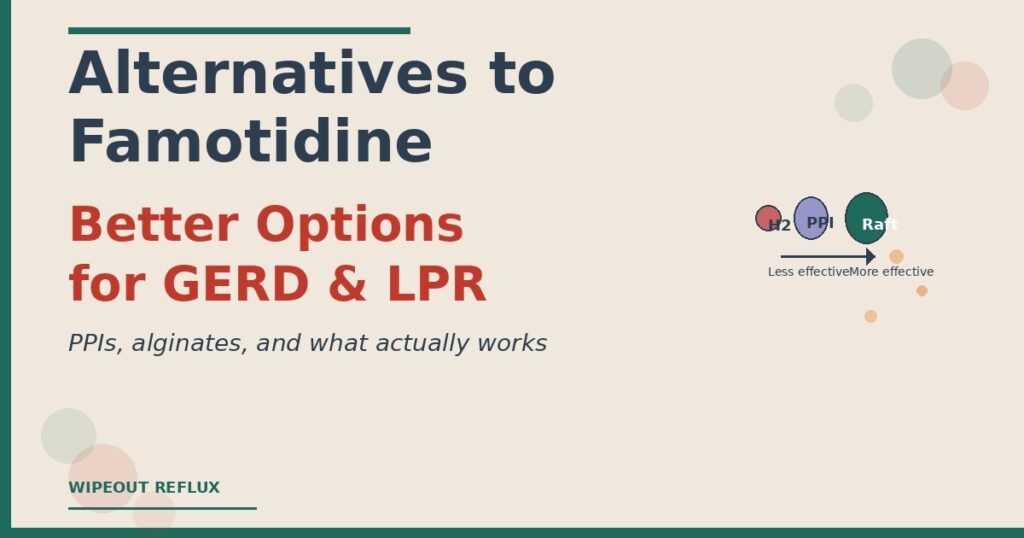
Famotidine (Pepcid) is an H2 blocker that works fast but loses effectiveness over time. Better alternatives depend on your condition: for GERD, proton pump inhibitors (PPIs) like omeprazole are more effective; for LPR (silent reflux), alginates like Gaviscon Advance or Reflux Raft work better than any acid-suppressing drug because they physically prevent reflux instead of just suppressing acid.
The mechanism matters more than the brand—famotidine alone doesn’t solve the underlying reflux problem.
Why Famotidine Fails: Understanding the Mechanism
Before discussing alternatives, you need to understand why famotidine often stops working.
Famotidine is an H2-receptor antagonist (H2 blocker). It works by blocking histamine receptors in stomach cells, which slows acid production. This happens fast—relief in 30-60 minutes. But there are critical limitations:
1. Tachyphylaxis (Tolerance): Your body adapts to famotidine. After days or weeks of regular use, it becomes less effective. Research shows healing rates of 40-50% with famotidine compared to 80-90% with PPIs in clinical trials.
2. It doesn’t prevent reflux: Famotidine reduces acid production, but it doesn’t stop acid from traveling into your esophagus. A raft forms on top of your stomach contents—famotidine simply reduces how acidic that reflux is. For GERD sufferers, this is partially acceptable. For LPR sufferers, this is useless.
3. It doesn’t address pepsin: The real damage in reflux disease comes from pepsin—an enzyme that escapes the stomach and damages your esophagus or larynx. Famotidine suppresses acid but doesn’t prevent pepsin reactivation. Once pepsin is in your tissues, even weak acid can reactivate it and cause inflammation. Famotidine can’t stop this cycle.
For GERD: Famotidine works moderately for mild-to-moderate symptoms but fails for severe cases. Healing rates show omeprazole (a PPI) achieved complete relief in 56% of patients vs. 48% for famotidine in head-to-head trials.
For LPR: Famotidine is especially ineffective. Studies show only 54% of LPR patients improved on famotidine 20mg nightly. In comparison, 83% improved on omeprazole when famotidine failed. And alginates? They showed superior benefits over placebo and comparable or better effectiveness than PPIs in LPR-specific trials.
Alternative #1: Other H2 Blockers (Cimetidine, Nizatidine)
If you want to stay in the H2 blocker class, there are options:
Cimetidine (Tagamet): Similar mechanism to famotidine but older medication. May interact with more drugs. Not significantly better than famotidine.
Nizatidine (Axid): Similar to famotidine. Slightly different side effect profile but same limitations—tolerance develops, doesn’t prevent reflux mechanically, ineffective for LPR.
Ranitidine (Zantac): Discontinued in 2020 due to contamination concerns. Not a current option.
Verdict: H2 blockers are all similar. If famotidine isn’t working, switching to cimetidine or nizatidine likely won’t help—the mechanism is identical, and you’ll face the same tolerance issue.
Alternative #2: Proton Pump Inhibitors (PPIs) — Best for GERD
PPIs are the most commonly prescribed reflux medications and for good reason: they’re significantly more effective than H2 blockers for GERD.
How they work differently: Instead of slowing acid production, PPIs block the proton pumps that actually manufacture stomach acid. This creates near-total acid suppression—lowering stomach pH to 3.5+ for most of the day.
Available PPIs:
- Omeprazole (Prilosec): First-line, most studied, inexpensive generic. 20-40mg daily.
- Esomeprazole (Nexium): Active isomer of omeprazole. Slightly faster onset. 20-40mg daily. More expensive.
- Lansoprazole (Prevacid): Slightly different pharmacokinetics. 15-30mg daily.
- Pantoprazole (Protonix): Often chosen for hospitalized patients. 40mg daily.
- Rabeprazole (Aciphex): Faster acid suppression onset. 20mg daily.
- Dexlansoprazole (Dexilant): Delayed-release, longer duration. 30-60mg daily.
GERD Effectiveness: PPIs achieve healing rates of 80-90% in clinical trials—far superior to famotidine’s 40-50%. Omeprazole improved reflux scores in 66.9% of patients vs. 41% for famotidine in a large comparative trial.
LPR Effectiveness: PPIs are controversial for LPR. Meta-analyses show PPI efficacy in LPR is no better than placebo in many randomized controlled trials. However, clinical practice shows benefit in some patients when dosed aggressively (higher doses, longer duration). The mechanism issue remains: PPIs suppress acid but don’t prevent pepsin reactivation—LPR requires prevention, not suppression.
Speed: PPIs work slower than H2 blockers or alginates (1-4 days to full effect) but last much longer (up to 72 hours).
Side effects & long-term concerns: Long-term PPI use is linked to B12 deficiency, bone health concerns, kidney disease, micronutrient deficiencies, and increased infection risk. Use the lowest effective dose for the shortest duration necessary.
Verdict: PPIs are the most effective acid suppressants for GERD but not ideal for LPR. If you need long-term PPI therapy, consider combining with alginates and dietary changes to reduce dose dependence.
Alternative #3: Alginates — Best for LPR, Superior Mechanism
Alginates (sodium alginate from seaweed) work through a completely different mechanism: they form a protective physical barrier instead of suppressing acid.
How they work: When alginate contacts stomach acid, it reacts with ions to form a gel “raft” that floats on top of stomach contents. This raft physically blocks refluxed material from reaching your esophagus. It’s not acid suppression—it’s reflux prevention.
Available options: Gaviscon Advance (UK formulation with 1000mg alginate), Reflux Raft, Refluxter, Reflux Gourmet (see detailed comparison article).
GERD Effectiveness: Meta-analysis of 14 clinical trials found alginates more effective than placebo or antacids but less effective than PPIs. However, they work immediately (minutes) vs. PPIs (1-4 days) and last 3-4 hours per dose.
LPR Effectiveness: This is where alginates shine. Multiple studies show alginates are superior to placebo and comparable or better than PPIs for LPR:
- Non-inferiority trial: Magnesium alginate was as effective as omeprazole for reducing LPR symptoms and more well-tolerated.
- RCT: Sodium alginate significantly reduced LPR symptoms (RSI scores) vs. placebo at 2 and 6 months.
- Adjunctive therapy: Alginate + PPI showed faster symptom improvement than PPI alone in LPR patients.
Why alginates work better for LPR: They physically prevent pepsin from escaping the stomach. PPIs suppress acid but don’t stop pepsin reactivation in laryngeal tissue. Alginates eliminate the problem at the source.
Speed & duration: Fast (minutes), lasts 3-4 hours. Multiple doses per day needed.
Side effects: Minimal. Sodium content is the main concern (sodium-restricted diets). No systemic absorption.
Verdict: Alginates are the best alternative to famotidine for LPR and a solid option for GERD. They work immediately, have few side effects, and address the mechanical problem of reflux instead of just suppressing acid.
Alternative #4: Natural & Supplement Approaches
Before jumping to pharmaceuticals, some people find relief with supplements:
Ginger: Anti-inflammatory properties. Small doses (0.5-1g daily) may help. However, ginger powder can irritate reflux in sensitive individuals—test carefully.
DGL (Deglycyrrhizinated Licorice): May coat the esophagus. Limited research but generally safe. Take before meals.
PEA (Palmitoylethanolamide): Anti-inflammatory, studied for LPR symptom support. 600-1000mg daily. Best introduced at low dose.
Magnesium glycinate: Supports LES relaxation. L-threonate form preferred over glycinate (which can worsen reflux). Always low-dose introduction.
Aloe vera: Soothing properties. Limited evidence but low risk if taken as directed.
Honest assessment: Supplements alone are rarely sufficient for moderate-to-severe reflux. They work best as complementary therapy alongside dietary changes and mechanical barriers (alginates).
Verdict: Supplements can support reflux management but shouldn’t replace proven alternatives like alginates or PPIs for active reflux disease. They’re most useful for mild symptoms or as adjuncts.
Alternative #5: Lifestyle & Dietary Changes — The Foundation
No medication works optimally without addressing underlying causes:
Meal timing: Finish eating 3+ hours before bed. Small, frequent meals instead of large ones reduce stomach pressure.
Elevation: Sleep with head of bed elevated 30-45 degrees. Gravity prevents nighttime reflux.
Trigger elimination: Caffeine, citrus, chocolate, tomato, alcohol, spicy foods—these relax the LES or irritate tissues. The Wipeout Diet Plan provides a complete framework for identifying and eliminating reflux triggers while maintaining nutrition.
Weight management: Excess abdominal pressure increases reflux risk.
Stress management: Stress increases acid production and reflux events.
For LPR specifically: Lifestyle changes are often more effective than medication alone. Combined approach (diet + alginates + PPI if needed) beats medication alone.
Verdict: Lifestyle changes are non-negotiable for long-term reflux management. Medication addresses symptoms; diet and lifestyle address root causes.
Comparison Matrix: Famotidine vs. Alternatives
Speed of action: Alginates win (minutes). Famotidine second (30-60 min). PPIs slowest (1-4 days).
Duration: PPIs (up to 72 hours) > Alginates (3-4 hours) > Famotidine (6-12 hours).
GERD effectiveness: PPIs (80-90% healing) > Alginates (similar to PPIs in some trials) > Famotidine (40-50%).
LPR effectiveness: Alginates > PPIs (controversial) > Famotidine (weak).
Tolerance development: PPIs (minimal) > Alginates (none) > Famotidine (significant—develops quickly).
Long-term side effects: Alginates (minimal) > Famotidine (minimal) > PPIs (nutrient deficiency, bone health, infection risk).
Cost: Famotidine (cheapest generic) ≈ Omeprazole (cheap generic) > Alginates > Branded PPIs.
Which Alternative Is Right for You?
If you have mild-to-moderate GERD:
Try alginates first. They work fast, have no side effects, and address the mechanical problem. If that’s insufficient, add dietary changes. Only escalate to PPIs if needed.
If you have severe GERD with erosive damage:
PPIs are necessary for healing. Take the lowest effective dose (usually omeprazole 20-40mg daily). Combine with alginates for faster symptom relief. Plan to reduce or stop PPIs once healing occurs.
If you have LPR (silent reflux):
Alginates (Gaviscon Advance, Reflux Raft) are your first-line treatment. They’re more effective than any acid-suppressing drug for LPR. Combined with dietary modifications and elevation, alginates alone often sufficient. PPIs can be added if alginates + diet aren’t enough, but don’t expect dramatic PPI benefit—the mechanism doesn’t address pepsin reactivation.
If famotidine has stopped working:
Your body has developed tolerance. Switching to another H2 blocker won’t help. Jump to alginates (immediate, different mechanism) or PPIs (stronger acid suppression). Don’t waste time on alternative H2 blockers.
Comprehensive Strategy: Medication + Lifestyle
The best alternative to famotidine isn’t just “another medication.” It’s a layered approach:
Layer 1 (Foundation): Dietary changes and lifestyle modifications. This is where 70% of the work happens. Identify and eliminate your triggers.
Layer 2 (Mechanical): Alginates for immediate symptom relief and mechanical reflux prevention. Use after meals and at bedtime.
Layer 3 (Chemical, if needed): PPIs only if alginates + diet aren’t sufficient. Use the lowest dose for the shortest duration.
Layer 4 (Professional): If you’re not improving after 2-4 weeks of aggressive management, consult a specialist to rule out structural issues (hiatal hernia, valve dysfunction) or to optimize your regimen.
Frequently Asked Questions
Can I combine alternatives (PPI + alginate)?
Yes, and it’s often more effective than either alone. PPIs suppress acid production; alginates prevent reflux mechanically. Combined effect is synergistic. Space dosing by 30 minutes to avoid interactions.
How long until I see improvement?
Alginates: Minutes to hours. PPIs: 1-4 days for symptom relief, but weeks to months for tissue healing. H2 blockers: 30-60 minutes for symptom relief, but similar tolerance limitations as famotidine apply.
Are PPIs safe long-term?
Short-term (weeks to months): Yes. Long-term (years): Increased risk of B12 deficiency, bone density loss, kidney disease, infections. Use the lowest effective dose and plan to discontinue. Work with your doctor on a tapering strategy.
Is alginate safe for daily use?
Yes. Alginates work locally in the stomach, aren’t absorbed, and have no known systemic side effects. The main concern is sodium content for sodium-restricted diets. Safe for pregnancy, breastfeeding, and long-term use.
What if nothing works?
This suggests structural issues (hiatal hernia, weak sphincter, esophageal motility disorder) or that your reflux is primarily non-acid. Diagnostic testing (endoscopy, pH monitoring, manometry) is necessary.
Conclusion: The Right Alternative Depends on Your Reflux Type
Famotidine isn’t a bad medication—it just has limitations. It works fast but loses effectiveness, doesn’t prevent reflux mechanically, and is especially poor for LPR.
Better alternatives exist:
For GERD: Alginates + diet first; PPIs if needed for healing.
For LPR: Alginates are superior to any acid-suppressing drug.
For long-term management: Combine whichever medication fits your condition with comprehensive dietary and lifestyle changes.
Real recovery from reflux disease doesn’t come from finding the perfect pill. It comes from understanding your reflux mechanism, eliminating triggers, using targeted medication when needed, and addressing root causes. Alginates are the closest to a “complete” solution for mechanical reflux prevention, but they work best alongside other strategies.
Research & References
Famotidine vs. Omeprazole for Non-Erosive GERD: Prospective Randomized Multicenter Trial — Head-to-head comparison showing omeprazole achieved complete relief in 56% of patients vs. 48% for famotidine. Omeprazole showed superior efficacy in H. pylori-negative patients.
Efficacy and Tolerability of Omeprazole Compared with Famotidine for Treatment of GERD — Large study (J-FOCUS trial) showing omeprazole achieved sufficient symptom relief in 66.9% of patients vs. 41% for famotidine after 4 weeks of treatment.
An Update on Current Treatment Strategies for Laryngopharyngeal Reflux Symptoms — Comprehensive review showing famotidine 20mg nightly only improved symptoms in 54% of LPR patients, while omeprazole improved 83% of cases where famotidine failed. Alginates demonstrated superior benefits.
Management of Laryngopharyngeal Reflux with Proton Pump Inhibitors — Meta-analysis of 7 placebo-controlled trials showing PPI therapy is no more effective than placebo in LPR patients, challenging PPI as first-line for silent reflux.
Alginates and Laryngopharyngeal Reflux: Systematic Review — Comprehensive review concluding alginates demonstrate beneficial role both as monotherapy and adjunct therapy for LPR, with larger randomized studies warranted.
Magnesium Alginate vs. PPIs for LPR: Non-Inferiority Randomized Controlled Trial — Non-inferiority trial showing magnesium alginate was as effective as omeprazole for reducing LPR symptoms and signs, with better tolerability and fewer adverse events.
The Value of Liquid Alginate Suspension (Gaviscon Advance) in LPR Management — Pilot study showing significant improvement in LPR symptom scores and clinical findings with liquid alginate vs. control, supporting further evaluation for LPR treatment.

David Gray
12 years living with LPR · Consultant & researcher
I've lived with LPR for twelve years — the misdiagnoses, the PPI courses that did nothing, the slow work of figuring out what actually helps. Wipeout Reflux is where I translate the research into plain terms for people stuck in the same place. Every claim here is sourced to peer-reviewed work, and I consult one-to-one with LPR sufferers.