
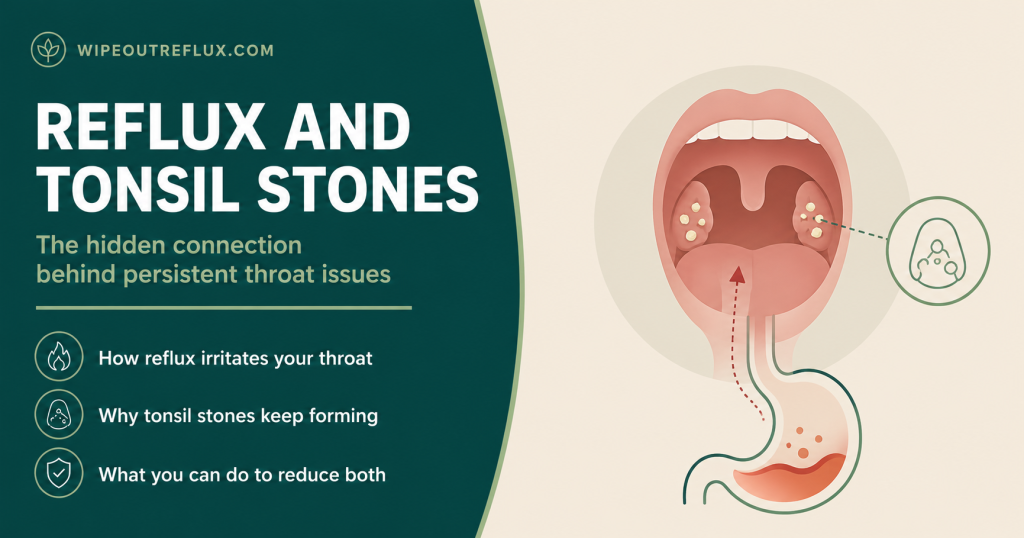
If you keep coughing up small, foul-smelling white lumps and you also deal with reflux, it’s natural to wonder whether the two are connected. The honest answer is: probably, but not in the simple “reflux causes tonsil stones” way you’ll read elsewhere.
No large study has proven that acid reflux directly creates tonsil stones. What the research does show is that silent reflux (LPR) is strongly linked to the exact conditions that let tonsil stones form – chronic tonsil inflammation, deeper crypts, more mucus, and altered saliva. In other words, reflux doesn’t hand you a tonsil stone, but it can quietly set the stage for one.
I’ve spent years dealing with the throat side of reflux, and this is one of those overlaps that makes total sense once you understand the mechanisms. Let me walk you through what’s actually going on, what the evidence supports, and what you can realistically do about it.
Key Takeaways
- Tonsil stones (tonsilloliths) are calcified lumps of trapped food, dead cells, bacteria and mucus that harden inside the pockets (crypts) of the tonsils.
- There’s no proof that acid reflux directly causes tonsil stones – but silent reflux (LPR) is linked to the tonsil conditions that make them more likely.
- LPR is strongly associated with chronic tonsillitis, and chronic tonsillitis is a leading driver of tonsil stone formation.
- Pepsin, a stomach enzyme carried up in reflux, has been detected in tonsil tissue and may contribute to tonsil enlargement, creating deeper crypts that trap more debris.
- Reflux-related mucus and post-nasal drip add more material for the tonsils to catch.
- Both tonsil stones and silent reflux cause chronic bad breath, so it’s easy to blame the wrong one.
- Calming reflux, improving oral hygiene and staying hydrated are the most practical ways to reduce recurrence.
What Tonsil Stones Actually Are
Before we connect anything to reflux, it helps to understand how a tonsil stone forms in the first place. Your tonsils aren’t smooth – their surface is full of small pockets and folds called tonsillar crypts. These crypts are part of your immune system, designed to trap and sample bacteria and debris. The trouble is, sometimes that trapped material never clears. Instead it accumulates, mixes with mucus and bacteria, and gradually calcifies as mineral salts deposit onto it, forming a hard little stone. Tonsilloliths are calcified masses in the tonsil, classically attributed to chronic tonsillitis, though they can also form through chronic saliva stasis in the tonsillar tissue [Pirkl et al., Dentomaxillofacial Radiology, 2015].
So two things really matter for stone formation: how deep and cryptic your tonsils are (more hiding places), and how much debris and mucus is available to get trapped (more raw material). Reflux, as you’ll see, can influence both.
The Reflux Connection: How Silent Reflux Sets the Stage
This is where it gets interesting, and where the LPR angle matters far more than classic heartburn. If you’re not sure of the distinction, I’ve explained the difference between GERD and LPR in detail – but the short version is that LPR (silent reflux) sends stomach contents all the way up to the throat and voice box, often without any heartburn at all. That’s exactly the territory where your tonsils live.
Chronic Inflammation and Deeper Crypts
Repeated irritation of the tonsils causes them to become inflamed, and over time that inflammation reshapes the crypts, making them deeper and better at trapping debris. This is why chronic tonsillitis is such a strong risk factor for stones. And here’s the reflux link: in one study of adults with chronic tonsillitis, 72.3% were found to have LPR, and treating the reflux with acid suppression plus dietary and lifestyle changes measurably improved both their sore throat and tonsillar inflammation [Fageeh et al., Saudi Medical Journal, 2025]. If reflux is feeding chronic tonsil inflammation, it’s indirectly feeding the environment stones thrive in.
Pepsin in the Throat and Tonsils
This is the mechanism most articles miss entirely. Reflux doesn’t just carry acid – it carries pepsin, a digestive enzyme that’s the real troublemaker in silent reflux. Pepsin has been detected in the saliva and even within the palatine tonsil tissue of patients with LPR, and it’s been proposed as a trigger for palatine tonsil enlargement [Abičić et al., Journal of Clinical Medicine, 2023]. Bigger, more inflamed tonsils mean deeper crypts – and more places for stones to form. If you want to understand this enzyme better, I’ve written specifically about how to neutralise pepsin in the throat, because it’s central to almost every LPR symptom.
More Mucus and Post-Nasal Drip
When reflux irritates the throat, the body responds by producing more mucus to protect itself. That extra mucus, often experienced as post-nasal drip from silent reflux, is one more source of material that can pool in the tonsillar crypts and get caught up in stone formation. Post-nasal drip is a recognised risk factor for tonsil stones in its own right, so anything that increases it – reflux included – can tip the balance.
Altered Saliva and Slower Clearance
Saliva is your mouth’s natural cleaning system: it’s mildly alkaline and helps rinse debris and pepsin away. Anything that reduces saliva flow or lets it stagnate gives stones more chance to form – the saliva stasis route to tonsillolith formation is well described [Pirkl et al., Dentomaxillofacial Radiology, 2015]. Reflux sufferers often mouth-breathe, sleep poorly, or take medications that dry the mouth, all of which reduce that protective clearance.
Why Silent Reflux Is the Bigger Culprit Than Heartburn
If you have classic heartburn but no throat symptoms, tonsil stones are probably not being driven by your reflux. The connection really lives with LPR, because that’s the version of reflux that reaches high enough to bathe the tonsils and throat in acid and pepsin. That’s also why so many people with tonsil stones have no idea they have reflux – silent reflux earns its name by skipping the heartburn. If any of the wider LPR symptoms sound familiar – a persistent lump sensation, throat clearing, hoarseness, a chronic cough – reflux may be a bigger part of your tonsil stone picture than you realised.
The Bad Breath Overlap
Here’s a genuinely tricky part. The single most common complaint with tonsil stones is bad breath – those stones are packed with odour-producing bacteria. But silent reflux also causes bad breath independently, by bringing acidic, enzyme-laden gas and fluid up into the throat and mouth. So if you’re battling persistent halitosis, you could be dealing with either, or both at once. I’ve covered the reflux side of this in detail in my guide to silent reflux and bad breath. The practical takeaway: if you remove the visible stones and the bad breath persists, reflux is very likely the hidden second source.
How to Reduce Tonsil Stones When Reflux Is a Factor
Because the reflux link is indirect, the best approach is to tackle both ends – the local tonsil environment and the reflux driving it. None of this is a guaranteed cure, but these are the levers that actually matter.
- Calm the reflux at the source. Reducing how much acid and pepsin reaches your throat is the upstream fix. Diet is the biggest lever here, which is where a structured plan makes a real difference.
- Improve oral hygiene. Brush, floss and clean your tongue consistently to reduce the bacterial load and debris feeding the crypts.
- Gargle regularly. A daily salt-water gargle can dislodge early debris before it calcifies and helps keep the crypts clearer.
- Stay well hydrated. Good saliva flow is your natural clearance system, so don’t let your mouth run dry, especially overnight.
- Address the throat mucus. Tackling reflux-driven mucus and constant throat clearing reduces the raw material available to form stones.
- See an ENT for stubborn cases. If stones are large, recurrent or affecting your quality of life, get assessed – persistent cases sometimes warrant professional removal or, rarely, surgery.
Conclusion
Tonsil stones and reflux are one of those frustrating pairings where the connection is real but rarely explained properly. The stones themselves come from debris calcifying in the pockets of your tonsils – but silent reflux can quietly stack the odds by inflaming those tonsils, deepening the crypts through pepsin exposure, and flooding the area with extra mucus. Add in the fact that both conditions cause stubborn bad breath, and it’s easy to see why people chase the wrong culprit for years.
The good news is that the reflux side of this equation is very much within your control. If you calm the silent reflux – lowering the acid and, crucially, the pepsin reaching your throat – you take away much of the inflammation and mucus that keep the tonsil environment stone-friendly. Pair that with consistent oral hygiene, good hydration and regular gargling, and you give yourself the best realistic chance of fewer stones and fresher breath.
If you want to tackle the reflux properly, my Wipeout Diet Plan is the complete, step-by-step system I put together for calming reflux and LPR at the source – it’s the most thorough resource I have for getting throat symptoms under control. If you’d prefer a simpler starting point, the Wipeout Food Reference Guide is an essential companion that lays out exactly which foods and drinks are safe for acid reflux and LPR, along with their pH values, so you always know what’s reflux-friendly at a glance. Between the deep strategy and the quick daily reference, you’ll have everything you need to start settling things down.
Frequently Asked Questions
Can acid reflux cause tonsil stones?
Not directly, based on current evidence. But silent reflux (LPR) is strongly linked to chronic tonsil inflammation, extra mucus and pepsin exposure – all of which create the environment where tonsil stones form more easily. So reflux is better understood as a contributing factor than a direct cause.
Why do I get tonsil stones and bad breath even with good oral hygiene?
If your hygiene is solid and stones keep returning, a hidden driver like silent reflux is worth considering. Reflux delivers pepsin and mucus to the throat that oral care alone can’t fully address, and it can cause bad breath on its own, independent of the stones.
Will treating my reflux get rid of tonsil stones?
It may reduce how often they form by calming the underlying inflammation and cutting the mucus and pepsin reaching your tonsils. It won’t necessarily remove existing stones or change the natural depth of your tonsil crypts, so it’s best combined with good local hygiene.
Is it silent reflux or tonsil stones causing my bad breath?
It can be either, or both. A useful test: remove or dislodge any visible stones and see if the bad breath clears. If it persists despite clean tonsils, reflux is the likely hidden source.
Do tonsil stones mean I have acid reflux?
No – plenty of people get tonsil stones purely from anatomy, oral hygiene or recurrent tonsillitis with no reflux at all. But if you also have throat symptoms like a lump sensation, hoarseness or chronic throat clearing, reflux is worth investigating.
Can what I eat affect tonsil stones?
Indirectly, yes. Reflux-triggering foods can worsen the silent reflux that feeds tonsil inflammation and mucus, while dairy and sugary residues can add to the debris in your mouth. A reflux-friendly, lower-residue approach helps on both fronts.
Should I have my tonsils removed to stop tonsil stones?
Tonsillectomy does eliminate tonsil stones, but it’s a significant step usually reserved for severe, recurrent or debilitating cases. It’s worth first addressing reversible drivers like reflux and hygiene, and discussing the options with an ENT.
Research Sources
- [Pirkl et al., Dentomaxillofacial Radiology, 2015] – A case report describing tonsillolith formation, noting that stones are classically linked to chronic tonsillitis but can also arise from chronic saliva stasis in the tonsillar tissue.
- [Fageeh et al., Saudi Medical Journal, 2025] – A prospective study finding that 72.3% of adults with chronic tonsillitis had LPR, and that treating the reflux improved sore throat and tonsillar inflammation.
- [Abičić et al., Journal of Clinical Medicine, 2023] – A study detecting pepsin in the saliva and palatine tonsil tissue of children with LPR, supporting pepsin’s proposed role in triggering palatine tonsil enlargement.

David Gray
12 years living with LPR · Consultant & researcher
I've lived with LPR for twelve years — the misdiagnoses, the PPI courses that did nothing, the slow work of figuring out what actually helps. Wipeout Reflux is where I translate the research into plain terms for people stuck in the same place. Every claim here is sourced to peer-reviewed work, and I consult one-to-one with LPR sufferers.