
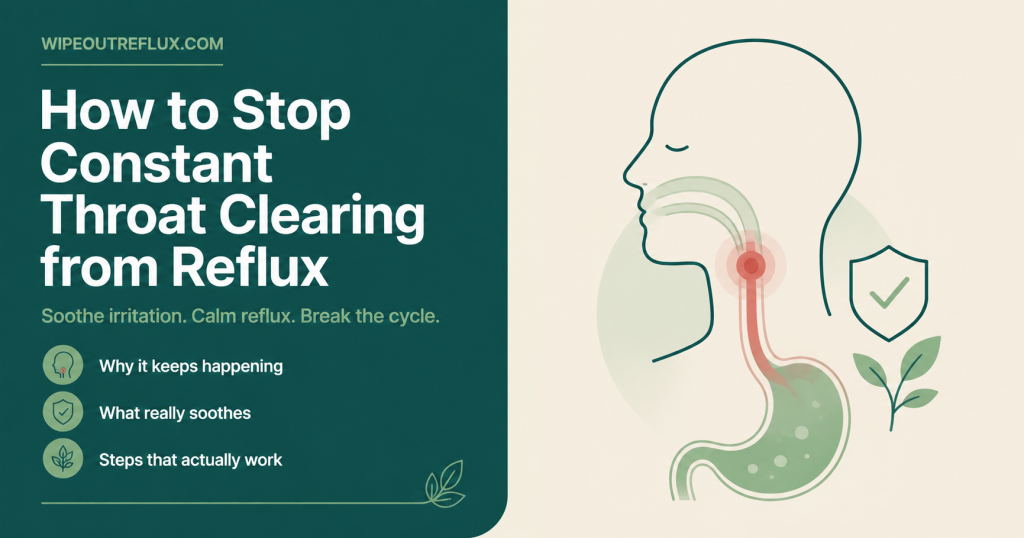
Constant throat clearing from reflux is one of the most frustrating symptoms people with LPR (laryngopharyngeal reflux, also called silent reflux) deal with. Unlike typical heartburn, this symptom has little to do with how your stomach feels — it’s your larynx and throat tissue reacting to tiny amounts of acid and pepsin being deposited there, often without you even realising reflux is the cause.
The good news is that throat clearing from reflux responds well to the right combination of dietary changes, lifestyle adjustments, and — importantly — breaking the habit itself. I know this from personal experience. Constant throat clearing was one of my worst LPR symptoms before I properly understood what was driving it.
In this guide, I’ll walk you through exactly why reflux causes that chronic urge to clear your throat, and the practical steps you can take to stop it.
Key Takeaways
- Constant throat clearing is a hallmark symptom of LPR (silent reflux), not just standard GERD
- Pepsin — a digestive enzyme from the stomach — deposited on laryngeal tissue is a primary driver of irritation
- Dietary changes targeting both acid and pepsin are the most effective first step
- Alkaline water (pH 8.8+) can deactivate pepsin on throat tissue
- Eating timing and portion size matter as much as food choices
- Throat clearing itself becomes a habit that worsens laryngeal irritation — suppressing it is part of recovery
- Bed elevation and left-side sleeping significantly reduce overnight LPR
- Most people see meaningful improvement within 4–6 weeks of consistent changes
Why Reflux Causes Constant Throat Clearing
When acid and pepsin travel up past the oesophagus and reach the throat and larynx (voice box), the tissue there becomes irritated. Unlike the oesophagus, which has some protective mechanisms, the larynx is extremely sensitive — clinical research found it takes only a tiny amount of reflux to trigger significant laryngeal symptoms [Koufman JA, Laryngoscope, 1991].
Your body’s instinctive response is to try to clear whatever is causing the discomfort. The problem is that the irritation comes from microscopic tissue damage — not from mucus or material that can actually be removed by clearing. So the clearing doesn’t resolve anything. It just prolongs the discomfort and, as I’ll explain below, actively makes things worse over time.
LPR vs GERD: Why Throat Clearing Is Often a Silent Reflux Problem
If you’re dealing with constant throat clearing without obvious heartburn, you’re most likely dealing with LPR rather than classic GERD. With LPR, reflux bypasses the oesophagus quickly and reaches the upper airway — sometimes in such small quantities that it causes no chest burning at all. This is why so many people with this symptom go years without connecting it to reflux.
The Reflux Symptom Index (RSI) — a validated clinical screening tool for LPR — lists throat clearing as one of its nine key diagnostic symptoms, reflecting just how central it is to this condition [Belafsky et al., Journal of Voice, 2002].
My complete guide to LPR and silent reflux covers the condition in much more depth, including how it differs from GERD and what a proper diagnosis involves.
The Role of Pepsin in Throat Irritation
Most people focus on acid when thinking about reflux — but for throat-clearing symptoms specifically, pepsin is arguably the bigger problem. Pepsin is a digestive enzyme produced in the stomach. When it travels upward and reaches the throat, it can bind directly to laryngeal tissue and remain there even after the acid has cleared.
Research has shown that pepsin causes direct cellular damage to throat tissue — and this damage can be triggered or worsened by even mildly acidic foods or drinks reactivating the pepsin already deposited there [Johnston et al., Annals of Otology, Rhinology & Laryngology, 2009]. This creates a frustrating cycle where almost anything acidic can reignite the irritation.
This is also why PPIs often give incomplete relief for LPR. They reduce acid production in the stomach, but they do nothing about the pepsin already deposited on your throat tissue — so the irritation cycle continues even on medication.
How to Stop Constant Throat Clearing from Reflux
1. Adjust Your Diet to Reduce Acid and Pepsin Triggers
The most impactful change you can make is adjusting your diet to reduce acid production and avoid foods and drinks that reactivate pepsin on laryngeal tissue. The key changes are:
- Cut out highly acidic foods and drinks — citrus, tomatoes, vinegar, carbonated drinks, and anything with a pH below 4
- Reduce high-fat meals, which slow gastric emptying and increase reflux pressure
- Cut back or eliminate alcohol and caffeine — both relax the lower oesophageal sphincter (LOS) and promote reflux
- Stop eating within 3–4 hours of bed — this is critical for reducing overnight LPR and morning symptoms
A Mediterranean-style dietary approach has shown strong clinical results for LPR — in some research achieving outcomes comparable to or better than PPI therapy for symptom reduction [Zalvan et al., JAMA Otolaryngology-Head and Neck Surgery, 2017].
For a quick daily reference on which specific foods are reflux-safe and their pH values, the Essential Reflux Food List is a practical guide worth keeping to hand.
2. Drink Alkaline Water to Deactivate Pepsin
Alkaline water at pH 8.8 or above is one of the more evidence-backed practical steps for LPR throat symptoms. Research has shown that water at this pH can irreversibly denature pepsin — essentially deactivating it so it can no longer cause tissue damage [Koufman & Johnston, Annals of Otology, Rhinology & Laryngology, 2012].
Sipping alkaline water throughout the day — particularly after meals and before bed — helps neutralise pepsin deposited on laryngeal tissue. You don’t need expensive bottled water; a good alkaline water filter achieves the same result. I’ve written a detailed guide on alkaline water and acid reflux if you want to understand the mechanism more fully.
3. Fix Your Eating Habits, Not Just Your Food Choices
How and when you eat matters as much as what you eat when it comes to LPR throat symptoms:
- Eat smaller meals — large volumes dramatically increase stomach pressure and the risk of reflux reaching the throat
- Eat slowly and chew thoroughly — rushed eating leads to swallowed air and increased gastric pressure
- Stop eating 3–4 hours before bed — overnight reflux deposits pepsin on your throat tissue while you sleep, driving worse morning symptoms
- Stay upright for at least 30 minutes after eating
- Avoid vigorous exercise or bending over immediately after meals
4. Optimise Your Sleep Position
Nocturnal reflux is a major driver of morning throat clearing and all-day laryngeal irritation. When you lie flat, gravity no longer helps keep stomach contents down, and reflux can reach the throat with minimal resistance.
- Elevate the head of your bed by 15–20cm using bed risers placed under the legs — not extra pillows, which create a bend at the neck that can actually worsen reflux
- Sleep on your left side — due to the anatomy of the stomach, left-side sleeping reduces reflux episodes compared to sleeping on the right
For more detail on managing overnight symptoms, my guide to sleeping with acid reflux and LPR covers the specifics.
5. Suppress the Throat Clearing Habit Itself
This is one of the most overlooked elements of recovery. Every time you clear your throat, you’re creating forceful friction between your vocal cords. This inflames the laryngeal tissue further, creating more irritation, which creates more urge to clear — a self-perpetuating cycle that can continue long after the underlying reflux has improved.
The approach used by speech-language pathologists and voice specialists is called throat clearing suppression. In practice, this means:
- When you feel the urge to clear your throat, swallow firmly instead — this achieves a similar clearing effect without the vocal cord impact
- Use a silent cough (a sharp exhalation through the mouth without vocalising) as an alternative when a swallow doesn’t feel like enough
- Sip water regularly — gently rinsing the throat often resolves the sensation without any clearing needed
- Track how frequently you’re doing it — most people are surprised by how automatic it has become
Breaking this habit takes consistent effort for two to three weeks, but it significantly reduces laryngeal irritation and speeds up overall recovery.
6. Stay Hydrated Throughout the Day
Dehydration thickens mucus and makes the throat feel more congested, which increases the urge to clear. Sipping water regularly — ideally alkaline water — keeps the throat lubricated and reduces that persistent feeling of something being there. Some people also find that removing dairy reduces mucus-related throat symptoms, which is worth testing for two to three weeks if it resonates with you.
If you want a clear breakdown of which foods and drinks are appropriate at each stage of managing reflux, the Essential Reflux Food List gives you a pH-referenced guide to work from daily.
What Makes Throat Clearing from Reflux Worse
If symptoms are persisting despite initial changes, check whether any of these common aggravating factors apply:
- Carbonated drinks — the bubbles increase gastric pressure and promote belching reflux directly into the throat
- Eating close to bedtime — the single most common mistake driving overnight LPR
- Excessive talking when the throat is already inflamed — this worsens laryngeal irritation directly
- Smoking — impairs LOS function and directly irritates laryngeal tissue
- Being overweight — increases intra-abdominal pressure, pushing reflux upward
- Tight waistbands or clothing — compress the abdomen and promote upward reflux pressure
- High stress — alters gut motility and can worsen reflux through multiple pathways
- Some antihistamines and blood pressure medications — can dry throat tissue and increase irritation
When to See a Doctor
Most throat clearing from reflux improves significantly with consistent dietary and lifestyle changes. However, seek medical review if:
- Throat clearing persists for more than 8–12 weeks with no improvement from lifestyle changes
- You’re experiencing persistent hoarseness or voice changes
- You have difficulty swallowing
- You have a sensation of a lump in the throat (globus) that is worsening — my guide to globus sensation from reflux covers this symptom in detail
- There is any blood in mucus or saliva
- You’re experiencing unexplained weight loss
An ENT specialist can perform a laryngoscopy to directly examine the larynx and assess signs of LPR-related damage. A 24-hour pH impedance study can confirm whether reflux is occurring overnight and reaching the throat.
Frequently Asked Questions
How long does it take for throat clearing from reflux to stop?
Most people see meaningful improvement within 4–6 weeks of consistent dietary and lifestyle changes. Full resolution of the throat clearing habit can take 2–3 months, particularly once the habitual component has become ingrained.
Can throat clearing from reflux cause permanent damage?
Chronic LPR can cause changes to laryngeal tissue over time, including thickening and granulomas. These changes are typically reversible with proper management. Early intervention reduces the risk of longer-term structural changes developing.
Why is my throat clearing worse in the morning?
Morning symptoms are a classic sign of nocturnal LPR — acid and pepsin reaching your throat while you sleep. Elevating the head of your bed and stopping eating 3–4 hours before sleep are the most reliable ways to improve morning symptoms specifically.
Will PPIs stop throat clearing from reflux?
PPIs reduce acid production but don’t address pepsin, which is a key driver of LPR throat irritation. Many people find PPIs give partial or no relief for throat-clearing symptoms. Dietary and lifestyle changes targeting both acid and pepsin tend to be more effective for LPR specifically.
Is throat clearing from reflux the same as post-nasal drip?
They can feel very similar, but they’re different conditions. Post-nasal drip involves excess mucus from the sinuses draining into the throat. LPR throat clearing is driven by laryngeal irritation from reflux. Both can occur simultaneously, which often makes the cause difficult to identify without proper assessment.
Does drinking more water help with throat clearing?
Yes — sipping water regularly, particularly alkaline water, helps rinse pepsin from throat tissue and keeps the larynx lubricated. It won’t resolve the underlying reflux alone, but it’s one of the most immediately useful supportive strategies available.
Does throat clearing make reflux worse?
Throat clearing doesn’t directly worsen the reflux itself, but it worsens laryngeal tissue damage, which perpetuates the urge to clear. This feedback loop can prolong recovery significantly — even once the underlying reflux has improved.
Conclusion
Constant throat clearing from reflux is persistent and frustrating — but it is manageable. The key insight is that this symptom is primarily driven by pepsin irritation of the larynx rather than acid alone, which is why standard acid-suppressing medication so often falls short. Addressing both acid and pepsin through diet, making key lifestyle changes, and consciously suppressing the throat clearing habit is what actually moves things forward.
Start with the fundamentals: adjust your diet to cut acidic and triggering foods, stop eating within 3–4 hours of bed, elevate the head of your bed, drink alkaline water regularly, and replace habitual throat clearing with a firm swallow or sip of water. These changes alone make a meaningful difference for most people within a few weeks.
If you want a fully structured dietary approach to managing LPR and acid reflux symptoms, the Wipeout Diet Plan goes much deeper than any single article can — covering exactly what to eat, what to avoid, and how to progress through recovery in a clear, step-by-step way. And for a quick daily reference on reflux-safe foods and their pH values, the Essential Reflux Food List is an essential companion guide to keep to hand throughout the process.
Recovery from this symptom requires consistency rather than perfection. Stick with the changes, break the habit, and give your throat tissue the time it needs to heal.
Research & References
Koufman JA, Laryngoscope, 1991 — A foundational clinical investigation of 225 patients examining the otolaryngologic manifestations of GERD and LPR, establishing that laryngeal tissue is highly vulnerable to even micro-reflux events and confirming throat clearing as a primary presenting symptom.
Belafsky et al., Journal of Voice, 2002 — Validation study for the Reflux Symptom Index (RSI), the nine-item clinical questionnaire used to screen for LPR, with throat clearing identified as one of the key diagnostic symptoms assessed.
Johnston et al., Annals of Otology, Rhinology & Laryngology, 2009 — Demonstrated that pepsin in non-acidic refluxate causes direct cellular damage to hypopharyngeal epithelial cells, highlighting pepsin’s damaging role independent of acid in driving LPR tissue injury.
Koufman & Johnston, Annals of Otology, Rhinology & Laryngology, 2012 — Examined alkaline water (pH 8.8) as an adjunct treatment for reflux disease, demonstrating its ability to irreversibly denature pepsin and its potential benefit for patients with LPR.
Zalvan et al., JAMA Otolaryngology-Head and Neck Surgery, 2017 — Compared a Mediterranean and alkaline dietary approach against PPI therapy for LPR treatment, finding dietary intervention achieved outcomes comparable to or better than medication for reducing reflux symptom scores.

David Gray
12 years living with LPR · Consultant & researcher
I've lived with LPR for twelve years — the misdiagnoses, the PPI courses that did nothing, the slow work of figuring out what actually helps. Wipeout Reflux is where I translate the research into plain terms for people stuck in the same place. Every claim here is sourced to peer-reviewed work, and I consult one-to-one with LPR sufferers.