
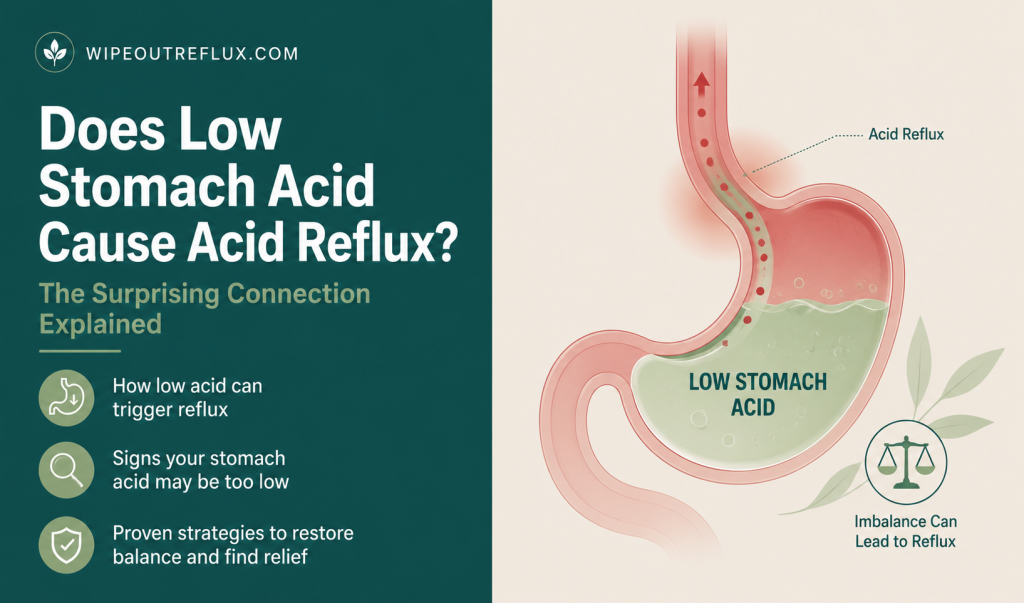
The functional medicine theory goes like this: reflux isn’t caused by too much stomach acid — it’s caused by too little. Low acid means food ferments rather than digests properly, gas builds up, pressure rises, and stomach contents push upward through a weakened sphincter. Take betaine HCl to restore normal acidity, and the reflux resolves. It’s a compelling story, and it’s spread widely across health blogs and supplement retailer pages.
The problem is that the evidence doesn’t support the story — at least not in the way it’s usually told. Betaine HCl has been studied in clinical settings, but not as a reflux treatment. And the broader claim that low stomach acid directly causes GERD hasn’t been established in the research either. What’s actually happening, and where does betaine HCl genuinely have a role? That’s what this article examines.
There’s also a specific caution that almost no functional medicine page includes, and that matters significantly for people with silent reflux (LPR): because the primary driver of throat damage in LPR is pepsin, and pepsin reactivates when pH drops, deliberately acidifying the stomach in an LPR context risks reactivating pepsin on already-damaged throat tissue. That’s not a theoretical concern — it’s a mechanistic one with direct implications for whether betaine HCl is appropriate for you.
Key Takeaways
- The theory that low stomach acid directly causes GERD has not been established in clinical research — GERD is primarily a reflux mechanism problem (LES dysfunction and transient LES relaxations), not an acid production problem
- Betaine HCl has been studied clinically, but for re-acidifying the stomach in people on PPIs to improve absorption of pH-dependent medications — not as a treatment for reflux
- A 1500mg dose was shown to lower gastric pH within ~6 minutes in PPI-induced hypochlorhydria — but most subjects returned to elevated pH within 75 minutes in the fasted state
- The functional medicine practice of taking betaine HCl for reflux “has yet to be rigorously validated in clinical research”
- Genuine hypochlorhydria is a real condition with specific causes (H. pylori, atrophic gastritis, long-term PPI use, aging) and distinct symptoms — but its overlap with GERD is not straightforward
- For silent reflux (LPR) specifically, betaine HCl presents a specific risk: pepsin embedded in throat tissue reactivates at low pH, meaning added acid can worsen the damage LPR is already causing
- Betaine HCl is contraindicated in active peptic ulcer disease and should not be used concurrently with NSAIDs due to increased gastric injury risk
- If you’re investigating low stomach acid as a contributor to your symptoms, genuine testing — not symptom-matching — is the right starting point
Does Low Stomach Acid Cause Acid Reflux?
The short answer: there is no well-established clinical evidence that hypochlorhydria directly causes GERD. The theory is mechanistically plausible — low acid might delay gastric emptying, reduce the signal for LES closure, and allow gas to build up — but none of these pathways has been demonstrated as a primary driver of reflux in clinical studies.
GERD is fundamentally a motility problem, not an acid production problem. The acid in your reflux is corrosive and causes damage, but the reason it’s refluxing is almost always a fault in the valve mechanics — specifically transient relaxations of the lower oesophageal sphincter (LES) that allow stomach contents to escape upward. The majority of people with symptomatic GERD have normal or elevated gastric acid output, not reduced acid. Acid suppression with PPIs works for most of them precisely because reducing the acidity of what refluxes reduces the tissue damage, even though it doesn’t address the LES dysfunction at all. You can read more about why the sphincter mechanics matter so much in my guide to the stomach sphincter and LPR.
That doesn’t mean hypochlorhydria and reflux never coexist. They can. Long-term PPI use is itself a cause of artificially reduced gastric acid, and SIBO — which frequently develops alongside both reflux and reduced acid — can cause gas-driven pressure that worsens reflux. But in these cases, low acid is a complication of the treatment or a downstream effect of the condition, not the original cause of the reflux. The distinction matters enormously for how you approach management.
What Is Hypochlorhydria?
Hypochlorhydria is a genuine medical condition defined by below-normal gastric acid secretion — typically a fasting gastric pH above 4. When acid production falls to near zero, it’s called achlorhydria. Genuine hypochlorhydria has specific, identifiable causes:
- H. pylori infection: The most common infectious cause — the bacteria colonise the stomach and disrupt the parietal cells responsible for acid secretion
- Atrophic gastritis (including autoimmune gastritis): Progressive destruction of gastric glands, eventually leading to significant acid deficiency. Autoimmune gastritis, in particular, causes parietal cell destruction and is also associated with pernicious anaemia
- Long-term PPI use: PPIs pharmacologically suppress acid production and will artificially produce a hypochlorhydric state for as long as they’re taken — and sometimes with some delay afterward
- Age: Gastric acid output tends to decline gradually with aging, though less dramatically than often claimed
- Gastric surgery: Procedures that affect the stomach’s anatomy can reduce acid-secreting cell mass
What hypochlorhydria is not: a condition reliably diagnosed by a symptom checklist. The “test” of taking betaine HCl and noticing whether you feel warmth has no clinical validation and can’t distinguish between different types of GI sensitivity. If you have genuine concerns about acid insufficiency — particularly in the context of pernicious anaemia, autoimmune conditions, or long-term PPI use — a formal assessment (including serum pepsinogen I/II ratio, fasting gastric pH measurement, or gastrin levels) is the appropriate route.
Low Stomach Acid Symptoms: What to Watch For
Genuine hypochlorhydria does produce symptoms — but they overlap substantially with both GERD and functional dyspepsia, which makes self-diagnosis particularly unreliable. Symptoms associated with clinically confirmed low stomach acid include:
- Bloating and excessive gas shortly after meals (from inadequate protein breakdown and fermentation)
- Early satiety — feeling full quickly and uncomfortably
- Belching and a sensation of food sitting heavily
- Nutrient deficiency symptoms: fatigue and neurological symptoms from B12 deficiency; anaemia from iron malabsorption; muscle cramping or symptoms from low magnesium and calcium
- Recurring gut infections or sensitivity to food pathogens (stomach acid is a first-line defence against bacteria)
- SIBO (small intestinal bacterial overgrowth) — reduced acid allows more bacteria to survive the transit from mouth to small intestine
Notice what isn’t on that list: heartburn and acid regurgitation. Those are the cardinal symptoms of GERD, and they’re caused by acid reaching tissue it shouldn’t reach — not by a deficiency of acid. If your main symptom is heartburn, the hypochlorhydria theory is a less likely explanation than LES dysfunction. The SIBO and acid reflux connection is worth reading if the bloating, gas, and digestive dysregulation picture fits your experience.
Betaine HCl for Acid Reflux: What the Research Actually Shows
Betaine hydrochloride (betaine HCl) is a salt of hydrochloric acid that releases HCl on contact with stomach water. It’s been sold as a digestive supplement for decades, and the functional medicine claim is that it restores adequate acid levels in people with hypochlorhydria. Here’s what the science has actually tested.
The most rigorous clinical study of betaine HCl evaluated its ability to temporarily re-acidify the stomach in people with pharmacologically-induced hypochlorhydria — specifically, healthy volunteers who had been given the PPI rabeprazole. After gastric pH rose above 4 following PPI dosing, a 1,500mg dose of betaine HCl was administered. The results were striking: gastric pH dropped from a mean of 5.2 to 0.6 within an average of six minutes. But the re-acidification was temporary — most subjects had returned to PPI-induced elevated pH within 73–77 minutes in the fasted state [Yago M.R. et al., Molecular Pharmaceutics, 2013].
Critically, this study was not designed to test betaine HCl as a reflux treatment. Its purpose was to investigate whether betaine HCl could temporarily restore gastric acid to improve absorption of pH-dependent medications (like certain cancer drugs) in patients whose PPIs were interfering with drug bioavailability. The question of whether it reduces reflux symptoms was not studied, because that wasn’t the hypothesis.
A 2020 review of the betaine HCl evidence concluded that mealtime supplementation with betaine HCl for functional hypochlorhydria “has yet to be rigorously validated in clinical research” — and that despite its long history of use in integrative medicine, controlled trials specifically examining its impact on digestion, reflux, or hypochlorhydria-related symptoms in the broader population are lacking [Guilliams T.G. and Drake L.E., Integrative Medicine, 2020].
This is the honest position: betaine HCl demonstrably lowers gastric pH, briefly, in a fasted state. Whether that translates to meaningful clinical benefit for reflux has not been demonstrated.
What Betaine HCl Is Actually Good For
Setting aside the reflux claim, there are contexts where betaine HCl has a plausible and better-supported role:
- Improving absorption of pH-dependent medications during PPI therapy: Certain drugs require an acidic gastric environment for dissolution and absorption. The Yago 2013 study was investigating precisely this, showing that a betaine HCl dose could temporarily restore absorption conditions for drugs like dasatinib
- Supporting protein digestion in genuinely hypochlorhydric individuals: If stomach acid is genuinely low (confirmed by proper testing), supplemental HCl at mealtimes has a physiologically sound mechanism for improving protein breakdown — the theoretical basis for functional medicine’s use of it
- Potentially supporting micronutrient absorption: B12, iron, calcium, and magnesium all require an acidic environment for efficient absorption. In documented deficiency states linked to low acid, restoring acidity may help
- Potentially reducing SIBO risk in genuine hypochlorhydria: Stomach acid is a primary antimicrobial barrier. In achlorhydria or severe hypochlorhydria, reduced acid may allow bacterial overgrowth that betaine HCl could partially counter
The key qualification throughout: these benefits apply to people with genuinely low acid, confirmed by appropriate investigation — not to anyone who reads a symptom list and decides they might have low acid.
How to Take Betaine HCl — If It’s Appropriate for You
If you’re considering betaine HCl after reading this, please first work through the safety section below. If you’ve determined it’s appropriate for your situation, the standard functional medicine protocol is:
- Start with one capsule (typically 325–650mg) taken at the start of a protein-containing meal of adequate size (at least 500 calories)
- Note any warmth, burning, or discomfort in the stomach or chest — this is a signal to stop and not increase the dose
- If no discomfort, cautiously increase by one capsule at the next meal
- Continue titrating upward until you notice warmth, then reduce by one capsule — that’s your working dose
- Do not open capsules onto food or dissolve in beverages — HCl can damage tooth enamel and irritate the oesophagus directly
- Use only with meals, never on an empty stomach
- Do not use betaine HCl alongside PPIs, H2 blockers, or antacids without medical supervision — the supplement directly counteracts these medications
One additional note on dosing: as the Yago study showed, even 1500mg wore off within 75 minutes under fasted conditions. Under fed conditions, the picture changes further — a follow-up study found betaine HCl was less effective at re-acidifying when a meal was consumed beforehand. The implication is that meal-timing and meal composition significantly affect how much betaine HCl does in practice.
The Critical Caution for Silent Reflux and LPR
This section is the one that matters most for people managing laryngopharyngeal reflux (LPR), and it’s almost entirely absent from functional medicine pages on this topic.
In LPR, the primary driver of throat and laryngeal damage is not acid alone — it’s pepsin. Pepsin is a digestive enzyme produced in the stomach that travels with the refluxate into the throat. Once in the throat, it is taken up by epithelial cells and can remain embedded in the tissue. The key mechanistic detail: pepsin is inactive at neutral pH (like the throat’s normal pH of 6.5–7.0) but is reactivated when the local pH drops below about 4. It then resumes its protein-digesting activity against the surrounding tissue.
What this means for betaine HCl is direct and important: if you have pepsin already lodged in your throat tissue — which anyone with established LPR almost certainly does — then deliberately acidifying your stomach increases the likelihood of that pepsin being reactivated. Every time the pH drops in the throat (through acidic food or drink, through further reflux events, or through the downstream effects of increased gastric acidity), pepsin that might otherwise have remained dormant begins damaging tissue again.
LPR management is built around reducing the acid exposure of the throat, keeping pH as high as possible, and over time allowing the mucosa to recover. Betaine HCl works against each of those goals simultaneously. My detailed guide to neutralising pepsin in the throat explains what actually helps in this context — and it’s the opposite direction of adding more acid. If you’re unsure whether you have LPR or GERD, my guide comparing GERD and LPR helps distinguish the two.
Who Should Avoid Betaine HCl
These are not soft cautions — they are hard stops:
- Active peptic ulcer disease: Betaine HCl is directly contraindicated in peptic ulcer disease. Introducing supplemental hydrochloric acid onto an ulcerated stomach lining delays healing and can worsen tissue damage [Guilliams T.G. and Drake L.E., Integrative Medicine, 2020]
- Active gastritis: Any inflammation of the stomach lining — including H. pylori-associated gastritis — means introducing additional acid risks worsening mucosal injury
- Concurrent NSAID use: NSAIDs (ibuprofen, naproxen, aspirin) suppress prostaglandin production, which in turn reduces the stomach’s protective mucus layer. Combined with supplemental acid, the risk of gastric injury and ulceration increases significantly
- Concurrent corticosteroid use: Similar mechanism to NSAIDs — reduced mucosal defence plus added acid is a problematic combination
- Anyone with LPR or significant oesophagitis: As detailed above, betaine HCl poses a specific pepsin-reactivation risk for LPR and may worsen oesophageal inflammation in active oesophagitis
- Anyone currently on a PPI or H2 blocker: Betaine HCl directly counteracts these medications. If you’re prescribed acid suppression for a clinical reason, using a supplement that undoes it should only happen under medical guidance
- H. pylori-positive individuals: If you have an active or recently treated H. pylori infection, the gastric mucosal environment is already compromised. Additional acid supplementation is inappropriate until the infection is resolved and healing has occurred
Frequently Asked Questions
Can low stomach acid cause heartburn?
It’s theoretically possible through a cascade of mechanisms — low acid slowing gastric emptying, increasing gas production, and creating LES pressure — but this hasn’t been demonstrated as a primary cause of heartburn in clinical studies. The overwhelming majority of GERD cases involve normal or elevated gastric acid. If you have heartburn and suspect your acid might be low, formal testing is needed rather than self-diagnosis from a symptom list.
What is betaine HCl used for in clinical research?
Clinical studies have primarily investigated betaine HCl as a tool for temporarily restoring gastric acidity in people on PPIs to improve absorption of pH-dependent medications. It has not been clinically studied as a treatment for acid reflux, heartburn, or GERD.
Does betaine HCl help with GERD?
There is no clinical trial evidence supporting betaine HCl as a GERD treatment. The functional medicine rationale exists, but it rests on the unverified premise that low acid is causing the reflux — a premise that doesn’t hold for the majority of GERD patients. For people whose reflux is related to SIBO or significant digestive dysregulation, addressing those underlying issues through targeted interventions (rather than acid supplementation) is the better-evidenced route.
How long does betaine HCl lower stomach pH?
In the one well-designed study on this, a 1,500mg dose lowered gastric pH from approximately 5.2 to 0.6 within 6 minutes in PPI-induced hypochlorhydria, but most subjects had returned to their pre-dose elevated pH within 73–77 minutes when fasted. With a meal, the duration is different again — food buffers the effect and the re-acidification may be less pronounced.
Is betaine HCl safe?
It was well tolerated in the small clinical studies conducted. However, it is contraindicated in peptic ulcer disease, active gastritis, and should not be combined with NSAIDs or corticosteroids due to increased ulcer risk. It should not be used by anyone with LPR due to the pepsin reactivation mechanism. As with any supplement, discuss with your GP before starting — particularly if you’re on prescription medication.
What’s the difference between low stomach acid and too much acid?
They are opposite conditions, but their symptoms can overlap frustratingly. Heartburn and regurgitation are typically signs of acid reaching the wrong place (oesophagus or throat) regardless of how much acid is produced — you can have reflux with low, normal, or high acid output. Symptoms more specific to genuinely low acid include poor digestion of protein, nutrient deficiencies (particularly B12 and iron), and recurring gut infections. A GP assessment, including relevant blood tests, is the only way to reliably distinguish the two.
Should I try betaine HCl for silent reflux?
No. For LPR specifically, betaine HCl carries a mechanism-based risk of reactivating pepsin already embedded in throat tissue. LPR management focuses on reducing acid exposure to the throat and promoting mucosal healing — both of which are undermined by deliberately adding acid. If you have throat symptoms from reflux, my full silent reflux treatment guide covers what the evidence actually supports.
Conclusion
The low-stomach-acid theory of reflux has genuine biological plausibility — and there are real cases where hypochlorhydria contributes to digestive problems. But the leap from “low acid can disrupt digestion” to “betaine HCl treats acid reflux” skips over what the clinical evidence actually shows: which is that betaine HCl hasn’t been studied as a reflux therapy, its re-acidification effect is short-lived, and the broader clinical practice remains unvalidated by rigorous trials.
For the large majority of people with GERD or LPR, the problem is not acid production — it’s acid containment. The LES isn’t closing properly, the stomach is under too much pressure, food stays too long in the stomach, or pepsin is already in the throat causing damage that acid suppression alone doesn’t resolve. Adding more acid into that picture doesn’t address any of those mechanisms. And for LPR specifically, it risks making the pepsin problem actively worse.
If you’re looking for a structured, evidence-based framework for managing reflux through diet and lifestyle — which is where the strongest foundations lie — the Wipeout Diet Plan covers exactly this, from what to eat and what to avoid through to how to structure meals to reduce LES pressure. The Wipeout Reflux Food Reference Guide sits alongside it as a practical reference for safe foods and drinks with their pH values — useful whether you’re managing GERD or the throat-focused picture of LPR.
If you have genuine concerns about low stomach acid — especially in the context of documented B12 deficiency, pernicious anaemia, or long-term PPI use — that’s a conversation worth having with your GP, with proper testing rather than self-supplementation.
Research & References
Yago M.R., Frymoyer A.R., Smelick G.S., Frassetto L.A., Budha N.R., Dresser M.J., Ware J.A., Benet L.Z. (2013). Gastric reacidification with betaine HCl in healthy volunteers with rabeprazole-induced hypochlorhydria. A pilot study of six healthy volunteers in whom hypochlorhydria was pharmacologically induced with rabeprazole. A 1,500mg oral dose of betaine HCl lowered gastric pH from 5.2 (±0.5) to 0.6 (±0.2) within a mean of 6.3 minutes, with reacidification below pH 4 lasting a mean of 77 minutes in the fasted state. The study purpose was to investigate improved absorption of pH-dependent drugs, not to test betaine HCl as a reflux treatment. [Yago M.R. et al., Molecular Pharmaceutics, 2013]
Guilliams T.G. and Drake L.E. (2020). Meal-time supplementation with betaine HCl for functional hypochlorhydria: what is the evidence? A review of the clinical evidence for betaine HCl supplementation in functional hypochlorhydria, concluding that the practice “has yet to be rigorously validated in clinical research.” The review also states directly that administration of HCl/pepsin is contraindicated in peptic ulcer disease, and notes that under fasted conditions most subjects returned to PPI-induced hypochlorhydria in less than 75 minutes after a 1,500mg dose. [Guilliams T.G. and Drake L.E., Integrative Medicine, 2020]

David Gray
Content Researcher & Author
David Gray founded Wipeout Reflux to address a critical gap in reflux management. His research synthesizes over 100 peer-reviewed studies on laryngopharyngeal reflux (LPR), pepsin biology, and GERD pathophysiology. For LPR specifically—a condition most physicians misdiagnose—his work focuses on pepsin reactivation and why standard PPI therapy fails most patients. He develops evidence-based protocols targeting root causes of both LPR and GERD, integrating emerging research on sphincter dysfunction, dietary interventions, and newer clinical approaches. Wipeout Reflux represents practical application of clinical science for patients seeking real solutions.