
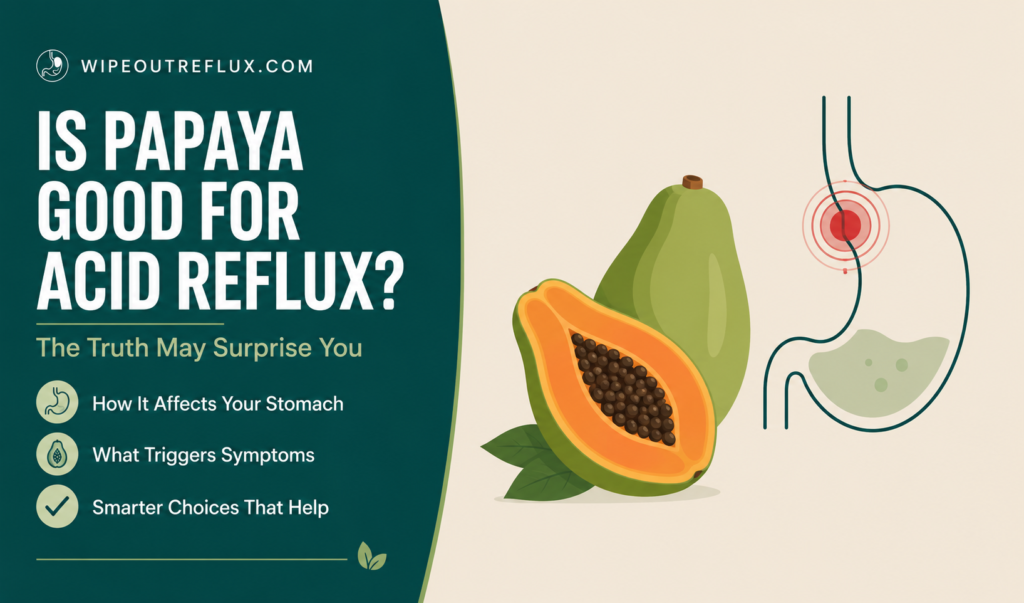
Papaya is one of the few fruits I’m genuinely happy to recommend for acid reflux — and it stands out because the case for it goes beyond simply having a tolerable pH. Ripe papaya contains papain, a digestive enzyme with some promising research behind it, sits at a pH of around 5.5–6.0, and has a nutritional profile that’s hard to argue with. For most people with GERD or LPR, it’s a safe and useful addition to a reflux-friendly diet.
That said, there are important nuances to cover — ripeness matters a lot, unripe papaya behaves quite differently, and for LPR specifically, understanding where papaya sits on the pH scale helps explain why it’s a better choice than most tropical fruits. Below I’ll walk through the science, what the clinical research actually shows, and how to get the most out of papaya if you have reflux.
Key Takeaways
- Ripe papaya has a pH of around 5.5–6.0, placing it at or above the threshold considered safe for acid reflux and LPR.
- Papaya contains papain and chymopapain — digestive enzymes that help break down proteins and may support gastric motility.
- A double-blind, placebo-controlled study found that a papaya preparation significantly improved constipation and bloating, with a positive trend for heartburn reduction.
- Papaya’s fiber content supports digestive regularity, which can reduce the bloating and gastric pressure that drive reflux episodes.
- Unripe papaya is more acidic, harder to digest, and contains higher concentrations of papain — making it a worse choice for reflux sufferers.
- For LPR, ripe papaya is one of the safer fruit options available, sitting near or above the pH 5 threshold at which pepsin reactivation becomes a concern.
- Papaya enzyme supplements are worth considering if you want the digestive benefits of papain without relying on the fruit itself.
Why Papaya Is a Good Choice for Acid Reflux
The first reason papaya works well for reflux is straightforward: its pH. Ripe papaya sits at approximately 5.5–6.0 on the pH scale, which puts it in low-acid territory and well clear of the fruits that routinely trigger reflux. Compare this to pineapple (pH 3.2–4.0) or orange juice (pH 3.3–4.0) and you can see why papaya belongs in a different category entirely.
For people with GERD, this lower acidity means significantly less direct irritation to the esophageal lining, and far less risk of triggering a reflux episode. For those with LPR (silent reflux), the pH of 5.5–6.0 means that ripe papaya sits at or above the threshold below which pepsin — the damaging enzyme found in reflux — can be reactivated in throat tissue. Pepsin reactivation is triggered by foods and drinks below approximately pH 5 [Johnston N et al., Laryngoscope, 2007], which is why the distinction between papaya and higher-acid fruits like pineapple is meaningful for LPR management, not just for GERD.
Beyond pH, papaya has a nutritional profile that actively supports digestive health — vitamins A, C, and E, potassium, and a useful amount of dietary fiber. None of these create any reflux risk, and the fiber in particular is worth highlighting: adequate dietary fiber supports regular bowel function, which reduces bloating, gastric distension, and the upward pressure on the lower esophageal sphincter (LES) that drives reflux events in the first place.
The Papain Enzyme: What the Research Actually Shows
Papaya contains two notable digestive enzymes — papain and chymopapain — both of which are cysteine proteases that help break down proteins in the digestive tract. Papain is the more researched of the two and is widely sold as a dietary supplement for digestive support.
The most relevant clinical evidence for papaya and digestive symptoms comes from a double-blind, placebo-controlled study that tested a concentrated papaya preparation (Caricol®) in participants with chronic indigestion and gastrointestinal dysfunction. The study found statistically significant improvements in constipation and bloating in the papaya group compared to placebo. Heartburn showed a positive trend toward improvement, though this fell short of statistical significance — largely because the number of participants with heartburn as a primary symptom was small (N=13). The authors concluded that the papaya preparation contributes to maintaining digestive tract physiology and can ameliorate functional gastrointestinal disturbances [Muss et al., Neuro Endocrinology Letters, 2013].
Separately, laboratory research investigating papain’s effects on the stomach found that it alters gastric motility in a region-specific way — increasing the amplitude of contractions in the stomach’s antrum (the lower section responsible for grinding food and moving it toward the intestine), which supports more efficient gastric emptying. The researchers noted that these effects could partly explain papain’s traditionally claimed benefits in functional gastrointestinal complaints [Torabi et al., Neurogastroenterology and Motility, 2021].
This matters for reflux because delayed gastric emptying is a recognised contributor to GERD — food and acid that sit in the stomach for longer create more opportunity for reflux events. Anything that supports more efficient gastric emptying, even modestly, is worth noting in a reflux context.
I want to be clear about the limits of this evidence though. The research on papaya and reflux is promising but not yet robust — the Caricol study was relatively small, and the heartburn finding didn’t reach significance. Papaya is not a treatment for GERD or LPR. It’s a safe, nutritious fruit with some mechanisms that are plausibly helpful for digestive function, and that’s a meaningful distinction from most fruits you’d be choosing between.
Ripe vs Unripe Papaya: Why This Matters
The guidance above applies specifically to ripe papaya. Unripe papaya behaves quite differently and is worth treating with more caution if you have reflux.
Unripe papaya is significantly more acidic than its ripe counterpart — the pH drops closer to the 4.5–5.0 range as the fruit becomes less ripe. For someone with LPR in particular, this brings it much closer to the pepsin reactivation threshold, making it a riskier choice. Unripe papaya is also harder to digest, places more demand on the stomach, and contains much higher concentrations of papain — which in large amounts can itself irritate the digestive tract rather than soothe it.
Choosing ripe papaya is straightforward. A ripe papaya will have skin that’s largely yellow or orange rather than green, and the flesh should yield slightly to gentle pressure — similar to a ripe avocado. If the skin is still predominantly green, leave it at room temperature for a few more days before eating.
Fresh papaya is always the best form. Canned or processed papaya often has added citric acid or concentrated sugars, both of which push the pH down and reduce its reflux-friendliness significantly. Check ingredient labels on any packaged papaya product before assuming it’s safe.
How Papaya Compares to Other Fruits for Reflux
Among commonly available fruits, papaya ranks as one of the better choices for reflux alongside ripe bananas, watermelon, melon, and dates — all of which sit comfortably above pH 5. What makes papaya slightly more interesting than these alternatives is the papain enzyme component, which adds a potential digestive benefit the others don’t offer.
It compares favourably to pineapple, which is often promoted for similar reasons because of bromelain. Both fruits contain a proteolytic digestive enzyme, but the critical difference is pH — pineapple at 3.2–4.0 is too acidic for most reflux sufferers, while ripe papaya at 5.5–6.0 is not. If you’re looking for that tropical enzyme-containing fruit, papaya is the sensible choice. For a broader look at how different fruits rank by acidity level, see our fruit acidity and acid reflux guide.
Papaya Enzyme Supplements
If you find that fresh papaya isn’t always practical to buy or keep, or if you want the digestive enzyme benefits in a more concentrated and convenient form, papaya enzyme supplements (usually sold as papain tablets or chewable tablets) are a reasonable option.
These supplements are typically taken with meals and are designed to support protein digestion specifically. They don’t carry the pH risk of the fruit itself because they’re usually formulated with a neutral carrier — meaning you’re getting the papain without the acidity. That said, some chewable papaya enzyme products contain added citric acid or fruit-based flavourings that could be mildly acidic, so it’s worth checking the label before committing to a brand. As with any supplement, if you’re on other medications, it’s sensible to check with your doctor first — papain can affect the absorption of certain drugs.
Practical Tips for Eating Papaya With Reflux
- Choose fully ripe fruit — yellow or orange skin, soft to touch, never green.
- Eat it fresh — avoid canned, pickled, or processed papaya which often contains added citric acid.
- Eat with a meal rather than on an empty stomach — like any fruit, papaya is better tolerated when paired with other food rather than eaten alone as a standalone snack on an empty stomach.
- Moderate portions — papaya is generally safe in normal serving sizes, but very large quantities of any food can increase gastric volume and reflux pressure.
- Avoid the seeds for now — papaya seeds have a peppery, mildly spicy quality that could irritate a sensitive esophagus. Stick to the flesh.
Frequently Asked Questions
Is papaya safe for LPR (silent reflux)?
Yes, ripe papaya is one of the safer fruit choices for LPR. Its pH of around 5.5–6.0 sits at or above the threshold below which pepsin can be reactivated in throat tissue — which is the key mechanism driving LPR symptoms. This makes it meaningfully different from high-acid fruits like pineapple, oranges, and berries, which sit well below that threshold and should be avoided with LPR. As always, unripe papaya is more acidic and should be avoided.
Can papaya help with heartburn?
There is some clinical evidence suggesting papaya preparations may help with heartburn. A double-blind placebo-controlled study found a positive trend toward heartburn improvement in participants taking a papaya extract (Caricol®), though this didn’t reach statistical significance due to a small sample size. The improvement in bloating and constipation was statistically significant, and both of these can be contributing factors to reflux. Papaya’s low acidity also means it’s unlikely to trigger heartburn the way high-acid fruits do. It’s not a treatment, but it’s one of the more reflux-compatible fruits available.
Is papaya acidic or alkaline?
Ripe papaya is mildly acidic with a pH of approximately 5.5–6.0. While technically on the acidic side of neutral (pH 7), this places it firmly in the low-acid category for reflux purposes — well above the pH 5 threshold that matters for pepsin reactivation in LPR. Unripe papaya is somewhat more acidic and sits closer to pH 4.5–5.0, which is why ripeness is the most important factor when choosing papaya for a reflux-friendly diet.
How does papaya compare to pineapple for acid reflux?
Papaya is significantly better than pineapple for acid reflux. Both contain a proteolytic digestive enzyme — papain in papaya, bromelain in pineapple — but pineapple has a pH of 3.2–4.0, making it highly acidic and a common reflux trigger. Ripe papaya at pH 5.5–6.0 is well below pineapple’s acidity level. If you’re looking for a tropical fruit with digestive enzyme benefits, papaya is the appropriate choice for someone managing GERD or LPR.
What fruits should I avoid with acid reflux?
The fruits to avoid with acid reflux and LPR are those with a pH below 5 — particularly all citrus fruits (oranges, lemons, limes, grapefruit), pineapple, and most berries (strawberries, raspberries, blueberries tend to sit at pH 3–4). Tomatoes, while technically a fruit, should also be avoided. Safe fruit choices include ripe banana, watermelon, cantaloupe, honeydew melon, dates, and ripe papaya. See our full fruit acidity chart for a comprehensive breakdown.
Conclusion
Papaya is genuinely one of the better fruit options for people managing acid reflux or LPR — and the recommendation is grounded in more than just its pH level. Its papain enzyme content, dietary fiber, and low acidity all point in the right direction for digestive health, and there’s early clinical evidence suggesting that papaya preparations can help with some of the functional digestive complaints that overlap with reflux, including bloating and heartburn.
The one thing to always remember is ripeness. Ripe papaya is a good choice. Unripe papaya is a different food with different properties, and it’s worth leaving it on the counter a few days longer rather than eating it before it’s ready.
If you’re working through a broader dietary overhaul for your reflux symptoms, papaya fits naturally into the framework I’ve put together in the Wipeout Diet Plan — which covers the full picture of low-acid eating for both GERD and LPR, not just individual foods. And if you’d like more personalised guidance based on your specific symptom pattern, you can book a private acid reflux consultation.
Related Articles
- Fruit Acidity Chart: Which Fruits Trigger Acid Reflux?
- Is Pineapple Good for Acid Reflux?
- Are Bananas Acidic or Alkaline?
- Best Snacks for LPR and Acid Reflux
- The Complete Guide to LPR (Silent Reflux)
- Do Cucumbers Cause Acid Reflux or Heartburn?
- Is Rice Acidic or Alkaline?
Research and References
[Muss C et al., Neuro Endocrinology Letters, 2013] — A double-blind, placebo-controlled study of a papaya fruit preparation (Caricol®) in participants with chronic indigestion and gastrointestinal dysfunction. Found statistically significant improvements in constipation and bloating in the papaya group. Heartburn showed a positive trend toward improvement that fell short of statistical significance due to small sample size (N=13, p=0.114). Authors concluded papaya preparation supports digestive tract physiology and ameliorates functional gastrointestinal disturbances.
[Torabi Z et al., Neurogastroenterology and Motility, 2021] — Investigated the effects of papain on gastric motility using in vitro organ bath models. Found that papain increased the amplitude of contractions in the stomach’s antrum in a dose-dependent manner, supporting more efficient gastric emptying — a mechanism that could help explain the traditionally claimed benefits of papaya in functional gastrointestinal disorders.
[Johnston N et al., Laryngoscope, 2007] — Established that human pepsin remains stable in laryngeal tissue for up to 24 hours at body temperature and can be reactivated by a subsequent drop in pH. Relevant to understanding why ripe papaya’s pH of 5.5–6.0 makes it a safer fruit choice for LPR compared to high-acid options that sit below the pH 5 reactivation threshold.
[Zhang et al., Therapeutics and Clinical Risk Management, 2021] — A systematic review of 72 studies on dietary and lifestyle factors associated with GERD. Confirmed that acidic fruits — particularly citrus — are positively correlated with GERD onset, reinforcing the importance of pH as the primary criterion for fruit selection in a reflux diet, and contextualising why low-acid fruits like papaya are preferable.

David Gray
12 years living with LPR · Consultant & researcher
I've lived with LPR for twelve years — the misdiagnoses, the PPI courses that did nothing, the slow work of figuring out what actually helps. Wipeout Reflux is where I translate the research into plain terms for people stuck in the same place. Every claim here is sourced to peer-reviewed work, and I consult one-to-one with LPR sufferers.