
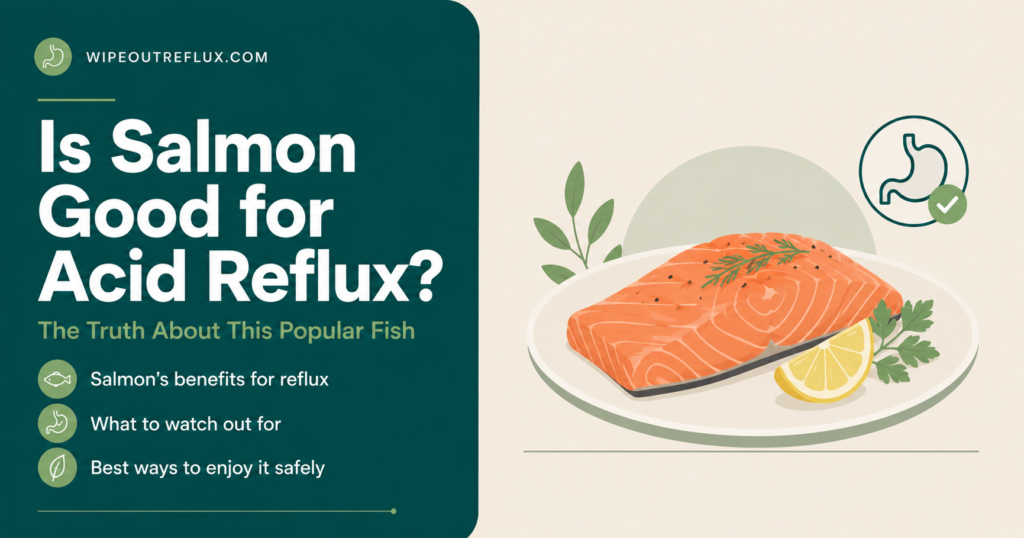
Yes — salmon is one of the best protein choices you can make if you have acid reflux, GERD, or LPR. It sits at a mildly acidic pH of around 6.2, which is well within the safe range for reflux sufferers, and it brings a genuinely useful nutritional profile: omega-3 fatty acids that directly reduce esophageal inflammation, vitamin D that supports the muscle function of key digestive valves, and astaxanthin — the antioxidant pigment that gives salmon its colour — which has protective effects on gastrointestinal tissue.
The main caveats are around preparation. Smoked salmon, heavily marinated salmon, and salmon cooked in excessive oil or butter can all become problematic — but that’s the preparation, not the fish itself. Plain grilled, baked, or poached salmon is almost universally well-tolerated, even by people with more sensitive reflux.
Key Takeaways
- Salmon has a mildly acidic pH of ~6.2 — well within the safe range for acid reflux sufferers.
- The omega-3 fatty acids EPA and DHA in salmon actively reduce inflammation in the esophageal lining caused by repeated acid exposure.
- Salmon’s vitamin D content helps maintain the muscle tone of the lower esophageal sphincter (LES) — the valve that keeps stomach acid from rising.
- Astaxanthin, the antioxidant carotenoid found in salmon, has documented protective effects on gastrointestinal mucosa.
- Wild-caught salmon is nutritionally superior to farmed, with higher omega-3 content and fewer potential additives.
- Smoked salmon should be avoided — the smoking process increases acidity and sodium content significantly.
- Grilling, baking, poaching, and light sautéing are all safe cooking methods; deep-frying is not.
Why Salmon is Good for Acid Reflux: The Mechanism
Most foods are simply assessed as “safe” or “unsafe” for reflux based on fat content and acidity. Salmon is worth understanding more deeply, because it’s one of the few foods that actively works in your favour rather than just being inoffensive.
Omega-3 Fatty Acids and Esophageal Inflammation
When you have acid reflux — and especially if it’s frequent — the lining of your esophagus and, with LPR, your throat, becomes chronically irritated and inflamed from repeated exposure to acid and pepsin. That inflammation is both a symptom and a driver of ongoing damage.
The EPA and DHA omega-3 fatty acids found in salmon are well-established anti-inflammatory agents. In an experimental model of reflux esophagitis, omega-3 fish oil significantly reduced esophageal damage and inflammation, while omega-6 oils from sources like soybean actually worsened it [__Irún et al., Frontiers in Pharmacology, 2019__]. Eating salmon regularly gives your body a steady supply of these EPA and DHA fatty acids, which work to dampen the inflammatory response in gastrointestinal tissue over time.
Vitamin D and Sphincter Muscle Function
Salmon is one of the best dietary sources of vitamin D — a 100g serving provides roughly 400–600 IU, which is a meaningful contribution toward daily requirements. This matters for reflux in a specific and underappreciated way.
Vitamin D plays a direct role in maintaining muscle function throughout the body, including the smooth muscle of the digestive tract. Research has found that vitamin D deficiency can dysregulate lower esophageal sphincter (LES) function — the valve between the stomach and esophagus that, when it fails to close properly, is the root cause of acid reflux in the first place [__Chen et al., Frontiers in Physiology, 2023__]. Low vitamin D has also been linked to impaired pyloric sphincter function, which can slow gastric emptying and increase stomach pressure.
The takeaway is that eating foods rich in vitamin D — including salmon — may help support the muscle tone that keeps these valves closing correctly. If you have low vitamin D levels, this is worth paying particular attention to.
Astaxanthin and Gastrointestinal Protection
Astaxanthin is the carotenoid pigment responsible for salmon’s characteristic pink-orange colour, and it’s one of the most potent naturally occurring antioxidants known. It resides directly in cell membranes — including those of gastrointestinal tissue — where it neutralises reactive oxygen species and suppresses pro-inflammatory cytokines that drive mucosal damage [__Fakhri et al., International Journal of Molecular Sciences, 2022__]. For someone with an inflamed esophageal lining, astaxanthin’s presence in salmon adds another layer of anti-inflammatory benefit beyond the omega-3s.
Is Salmon Acidic or Alkaline?
Salmon has a pH of approximately 6.2, which puts it in the mildly acidic range. That might sound like a concern, but context matters. Your stomach acid sits at a pH of 1.5–3.5 — salmon at pH 6.2 is dramatically more alkaline than the environment it’s entering. Eating salmon actually raises the pH in your stomach temporarily, which can have a calming effect on acid symptoms rather than worsening them.
For comparison, salmon’s acidity is similar to that of broccoli, asparagus, and other vegetables considered safe for reflux. The pH of a food in isolation tells you very little about whether it will trigger reflux — what matters far more is fat content, portion size, and preparation method.
Wild-Caught vs Farmed Salmon
From a reflux perspective, both are acceptable — but wild-caught salmon is nutritionally superior in ways that matter for this topic specifically. Wild salmon typically contains significantly more omega-3 fatty acids per gram than farmed salmon, and has a better omega-3 to omega-6 ratio. Farmed salmon tends to be fed grain-based diets that shift the fat composition toward omega-6 fatty acids, which are pro-inflammatory rather than anti-inflammatory.
Wild-caught Atlantic or Pacific salmon (particularly sockeye) is the best choice if it’s available and within your budget. If farmed is what you have access to, it’s still a good option — the omega-3 content is still meaningful, just not as high. The key difference becomes more relevant if you’re eating salmon several times a week as a regular part of a reflux management diet.
What About Smoked Salmon?
Smoked salmon is a different proposition entirely and I’d avoid it if you have active reflux. The smoking process significantly increases the acidity of the fish, and smoked salmon is typically very high in sodium — often 600–1000mg per 100g serving. High sodium intake has been associated with increased GERD risk and can irritate an already inflamed esophageal lining.
Smoked salmon also often contains added preservatives and curing agents that can exacerbate symptoms. If you have LPR in particular, where even mild irritants reaching the throat cause significant symptoms, smoked salmon is worth cutting out consistently rather than just during flares. Plain fresh or frozen salmon is always the better option.
What About Salmon Skin?
Salmon skin is safe to eat with reflux and contains a high concentration of omega-3 fatty acids — often more than the flesh itself. The skin does have a slightly higher fat content, so if you’re particularly sensitive to dietary fat, removing it is a reasonable precaution. But for most reflux sufferers, eating the skin of well-prepared salmon (grilled or baked rather than fried) is perfectly fine and adds nutritional value.
How to Cook Salmon for Acid Reflux
The cooking method is the most important variable when it comes to whether salmon is reflux-friendly or not. The fish itself is almost always fine — it’s what you do to it that causes problems.
- Grilling — The simplest and most reliable method. Season with fresh herbs, a small squeeze of lemon (used lightly if you’re sensitive), and a light brush of olive oil. Keeps fat content low and brings out natural flavour.
- Baking — Wrapping salmon in foil with herbs and a teaspoon of olive oil produces a moist, flavourful result with minimal fat. One of the best approaches for a flare period.
- Poaching — Gently simmering in water or a light vegetable stock. The most digestion-friendly method and a good choice if your symptoms are currently active.
- Steaming — Similar to poaching in terms of gentleness. Particularly good if you want to retain maximum nutrients.
- Light sautéing — Fine with 1–2 teaspoons of extra virgin olive oil. Avoid high heat that degrades the oil and avoid adding butter or cream-based sauces.
Avoid: Deep-frying (dramatically increases fat content), cooking in excessive butter, rich cream or cheese sauces, and heavy marinades containing garlic, chilli, or citrus juice in large quantities. These additions transform a reflux-safe meal into a potential trigger regardless of how good the salmon itself is.
For practical guidance on building meals around safe proteins like salmon, see my Wipeout Diet Plan.
Salmon and LPR (Silent Reflux)
Salmon is an excellent choice for LPR specifically. LPR tends to respond better to dietary fat reduction than standard GERD, and salmon — prepared simply — is a lean-to-moderate fat protein that doesn’t create the kind of high-fat burden that relaxes the LES and promotes reflux events. The anti-inflammatory benefits of its omega-3s are arguably more relevant for LPR, where pepsin reaching the throat causes direct tissue irritation that inflammation compounds. Regular salmon consumption as part of a broader reflux-conscious diet is something I’d actively encourage for LPR patients.
Frequently Asked Questions
Is salmon good for acid reflux every day?
Eating salmon 3–4 times a week is a reasonable frequency for most people. Having it daily is unlikely to cause problems, but nutritional variety is generally beneficial, and rotating with other safe proteins — such as cod, halibut, chicken, or prawns — gives you a broader micronutrient profile. There’s no reason to limit yourself to salmon, even if it’s one of the best options available.
Can salmon cause acid reflux?
It would be very unusual for plain salmon to trigger acid reflux. If you’ve noticed a reaction, it’s almost always the preparation rather than the fish — excessive oil, butter-based sauces, garlic, or chilli are the most common culprits. A small number of people may have a sensitivity to high-histamine foods, and smoked or canned salmon can be higher in histamines, but fresh salmon prepared simply is rarely a trigger.
Is canned salmon good for acid reflux?
Yes, canned salmon in water or brine is a convenient and reflux-safe option. It retains much of the omega-3 content of fresh salmon and is a practical everyday choice. As with canned tuna, choose water-packed rather than oil-packed versions. Check the sodium content on the label — some canned salmon can be quite high in salt, which is worth being mindful of if sodium is a trigger for you.
Is smoked salmon bad for acid reflux?
Yes — smoked salmon should be avoided if you have active reflux. The smoking and curing process significantly increases acidity and sodium content. If you have LPR in particular, smoked salmon is one to consistently avoid rather than just during flares.
What is the best fish for acid reflux?
Salmon ranks among the best due to its omega-3 content and anti-inflammatory properties. Other excellent choices include cod, halibut, tilapia, tuna in water, and prawns. See our full guide: What Fish is Good for Acid Reflux?
Does salmon worsen LPR?
No — plain, simply prepared salmon is one of the better food choices for LPR. Its anti-inflammatory fatty acids are directly relevant to LPR’s throat inflammation, and its moderate fat content doesn’t significantly stress the LES. Smoked salmon is the exception and should be avoided.
Conclusion
Salmon earns its place as one of the most recommended proteins for acid reflux not just because it’s low-risk, but because it actively contributes to the conditions needed for recovery. The omega-3 fatty acids work against the esophageal inflammation that drives persistent symptoms. The vitamin D content helps maintain the sphincter muscle function that prevents acid from rising in the first place. And the astaxanthin provides an additional antioxidant layer of protection to gastrointestinal tissue.
Keep the preparation simple — grilled, baked, or poached — and avoid smoked, heavily marinated, or fried versions. Wild-caught is preferable to farmed where available. Aim for two to four servings per week as part of a balanced, reflux-conscious diet, and pay as much attention to what surrounds the salmon on your plate as to the fish itself.
If you want a full framework for eating well with acid reflux — including which proteins, vegetables, and meal patterns work best together — my Wipeout Diet Plan provides a practical, evidence-based guide. For tailored advice specific to your symptoms, you can also book a Private Acid Reflux Consultation with me directly.
Related Articles
- What Fish is Good for Acid Reflux? Best & Worst Choices
- Is Tuna Good for Acid Reflux?
- Vitamin D and Silent Reflux: What You Need to Know
- The Complete Guide to LPR (Silent Reflux)
- The Ultimate Guide to Acid Reflux and GERD
- Is Broccoli Good for Acid Reflux?
- The Stomach Sphincter and LPR
Research & References
- In an experimental model of reflux esophagitis, omega-3 fish oil significantly reduced esophageal damage and inflammation, while omega-6 oils worsened it — supporting the anti-inflammatory benefit of EPA and DHA-rich fish like salmon [__Irún et al., Frontiers in Pharmacology, 2019__].
- Vitamin D3 was found to reduce pro-inflammatory cytokine levels (IL-6 and TNF-α) in reflux esophagitis, with evidence that vitamin D3 deficiency can dysregulate lower esophageal sphincter function [__Chen et al., Frontiers in Physiology, 2023__].
- Astaxanthin — a carotenoid naturally found in salmon — has been shown to directly neutralise reactive oxygen species in gastrointestinal cell membranes and suppress pro-inflammatory transcription factors associated with GI mucosal damage [__Fakhri et al., International Journal of Molecular Sciences, 2022__].
- Lean, low-fat protein sources including fish have been specifically identified as foods that help minimise GERD symptoms, with high-fat foods shown to promote LES relaxation and increase reflux frequency [__Niu et al., Nutrients, 2023__].

David Gray
12 years living with LPR · Consultant & researcher
I've lived with LPR for twelve years — the misdiagnoses, the PPI courses that did nothing, the slow work of figuring out what actually helps. Wipeout Reflux is where I translate the research into plain terms for people stuck in the same place. Every claim here is sourced to peer-reviewed work, and I consult one-to-one with LPR sufferers.
I’ve just heard of RefluxRaft, sounds good, it’s seaweed algae, deglicerized liquorice and ginger! May be a good choice for US as Gaviscon is so expensive to ship from UK, however, sod’s law, it’s awesomely expensive to have it, RefluxRaft delivered to UK!
Gaviscon extra is amazing, I keep it for emergencies but have discovered from having to go to A&E with chest pain (which was acid reflux) a few times, they give you some Gaviscon to take home and use before bed. (I think they have a container, as they decant it in to what is like an icing bag to take home and it’s much more that you would take……….about 30mls but it stops it). I’m not sure if your course would help me. I have had AR for 10 years now, only took ppi’s due to pandemic as there was no access to medical help, took them for 10 months. I have been gluten free, for years on and off, and everything else free, never eat after six, every thing you have ever heard of and maybe more! Now I have been diagnosed as Celiac (I had to eat gluten for 4 2weeks before the test). The only symptom I had was Acid reflux.
So I have definitely had been Gluten free since November the 5th and I’m still getting Acid reflux?
I saw the gastroenterologist last week, my follow up apt, and he said that I should take a ppi, even though my dexa scan has shown that I have had significant bone loss to my left hip in the year I was taking the Omeprazole.
Should I invest in your wipeout reflux programm, would it help? If it is based on raw food or fodmap maybe, as I haven’t gone down that rabbit hole yet!
Hi Marilyn,
I haven’t tried that product but it does sound promising from what you have mentioned. Definitely worth giving a go. Of course as you mentioned Gaviscon is the best option but it’s not easily available for everyone or costly as you pointed out.
From what you mentioned I would definitely recommend you the Wipeout Diet, I am quite confident you would see an improvement if you stick to it for a least a few weeks time. Usually a few tweaks and adjustments to diet and other important lifestyle changes can make a massive difference. I don’t know all your symptoms but also making an adjustment to the PPI’s would be helpful. I can advise you more with a private consultation here.